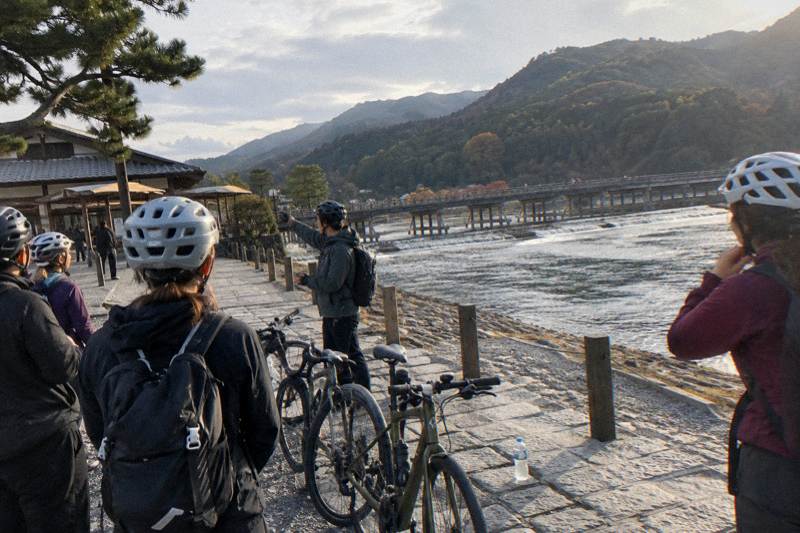
Best Time Of Day To Cycle In Kyoto: Beating The Crowds
Morning, afternoon, evening and night rides all exist in Kyoto. Here is what each window actually offers, which roster rides match it, and how temple hours, heat and rain should shape the choice.
Short answer
Morning rides dominate the choice: the Early Bird Bamboo Forest Ride (from ¥16,000 per person, 3 to 4 hours) and Morning Ride From Station (from ¥14,000 per person, 3 hours 30 minutes) are built for it, while Night Ride By Lantern Light (3 hours 45 minutes) and two evening rides cover after dark. Temple hours, July rain and August heat decide the rest.
The time of day you ride shapes a Kyoto trip more than almost any other decision, and the Arashiyama by bike route guide covers the west-side streets where the morning options concentrate. This guide walks through what each part of the day can and cannot offer, which guided rides are built for it, and the temple hours and climate numbers that should sit behind the choice.
| Fact | Detail |
|---|---|
| Blue-ticket fines | From 1 April 2026, riders aged 16 and over pay 3,000 to 12,000 yen for minor violations |
| Helmet rule | An effort duty for every age since 1 April 2023, with no fine attached |
| Removed bicycle fee | 3,500 yen to reclaim, held for 4 weeks |
| Wettest month | July, 223.6 mm |
| Hottest month | August, mean 28.5 °C, daily high 33.7 °C |
| Cherry full bloom normal | 4 April (2026 reached full bloom 30 March) |
| Maple colouring normal | 5 December, the observatory's official marker |
| Tenryu-ji hours | 8:30 to 17:00, last admission 16:50, garden 500 yen |
Is A Morning Ride The Right Choice For Kyoto Cycling?
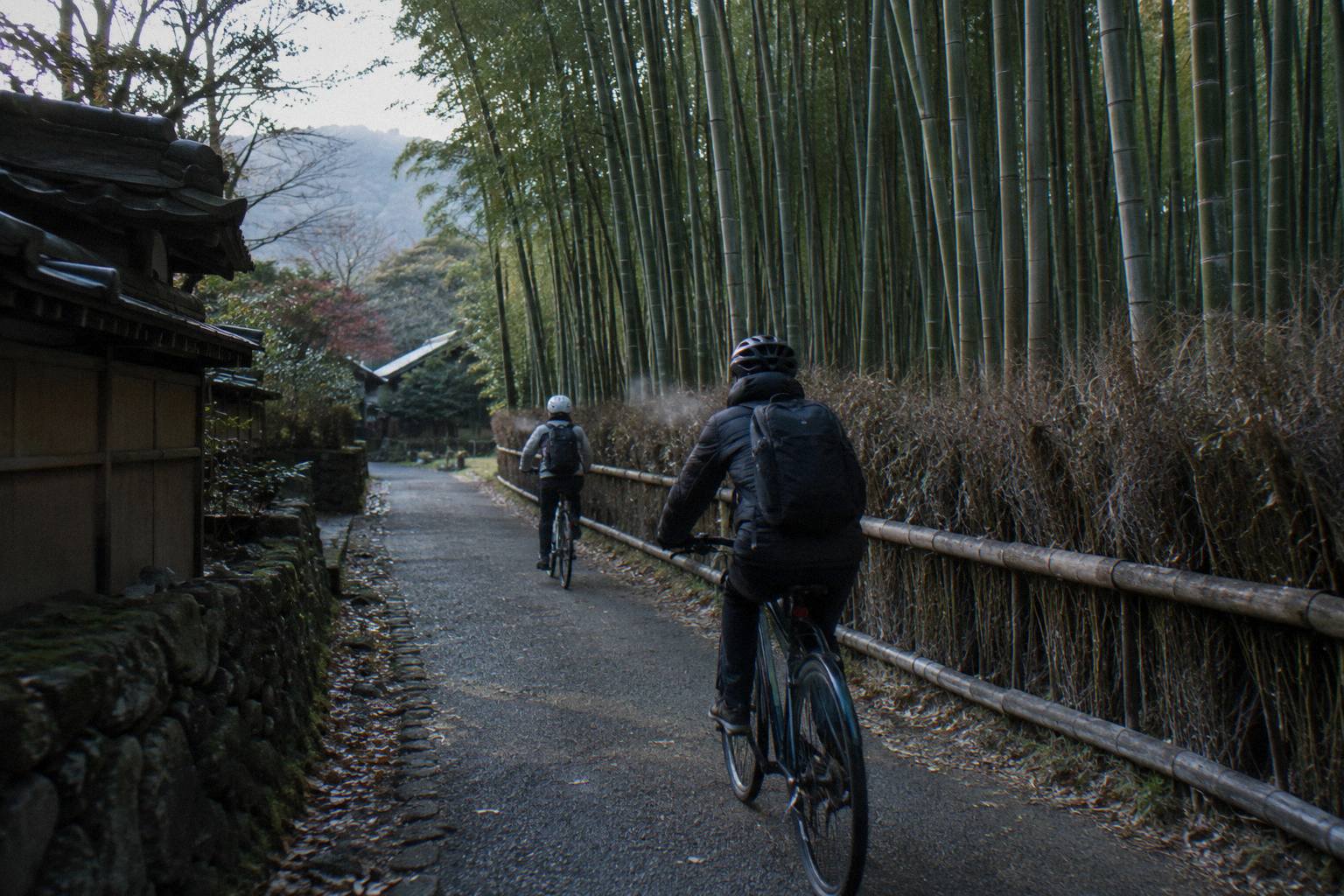
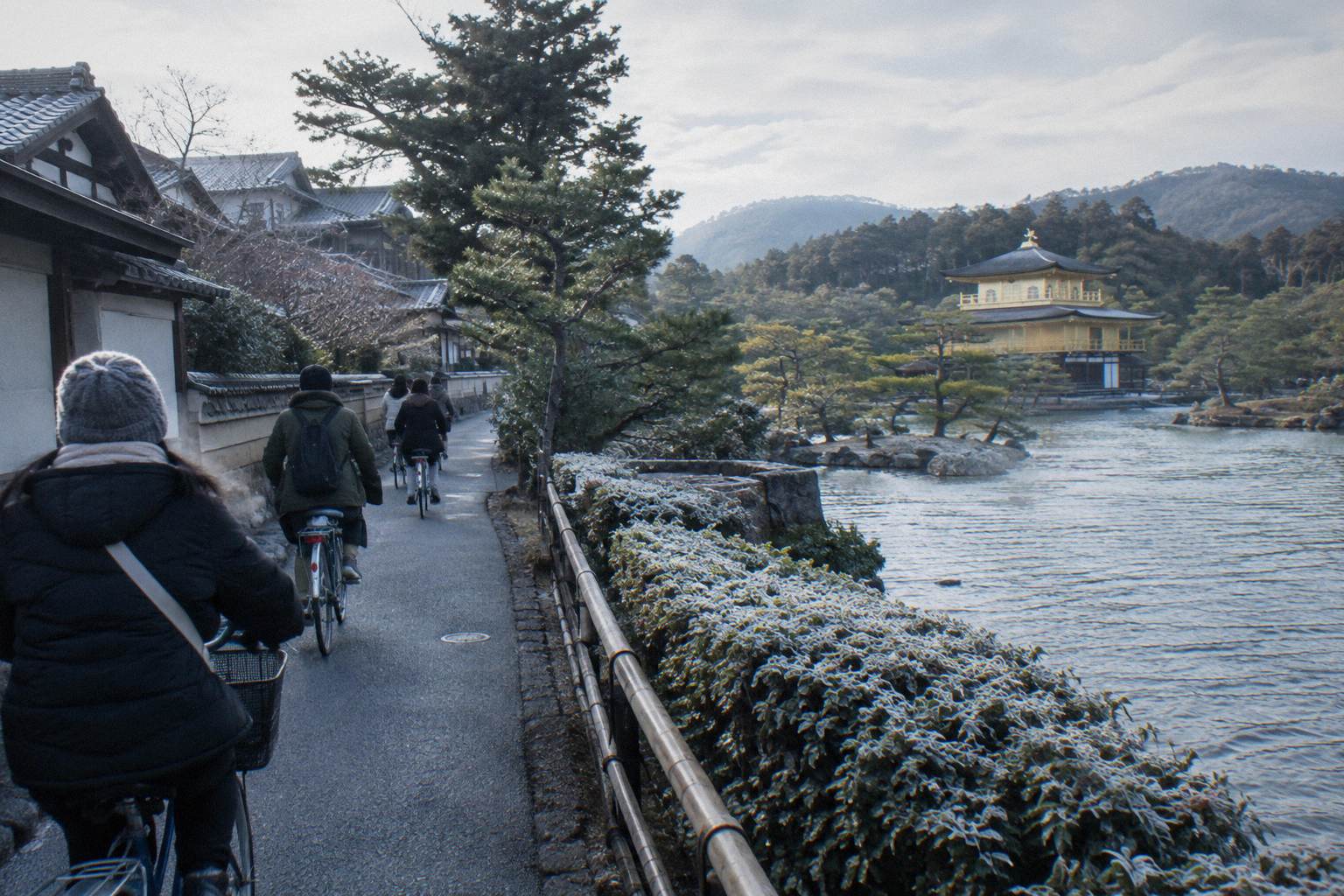
Morning is the strongest default, and the roster backs it with purpose-built products rather than vague advice. Two rides carry morning in their own names: the Early Bird Bamboo Forest Ride (from ¥16,000 per person, 3 to 4 hours, minimum age 10) and the Morning Ride From Station (from ¥14,000 per person, 3 hours 30 minutes, minimum age 13). Both run when temple hours are already open and before the August heat peaks.
The logic has three legs. First, the temple schedule: Tenryu-ji opens at 8:30, Kinkaku-ji at 9:00 and Ginkaku-ji at 8:30 until 30 November, so a morning ride can reach working stops instead of shuttered gates. Second, the climate: August's mean daily high of 33.7 °C is recorded in the Japan Meteorological Agency Kyoto monthly normals, and mornings sit on the cooler side of that curve. Third, the product design: a ride whose name says early bird has its route, pace and stops built around the early window, which self-timed riding cannot copy.
The Early Bird Bamboo Forest Ride is the fullest expression of this on the roster. It runs 3 to 4 hours, carries a 5 rating from 773 reviews, includes a bilingual English-speaking guide, bottled water, a Cannondale multi-speed bicycle and a helmet, and sets a minimum age of 10. An e-bike upgrade is excluded and costs extra, requested in advance and subject to availability. Free cancellation applies up to 24 hours before start.
What morning riding does not promise is emptiness. Crowd levels by hour are not something any official body publishes for Kyoto, and no verified claim about how busy a temple is at 9:00 versus 11:00 exists, so none appears here. What can be said precisely: a morning ride reaches stops within their opening hours, avoids the hottest part of an August day, and on the early-bird product pairs you with a guide who has run that route at that hour before. Start times are chosen on the booking page, so check the calendar for the slot that suits.
One more timing fact belongs here. Since 1 April 2026, riders aged 16 and over who commit minor violations pay a fixed fine of 3,000 to 12,000 yen under the blue-ticket system described on the Kyoto City page on cycling rules. A guided morning ride keeps you behind a guide who knows the local rules, which matters more at intersections than at any viewpoint.
Which Guided Rides Match Each Part Of The Day?
The roster covers morning, full day, evening and night with distinct products, and the durations do the sorting. Morning options run 3 hours 30 minutes to 4 hours, full-day options 7 to 8 hours with lunch either included or excluded, and the night and evening rides 3 to 3 hours 45 minutes. Price, duration and minimum age together tell you which window each ride is really for.
- Budget Fare, Hidden Alleys¥11,000
- Crowd-Free E-Bike Ride¥13,000
- Higashiyama Heritage Ride¥13,500
- Fushimi Inari, Sento Stop¥13,500
- Morning Ride From Station¥14,000
- Silver Pavilion, Philosopher's Path¥14,500
- Backstreets, 5 To 6 Hours¥15,000
- Palace, Castle And Temples¥16,500
The table below lays out the rides that speak to a time-of-day decision. Prices are per person where the roster gives a per-person basis; ratings print only where the review pool supports one.
| Ride | Window it suits | Duration | From-price | Rating | Min age |
|---|---|---|---|---|---|
| Early Bird Bamboo Forest Ride | Early morning | 3 to 4 hours | ¥16,000 per person | 5.0 from 773 reviews | 10 |
| Morning Ride From Station | Morning | 3 hours 30 minutes | ¥14,000 per person | 5.0 from 20 reviews | 13 |
| Crowd-Free E-Bike Ride | Morning or midday | 4 hours | ¥13,000 per person | 5.0 from 21 reviews | 12 |
| Full-Day E-Bike, Lunch Included | Full day | 7 to 8 hours | ¥26,000 per person | 5.0 from 596 reviews | 16 |
| Night Ride By Lantern Light | Night | 3 hours 45 minutes | Price on the booking page | 4.9 from 53 reviews | 10 |
| Evening Ride, Fushimi Inari | Evening | 3 hours | Price on the booking page | Too few reviews for a rating | Not listed |
The Crowd-Free E-Bike Ride (Pedal Adventure Kyoto E-Bike tour: True Kyoto Avoid the crowds, from ¥13,000 per person, 4 hours, minimum age 12) sits in the middle of the day by duration but is named for its routing intent. It includes bottled water, a helmet, bicycle use and an in-person guide in English or Japanese, and its operator asks that dietary requirements be flagged ahead of booking. Whether the route is calm on your date depends on the day, so treat the name as a design goal and check dates before booking.
The full-day counterweight is Full-Day E-Bike, Lunch Included (Bike Kyoto's Grand Loop, from ¥26,000 per person, 7 to 8 hours, minimum age 16), which covers five sites with a light lunch, snacks, admission fees and an e-bike included, and carries a 5 rating from 596 reviews. A full day spreads the stops across opening hours rather than compressing them into one window, which is a different answer to the same timing question. A second full-day product, Full-Day Ride, No Meal (from ¥19,500 per person, 7 to 8 hours, minimum age 10), does the same without lunch, with a 5 rating from 28 reviews.
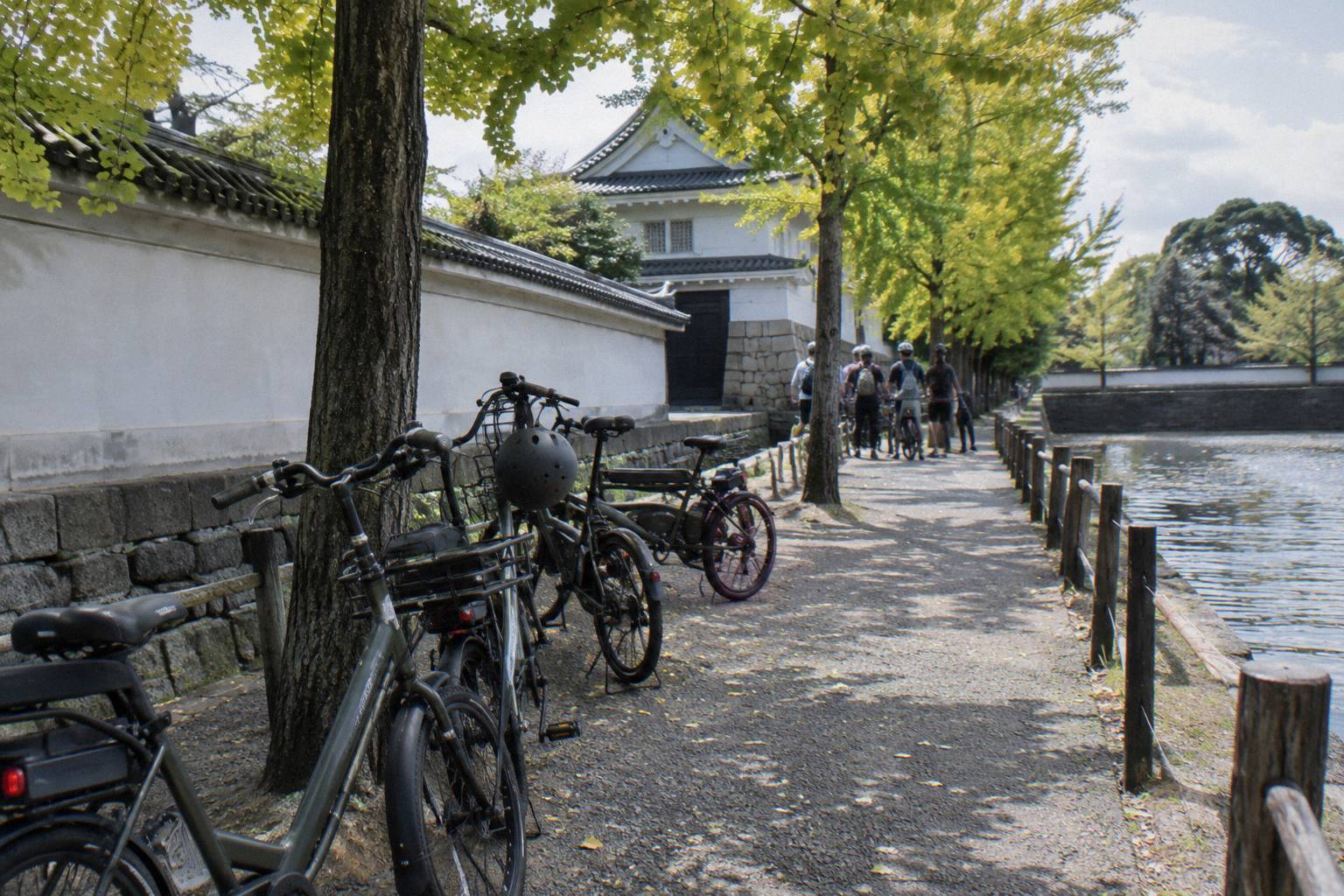
If you are still deciding whether a guide adds enough to justify the structure, the guided versus self-guided cycling comparison covers the trade-offs; the short version for timing is that a guide fixes the schedule to the stops' hours, while a self-guided rider carries that planning alone. Prices vary by date and group, and the booking page shows the price for the date you pick.
How Do Temple Opening Hours Constrain Your Ride?
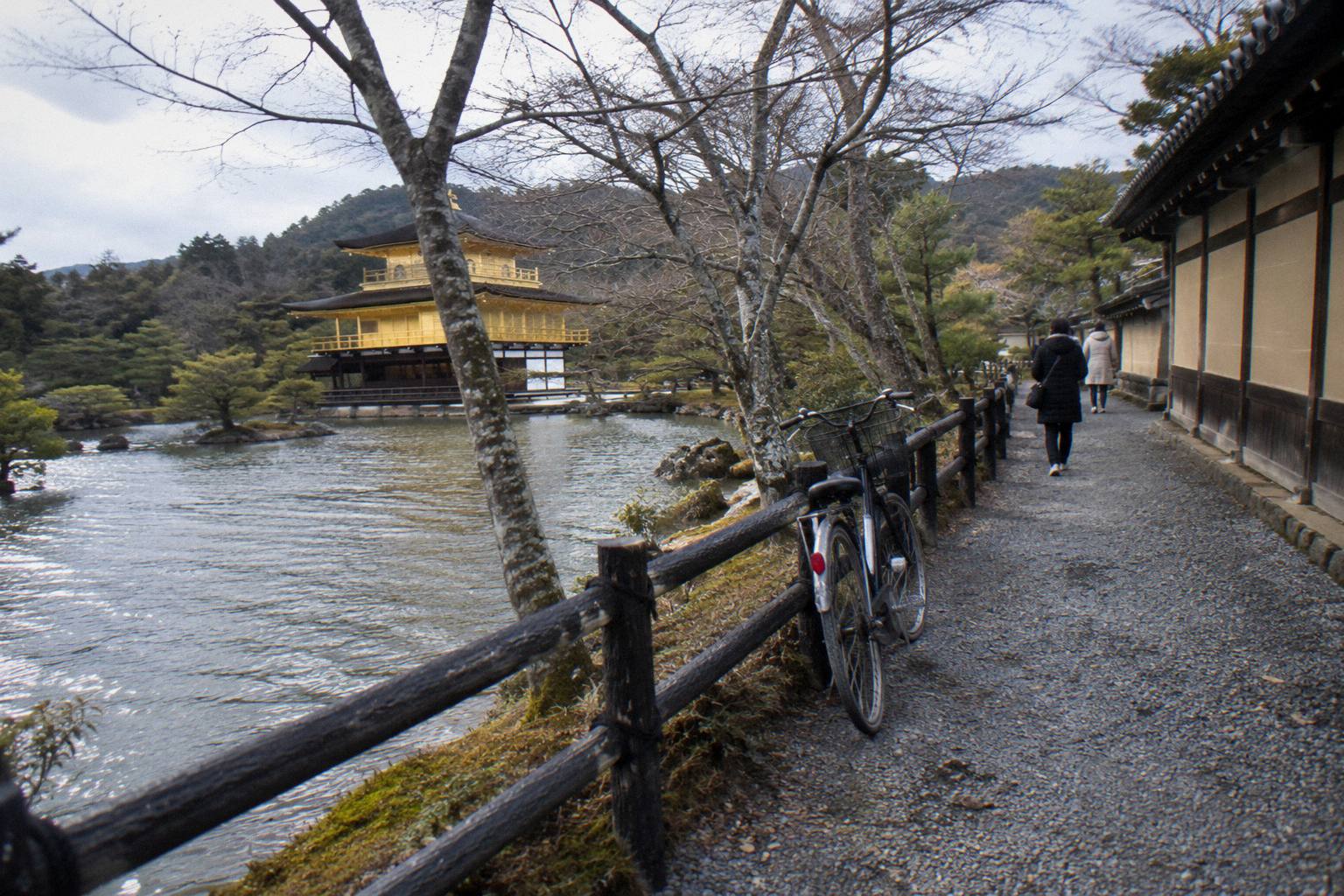
Every temple stop has a fixed window, and a ride that ignores it can arrive at a closed gate. Tenryu-ji runs 8:30 to 17:00 with last admission at 16:50, Kinkaku-ji 9:00 to 17:00 all year, and Ginkaku-ji 8:30 to 17:00 from 1 March to 30 November and 9:00 to 16:30 from 1 December to the end of February. Fushimi Inari has no fee and states no closing time.
These hours are the hard edges of any cycling day. A morning ride that starts near opening time reaches Kinkaku-ji's 9:00 gate just as it unlocks; an afternoon ride needs to leave Tenryu-ji before the 16:50 last admission. Evening and night rides work because their stops, typically shrine grounds and streetscapes, are not gated on the same schedule. Fushimi Inari Taisha charges no admission and its official FAQ describes around 10,000 torii gateways along the mountain paths, with no closing time stated by the shrine, which is why the evening product in this guide routes there.
| Stop | Hours | Admission |
|---|---|---|
| Tenryu-ji | 8:30 to 17:00, last admission 16:50 | Garden 500 yen (high school and older); buildings add 300 yen |
| Kinkaku-ji | 9:00 to 17:00, open all year | 500 yen general; 300 yen primary and middle school |
| Ginkaku-ji | 8:30 to 17:00 (1 March to 30 November); 9:00 to 16:30 (1 December to end of February) | 1,000 yen adult, 500 yen child |
| Fushimi Inari Taisha | No closing time stated by the shrine | No admission fee |
Ginkaku-ji's adult fee doubled to 1,000 yen on 1 April 2026, a dated change worth knowing when a ride lists admission as included or excluded. Full-Day E-Bike, Lunch Included includes admission fees; the Silver Pavilion, Philosopher's Path ride (Kyoto E-Bike Tour: The Silver Pavilion & Philosopher's Path, from ¥14,500 per person, 4 hours, minimum age 12, 5.0 from 322 reviews) includes landing and facility fees; the Higashiyama Heritage Ride (from ¥13,500 per person, 4 hours, minimum age 12) includes entrance to Kiyomizu-dera and Ginkaku-ji specifically. Read what each product covers before assuming a stop is paid for.
Hours and fees for each stop above come from the temples' own pages, including the Tenryu-ji visitor page and the Kinkaku-ji access page. Where a roster ride names a stop, its detail page is the place to confirm what is paid at the gate versus arranged in advance. For the timing decision itself, the pattern is simple: gate-limited stops belong to daylight hours, open shrine grounds and lit streets belong to the evening and night products.
When Does Weather Change The Best Time To Ride?
The calendar moves the answer. July is Kyoto's wettest month at 223.6 mm, August the hottest with a mean of 28.5 °C and a daily high of 33.7 °C, and January both coldest and driest at a mean of 4.8 °C. In summer the early window matters most; in the wettest weeks a morning start leaves the afternoon as backup.
The figures below are the 1991-2020 normals for Station Kyoto from the Japan Meteorological Agency's monthly table. They are averages, not forecasts: they tell you which part of the year rewards an early start, not what any single day will do.
| Month | Rain (mm) | Mean C | Mean daily high C | Mean daily min C |
|---|---|---|---|---|
| January | 53.3 | 4.8 | 9.1 | 1.5 |
| April | 117.0 | 14.4 | 20.1 | 9.2 |
| July | 223.6 | 27.3 | 32.0 | 23.6 |
| August | 153.8 | 28.5 | 33.7 | 24.7 |
| October | 143.2 | 18.4 | 23.4 | 14.4 |
| December | 57.3 | 7.2 | 11.6 | 3.5 |
The rainy season runs roughly early June to mid July in the Kinki region, which pushes the timing question from heat to wet gear. The rainy season cycling guide covers riding through it in detail. Kyoto's record daily maximum is 39.8 °C, and three of the six hottest days on record fell in 2024, 2025 and 2026, so recent summers have leaned hot; the summer heat cycling guide goes deeper on that window. No operator rain or heat cancellation policy beyond each ride's free-cancellation flag can be stated here, so check the booking calendar for your date.
Spring and autumn bring their own timing pull. The observatory's cherry full-bloom normal for Kyoto is 4 April, and 2026 reached full bloom on 30 March, earlier than the norm. Maple colouring's normal is 5 December, measured on the observatory's official marker tree rather than any temple district. Those dates come from the Japan Meteorological Agency Kyoto phenology observations. They are normals and records, not promises for your week.
What Do Evening And Night Rides Actually Offer?
Two roster products own the after-dark window. Night Ride By Lantern Light (Discover Kyoto at Night by Bike, 3 hours 45 minutes, minimum age 10) carries a 4.9 rating from 53 reviews and includes entrance fees, bottled water and bicycle use. Evening Ride, Fushimi Inari (3 hours) includes e-bike rental, a helmet, entrance tickets, bike parking fees and a bilingual guide, and has too few reviews for a star claim.
The night product's shape tells you what it is for: a shorter duration, entrance fees baked in, and hotel transport and guide gratuities excluded. Its route lives on lit streets and open shrine grounds rather than gated temple interiors, which is what makes a 3-hour-45-minute evening work at all. The evening Fushimi Inari ride leans on the same logic, that the shrine states no closing time and charges no admission, so its torii-lined paths remain reachable after daytime temples shut.
Two legal facts matter after dark. Helmets have been an effort duty for every age since 1 April 2023, per the Kyoto Prefecture page on the helmet duty, and Kyoto Prefecture requires bicycle liability insurance under its ordinance. Night Ride By Lantern Light includes entrance fees but names insurance nowhere, while Evening Ride, Fushimi Inari includes entrance tickets and parking fees with no insurance named either; ask the operator if coverage matters to you. The night cycling guide expands on the whole after-dark category.
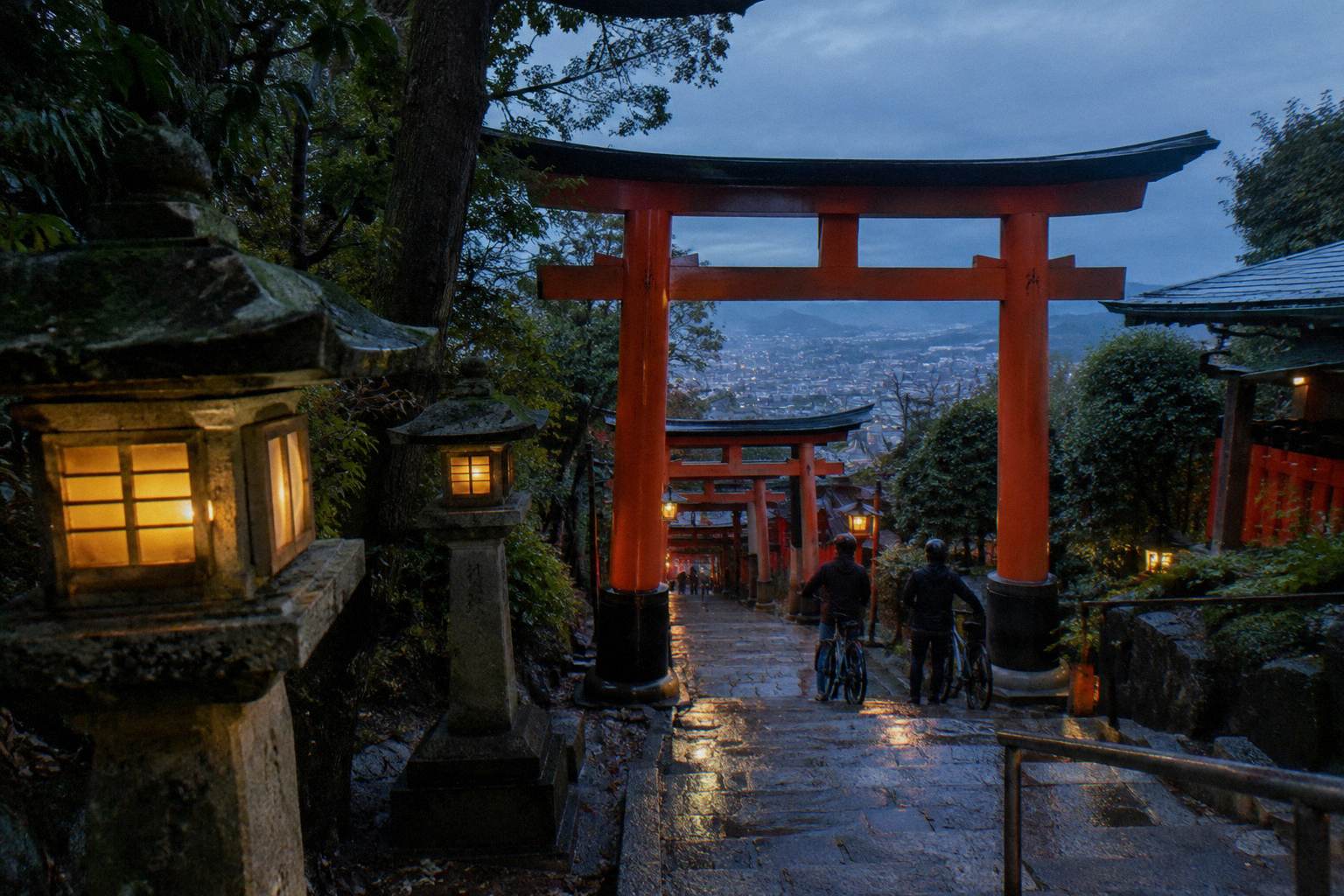
Prices for both after-dark rides sit on the booking page rather than in any printed figure here, and they vary by date. Both offer free cancellation up to 24 hours before start, which softens the bet if an evening turns wet. The choice between them is mostly a route choice: one is a broad city night ride with a solid review pool behind it, the other a short southbound evening built around Fushimi Inari and Tofuku-ji.
Half Day, Full Day Or Single Window: Which Duration Fits?
Duration is the second timing decision after hour. A 3-to-4-hour morning ride visits a cluster; a 7-to-8-hour full day spreads across five sites with lunch; and a 3-hour evening compresses to a single district. The full-day products cost more and demand more of the day, and their minimum ages run higher, at 16 on the grand-loop ride versus 10 on the early-bird ride.
Think of it as coverage versus depth. The Early Bird Bamboo Forest Ride's 3-to-4-hour window buys a focused west-side morning. Full-Day E-Bike, Lunch Included spends 7 to 8 hours on five sites with a light lunch, snacks, water, helmet, admission fees and the e-bike all included, at a from-price of ¥26,000 per person and a minimum age of 16. Its 5 rating from 596 reviews is the second-largest pool on the roster behind the early-bird ride's 773. A multi-speed pedal bike is available on request at no extra charge, for riders who prefer one.
The Morning Ride From Station product earns its place in this comparison on convenience: its name ties it to Kyoto Station, it runs 3 hours 30 minutes, and it includes water, a raincoat, helmet, bicycle use and liability insurance, with snacks excluded. That raincoat inclusion is a small but real signal for the wettest weeks. It carries a 5 rating from 20 reviews and a from-price of ¥14,000 per person.
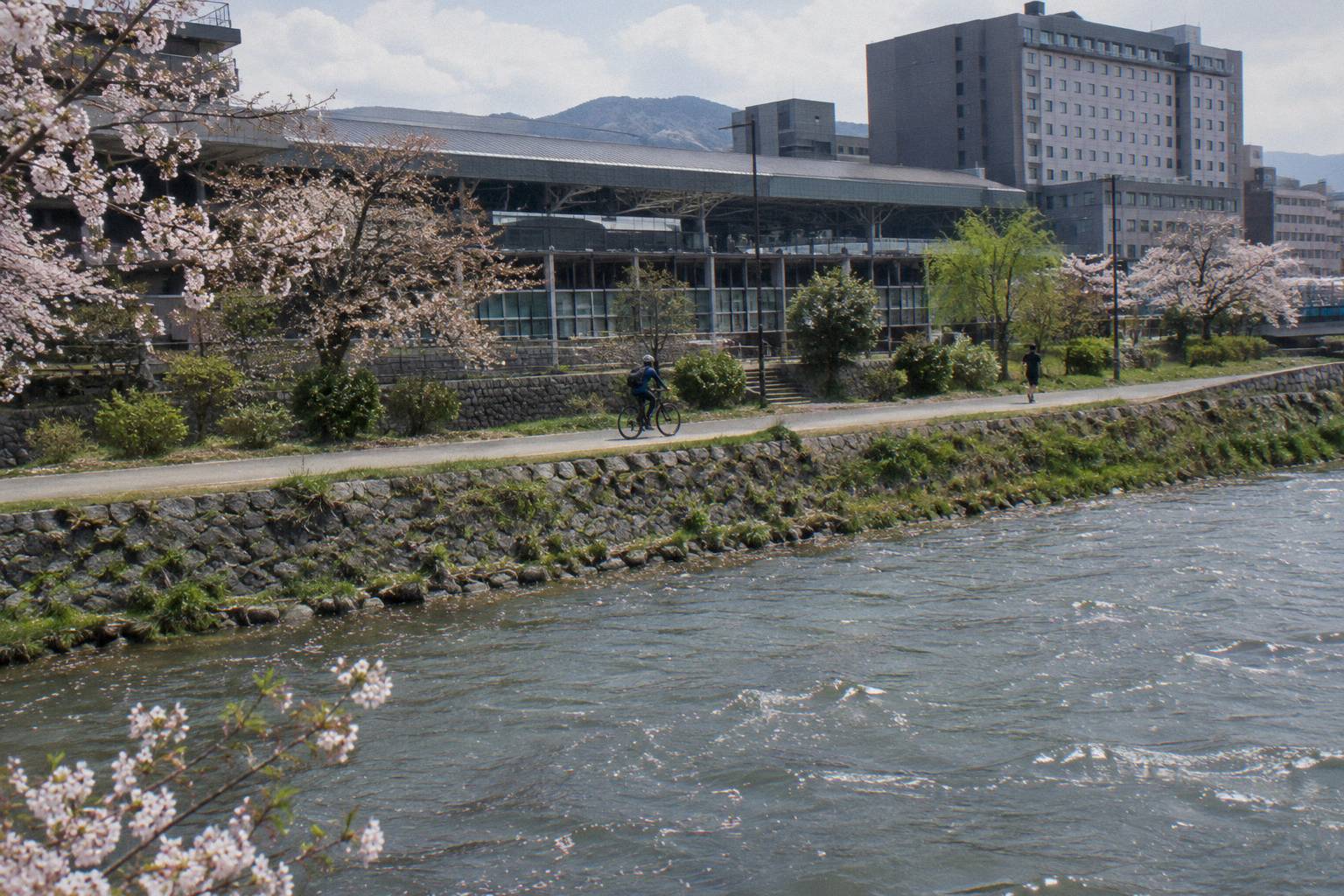
For riders weighing e-assist itself as part of the longer day, the e-bike versus regular bike guide covers the rider-fit question. One legal note carries across all of it: a pedal-assist e-bike that meets the legal standard is a bicycle under Kyoto City's rules, while a throttled or out-of-standard vehicle is not, which is why every roster product here uses compliant pedal-assist bikes or standard bicycles.
How Far Ahead Should You Book A Timed Ride?
Morning slots are the scarcest resource in this decision: the early-bird and morning products run once per day in their window, and the roster gives every ride free cancellation up to 24 hours before start. Booking ahead secures the hour you want while keeping the escape hatch open, and start times are chosen on the booking page rather than fixed in advance.
The cancellation terms are uniform across the rides discussed here: free up to 24 hours before start. That changes the booking math. You can reserve a morning slot weeks out, watch the forecast, and drop or move it the day before without cost, which is exactly the pattern that suits July's 223.6 mm or a fickle cherry-bloom week. The guide to booking timing covers the lead-time question in full.
Prices vary by date and group, so the from-prices printed here are floors rather than quotes. When you see a date you like, check the live price on the booking page before deciding. The one thing not to do is arrive in Kyoto assuming a same-morning slot will exist in a busy week; the free-cancellation terms mean early booking costs nothing but a few minutes.
What Trips People Up Before You Book
The recurring mistakes are all timing mistakes: arriving at a gated temple after the 16:50 last admission at Tenryu-ji or the 17:00 close at Kinkaku-ji, assuming a name like early bird guarantees a specific start clock time when start times are chosen on the booking page, and reading beating the crowds as a promise about how busy a site will be. None of those failures is the operator's fault; all are fixable at the planning stage.
The first fix is to read hours against your ride's window. If your ride ends late afternoon, its stops must be ones that admit until then; the evening products solve this by routing to Fushimi Inari, which states no closing time. The second fix is to check the booking calendar for the actual start time rather than inferring it from a product name; early bird tells you the intent, the calendar tells you the hour.
The third mistake is packing the wrong legal assumptions. Since 1 April 2026 the blue-ticket system fines riders aged 16 and over between 3,000 and 12,000 yen for minor violations, with holding a phone at 12,000 yen and riding with an umbrella at 5,000; since 1 November 2024, holding a phone while riding can mean up to 6 months in prison or a 100,000 yen fine. A guided ride puts a local guide between you and those numbers, but the rules apply to every rider aged 16 and over regardless.
| Mistake | Consequence | Fix |
|---|---|---|
| Ignoring temple last-admission times | A closed gate mid-route | Match stops to hours; evening rides suit shrine grounds |
| Assuming a fixed start time | A missed meetup | Check the booking calendar for your date |
| Reading a ride name as a crowd promise | Disappointment on a busy day | Treat the name as routing intent; no hour-by-hour crowd data exists |
| Riding uninsured | Exposure under the prefectural ordinance | Confirm what your ride covers or carry your own policy |
| Leaving a bike parked wrongly | 3,500 yen removal fee, 4-week hold | Use designated parking; the bike-parking guide maps the rules |
That last row deserves its own sentence: Kyoto City removes illegally parked bicycles across nearly the whole city and charges 3,500 yen to reclaim one, holding it for 4 weeks from the day after removal, per the Kyoto City page on removed bicycles. The bike parking guide covers where bikes can legally stand. Guided rides that include bike parking fees, like Evening Ride, Fushimi Inari, remove that problem entirely; on a self-guided day it is yours to solve.
A final note on who this all serves. Kyoto Bike Tours built this guide around the timing question because it is the one decision that touches route, weather, hours and law at once. Pick the window first, then the ride that owns it, and the rest of the day falls into place.
Common Questions About Riding Kyoto By Hour
Is A Morning Bike Tour In Kyoto Worth It?
Morning is the strongest window by the numbers: temples from Tenryu-ji (8:30) to Kinkaku-ji (9:00) are open, August heat has not peaked against its 33.7 °C daily high, and the roster has two rides built for it, the Early Bird Bamboo Forest Ride (from ¥16,000 per person, 5.0 from 773 reviews) and Morning Ride From Station (from ¥14,000 per person, 5.0 from 20 reviews). Start times are chosen on the booking page.
What Time Do Temples Open In Kyoto?
Tenryu-ji opens 8:30 to 17:00 with last admission at 16:50, Kinkaku-ji 9:00 to 17:00 all year, and Ginkaku-ji 8:30 to 17:00 from 1 March to 30 November and 9:00 to 16:30 in winter. Fushimi Inari Taisha charges no fee and states no closing time.
Are There Night Bike Rides In Kyoto?
Yes. Night Ride By Lantern Light runs 3 hours 45 minutes with a 4.9 rating from 53 reviews and includes entrance fees, and the Evening Ride, Fushimi Inari runs 3 hours with e-bike rental, entrance tickets and a bilingual guide included. Both offer free cancellation up to 24 hours before start; prices are on the booking page.
What Is The Hottest Month To Cycle In Kyoto?
August, with a mean of 28.5 °C and a daily high of 33.7 °C in the 1991-2020 normals. July is the wettest at 223.6 mm. In both months the morning rides carry the advantage, and the Morning Ride From Station even includes a raincoat.
Can I Cancel A Kyoto Bike Tour If The Timing Is Wrong?
Every ride covered here offers free cancellation up to 24 hours before start. That means you can book a morning slot early, then drop or move it the day before if the forecast or your schedule changes, at no cost.
Do I Need Insurance For A Guided Ride In Kyoto?
Kyoto Prefecture requires bicycle liability insurance under its ordinance. Some rides include liability insurance, such as Morning Ride From Station, while others, like Evening Ride, Fushimi Inari, do not name it; ask the operator if you want confirmation of coverage before booking.