Guided Or Self-Guided Cycling In Kyoto: Maps, Navigation And Trade-Offs
A guided ride hands you a route, a guide and a bicycle; going self-guided hands you the map and the rulebook. Here is how the two approaches compare on navigation, stop fees, parking, fines and insurance.
Short answer
Guided rides in Kyoto cost from ¥11,000 to ¥26,000 per person for 3 to 8 hours with a guide, bicycle and helmet included, while self-guided riding leaves you to arrange the bicycle, the route and the liability insurance Kyoto Prefecture requires. Solo riders also face the fixed-fine system for riders aged 16 and over, running 3,000 to 12,000 yen.
Self-guided riding and guided riding in Kyoto share the same streets, the same temple gates and the same rulebook, but they split the work very differently. This comparison sits within the world of guided e-bike products such as the Crowd-Free E-Bike Ride, where every guided ride on the roster keeps its own card, price and inclusions.
| Fact | Detail |
|---|---|
| Blue-ticket fixed fines | From 1 April 2026, riders aged 16 and over pay 3,000 to 12,000 yen for minor violations instead of criminal procedure |
| Helmet | An effort duty for every age since 1 April 2023, with no fine attached |
| Liability insurance | Kyoto Prefecture requires bicycle liability insurance under its bicycle ordinance |
| Removed bicycle | 3,500 yen to reclaim, held for 4 weeks from the day after removal |
| Phone while riding | 12,000 yen fixed fine; holding a phone has carried up to 6 months prison or a 100,000 yen fine since 1 November 2024 |
| Guided ride prices | From ¥11,000 to ¥26,000 per person for the 3 to 8 hour rides compared here, bicycle and helmet included |
| Cherry blossom normal | Full bloom 4 April in the 1991 to 2020 observatory normals |
| Wettest month | July, at 223.6 mm in the 1991 to 2020 normals |
What Does Self-Guided Cycling In Kyoto Involve?
A self-guided day means you arrange the bicycle, the route, the parking and the paperwork yourself: Kyoto Prefecture requires bicycle liability insurance, the blue-ticket system fines riders aged 16 and over between 3,000 and 12,000 yen for minor violations, and a badly parked bicycle costs 3,500 yen to reclaim. A guided ride folds the route, the guide and usually the bicycle and helmet into one booking, which is the trade this comparison weighs.
The core difference is not the scenery. Both kinds of rider roll past the same machiya frontages and the same shrine gates. The difference is who carries the decisions. On a guided product such as Kyoto Backstreets and Hidden Gems E-Bike Tour, the operator supplies an e-bike for everyone, helmets, bottled water and all fees and taxes, runs 5 hours to 6 hours, costs from ¥15,000 per person, holds a 4.9 rating from 210 reviews and sets a minimum age of 3. A rider who books it makes one decision and then pedals. A rider who goes alone makes dozens of small decisions per day: where to roll, where to stop, where to leave the bike, and whether each stop charges admission.
That is the shape of the trade, in planning terms at least: guided riding buys back your attention, self-guided riding buys back your schedule. Neither choice is wrong, and neither removes the road rules. The fixed-fine system applies to every rider aged 16 and over, with or without a guide, as the Kyoto City page on cycling rules sets out.
One more thing belongs in the opening picture. Prices on guided rides vary by date and group, and the booking page shows the price for the date you pick. Nothing in this comparison covers rental prices, because none are verified; the rental decision and what a solo rider arranges alone are covered in the bike rental prices and shops guide, while this article stays on navigation and trade-offs.
Who Carries The Route-Finding?
On a guided ride the guide carries the route, the stop order and the timing; self-guided, you carry all three, which in Kyoto means reconciling temple closing hours, bike parking rules and your own energy in one day. The guided products here remove that load entirely for 3 to 8 hours at from ¥11,000 to ¥26,000 per person, while a solo rider needs a map app, a parking plan and a fallback for rain.
Route-finding in Kyoto is deceptively simple on a map and fiddly on the ground. The grid is regular, but the stops that justify the ride keep their own hours: Tenryu-ji's garden opens 8:30 to 17:00 with last admission at 16:50, Kinkaku-ji runs 9:00 to 17:00 and is open all year, and Ginkaku-ji shortens to 9:00 to 16:30 from 1 December to the end of February. A solo rider stitching these together has to respect each gate; a guided ride has already done that arithmetic.
The guided alternatives show how differently that load can be packaged. The UNESCO Zen Temples, Lunch ride bundles a local lunch at a Japanese house, a bike lock, the Kennin-ji entrance fee and photos during the tour into 4 hours 30 minutes from ¥15,000 per person, rated 5.0 from 145 reviews, minimum age 15. The Crowd-Free E-Bike Ride runs 4 hours from ¥13,000 per person, rated 5.0 from 21 reviews, minimum age 12, with a guide in English or Japanese; allergies and dietary needs should be raised ahead of booking. Prices vary by date and group, and the booking page shows the price for the date.
- Budget Fare, Hidden Alleys¥11,000
- Crowd-Free E-Bike Ride¥13,000
- Higashiyama Heritage Ride¥13,500
- Fushimi Inari, Sento Stop¥13,500
- Morning Ride From Station¥14,000
- Silver Pavilion, Philosopher's Path¥14,500
- Backstreets, 5 To 6 Hours¥15,000
- Palace, Castle And Temples¥16,500
For the solo rider, the practical answer is to plan fewer stops per day than a guide would attempt, keep the closing hours written down before setting off, and read up on what a cycling day in Kyoto asks of you before choosing lanes. A guide also absorbs the day's surprises, a closed gate, a shower, a wrong turn, without the rider losing an hour to replanning. Whether that is worth the per-person price is the private calculation every reader makes here.
Between the two models sits a middle option worth naming: booking a guided ride for the day that carries the hardest logistics and riding self-guided on the simpler days. Visitors who plan several cycling days often do exactly that, and the cycling routes overview lays out which areas reward which approach.
Which Stops Charge Fees And Keep Hours?
Fushimi Inari charges no admission and counts around 10,000 torii; Tenryu-ji's garden is 500 yen for high school age and older, 300 for younger students, open 8:30 to 17:00; Kinkaku-ji is 500 yen general from 9:00 to 17:00; Ginkaku-ji is 1,000 yen for adults since 1 April 2026. A guide weaves fees and hours into the route; a solo rider times and pays them alone.
The temple economics cut both ways. On a guided ride that names admission in its inclusions, the fees are handled; the Higashiyama Heritage Ride, for example, includes entrance to Kiyomizu-dera and Ginkaku-ji in its price, and the Northern Ride, Kinkaku-Ji includes the Kinkaku-ji entrance fee alongside the electric bike rental. On a ride that excludes lunch or drinks, those costs stay with you. Read the inclusions line of any product before assuming a gate is covered.
| Stop | Admission | Hours |
|---|---|---|
| Fushimi Inari Taisha | No fee | No closing time stated by the shrine |
| Tenryu-ji garden | 500 yen high school and older; 300 elementary and middle school; preschool free; buildings add 300 yen | 8:30 to 17:00, last admission 16:50 |
| Kinkaku-ji | 500 yen general; 300 primary and middle school | 9:00 to 17:00, open all year |
| Ginkaku-ji | 1,000 yen adult since 1 April 2026; 500 child | 8:30 to 17:00 from 1 March to 30 November; 9:00 to 16:30 from 1 December to end of February |
| Nijo Castle | From 800 yen general | Admission 8:45 to 16:00, closes 17:00 |
Two of these figures come straight from the temples' own visitor pages: the Tenryu-ji visitor page confirms the garden fee and hours, and the Fushimi Inari Taisha FAQ describes the roughly 10,000 torii. A solo rider should also know that Ginkaku-ji's adult fee doubled from 500 yen to 1,000 yen on 1 April 2026, so older blog posts and printed guides understate it.
Hours shape a self-guided day more than fees do. A rider who reaches Kinkaku-ji at 16:50 still gets in; a rider who reaches Tenryu-ji at 16:55 does not, because last admission is 16:50. Guided rides rarely publish their stop order in advance, but the duration tells you how much day is consumed: the Silver Pavilion, Philosopher's Path ride runs 4 hours from ¥14,500 per person with e-bike rental and landing and facility fees included, rated 5.0 from 322 reviews, minimum age 12. You can check availability for your dates alongside the solo planning below.
Fees add up differently for a family. A self-guided group of two adults and two middle school children pays 1,000 yen at Kinkaku-ji where a couple pays the same, and children's rates at Tenryu-ji and Kinkaku-ji soften the total, but Ginkaku-ji's child ticket is still 500 yen. Whether any given guided ride's per-person price beats the sum of gates plus a rental is arithmetic each reader can do with the numbers above; just remember that prices vary by date and group.
Which Road Rules Apply To A Rider On Their Own?
Every rider aged 16 and over faces the blue-ticket system from 1 April 2026: fixed fines of 3,000 to 12,000 yen, with 12,000 yen for a phone in hand, 6,000 for ignoring a signal or riding on the wrong side, 5,000 for a stop sign or an umbrella, and 3,000 for two abreast. Helmets are an effort duty at every age, and Kyoto Prefecture requires bicycle liability insurance.
A guide does not exempt anyone from these rules, but a guide does set the pattern: where the group rides, when it stops, how it crosses. A solo rider has to internalise the basics alone. The National Police Agency's five rules make the roadway the principle, the sidewalk the exception where signs or markings permit, for children under 13, riders aged 70 and over, disabled riders, or where road conditions leave no safe alternative, with pedestrians first in every case; the National Police Agency bicycle safety leaflet carries the full set.
| Violation | Fixed fine |
|---|---|
| Holding or watching a phone while riding | 12,000 yen |
| Ignoring a signal | 6,000 yen |
| Riding on the wrong side of the road | 6,000 yen |
| Failing to stop at a stop sign | 5,000 yen |
| Riding with an umbrella | 5,000 yen |
| Riding two abreast or carrying a second rider | 3,000 yen |
Two penalties sit outside the fine table. Holding a phone to talk or watch the screen while riding has carried up to 6 months in prison or a 100,000 yen fine since 1 November 2024, and drunk cycling is banned at any level of drinking, with riding over the limit punishable by up to 3 years or a 500,000 yen fine. The helmet duty carries no fine but applies to every age; the Kyoto Prefecture page on the helmet effort duty states it plainly.
The e-bike question resolves cleanly for both kinds of rider. A pedal-assist e-bike that meets the legal standard is a bicycle; a vehicle with a throttle or outside the standard is a motorised bicycle or car, not a bicycle. The e-bikes named on the guided products here, the Panasonic premium electric bicycles on the Palace, Castle And Temples ride and the e-bikes on the Backstreets ride, are bicycles in law. A deeper comparison of the two formats sits in the e-bike or regular bike decision guide.
Insurance is the item solo riders most often miss. The Kyoto Prefecture page on bicycle liability insurance requires it under the prefecture's bicycle ordinance, and a personal-liability rider on home, car or accident cover counts. Note that some guided products name insurance in their inclusions, such as the morning ride from Kyoto Station with its liability insurance, while others, like the Hidden Gems 4-hour ride and the Northern Ride, name insurance as excluded; check the booking calendar details and ask the operator if coverage matters to you.
Where Does A Self-Guided Rider Leave The Bike?
Illegally parked bicycles are removed across nearly the whole city and stored at depots that open daily from noon to 9 pm; reclaiming one costs 3,500 yen and the bicycle is held for 4 weeks from the day after removal. Guided rides fold parking into the route, with several products naming bike parking fees among their inclusions, so the solo rider carries this risk alone.
Parking is the quiet cost of a self-guided day. Kyoto City designates bicycle removal strengthening areas that cover nearly the whole city, and the Kyoto City page on removed bicycles explains both the 3,500 yen fee and the four-week hold. A rider who leans a bike against a shrine wall for an hour may return to an empty patch of pavement and an afternoon at a depot.
Guided products handle this invisibly. The Palace, Castle And Temples ride includes all parking fees in its price alongside entrance fees and a premium Panasonic electric bicycle for each participant, running 6 hours 30 minutes from ¥16,500 per person, minimum age 10, with a bilingual guide in English and Japanese. The evening Fushimi Inari and Tofuku-ji ride also names bike parking fees among its inclusions. A solo rider gets none of that and should plan each stop around where the bike legally stands.
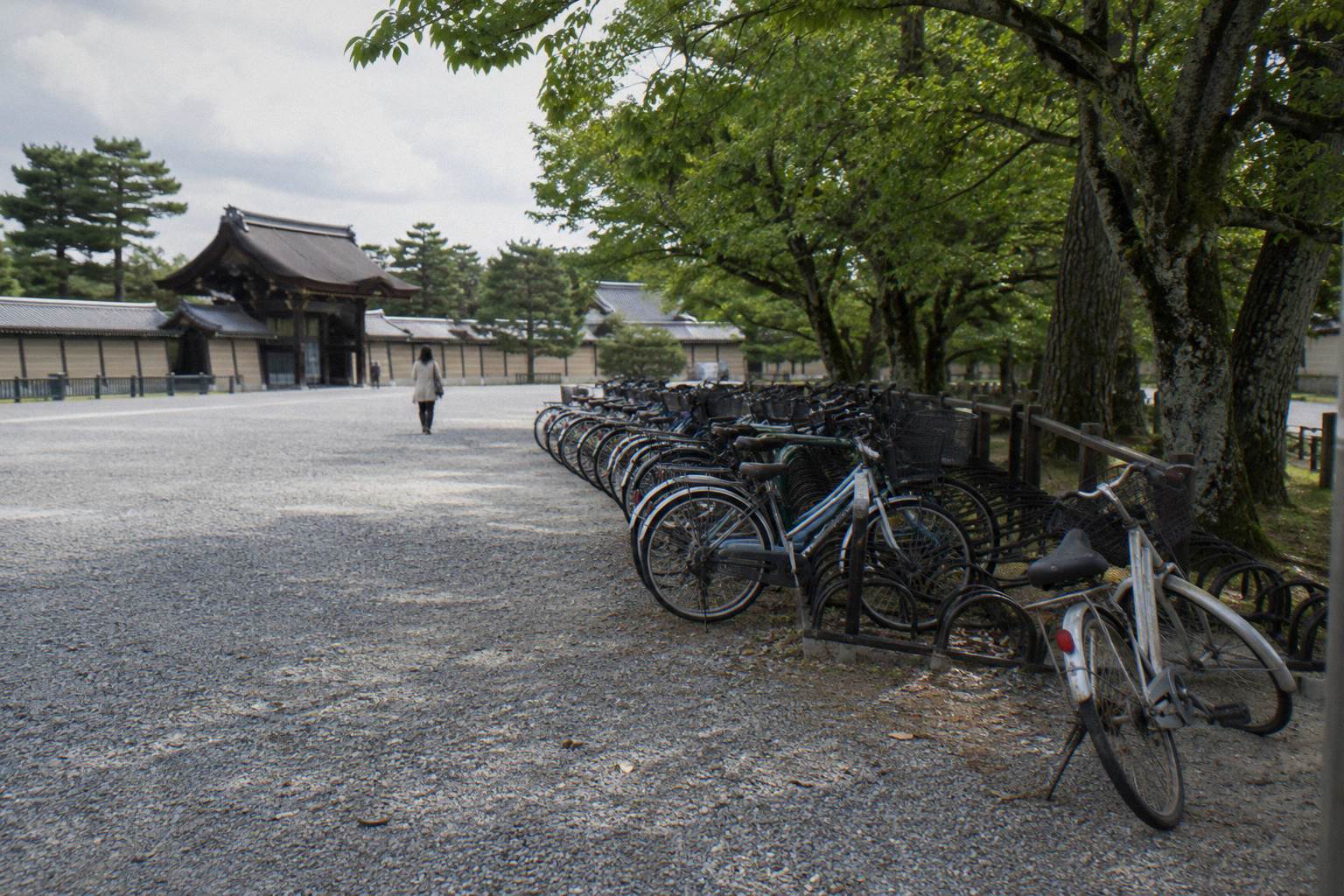
The wider parking picture, including the depot details and how removal works street by street, has its own treatment in the guide to where to leave bikes in Kyoto. For the guided-versus-solo decision, the summary is short: parking is a solved problem on a guided ride and a live problem on a self-guided one, and the failure mode costs 3,500 yen plus a chunk of your day.
What Do Guided Rides Include That A Solo Rider Arranges Alone?
Across the rides compared here, guided products bundle the bicycle, helmet, guide and often water, fees or lunch: the Backstreets ride includes an e-bike, helmets, water and all fees and taxes; the UNESCO Zen Temples ride adds lunch, a bike lock, the Kennin-ji fee and photos; the Crowd-Free ride includes a helmet, water and an English or Japanese guide. A solo rider sources each of these separately, from the bicycle itself to the insurance Kyoto Prefecture requires.
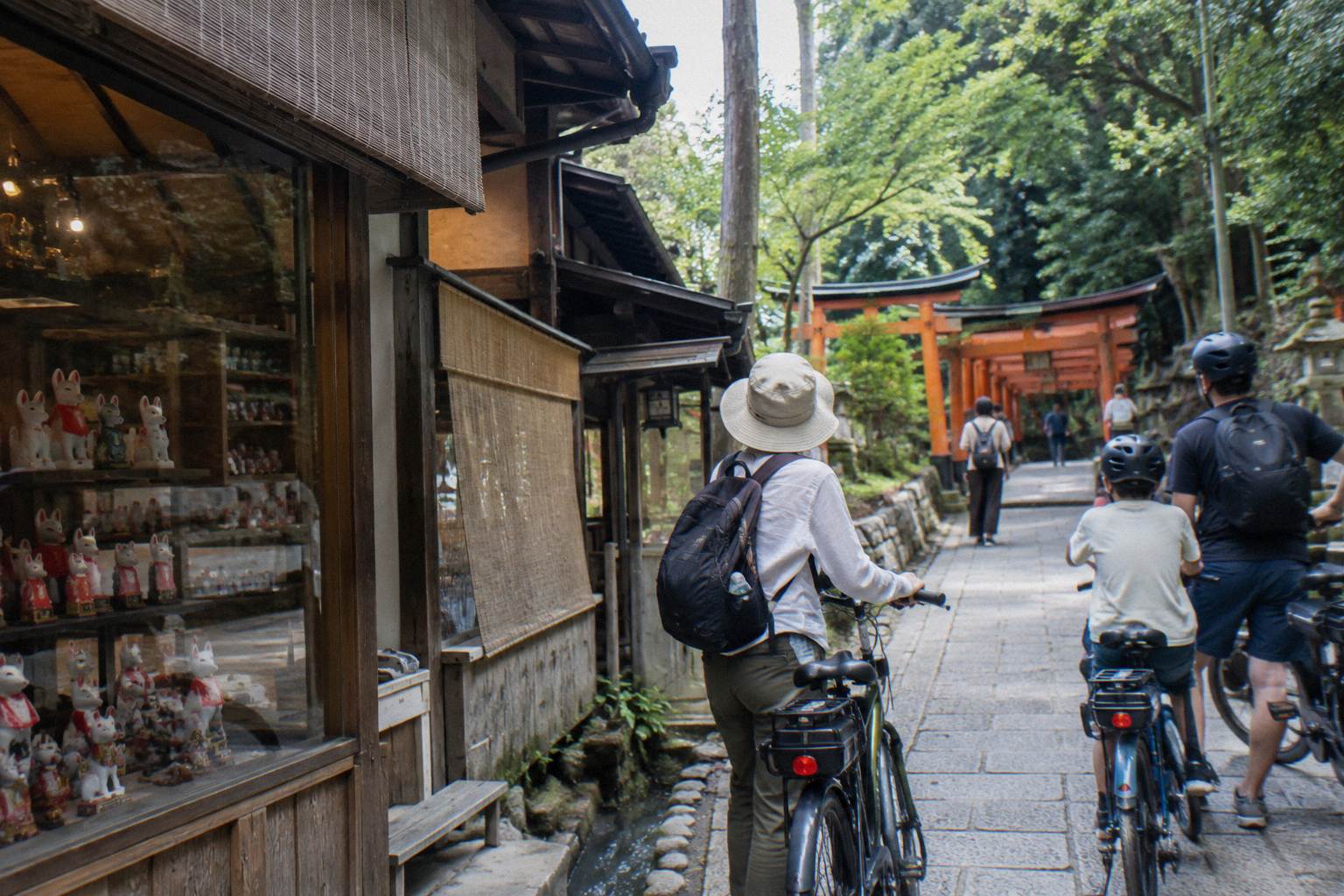
The inclusions are where the two models diverge most concretely. Take the Backstreets ride again: everyone gets an e-bike, helmets, bottled water, and all fees and taxes are covered, at from ¥15,000 per person for 5 hours to 6 hours with a 4.9 rating from 210 reviews and a minimum age of 3. A family with a small child can ride together on that product; a solo arrangement has to solve a child's bicycle and helmet separately, and no rental-shop details can be confirmed here, so ask the operator or check the booking calendar for what you need.
| Ride | From price per person | Duration | Rating | Minimum age | Named inclusions |
|---|---|---|---|---|---|
| Backstreets, 5 To 6 Hours | ¥15,000 | 5 hours to 6 hours | 4.9 from 210 reviews | 3 | E-bike for everyone; bottled water; all fees and taxes; helmets |
| UNESCO Zen Temples, Lunch | ¥15,000 | 4 hours 30 minutes | 5.0 from 145 reviews | 15 | Photos; Kennin-ji entrance fee; certified guide; helmet; local Kyoto lunch; bike lock; rental bike |
| Crowd-Free E-Bike Ride | ¥13,000 | 4 hours | 5.0 from 21 reviews | 12 | Bottled water; helmet; use of bicycle; English or Japanese guide |
The lunch question matters too. The UNESCO Zen Temples ride serves a local Kyoto lunch at a Japanese house, with vegan and vegetarian available but fish stock used, and names additional drinks and food as excluded. The Crowd-Free E-Bike Ride asks that allergies and dietary requirements be raised ahead of booking, and its operator notes vegetarians can usually be catered for. A solo rider simply buys lunch wherever the day lands, which is freedom of a kind, but it is one more decision in a day already full of them.
There is also the cancellation layer. Every ride compared here offers free cancellation up to 24 hours before start, which softens the commitment a solo rider never has: you can hold a guided place and release it a day out if the forecast turns. The full price-and-inclusion spread across guided products is compared in the guided ride prices comparison, which pairs with this article's trade-off view.
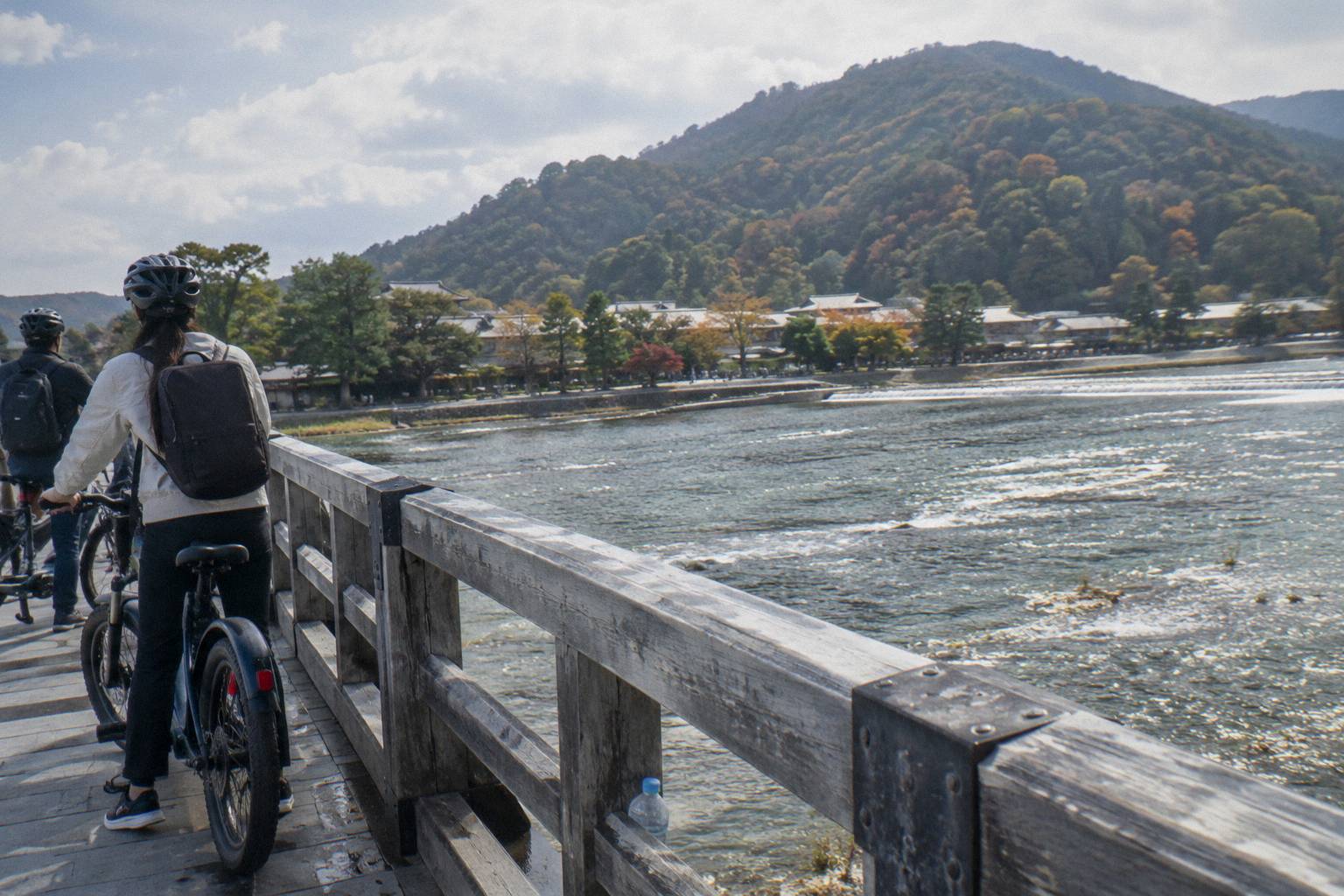
Seasonality touches both models but bites the solo rider harder. The Japan Meteorological Agency's Kyoto normals put July as the wettest month at 223.6 mm and August as the hottest with a mean of 28.5 °C and a daily high of 33.7, and the Japan Meteorological Agency Kyoto monthly normals carry the full table. A guided ride in those months comes with an operator's judgment on the day; a solo rider makes that call alone, with no operator policy standing behind it.
What Trips People Up Before You Book
The most common slips are assuming temple fees are covered when the product excludes them, missing the 1 April 2026 doubling of Ginkaku-ji's adult ticket to 1,000 yen, forgetting that liability insurance is required in Kyoto Prefecture even on a solo day, and leaning a rental bike somewhere a removal zone applies, which costs 3,500 yen and a trip to a depot. Reading inclusions and exclusions before booking prevents most of these.
Inclusion reading is the first fix. Products that look similar on the surface split on the details: one full-day ride includes a light lunch and admission fees, another full-day ride names lunch as excluded, and one e-bike product names insurance as excluded while another includes liability insurance. The product cards name exactly what is included and what is not, and those two lines are the most valuable seconds of reading before any booking.
The second slip is timing. Tenryu-ji stops admitting at 16:50, half an hour before it closes at 17:00, and Ginkaku-ji's winter hours shorten to 16:30 from December. Solo riders who build a route around closing times rather than opening times protect the day. The seasonal dates deserve the same care: the observatory's normal for cherry full bloom is 4 April, though 2026 peaked on 30 March, and maple colouring normally lands on 5 December. Bloom and leaf timing are the observatory's normals, not promises; the Japan Meteorological Agency Kyoto observations track both.
The third slip is assuming the rules relax on holiday. The blue-ticket fines apply to every rider aged 16 and over, and holding a phone for a map check while moving carries the 12,000 yen fine, the steepest in the table. Stop to check the phone. Helmets are an effort duty at every age with no fine attached, but the guided products here include them anyway, which tells you where operators land on the question.
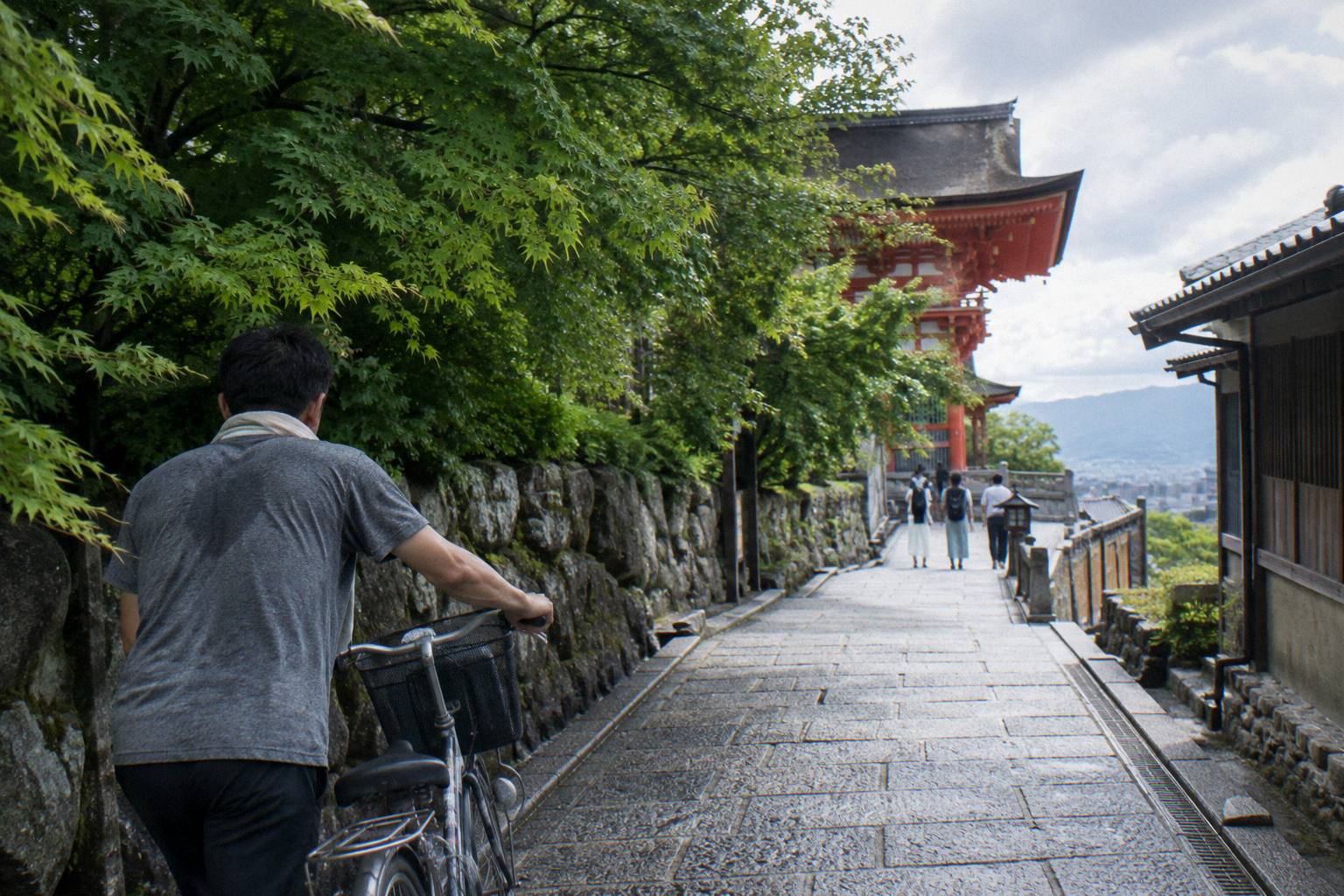
The last slip is price arithmetic. Guided prices vary by date and group and the booking page shows the price for the date, so a from-price is a floor, not a quote. Compare the guided from-price against what a solo day really costs you: the bicycle you cannot price from anything verified here, plus gates, plus the insurance requirement, plus the value of the hours you would spend planning. For many riders the guided price wins that comparison; for others the freedom does. If a guided day looks right for your dates, the site's hub at Kyoto Bike Tours keeps every product with its own card.
The balance of the decision, then, is a schedule question and a temperament question. Riders who want the day to run itself book the guide; riders who want to change the plan at every corner ride alone and accept the paperwork. Either way, the fines, the fees and the hours above are the same for everyone on two wheels in Kyoto.
Common Questions About Riding With Or Without A Guide
Is A Self-Guided Bike Day In Kyoto Realistic For A First-Time Visitor?
Yes, with planning. The street grid is regular and Fushimi Inari charges nothing, but you carry the temple hours, the parking rules and the liability insurance requirement yourself. Many first-time visitors book one guided ride for the logistically heavy day and ride self-guided on simpler days.
Do The Fixed Fines Apply To Tourists On Rental Bikes?
The blue-ticket system introduced on 1 April 2026 applies to riders aged 16 and over. Fines run 3,000 to 12,000 yen, with holding a phone at the top of the table. Rental or guided, the rules are the same on the road.
What Does A Guided Ride In Kyoto Include?
It depends on the product. The rides compared here run from ¥11,000 to ¥26,000 per person for 3 to 8 hours and typically include the bicycle, helmet and guide; some add lunch, entrance fees, parking fees or liability insurance, while others name those as excluded. Read the inclusions line before booking.
Do I Need Bicycle Insurance To Ride In Kyoto?
Kyoto Prefecture requires bicycle liability insurance under its bicycle ordinance. A personal-liability rider on home, car or accident cover counts. Some guided products include liability insurance and some name it as excluded, so check the booking calendar or ask the operator if you rely on the tour's coverage.
What Happens If My Bike Is Removed For Bad Parking?
It is stored at a city depot, some open daily from noon to 9 pm, and held for 4 weeks from the day after removal. Reclaiming it costs 3,500 yen per bicycle.
Can I Cancel A Guided Ride If My Plans Change?
Every ride compared in this article offers free cancellation up to 24 hours before the start time, so you can hold a place and release it a day out if the weather or the itinerary turns.