Kyoto Cycling Rules For Visitors: Left Side, Signals, Lights And Fines
Kyoto's cycling rules changed twice in recent years, and the fines are now fixed sums in yen. Here is the full reference a visitor needs before a rental or a guided ride.
Short answer
Ride on the left side of the roadway, treat the sidewalk as an exception, and know that since 1 April 2026 riders aged 16 and over pay fixed fines of 3,000 to 12,000 yen for minor violations. A phone held while riding costs 12,000 yen, ignoring a signal 6,000. Helmets are an effort duty with no fine, and Kyoto Prefecture requires bicycle liability insurance.
Visitors who would rather let a guide carry the rulebook can start with the Silver Pavilion and Philosopher's Path e-bike ride, where helmets and route decisions are part of the package. For everyone renting solo or joining a group, the reference below sets out what Japanese law and Kyoto's local ordinances actually ask of a cyclist.
Quick Facts:
| Fact | Detail |
|---|---|
| Blue ticket system | Fixed fines of 3,000 to 12,000 yen for minor violations by riders aged 16 and over, from 1 April 2026 |
| Largest fixed fine | 12,000 yen for holding or watching a phone while riding |
| Phone rule since 1 November 2024 | Holding a phone to talk or watch the screen can mean up to 6 months in prison or a 100,000 yen fine |
| Helmet | An effort duty for every age since 1 April 2023, with no fine attached |
| Insurance | Bicycle liability insurance is required in Kyoto Prefecture under its bicycle ordinance |
| Removed bicycles | 3,500 yen to reclaim, held for 4 weeks from the day after removal |
| E-bike status | A pedal-assist e-bike meeting the legal standard is a bicycle; a throttled or non-standard vehicle is not |
Where Should You Ride, Roadway Or Sidewalk?
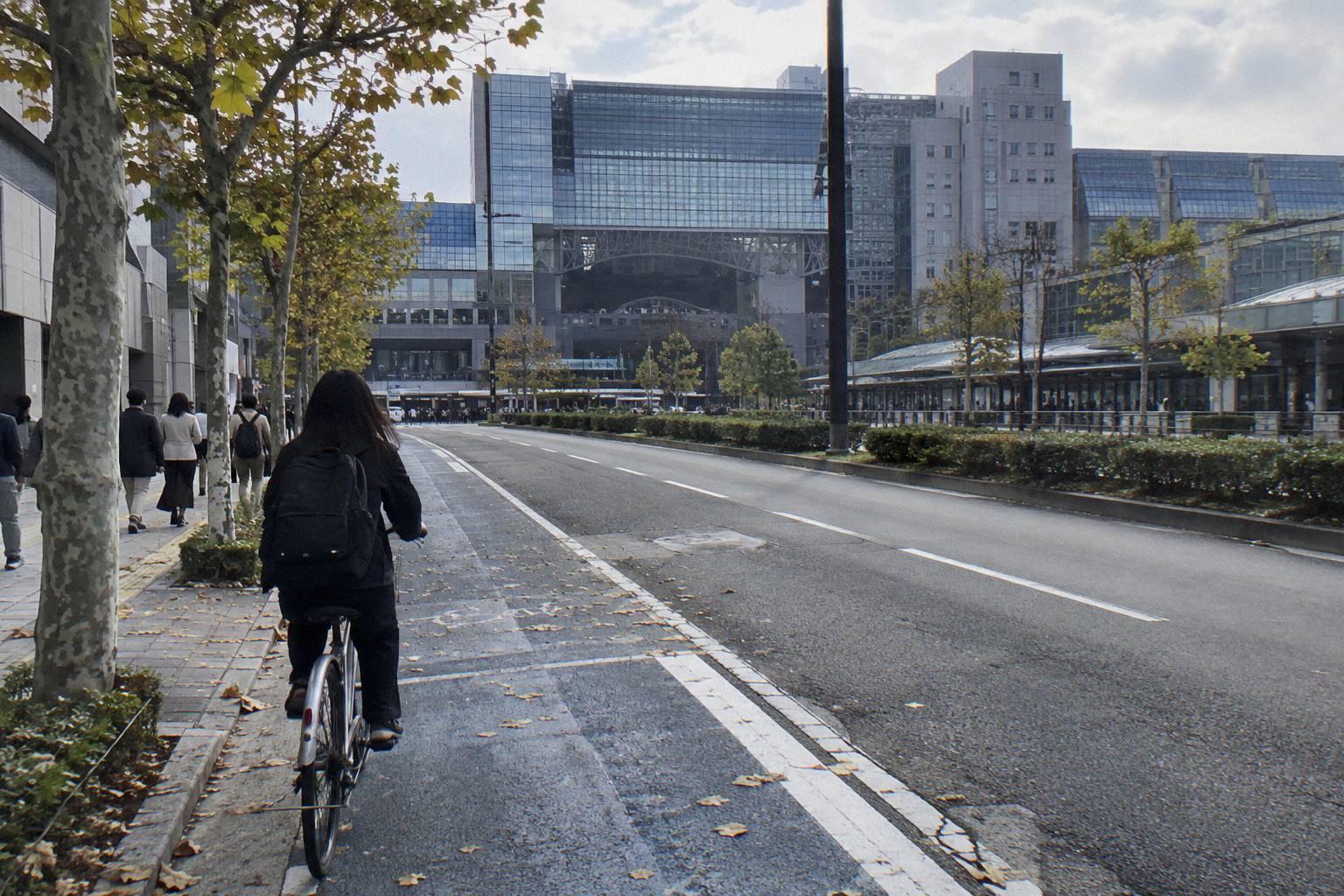
The roadway is the principle and the sidewalk is the exception: ride on the left side of the road, and use a sidewalk only where signs or markings permit it, if you are under 13, aged 70 or over, have a disability, or when road conditions leave no safe alternative. On a shared sidewalk, pedestrians come first at every moment. That is the framework set out in the National Police Agency's five rules for bicycle safety, and it is the single rule that most affects a visitor's first hour on a Kyoto street.
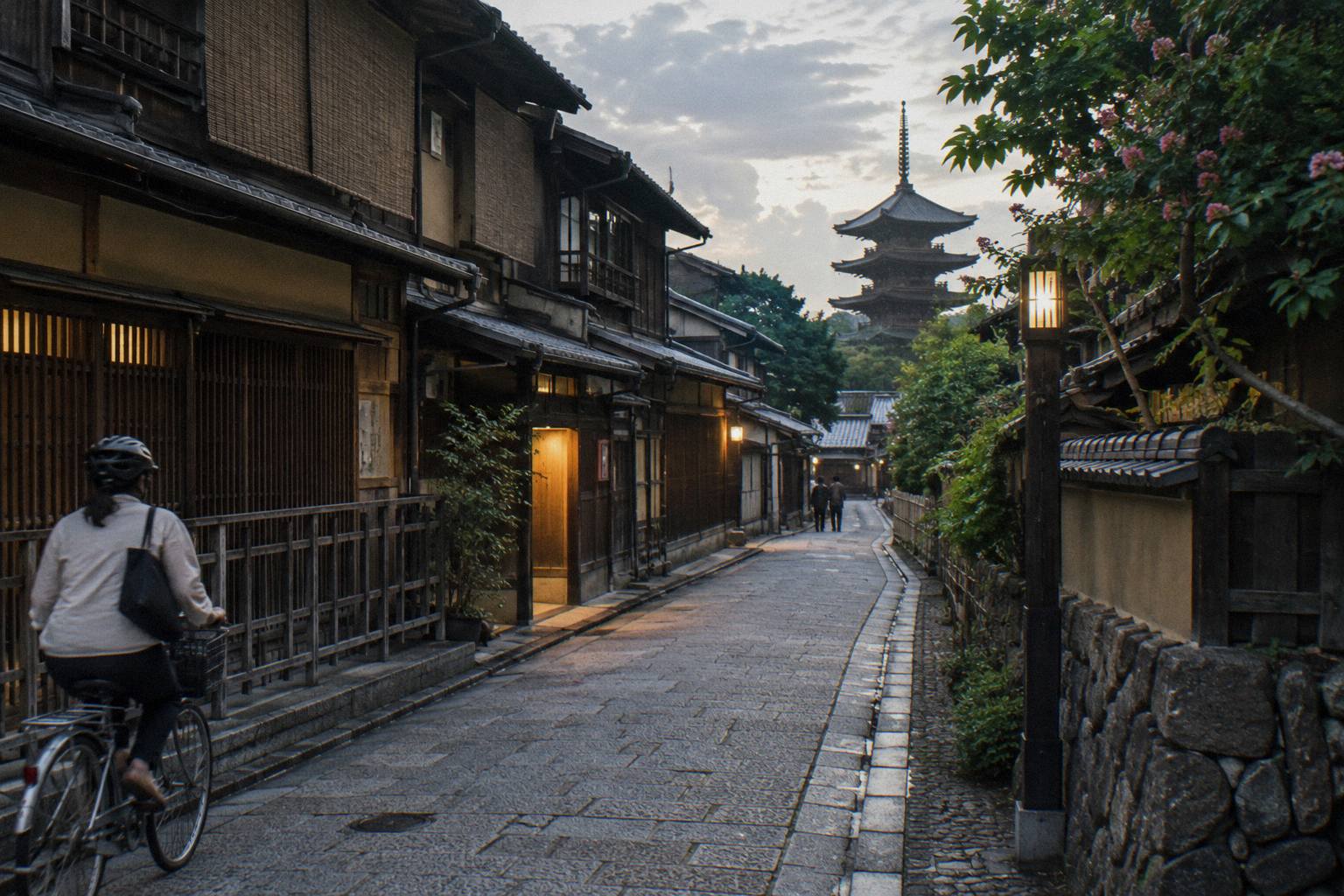
The five rules, as summarised in the National Police Agency bicycle safety leaflet, are: the roadway is the principle, ride on the left, the sidewalk is the exception with pedestrians first, follow the safety rules at intersections, and use lights and reflective gear after dark. For a visitor the practical consequence is that riding down the middle of a narrow street, or hugging the right-hand curb against traffic, is not a style choice but a violation that can attract the wrong-side fine of 6,000 yen.
Kyoto complicates things because so many of its streets are narrow, mixed-use lanes where bicycles, delivery vans and pedestrians share the same surface. That does not change the rule. A rider travelling on the left, at a modest pace and clear of the curb, is doing what the law expects; a rider weaving to whichever side looks emptier is not. If you want a longer discussion of how the sidewalk exception works in practice, the sidewalk riding question for cyclists in Japan is covered in its own piece.
Two further rules sit inside the fine table below but deserve a mention here because they surprise visitors: riding two abreast and carrying a second rider on a bicycle not built for it each carry a fixed fine of 3,000 yen. Group rides stay in single file for exactly this reason. A guided ride makes this invisible to you: the guide sets the line and pace, and you follow the wheel in front, on the correct side, without reading a single sign. If that sounds preferable to decoding lane etiquette on arrival, the Beat the Crowds morning e-bike ride from Kyoto Station starts at from ¥14,000 per person for 3 hours 30 minutes with a helmet included.
What Fines Can A Cyclist Get In Kyoto?
Since 1 April 2026, riders aged 16 and over who commit minor violations pay a fixed fine instead of going through criminal procedure, under the blue ticket system. Fines run from 3,000 to 12,000 yen, and the largest, 12,000 yen, is for holding or watching a phone while riding. The system applies to every rider aged 16 and over. Kyoto City publishes the fixed amounts on its page on cycling rules, which is the reference the table below follows.
- Budget Fare, Hidden Alleys¥11,000
- Crowd-Free E-Bike Ride¥13,000
- Higashiyama Heritage Ride¥13,500
- Fushimi Inari, Sento Stop¥13,500
- Morning Ride From Station¥14,000
- Silver Pavilion, Philosopher's Path¥14,500
- Backstreets, 5 To 6 Hours¥15,000
- Palace, Castle And Temples¥16,500
The change matters to visitors because it replaced a slower process. Before the blue ticket, a minor cycling violation meant a referral to prosecutors; now an officer can issue an on-the-spot fixed penalty, the way a parking ticket works. The amounts are small in absolute terms but real, and they apply to conduct that many visitors would not think of as an offence, such as failing to come to a full stop at a stop sign.
| Violation | Fixed fine |
|---|---|
| Holding or watching a phone while riding | 12,000 yen |
| Ignoring a traffic signal | 6,000 yen |
| Riding on the wrong (right) side of the road | 6,000 yen |
| Failing to stop at a stop sign | 5,000 yen |
| Riding with an umbrella | 5,000 yen |
| Riding two abreast or carrying a second rider | 3,000 yen |
A guided ride absorbs most of this table. A guide calls the stops, keeps the group single file, and chooses streets where the left-side rule is easy to honour. Three rides suit visitors who would rather not think about fines at all: each runs with a helmet included and free cancellation up to 24 hours before start.
The umbrella row is the one that catches visitors on a wet day. Holding an umbrella while riding carries a fixed fine of 5,000 yen, which is why riders in rain gear are the norm and riders under umbrellas are not. July is the wettest month in Kyoto with 223.6 mm of rain against 199.7 mm in June, according to the Japan Meteorological Agency Kyoto monthly normals, so the umbrella question comes up in summer more than visitors expect. Rainwear, not an umbrella, is the lawful answer.
For a fuller write-up of how the blue ticket system came into force, the new bicycle rules in Japan explained covers that question in its own article. What matters for planning is simpler: the fines exist, they are issued to riders aged 16 and over, and every one of them is avoidable by riding on the left, stopping at stop signs, and keeping the phone in a pocket or a handlebar mount you do not touch while moving.
Do You Need A Helmet And Insurance?
A helmet is an effort duty for every cyclist of every age since 1 April 2023, which means the law asks you to wear one but attaches no fine to going without. Separately, Kyoto Prefecture requires bicycle liability insurance under its bicycle ordinance, and an individual-liability rider on home, car, fire or accident cover counts. Both points are stated on official prefectural pages, and both are common questions from visitors before a ride.
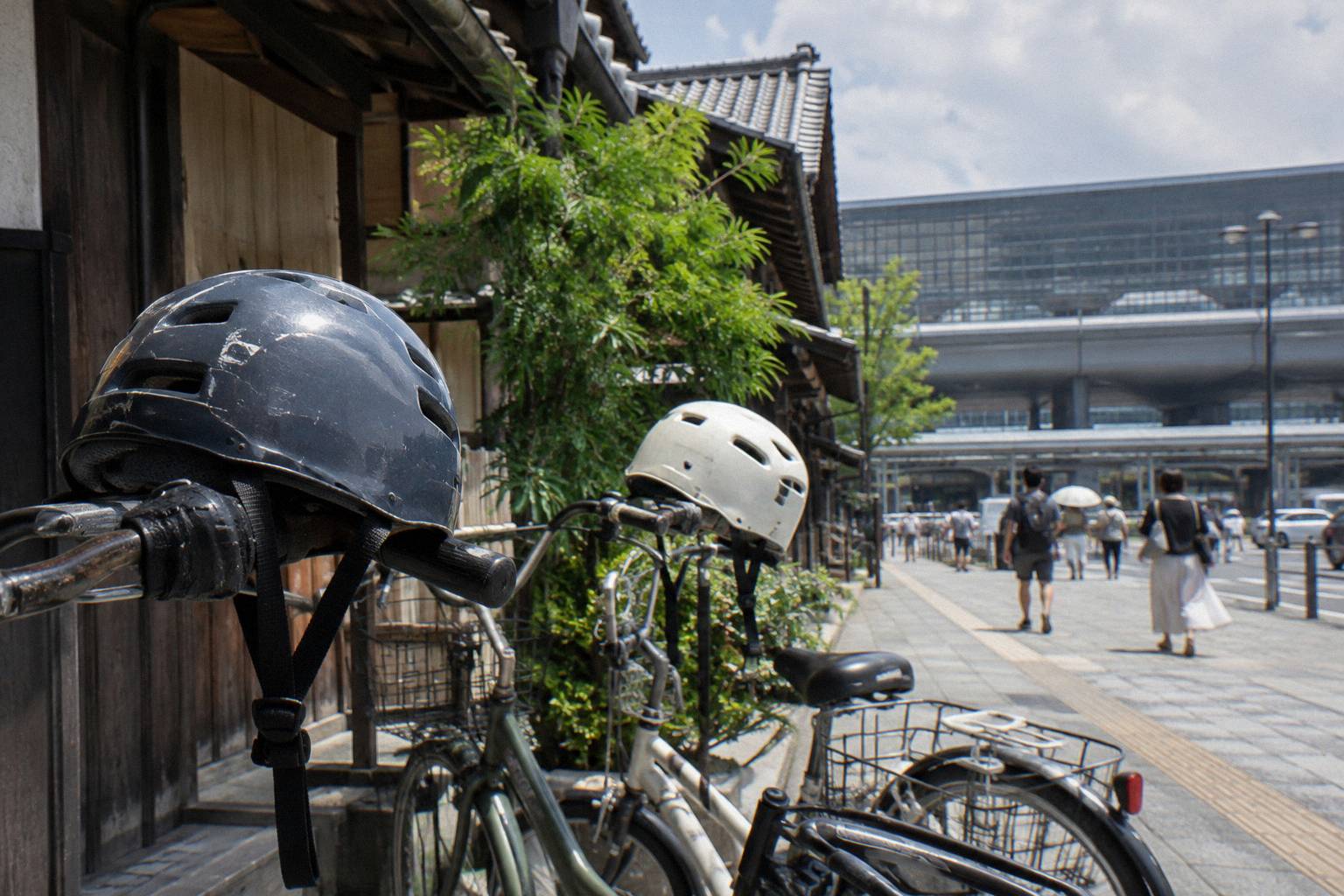
The helmet position is set out on the Kyoto Prefecture page on the helmet effort duty. The phrase effort duty, or doryoku gimu in Japanese, is a legal category rather than a suggestion: it places a moral and civic expectation on the rider without creating a penalty. In practice, every guided ride on this site includes a helmet, so the question answers itself for anyone joining a tour. Visitors renting solo should ask the rental operator what is provided, since a helmet is the single piece of kit that changes a fall from an inconvenience into something worse. The helmet question for cyclists in Japan has its own article for anyone who wants the duty explained in full.
Insurance is the point most visitors have never heard of. Under the Kyoto Prefecture bicycle ordinance, riders must carry bicycle liability insurance; the prefecture's guidance, on its page on bicycle liability insurance, accepts accident, fire and car policies that include an individual-liability rider, or a dedicated bicycle policy. For a short-stay visitor the practical route is to check whether a travel insurance policy includes personal liability for cycling, or to ride with a guided product that carries cover. Some roster rides name insurance in their inclusions, so read the inclusions before booking rather than assuming.
If checking helmet boxes and insurance fine print sounds like the wrong way to spend a Kyoto morning, a guided ride takes both items off your list. Helmets are included on every ride featured here, and you can cancel free up to 24 hours before start if your plans change.
The two items also interact. A rider involved in a collision while uninsured faces the costs personally, and the effort duty on helmets means the law will not fine you for bare-headed riding but will not protect you from the consequences either. Insurance and a helmet are the two cheapest forms of risk management a cyclist in Kyoto has, and neither depends on the weather, the season or the route.
Is An E-Bike A Bicycle Under Japanese Law?
A pedal-assist e-bike that meets the legal standard is a bicycle in Japanese law, which means every rule on this page applies to it unchanged. A vehicle with a throttle, or one outside the assist standard, is treated as a motorised bicycle or a car, not a bicycle, and cannot be ridden under cyclist rules at all. Kyoto City states the distinction plainly on its cycling-rules page, and it is the reason rental e-bikes in Japan are all pedal-assist models.
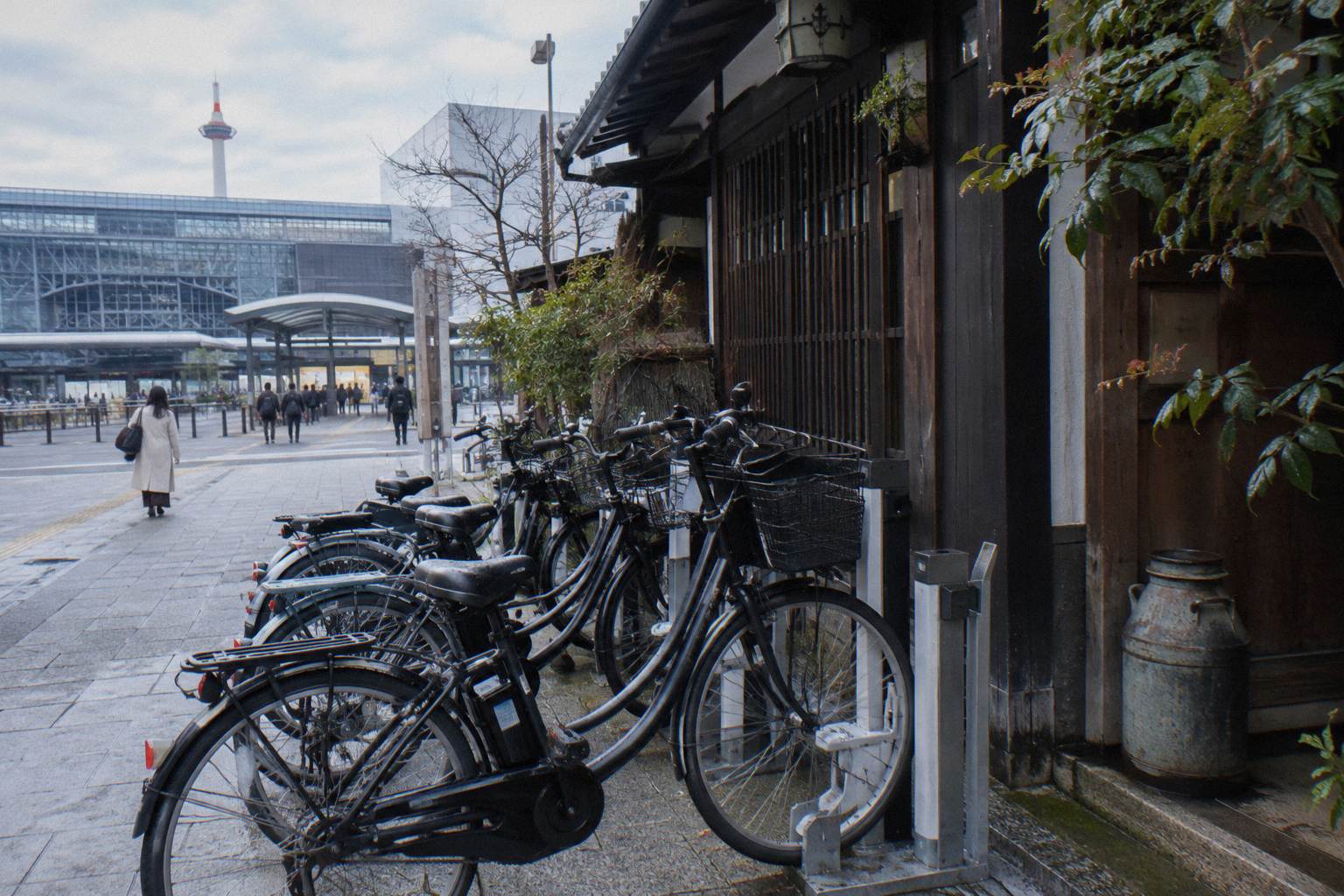
The practical takeaway for visitors is reassuring. The e-bikes used on guided rides in Kyoto are pedal-assist machines built to the national standard, so they occupy exactly the same legal position as a regular bicycle: same left-side rule, same fines, same helmet effort duty. Riders who have used throttled e-bikes elsewhere should leave those habits at home; twist-and-go riding is not what these bikes do, and a throttled vehicle would fall outside the rules a cyclist can use.
The roster reflects this. The Kyoto E-Bike Tour: The Silver Pavilion & Philosopher's Path, run by Kyoto Fun, includes e-bike rental from ¥14,500 per person for 4 hours, rated 5.0 from 322 reviews, with a minimum age of 12. Its sibling product, Kyoto E-Bike Tour of Palace, Castle, Temples and Hidden Gems, specifies a new premium Panasonic electric bicycle per participant from ¥16,500 per person for 6 hours 30 minutes. Both are ordinary bicycles in law, whatever the marketing says.
Because an e-bike is a bicycle, the blue ticket fines apply to e-bike riders aged 16 and over exactly as to anyone else. Holding a phone at 12,000 yen is the most expensive mistake, and the wrong-side fine of 6,000 yen is the most common. Riders sometimes assume electric assist buys leniency; it does not. If you are still deciding whether an e-bike suits you at all, the e-bike versus regular bike decision for Kyoto weighs durations, inclusions and minimum ages rather than any terrain claim.
A guided e-bike ride is the simplest way to ride legally without study: the bike is standard-compliant by construction, the helmet is in the inclusions, and the guide's line through traffic keeps the group lawful. Check availability for your dates, since free cancellation up to 24 hours before start applies.
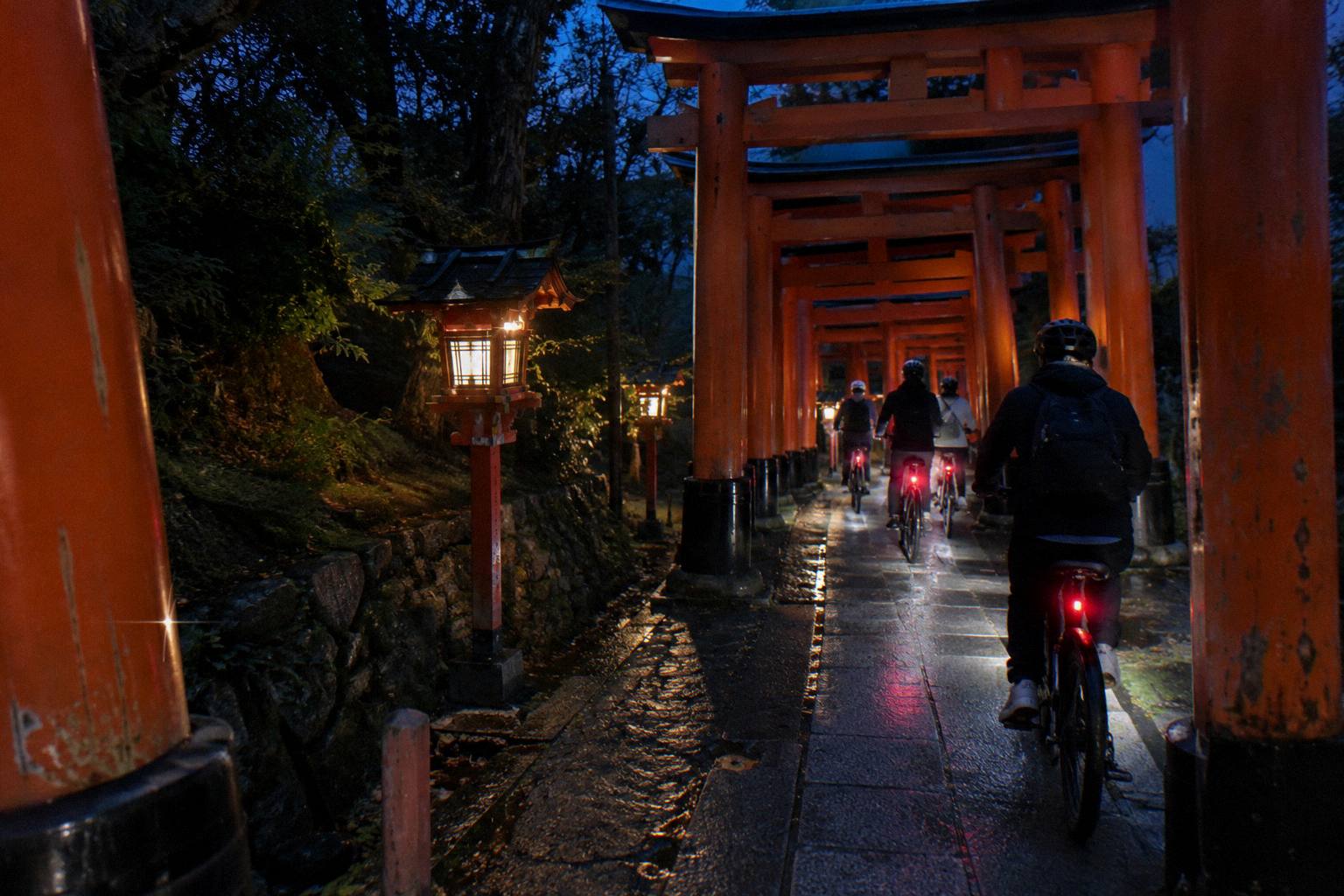
One further legal point closes the section: drunk cycling is banned at any level of drinking, and that includes the evening e-bike format as much as a daytime ride. The evening and night rides in Kyoto are a separate guide, but the alcohol rule travels with the bicycle whatever the hour.
What Are The Serious Cycling Penalties Beyond Fixed Fines?
Three behaviours sit outside the blue ticket system and carry criminal penalties: using a phone while riding, drunk cycling, and lending a bicycle to a drunk rider. Holding a phone to talk or watch the screen since 1 November 2024 can mean up to 6 months in prison or a 100,000 yen fine, and drunk riding at or over the limit can mean up to 3 years or a 500,000 yen fine. These are criminal matters, not fixed tickets, and Kyoto City lists all of them on its cycling-rules page.
The phone penalty deserves its own reading because it stacks. Since 1 November 2024, holding a phone to talk or watch while riding can bring up to 6 months in prison or a 100,000 yen fine; causing danger to others while using a phone raises that to up to 1 year or 300,000 yen. The blue ticket then adds a 12,000 yen fixed fine for the minor version of the same behaviour. In plain terms, the phone belongs in a pocket, and a handlebar mount is fine only if you do not touch the screen while moving.
The alcohol penalties are graduated by role. Riding with alcohol at or over the limit, set at blood 0.3 mg per ml or breath 0.15 mg per litre, can mean up to 3 years in prison or a 500,000 yen fine. Lending a bicycle to a drunk rider carries the same maximum, up to 3 years or 500,000 yen, which catches rental operators and generous friends alike. Riding along as a passenger, or serving alcohol to someone about to ride, can mean up to 2 years or 300,000 yen. The full table of maximum penalties is below.
| Behaviour | Maximum criminal penalty |
|---|---|
| Riding at or over the alcohol limit | Up to 3 years in prison or a 500,000 yen fine |
| Lending a bicycle to a drunk rider | Up to 3 years in prison or a 500,000 yen fine |
| Riding as a passenger of a drunk cyclist | Up to 2 years in prison or a 300,000 yen fine |
| Serving alcohol to a person who will ride | Up to 2 years in prison or a 300,000 yen fine |
| Holding or watching a phone while riding | Up to 6 months in prison or a 100,000 yen fine |
| Using a phone and causing danger to others | Up to 1 year in prison or a 300,000 yen fine |
For visitors the practical line is simple: no phone in the hand, no ride after a drink. Kyoto's food-and-drink culture makes the second rule easy to brush aside after a lunch with sake, and the penalties make it expensive to. A guided ride structures the day so the riding happens first and the eating after, which is one quiet argument for the format.
How Do Guided Rides Handle The Rules For You?
A guided ride moves the rulebook from the visitor to the guide: the guide picks the line on the left side of the road, calls the stops at signals and stop signs, keeps the group single file, and supplies a helmet, so the fixed fines on this page become someone else's job. Every roster ride featured here names a helmet among its inclusions and carries free cancellation up to 24 hours before start. For a first-time visitor, that transfer of responsibility is the main argument for the format.
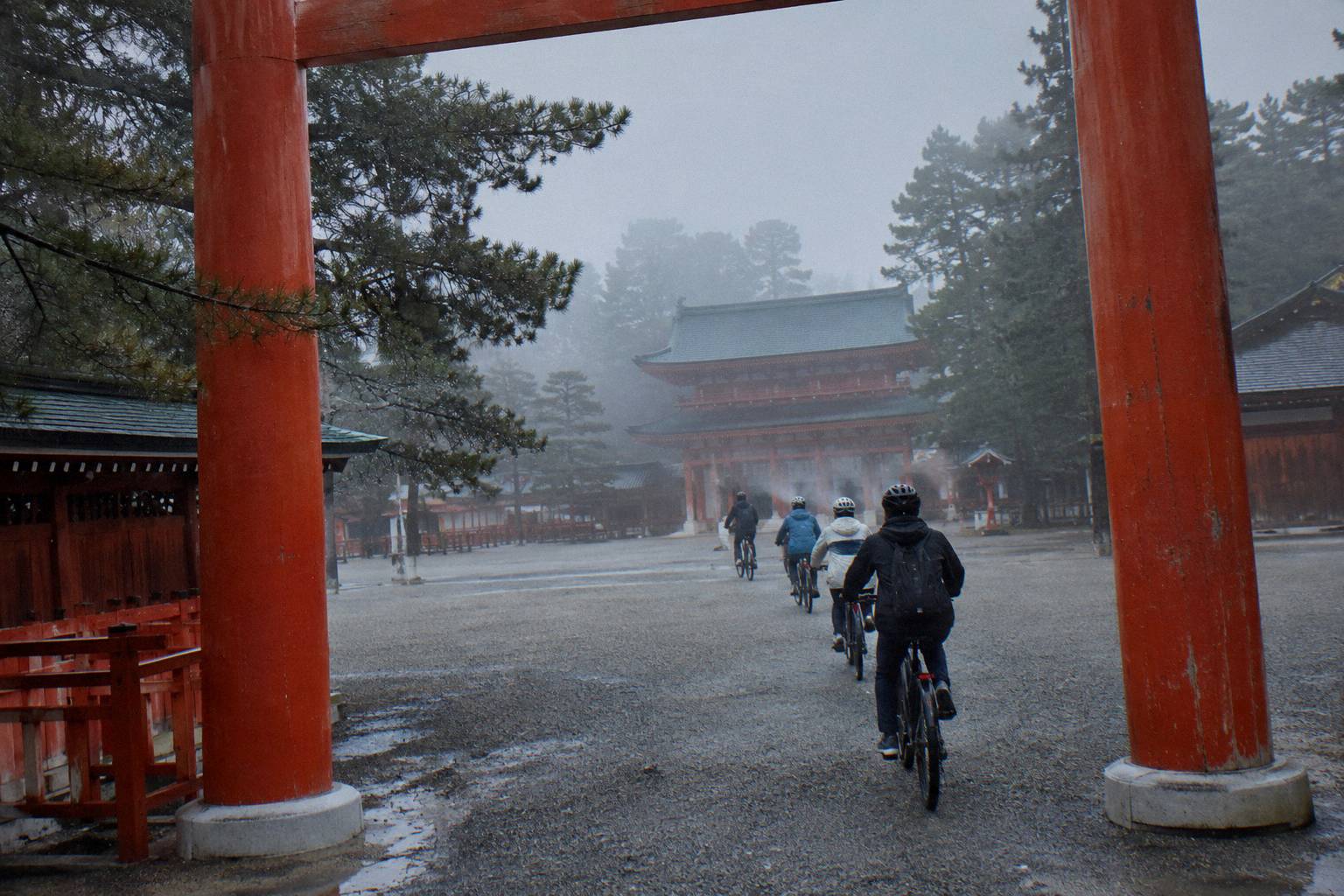
Take the three rides tied to this reference. The Morning Ride From Station, formally Beat the Crowds: Pro-Curated Morning E-Bike Tour, Kyoto Sta, runs 3 hours 30 minutes from ¥14,000 per person with a minimum age of 13, rated 5.0 from 20 reviews, and includes a helmet, a raincoat and liability insurance, which answers the insurance question from the earlier section in one inclusion line. The Gentle Backstreet Ride, formally South Kyoto in a Nutshell: Gentle Backstreet Bike Tour!, runs 3 to 4 hours from ¥12,000 per person with a minimum age of 13, rated 5.0 from 279 reviews, on a Cannondale bicycle with a helmet included. The Silver Pavilion, Philosopher's Path ride runs 4 hours from ¥14,500 per person with a minimum age of 12, rated 5.0 from 322 reviews.
Each of those minimum ages matters against the rule framework. Because the blue ticket applies to every rider aged 16 and over, and because each tour sets its own floor of 12 or 13, families should match the child's age to the product rather than to the law. The trade-off between a private and a small-group format is covered in the private versus small group cycling comparison, which is worth a read before booking for a mixed-age party.
Insurance deserves a second mention here because inclusions vary. The Morning Ride From Station names liability insurance among its inclusions; other rides do not name it, and where a product does not name cover, ask the operator before assuming. The same discipline applies to e-bike upgrades and meal inclusions: each product's inclusion list governs, and nothing on one product transfers to another.
None of this makes solo riding wrong. Kyoto is a workable city for a confident cyclist who rides left and keeps the phone pocketed; the overview of cycling routes across Kyoto is the companion piece for that approach. But a rider who wants the temples without the rulebook will find the guided format pays for itself in avoided anxiety, and the free-cancellation window means a weather change costs nothing.
Where Can You Leave A Bicycle In Kyoto?
An illegally parked bicycle in Kyoto is removed and stored, and reclaiming it costs 3,500 yen per bicycle, with storage depots holding removed bikes for 4 weeks from the day after removal. Bicycle removal strengthening areas cover nearly the whole city, and depots such as Sanjo Senbon open daily from noon to 9 pm. The fee and the hold period are published on the Kyoto City page on removed bicycles.
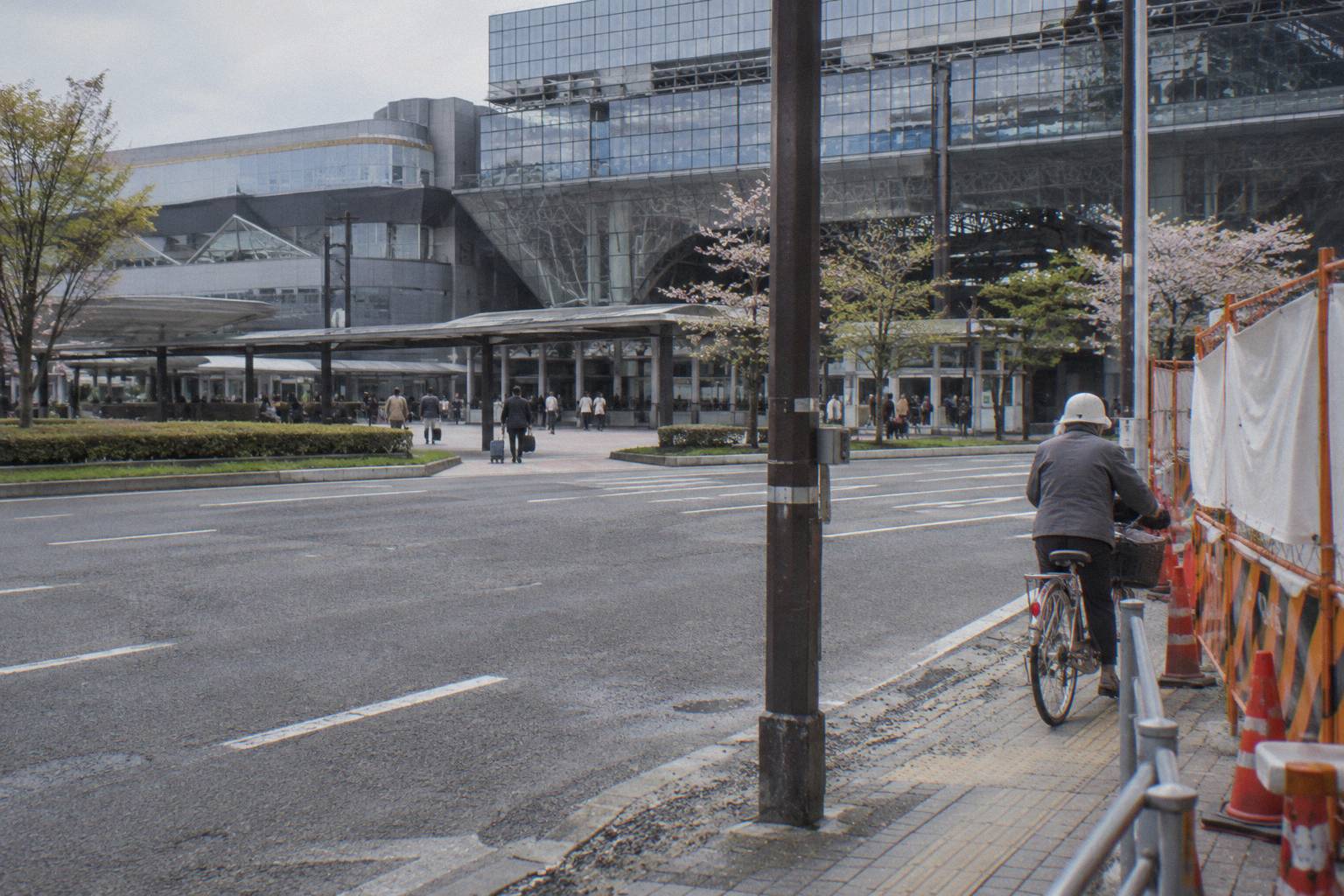
The rule exists because Kyoto's pavements are narrow and its bicycle traffic is heavy; a bike leaned against a temple wall in the wrong block can vanish within the hour. The 3,500 yen fee applies per bicycle, and scooters cost 5,000 to reclaim. Four weeks sounds generous until you have flown home, at which point the bicycle, if rented, becomes a dispute with the rental operator rather than a recoverable asset.
The practical guidance is to use designated bicycle parking, and to ask where that is before setting off, because no area-specific rules for Gion, Kawaramachi, Kyoto Station or Arashiyama can be confirmed here and guesses are how bikes get towed. The guide to bike parking across Kyoto covers the parking question in full for solo riders.
On a guided ride the question mostly disappears. Groups park where the operator arranges, and several roster products name bike parking fees among their inclusions: Kyoto E-Bike Tour of Palace, Castle, Temples and Hidden Gems includes all parking fees, and Kyoto: Evening E-Bike Tour of Fushimi Inari & Tofuku-ji includes bike parking fees as well. That inclusion line is small print worth reading twice, because it is the difference between a carefree stop at a temple and a 3,500 yen retrieval errand.
What Trips People Up Before You Book
The four mistakes that catch visitors are riding on the right side out of habit, keeping the phone in hand at 12,000 yen a time, assuming a helmet is optional because no fine attaches to it, and leaving the bicycle against a wall instead of in designated parking. A fifth, specific to families, is booking a ride whose minimum age is above the child's age, since floors run from 2 to 16 across the products. Each mistake has a one-line fix, and none requires reading a statute.
The right-side habit is the big one for visitors from left-driving countries. Japan drives and cycles on the left, and the 6,000 yen fixed fine for wrong-side riding is issued under a system designed to be quick. If you have never ridden on the left, a guided ride is effectively training with a chaperone: you follow the guide's line, and the habit forms in the first ten minutes rather than after a ticket.
The phone mistake is the most expensive. Twelve thousand yen for holding or watching a screen, against a criminal penalty of up to 6 months or 100,000 yen for the behaviour generally since 1 November 2024, is a heavy price for checking a map. Mount the phone or pocket it, and let a guide handle the route-finding on days you have one booked. On solo days, plan the route before setting off.
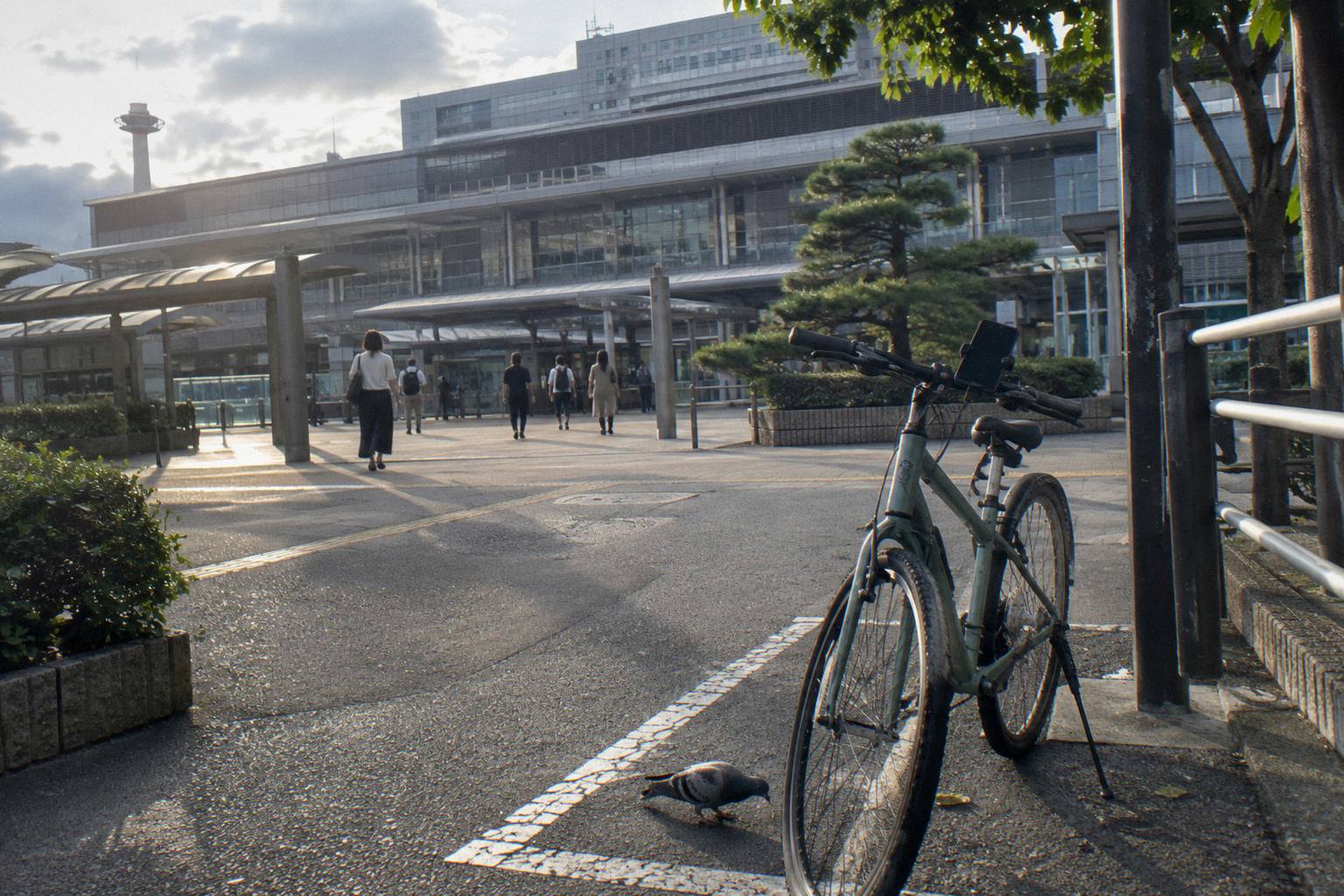
The helmet mistake is subtler because the law is soft: an effort duty since 1 April 2023 with no fine. Riders read "no fine" as "no need". Every ride featured on Kyoto Bike Tours includes a helmet regardless, so the guided format closes that gap for you. Solo renters should ask the operator what is provided, once, before paying.
The age mistake is a booking problem rather than a legal one, but it costs real money at the free-cancellation deadline. Minimum ages across the rides above run from 12 to 13; the full-day products run higher, at 15 and 16. Match the child to the product, not the other way round, and check dates early for school-holiday weeks.
Ride summary for the decision:
| Ride | From price | Duration | Minimum age | Helmet named as included |
|---|---|---|---|---|
| Morning Ride From Station | ¥14,000 per person | 3 hours 30 minutes | 13 | Yes |
| Gentle Backstreet Ride | ¥12,000 per person | 3 to 4 hours | 13 | Yes |
| Silver Pavilion, Philosopher's Path | ¥14,500 per person | 4 hours | 12 | No inclusion named; ask the operator |
| Full-Day E-Bike, Lunch Included | ¥26,000 per person | 7 to 8 hours | 16 | Yes |
Common Questions About Cycling Rules In Kyoto
What Happens If I Ride My Bike On The Wrong Side Of The Road In Kyoto?
Riding on the wrong, meaning right, side of the road carries a fixed fine of 6,000 yen under the blue ticket system that applies to riders aged 16 and over since 1 April 2026. Japan rides on the left, and the fixed fine replaced criminal referral for this kind of minor violation.
Can I Hold My Phone While Cycling In Japan?
No. Holding or watching a phone while riding carries a fixed fine of 12,000 yen, the largest in the blue ticket table, and since 1 November 2024 the behaviour can also bring up to 6 months in prison or a 100,000 yen fine. Keep the phone in a pocket or a mount you do not touch while moving.
Do I Need Insurance To Ride A Bicycle In Kyoto?
Yes. Kyoto Prefecture requires bicycle liability insurance under its bicycle ordinance, and an individual-liability rider on home, car, fire or accident cover counts toward it. Check whether your travel insurance includes personal liability for cycling, or ride with a product that names liability insurance among its inclusions.
Is An E-Bike Treated As A Bicycle In Japan?
A pedal-assist e-bike that meets the legal standard is a bicycle, so every cyclist rule applies to it. A vehicle with a throttle or outside the assist standard is a motorised bicycle or a car in law. The e-bikes on guided rides in Kyoto are standard-compliant pedal-assist machines.
What Happens To A Bicycle Parked Illegally In Kyoto?
It is removed and stored, and reclaiming it costs 3,500 yen per bicycle. Removed bicycles are held for 4 weeks from the day after removal, and storage depots such as Sanjo Senbon open daily from noon to 9 pm.
Do Children Have To Follow The Cycling Fines In Kyoto?
The blue ticket system applies to every rider aged 16 and over, so younger riders are outside the fixed-fine framework, though the underlying road rules still apply to them. Guided rides set their own minimum ages, from 12 upward on the rides above, so check the age floor before booking for a family.