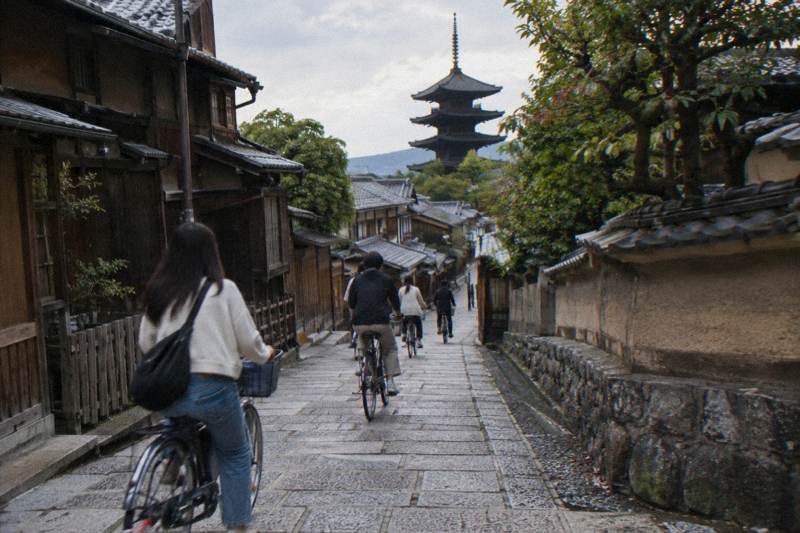
Can You Ride A Bike On The Sidewalk In Japan?
Japan's national cycling rules make the roadway the default and the sidewalk an exception. Who may ride on the sidewalk, what the fines are, and how guided rides in Kyoto handle the rule.
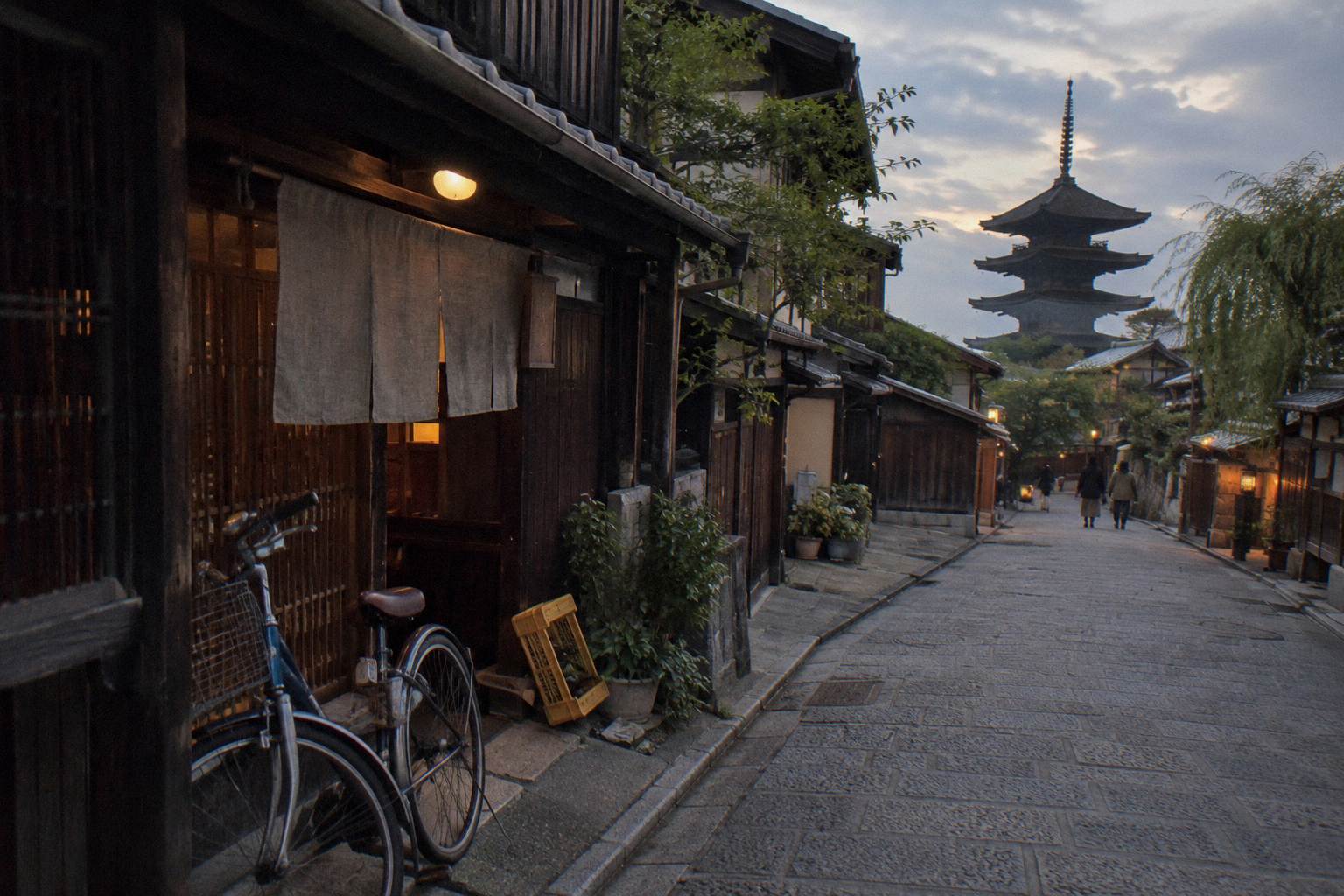
The fastest way to sidestep the sidewalk question entirely is to join a guided ride, and the gentle backstreet ride through south Kyoto is the featured option for exactly that reason. Before choosing, it helps to understand what the law actually says about where your wheels belong.
| Fact | Detail |
|---|---|
| Default riding position | The roadway is the principle; ride on the left |
| Sidewalk status | The exception, and pedestrians come first |
| Who may use the sidewalk | Riders where signs or markings permit, children under 13, people aged 70 and over, people with disabilities, or when road conditions leave no safe alternative |
| Fixed fines | From 1 April 2026, riders aged 16 and over pay 3,000 to 12,000 yen for minor violations instead of criminal procedure |
| Helmet | An effort duty for every age since 1 April 2023, with no fine |
| Insurance | Kyoto Prefecture requires bicycle liability insurance |
As a rule, no: the roadway is the principle and the sidewalk is the exception, with pedestrians first whenever the exception applies. Japan's National Police Agency frames this in its Five Rules for safe cycling. Sidewalk riding is permitted only where signs or markings say so, for children under 13, for people aged 70 and over, for people with disabilities, or when road conditions leave no safe alternative. Anywhere else, the bicycle belongs on the left side of the road.
The wording matters more than it first appears. The rule does not describe the sidewalk as a second lane that bicycles share with walkers at will. It describes a default position, the roadway, plus a short and specific list of situations where a rider may leave that position. If none of the listed situations applies and there is no sign or marking permitting sidewalk riding, the correct place for the bike is the road, on the left.
The National Police Agency lays this out in the National Police Agency bicycle safety leaflet, which sets out the Five Rules: the roadway is the principle, ride on the left, the sidewalk is the exception with pedestrians first. The remaining rules cover intersections and safe stopping. Together they form the national baseline that every prefecture, Kyoto included, works within.
For a visitor, the practical reading is simple. A typical healthy adult on a rental bicycle has no automatic right to the pavement. Where you see a blue round sign showing a bicycle above a pedestrian, or a painted line dividing the sidewalk into walking and cycling strips, the exception applies and you may ride, slowly, giving way to anyone on foot. Where you do not, you stay on the road.
If you would rather not make these calls street by street in an unfamiliar city, a guided ride solves it. The South Kyoto in a Nutshell: Gentle Backstreet Bike Tour, run by Cycle Kyoto, from ¥12,000 per person for 3 hours to 4 hours, puts a guide at the front who makes every lane and sidewalk decision for the group. It carries a 5 rating from 279 reviews and sets a minimum age of 13.
Where The Five Rules Place Your Wheels?
The Five Rules put the bicycle on the roadway, on the left, and treat the sidewalk as an exception only. Rule one states the principle, rule two fixes the left side, rule three allows sidewalk riding in defined cases with pedestrians first, and the last two cover intersections and safe stops. Together they replace guesswork with a hierarchy: road first, pavement only when permitted or necessary.
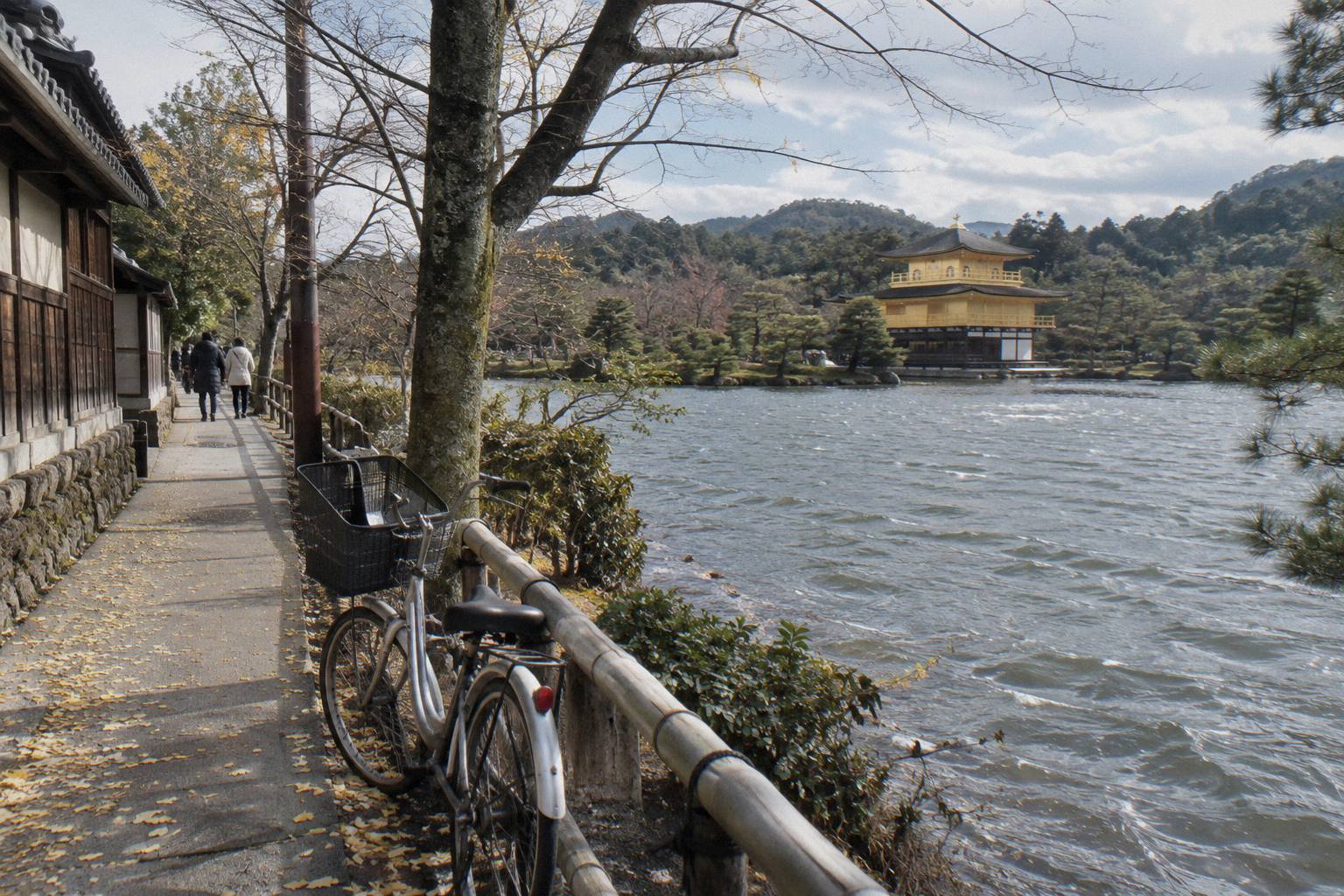
The structure of the rules is worth a moment because it explains how enforcement works. A principle plus exceptions is a common shape in Japanese traffic law, and it means the burden sits with the rider who leaves the roadway. If you are on the sidewalk, you should be able to point to a reason on the list: a sign, a marking, your age, a disability, or road conditions that genuinely left no safe alternative.
Kyoto City summarises the same framework on the Kyoto City page on cycling rules, alongside the fines and penalties discussed further down this article. That page is the single most useful reference for a rider in the city, because it joins the where-to-ride rules to the what-it-costs rules in one place.
One thing the rules do not do is turn every meter of Kyoto pavement into a judgment call a visitor must solve alone. Marked sidewalk sections exist, and a local guide reads them without thinking. On a guided ride the decision is made at the front of the group, which is one quiet reason many first-time visitors book one; the guide to guided versus self-guided cycling in Kyoto weighs that trade-off in full.
Riding with a guide is also the simplest way to internalise the Five Rules for the rest of your trip. After three or four hours watching where a local places the bike at intersections, on narrow streets and beside pedestrians, most riders find they can apply the same hierarchy on their own. See dates on the rides below if that appeals.
Who Is Actually Allowed On The Sidewalk?
Four categories of rider may use the sidewalk without a sign or marking: children under 13, people aged 70 and over, people with disabilities, and any rider facing road conditions that leave no safe alternative. Everyone else may ride on the sidewalk only where signs or painted markings permit it, and even then pedestrians come first at all times.
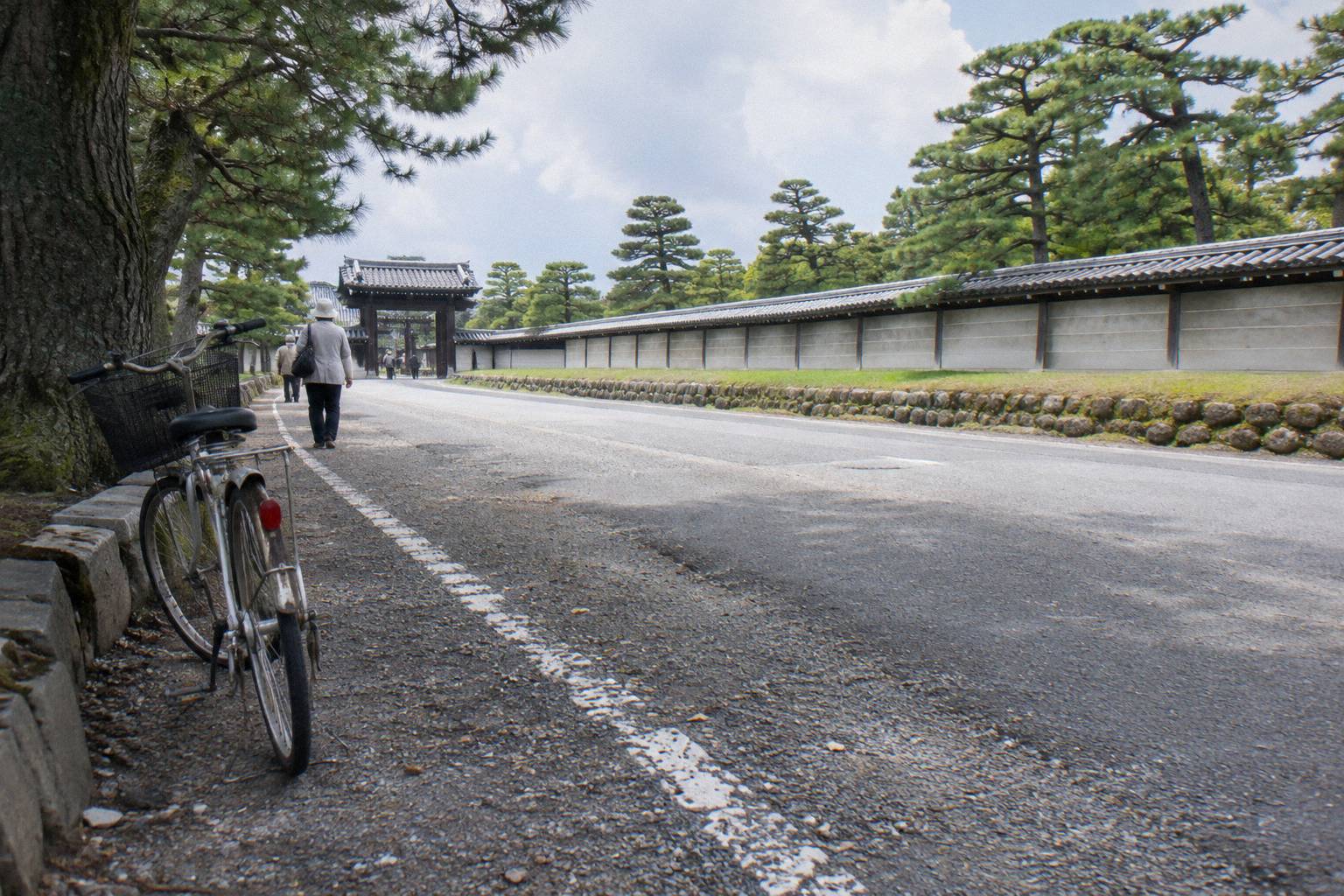
The age thresholds are the part families should note. A child of 12 may legally ride on the pavement; a child of 13 may not, unless a sign permits it. That line also shows up in the tour world: the Gentle Backstreet Ride sets its minimum age at 13, and the Morning Ride From Station, formally the Beat the Crowds: Pro-Curated Morning E-Bike Tour, Kyoto Sta, also starts at 13. A younger child belongs, legally, on the sidewalk or as a passenger where equipment allows, not on the roadway.
The fourth category is the flexible one. "No safe alternative" covers situations such as roadworks that have closed the left edge, parked vehicles that leave no rideable strip, or road surfaces that a reasonable rider could not safely use. It is a necessity test, not a convenience test: a busy road you would rather avoid does not qualify, while a road you physically cannot ride does.
The disability provision exists so that no rider is forced into traffic they cannot safely handle. Together with the age bands, it reflects the same principle as the rest of the Five Rules: the sidewalk exists as a refuge for people who need it, not as a fast lane for people who prefer it.
For adult riders who simply want calmer streets, the answer is not the pavement but route choice. Kyoto's backstreets carry far less traffic than its main arteries, and several guided rides are built around exactly that. The Kyoto: E-Bike Tour: Highlights, Backstreets & Local Secrets, run by SunnyCycleTour, from ¥11,000 per person for 4 hours, is named for this approach, with a minimum age of 2 and a 5 rating from 148 reviews.
| Rider category | May ride the sidewalk? |
|---|---|
| Children under 13 | Yes, one of the named categories |
| Riders aged 70 and over | Yes, one of the named categories |
| People with disabilities | Yes, one of the named categories |
| Any rider facing road conditions with no safe alternative | Yes, as a necessity test |
| Adult riders where signs or markings permit | Yes, with pedestrians first |
| Adult riders elsewhere | No; the roadway on the left is the default |
What Does A Sidewalk Mistake Cost?
Since 1 April 2026, riders aged 16 and over who commit minor violations pay a fixed fine instead of going through criminal procedure. Fines run from 3,000 to 12,000 yen. Riding two abreast or carrying a second rider costs 3,000 yen, ignoring a signal or riding on the wrong side of the road costs 6,000, and holding or watching a phone while riding costs 12,000 yen.
The fixed-fine system, known in Japan as the blue ticket, replaced criminal procedure for minor cycling violations across the country on 1 April 2026. Kyoto City lists the amounts on its cycling rules page, and they apply to every rider aged 16 and over. Two categories sit above the fixed fines entirely: phone use since 1 November 2024 can mean up to 6 months in prison or a 100,000 yen fine, and drunk cycling at any level of drinking carries penalties of up to 3 years or 500,000 yen. Everything else covered here is indexed on Kyoto Bike Tours.
| Violation named by Kyoto City | Fixed fine (yen) |
|---|---|
| Phone held or watched while riding | 12,000 |
| Ignoring a signal | 6,000 |
| Riding on the wrong side of the road | 6,000 |
| Failing to stop at a stop sign | 5,000 |
| Riding with an umbrella | 5,000 |
| Carrying a second rider or riding two abreast | 3,000 |
Note where sidewalk riding itself sits: it is not among the amounts Kyoto City names on its page, so no figure for it appears here. The violations listed are the ones with published fines, and they are worth learning because several of them, the wrong side of the road especially, are easy for a visitor from a right-hand-traffic country to commit without noticing.
There is a separate cost to sloppy parking, too. Kyoto City removes bicycles left where they block pavements and stores them; reclaiming one costs 3,500 yen, and stored bikes are held for 4 weeks from the day after removal, as explained on the Kyoto City page on removed bicycles. A rental bike parked on the sidewalk edge for a photo stop can disappear within the hour.
Insurance is the final piece of the financial picture. Kyoto Prefecture requires bicycle liability insurance under its bicycle ordinance; a personal-liability rider on home, car or accident cover counts, per the Kyoto Prefecture page on bicycle liability insurance. Travel insurance that includes cycling liability is the usual answer for visitors.
- Budget Fare, Hidden Alleys¥11,000
- Crowd-Free E-Bike Ride¥13,000
- Higashiyama Heritage Ride¥13,500
- Fushimi Inari, Sento Stop¥13,500
- Morning Ride From Station¥14,000
- Silver Pavilion, Philosopher's Path¥14,500
- Backstreets, 5 To 6 Hours¥15,000
- Palace, Castle And Temples¥16,500
None of this is a reason to avoid riding in Kyoto. The fines are modest, the rules are learnable in ten minutes, and a guided ride removes most of the risk of a misread street entirely. Check availability on any of the rides named here and the road-rule decisions belong to someone who makes them daily.
How Do Guided Rides In Kyoto Handle The Road Rules?
A guided ride puts a local at the front of the group who decides, at every street, whether the bicycles belong on the roadway or on a permitted sidewalk section. Riders follow in single file on the left, stop where the guide stops and park where the guide parks. It is the lowest-effort way to ride legally in a city whose rules may differ from home.
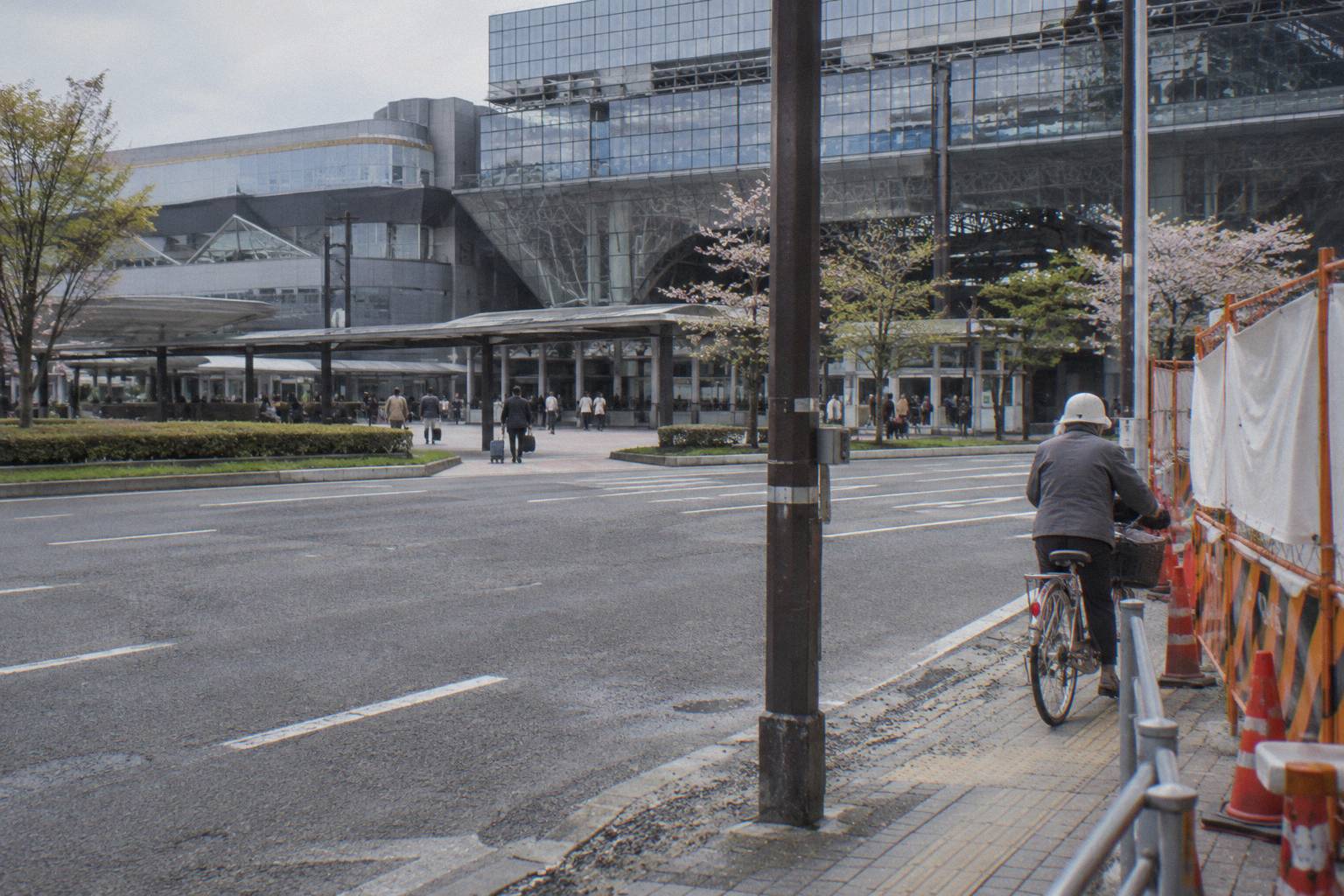
Every roster ride in Kyoto is built on this premise. The guide leads, the group follows, and the Five Rules get applied by the person with the most practice applying them. The group rides single file, which neatly avoids the 3,000 yen two-abreast fine, and stops are made where bicycles may legally stand, which avoids the 3,500 yen removal fee.
The format you choose shapes how much of this you absorb. A short morning loop such as the Morning Ride From Station, from ¥14,000 per person for 3 hours 30 minutes with a 5 rating from 20 reviews, gives you a compressed lesson in how a local positions a bike around Kyoto Station and the streets beyond. A longer outing spreads the same lesson across more districts.
E-bike formats change the riding, not the rules. A pedal-assist e-bike that meets the legal standard is a bicycle in Japanese law, as the Kyoto City page states; the same Five Rules apply to it, sidewalk included. Only a vehicle with a throttle or outside the assist standard falls into a different legal category, and the e-bikes on Kyoto's guided rides are of the pedal-assist kind.
Helmets belong in the same picture. Since 1 April 2023, every cyclist of every age has an effort duty to wear one, with no fine attached, per the Kyoto Prefecture page on the helmet effort duty. Every guided ride named in this article includes a helmet in its price, which removes one more item from your planning list.
If the rules still feel like friction, read what the cycling rules mean for visitors to Kyoto once before you ride anything, then let a guide do the rest on the day.
Does A Self-Guided Day Change Anything?
Self-guided riders carry the sidewalk decision alone, which makes the sign-reading skill the one thing to practise before setting out. Blue round signs showing a bicycle above a pedestrian mark permitted sidewalk sections; divided sidewalks with painted lanes mark them too. Absent both, an adult rider stays on the roadway, on the left, in single file.
The mechanical skills of riding do not change between a guided and a self-guided day. The judgment calls do. A self-guided rider must decide, dozens of times a day, where the bike legally belongs, and must do it while reading a map and traffic in an unfamiliar language environment.
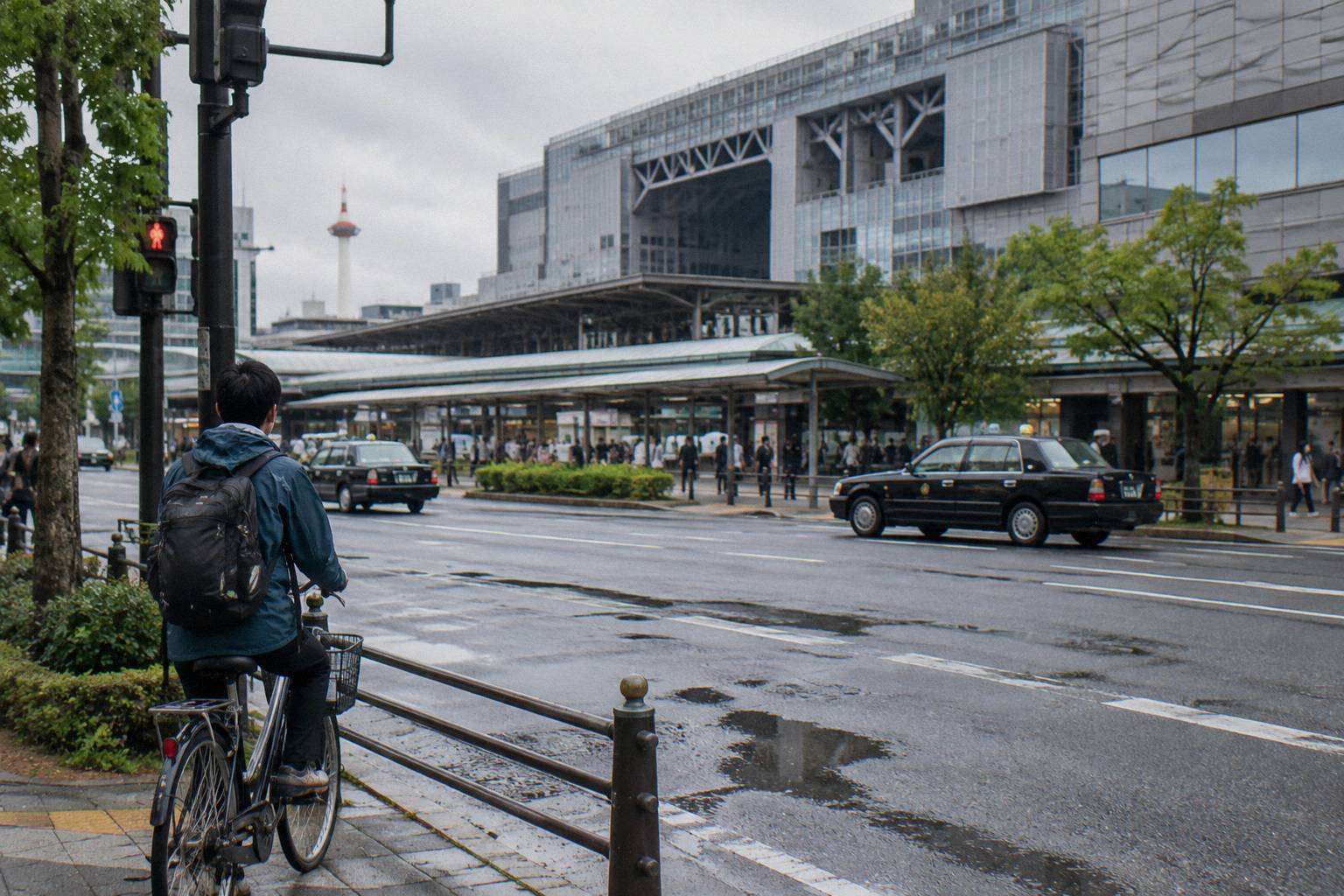
Two habits make that manageable. The first is defaulting to the roadway and treating the sidewalk as something you need a visible reason to use. The second is route choice: Kyoto's backstreets and residential lanes carry light traffic and make the roadway default comfortable, while the big arterial streets are where the temptation to pop onto the pavement arises. Plan a backstreet route and the question largely disappears.
The age rules also matter for self-guided families. A child under 13 may ride the sidewalk legally; the adult riding beside them may not, unless a sign permits it. That asymmetry is awkward for a family riding alone and is another reason families gravitate to guided formats, where the group moves as one under a guide's judgment.
For riders weighing the two approaches in detail, the comparison of guided and self-guided riding in Kyoto covers navigation, route-finding and trade-offs. If you decide on a guided day instead, see dates early: the small-group formats fill first in the popular seasons.
Either way, the sidewalk rule travels with you. It is national, so what you learn in Kyoto applies in Osaka, Tokyo and everywhere else you might ride in Japan, which makes it one of the highest-value ten minutes of trip preparation there is.
What Trips People Up Before You Ride?
The common missteps are assuming the sidewalk is the safe default, riding two abreast in pairs, touching a phone at a stop, and parking loosely against shopfronts. Each one has either a fixed fine from 3,000 yen or an outcomes problem, and each is avoidable with one habit: ride the roadway on the left in single file, and leave the bike only where a sign or a guide says bicycles may stand.
The first mistake is the mental model itself. Many visitors arrive from countries where riding on the pavement is normal or where bike lanes are painted everywhere, and they assume the same here. It is not. The roadway is the principle. Internalising that single sentence prevents most of the trouble before it starts.
The second is pairs riding side by side to chat. It is natural and it costs 3,000 yen under the blue-ticket system. Single file is the habit to build, and it is exactly how every guided group in Kyoto rides, which is one reason the guided format feels calm even in traffic.
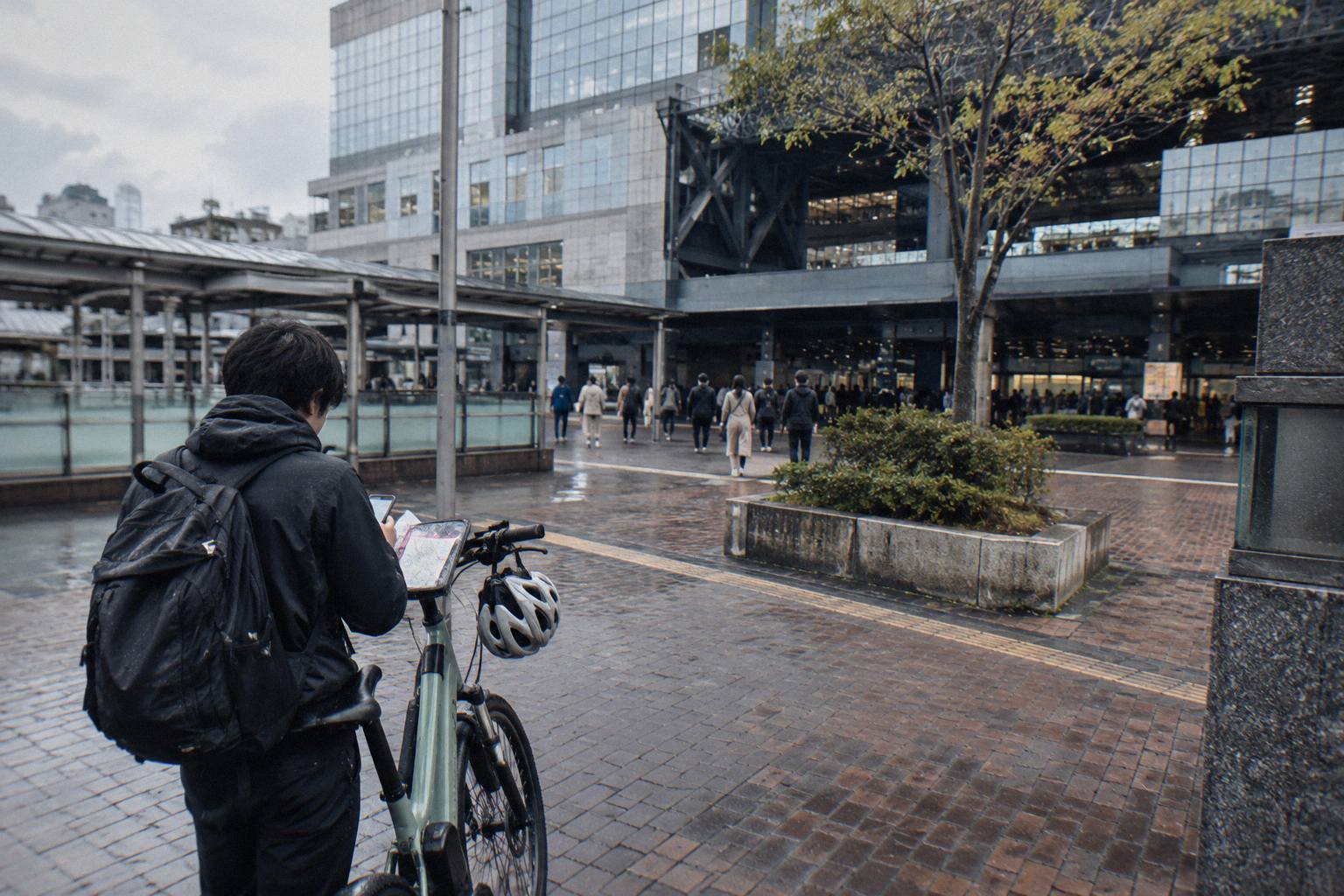
The third is the phone. Holding or watching a screen while riding carries the heaviest fixed fine at 12,000 yen, and the behaviour behind it, since 1 November 2024, can bring up to 6 months in prison or a 100,000 yen fine. Mount the phone, pocket it, or stop and dismount before looking at a map. On a guided day the guide carries the route and nobody needs a screen at all.
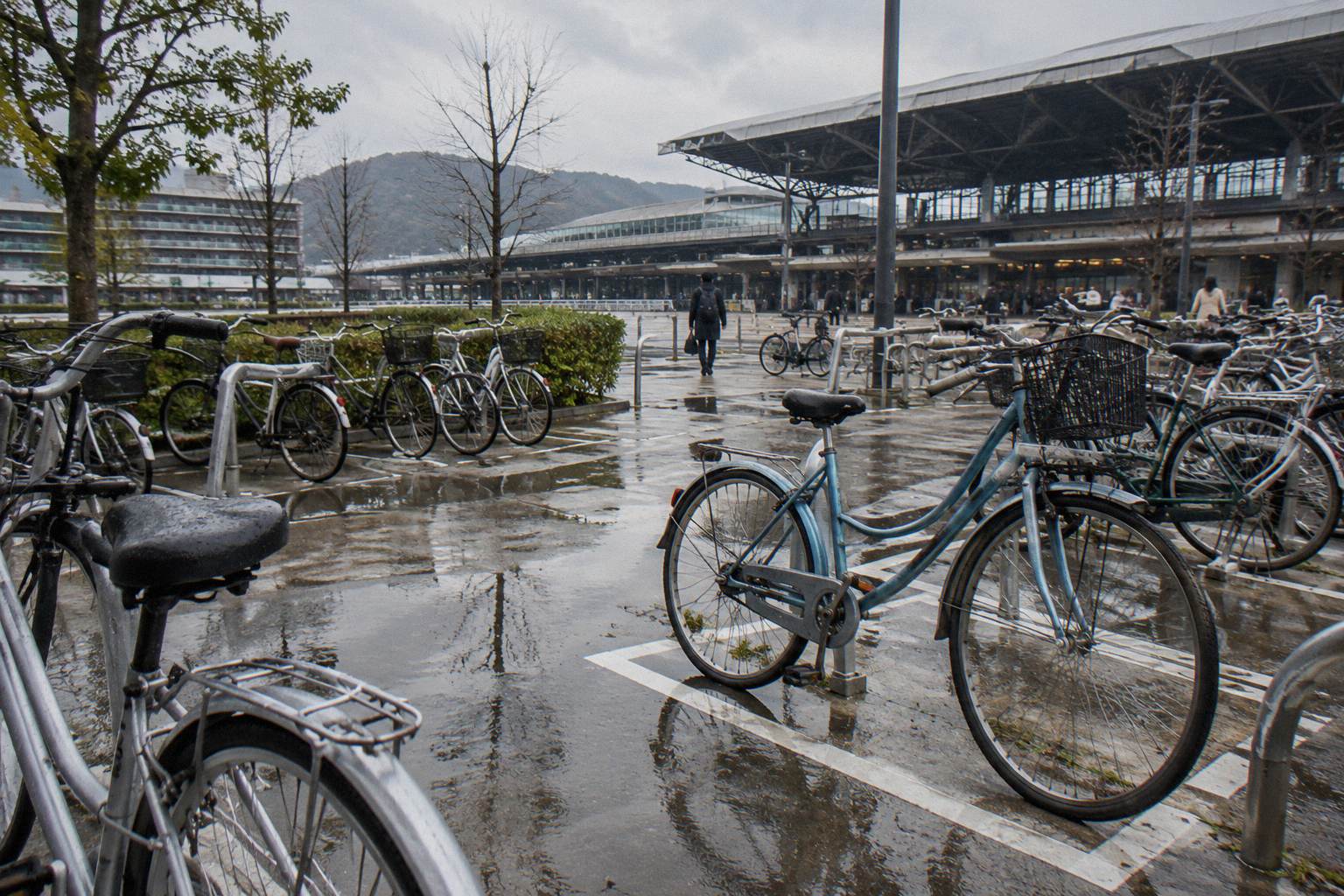
The fourth is parking. Leaning a rental bike against a shopfront on the pavement edge can end with a 3,500 yen reclaim fee and a trip to a storage depot, with bikes held for 4 weeks from the day after removal. Use marked bicycle areas, or let a guide choose the stop. Each of the three rides featured here, the Gentle Backstreet Ride, the Backstreets & Local Secrets tour and the Morning Ride From Station, runs on itineraries where the stops are already solved.
Finally, do not let the rules crowd out the pleasure. Kyoto rewards a bicycle more than almost any city in Japan, and a legal rider on a backstreet sees a version of the city that buses and taxis never reach. Learn the Five Rules once, pick your format, and ride.
Common Questions About Sidewalk Riding In Kyoto
Can You Ride A Bike On The Sidewalk In Japan?
Only in defined cases. The roadway is the principle; the sidewalk is allowed where signs or markings permit, for children under 13, people aged 70 and over, people with disabilities, or when road conditions leave no safe alternative. Pedestrians come first in every case.
Can Tourists Ride On Japanese Sidewalks?
The rule applies to every rider aged 16 and over, visitors included. A tourist has the same default position as a local adult: the roadway, on the left. Permitted sidewalk sections, marked by signs or painted lanes, may be used by anyone.
What Is The Fine For Riding On The Wrong Side Of The Road?
Kyoto City lists a fixed fine of 6,000 yen for riding on the wrong side of the road and other wrong-lane riding, part of the blue-ticket system in force since 1 April 2026 for riders aged 16 and over.
Can Children Ride Their Bikes On The Sidewalk?
Yes. Children under 13 are one of the categories the Five Rules name as entitled to ride on the sidewalk. The age line also appears in Kyoto's tour world: the Gentle Backstreet Ride and the Morning Ride From Station both set a minimum age of 13 for riders on the road.
Do E-Bikes Follow The Same Sidewalk Rules?
Yes, if they are pedal-assist models that meet the legal standard, which Japanese law treats as bicycles. The e-bikes used on Kyoto's guided rides are of this type, so the same Five Rules, sidewalk provision included, apply to them.
Is A Guided Ride A Way To Avoid Learning The Rules?
Largely, yes. On a guided ride a local at the front makes every roadway-versus-sidewalk decision and chooses where the group parks, which covers the situations where fines arise. Riders still benefit from knowing the basics, and helmets are included on every ride named in this article.