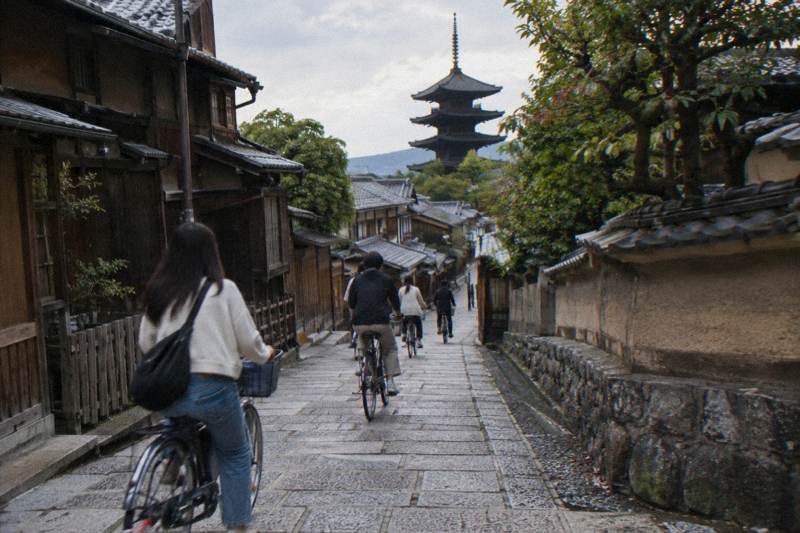
Do You Have To Wear A Helmet When Cycling In Japan?
Japan made bicycle helmets an effort duty for every rider on 1 April 2023, with no fine attached. Here is what the rule means in Kyoto and which guided rides include a helmet.
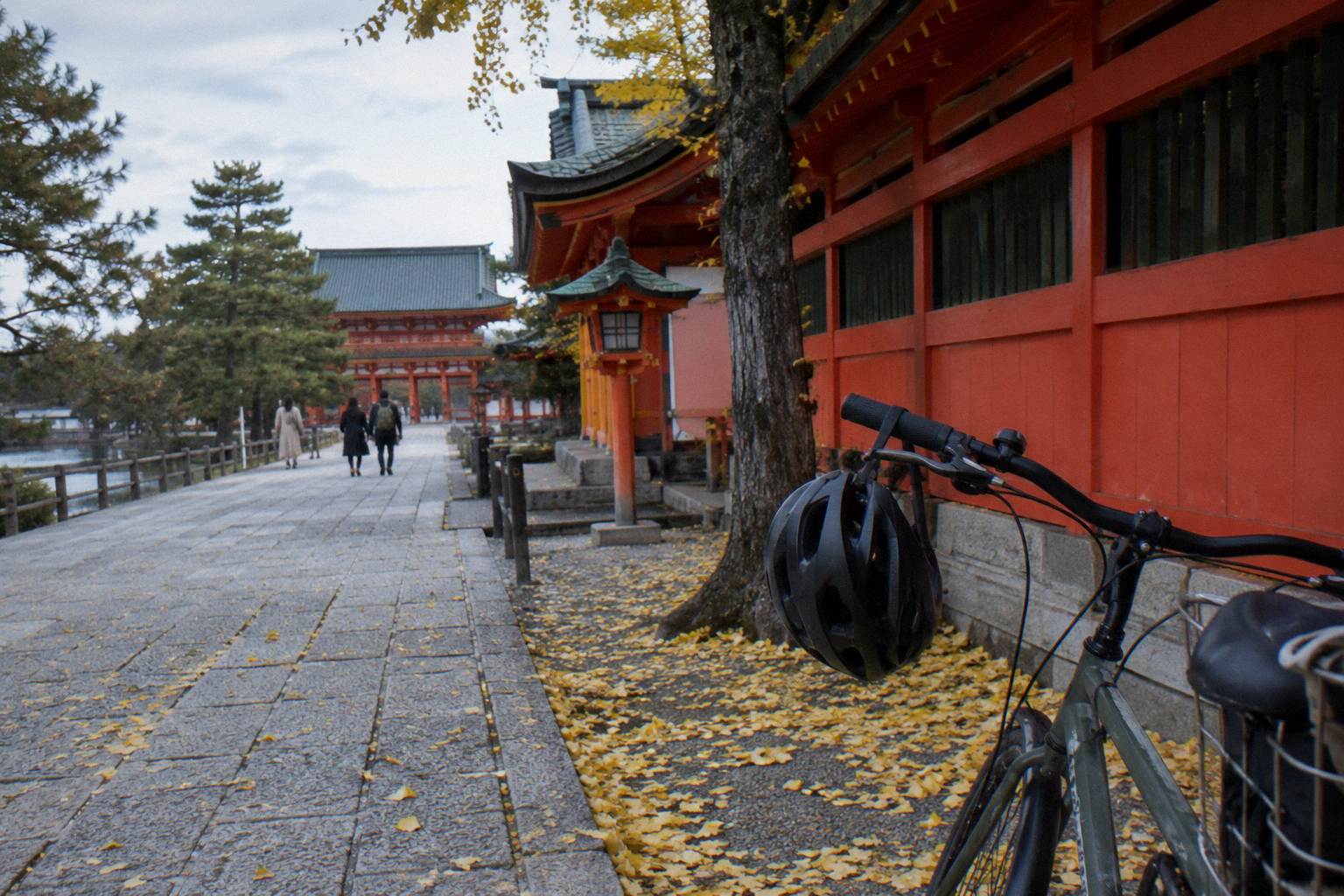
Riding a bicycle in Kyoto is one of the easiest ways to move between temples, and the helmet question comes up before almost every booking. The city's e-bike tour selection is where most visitors start, since electric assist and a provided helmet remove two decisions at once. Below is the short version of Japan's helmet rule, followed by what it means in practice on the city's streets.
| Fact | Detail |
|---|---|
| Helmet rule | Every cyclist of every age must make an effort to wear a helmet, since 1 April 2023 |
| Penalty for riding bare-headed | None: it is an effort duty with no fine |
| Source of the rule | Kyoto Prefecture and Kyoto City both publish the effort duty |
| Phone while riding | 12,000 yen fixed fine for riders 16 and over since 1 April 2026 |
| Riding with an umbrella | 5,000 yen fixed fine |
| Rides naming a helmet | Gentle Backstreet Ride, from ¥12,000 per person, helmet included |
| Second example | Morning Ride From Station, from ¥14,000 per person, helmet included |
| Bicycle insurance | Kyoto Prefecture requires bicycle liability insurance |
Legally you must try to wear one, but you cannot be fined for going without. Since 1 April 2023, every cyclist in Japan, of every age, has been under an effort duty to wear a helmet, an obligation to try rather than an outright mandate. Kyoto Prefecture and Kyoto City both publish the rule. No fine attaches to riding bare-headed. In practice, every guided ride reviewed here that names head protection includes it.
The distinction matters for visitors who read headlines and assume a helmet law with teeth. Japan chose a softer instrument. The effort duty means a rider is expected to wear a helmet, a parent is expected to put one on a child, and a business handing over a bicycle is expected to offer one. None of those expectations is backed by a penalty. The Kyoto Prefecture page on the helmet effort duty states the position plainly: the duty applies to all ages and carries no punishment.
For a visitor, the practical answer is that helmets are normal here. Rental fleets and tour operators stock them, the guides hand them over at the start, and the roster of Kyoto rides below names helmets as an inclusion on several products. If you ride independently, bring one or expect to be offered one when you collect a bicycle. If you book a guided ride, the question usually answers itself before you ask it.
If you would rather not think about helmets at all, a guided ride is the cleanest route. The three below are a cross-section of what Kyoto offers, and each puts the equipment question in the operator's hands.
One more piece of context belongs here. The effort duty dates from 2023, but Japan's wider rule set for cyclists tightened afterwards, with a fixed-fine system arriving on 1 April 2026. Those fines target riding behaviour, not bare heads, and the what the new bicycle rules in Japan cover walkthrough separates the two so the helmet duty does not get confused with the punishable offences.
Is There A Fine For Riding Without A Helmet In Japan?
No. Riding without a helmet carries no fine, no ticket and no penalty point, for any age. The helmet duty is an effort obligation, a legal category that expresses an expectation without attaching punishment. This separates helmets from the behaviours Japan does punish: holding a phone while riding draws a 12,000 yen fixed fine for riders aged 16 and over, and riding with an umbrella draws 5,000 yen. A bare head draws nothing.
The Kyoto City page on cycling rules lists the fixed fines introduced on 1 April 2026 in full, and a missing helmet is not among them. The fines target actions: ignoring a signal at 6,000 yen, riding on the wrong side of the road at 6,000, failing to stop at a stop sign at 5,000, carrying a second rider or riding two abreast at 3,000. The phone rules reach further back, since 1 November 2024, with holding a phone to talk or watch the screen punishable by up to 6 months in prison or a 100,000 yen fine.
So the hierarchy is clear. Behaviour on the bicycle is fined. Equipment on your head is encouraged. A rider who stops at every light and keeps both hands on the bars breaks no rule by riding bare-headed, though the law still says they should try to wear one. A rider in a perfect helmet who scrolls a phone at a junction faces the full weight of the 2024 phone provision.
For visitors, this shapes the decision in a simple way. If you are comfortable riding without a helmet at home, the law here will not intervene. If you would rather wear one, the equipment is available, and on the rides named in this article it is included in the price rather than rented separately.
Will A Guided Ride Sort The Helmet Out For You?
On the rides that name a helmet as an inclusion, yes. The Gentle Backstreet Ride, operated by Cycle Kyoto, includes a helmet and a Cannondale bicycle from ¥12,000 per person for 3 hours to 4 hours, minimum age 13. The Morning Ride From Station includes a helmet, a raincoat and liability insurance from ¥14,000 per person for 3 hours 30 minutes, minimum age 13. Check availability for your date and the equipment question is settled.
Between those two, the featured ride for this question is the Silver Pavilion and Philosopher's Path e-bike tour, which includes an e-bike, a guide and landing fees from ¥14,500 per person over 4 hours, scoring 5.0 from 322 reviews, with a minimum age of 12. It does not name a helmet in its inclusions, so if head protection matters to you, ask the operator when booking, or choose one of the rides that lists it. Prices vary by date and group, and the booking page shows the price for your date.
The point of booking either way is that a guided ride hands the whole equipment question to someone who answers it daily. Bikes arrive maintained, helmets arrive in sizes, and the guide fits them before the group moves. Riders who rent independently take on that checklist themselves, which is workable, but it is one more thing to arrange in a foreign cycling culture. Other pages covering the same trip are gathered on Kyoto Bike Tours.
Does The Helmet Rule Apply To Children And Teenagers?
Yes, at every age, with no lower limit. The effort duty of 1 April 2023 covers all cyclists, from a child on a first bicycle to a rider in their eighties, and it also expects parents and guardians to make sure children wear helmets. Again, no fine exists for a bare-headed child. What changes with age is the rest of the law: the fixed-fine system for minor violations applies only to riders aged 16 and over.
The age lines are worth laying side by side, because three different thresholds appear across Japan's cycling rules and tour minimums, and they serve different purposes.
| Age line | What it governs |
|---|---|
| Every age | The helmet effort duty, since 1 April 2023, with no fine |
| Under 13 | Sidewalk riding is permitted without special signs |
| 16 and over | The fixed-fine system for minor violations, since 1 April 2026 |
| 70 and over | Sidewalk riding is permitted without special signs |
The National Police Agency's bicycle safety leaflet with the five rules for cyclists sets out the sidewalk exceptions, which include children under 13, people aged 70 and over, people with disabilities, and riders facing unsafe road conditions. The helmet duty sits outside that list because it applies to everyone without exception.
For families, the tour minimums add another filter. The rides named here start at age 10, 12, 13 or 15 depending on the product, so the helmet rule for a child under 10 rarely comes into play on a guided ride, because the child cannot join in the first place. The cycling with kids and child seats guide goes deeper on family options, though note that age limits vary product by product and the booking page shows each one.
How Does The Helmet Duty Fit With Japan's Other Cycling Rules?
The helmet duty is the only piece of Japan's cycling law with no penalty attached; the rest is enforced. Since 1 April 2026, riders aged 16 and over face fixed fines of 3,000 to 12,000 yen for minor violations instead of criminal procedure. Drunk cycling is banned outright, phone use carries prison exposure, and Kyoto Prefecture separately requires bicycle liability insurance. The helmet sits apart: expected, never fined.
One paragraph of context on each neighbouring rule, without repeating the detail those pages carry. The full rule set, from the five basic rules to the blue-ticket fines, is laid out as a reference in the Kyoto cycling rules for visitors guide, which is the page to read once before you ride anywhere in the city. The insurance requirement deserves its own sentence here: Kyoto Prefecture requires bicycle liability insurance under its bicycle ordinance, and the Kyoto Prefecture page on bicycle liability insurance names accident, fire and car policies with an individual-liability rider as acceptable. Some rides, such as the Morning Ride From Station, include liability insurance alongside the helmet, which matters when you compare products.
The through-line for a visitor is this: Japan regulates the riding, not the rider's head. Keep left, obey signals, keep the phone in a pocket, never ride after drinking, and the law is satisfied whether or not a helmet is on your head. The helmet is the one item on the list you choose, and most riders, given that tours hand one over at no extra step, choose it.
Which Kyoto Rides Include A Helmet In The Price?
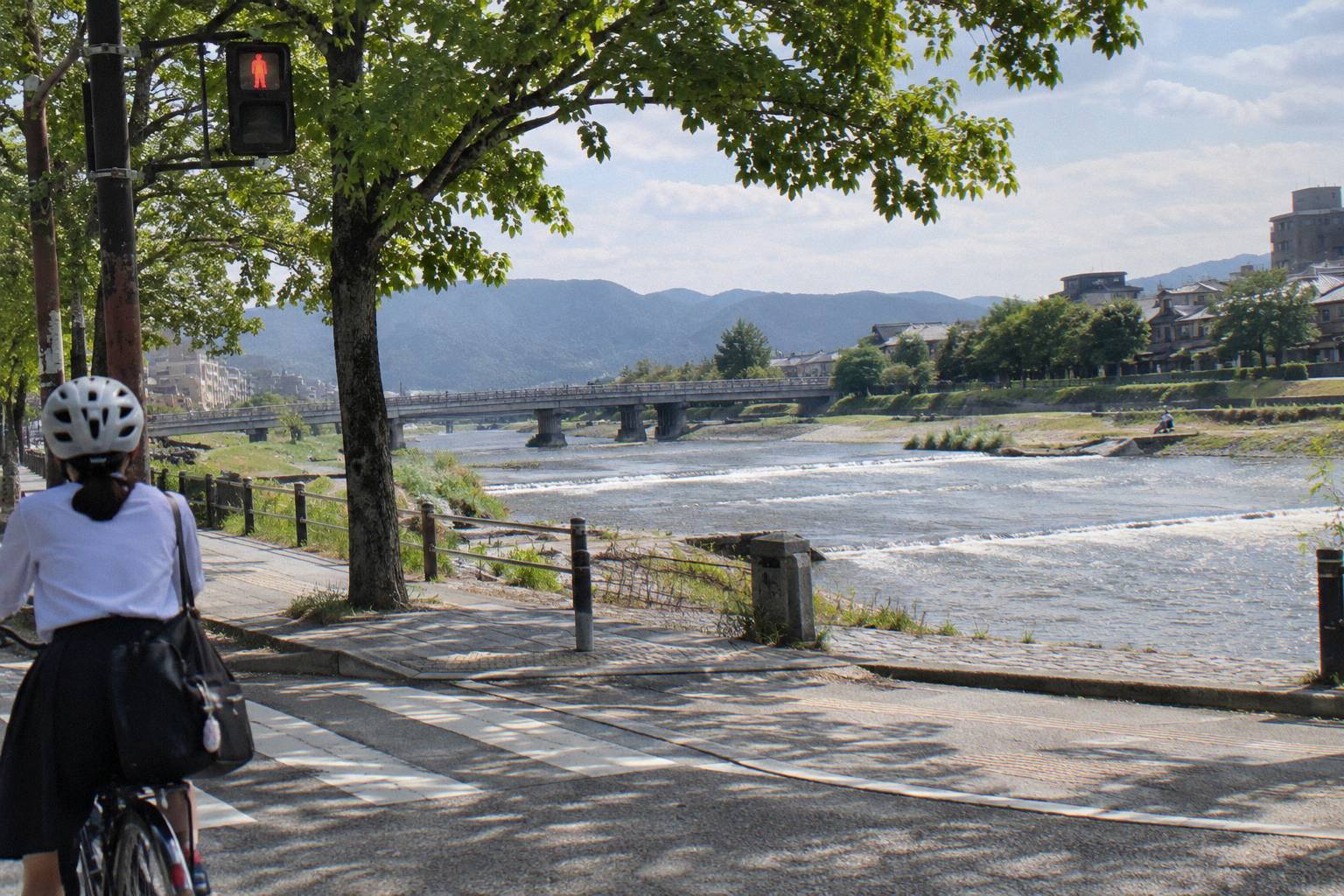
Four rides on this site's books name a helmet as an inclusion. The Early Bird Bamboo Forest Ride includes a helmet, a Cannondale bicycle and a bilingual guide from ¥16,000 per person, minimum age 10, scoring 5.0 from 773 reviews. The Gentle Backstreet Ride starts at ¥12,000 per person, the Morning Ride From Station at ¥14,000, and the UNESCO Zen Temples ride at ¥15,000 with a helmet if you need one. The rest ask the operator.
The comparison below keeps each product's own figures with its own line. Durations and minimum ages differ enough that the helmet is rarely the deciding factor; it is more often the tiebreaker between two rides that otherwise fit.
| Ride | From price per person | Duration | Helmet named | Minimum age | Rating |
|---|---|---|---|---|---|
| Gentle Backstreet Ride | ¥12,000 | 3 hours to 4 hours | Included | 13 | 5.0 from 279 reviews |
| Morning Ride From Station | ¥14,000 | 3 hours 30 minutes | Included | 13 | 5.0 from 20 reviews |
| UNESCO Zen Temples, Lunch | ¥15,000 | 4 hours 30 minutes | Included if you need | 15 | 5.0 from 145 reviews |
| Early Bird Bamboo Forest Ride | ¥16,000 | 3 hours to 4 hours | Included | 10 | 5.0 from 773 reviews |
The Early Bird Bamboo Forest Ride, formally the Kyoto Bamboo Forest & Hidden Gems: Early Bird Easy Bike Tour, is the one to single out for Arashiyama. It runs 3 hours to 4 hours with a native English speaking bilingual guide, bottled water and a well-maintained Cannondale multi-speed bicycle, and free cancellation applies up to 24 hours before start. At 773 reviews it carries the deepest review pool of any ride mentioned here.
The lunch-including option works differently. The UNESCO Zen Temples, Lunch ride, formally the 4.5-Hour Kyoto Bike Tour with Lunch and UNESCO Zen Temples, pairs Kennin-ji admission with a local lunch at a Japanese house, and offers a helmet if you need one, which reads as available on request rather than handed to every rider automatically. Ask the operator if you want certainty. Its free cancellation also runs to 24 hours before start.
Age thresholds do some quiet sorting here. The Early Bird ride admits riders from age 10, which makes it the natural pick for families with younger children; the Gentle Backstreet Ride and the Morning Ride From Station both start at 13, and the lunch-including UNESCO Zen Temples ride at 15. If your group spans younger and older riders, the Early Bird departure is the only one of the four that covers everyone on paper, so start there before comparing duration or price.
Price is only half the budget question. The two cheaper rides, at ¥12,000 and ¥14,000, do not name lunch, while the ¥15,000 UNESCO Zen Temples ride bundles a local lunch at a Japanese house plus Kennin-ji admission. Once you count a midday meal and temple entry that you would otherwise pay for separately, the gap between the mid-priced rides and the lunch option narrows considerably, and the extra 30 minutes to an hour of riding time comes close to standing in for the difference.
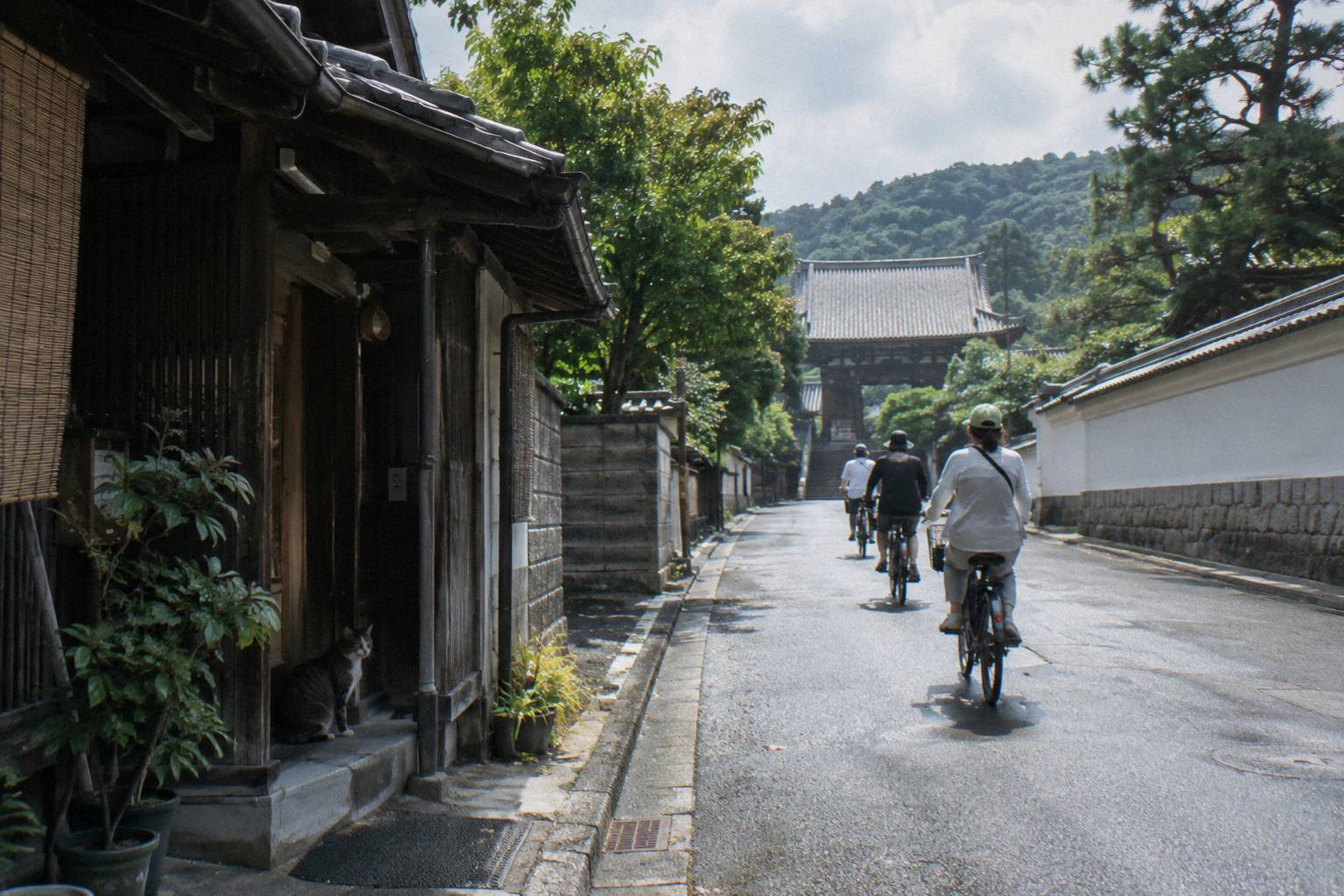
Rides that do not name a helmet are not riding illegally by omission; the inclusion list on a booking page records what the operator chose to promise, not the full contents of the store room. Where a helmet matters to you, the clean move is a message to the operator before booking, or choosing one of the four above, where the answer is already written down. See dates for any of them and the inclusions print on the same page as the price.
What Trips People Up Before You Ride
The most common slip is assuming the effort duty is a ban, and cancelling or over-preparing for a rule that carries no fine. The second is forgetting that everything around the helmet rule, phones, signals, insurance, alcohol, is enforced with real penalties. The third is skipping the inclusion list: on four Kyoto rides the helmet is named, and on the others it is a question for the operator before booking.
A few concrete traps deserve spelling out. Renting a bicycle and riding off bare-headed is legal, so no one will stop you, but the expectation runs the other way and most rental situations here offer a helmet; declining it is a choice you make knowingly, not an oversight. Meanwhile the phone fine of 12,000 yen applies from age 16, so a teenager finding their way by map in hand is exposed to the exact penalty a helmet would not have caused.
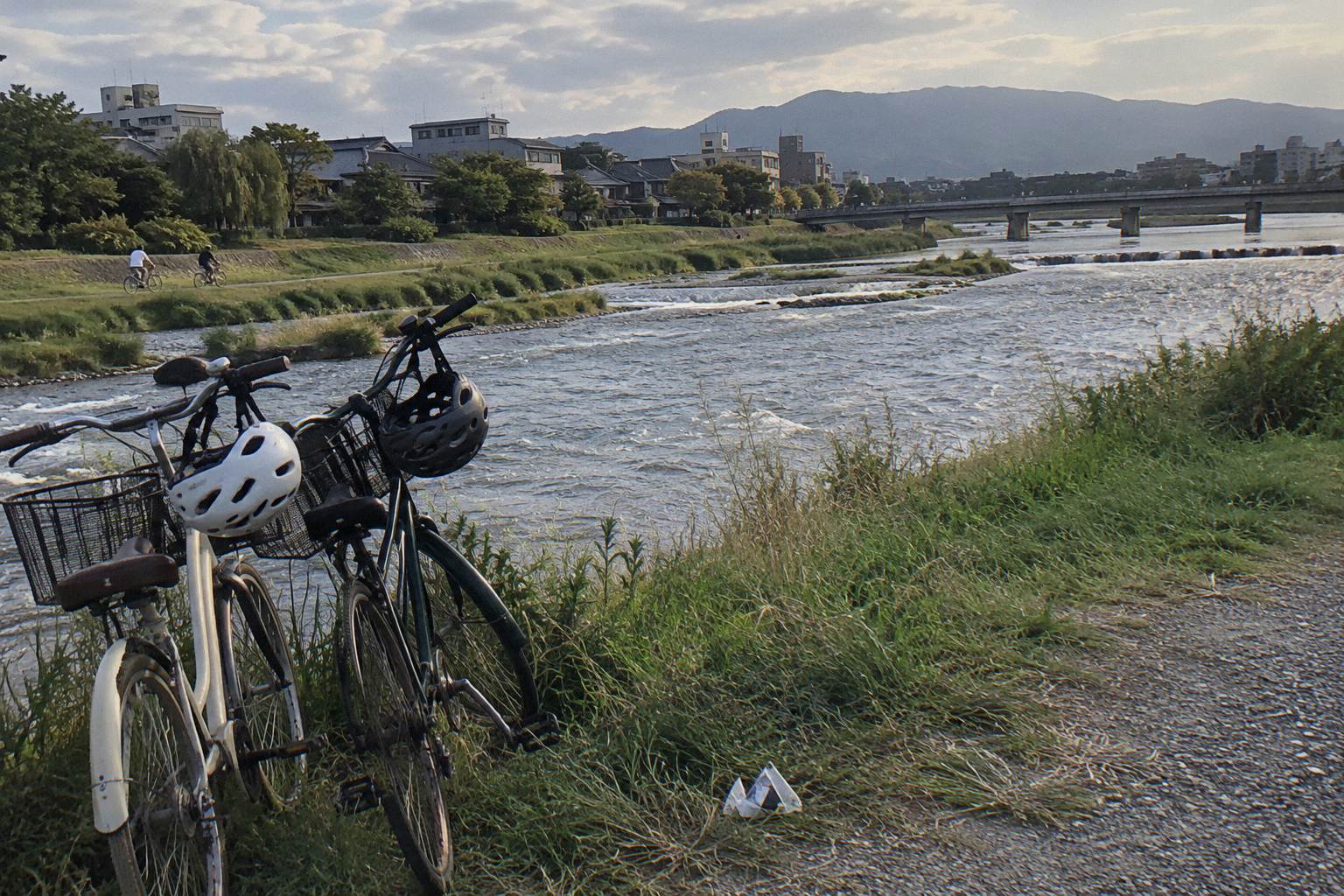
Timing slips matter too. Prices vary by date and group, and rides fill around cherry blossom season, whose normal full bloom date at the Kyoto observatory is 4 April, though 2026 peaked early at 30 March. If your dates sit near the blossom or the maple colouring, whose normal date is 5 December, book ahead rather than assuming a same-day slot. The helmet question takes a minute; the availability question can take the whole trip.
One last practical note: whether an e-bike or a regular bike suits you in Kyoto is a separate decision from the helmet one, and the guide covering it keeps the two apart. A pedal-assist e-bike that meets the legal standard counts as a bicycle under Japanese law, per Kyoto City, so the same helmet duty applies to it as to any other bike.
Common Questions About Helmet Rules For Cyclists
Do You Have To Wear A Helmet When Cycling In Japan?
You must make an effort to wear one. Since 1 April 2023, every cyclist of every age has been under an effort duty to wear a helmet, with no fine attached. Kyoto Prefecture and Kyoto City publish the rule. In practice, guided rides in Kyoto commonly include a helmet, and rental situations offer one.
Can Police Fine You For Not Wearing A Helmet In Japan?
No. The helmet duty carries no penalty of any kind. Police can fine riders aged 16 and over for behaviour such as holding a phone (12,000 yen) or riding with an umbrella (5,000 yen) under the fixed-fine system running since 1 April 2026, but a bare head is not an offence.
Do Children Have To Wear Helmets In Japan?
The effort duty covers every age, including children, and it also expects parents and guardians to make sure children wear helmets. There is no fine for a child riding without one. Guided rides in Kyoto set their own minimum ages, from 10 upward on the rides named here.
Do Kyoto Bike Tours Provide Helmets?
Several do, by name: the Early Bird Bamboo Forest Ride, the Gentle Backstreet Ride, the Morning Ride From Station and the UNESCO Zen Temples ride all list a helmet among their inclusions. On other rides, ask the operator before booking or check the booking calendar for the inclusion list.
Is An E-Bike Treated Differently Under The Helmet Rule?
No. A pedal-assist e-bike that meets the legal standard is a bicycle under Japanese law, so the same helmet effort duty applies. A vehicle with a throttle or outside the standard counts as a motorised bicycle, which is a separate legal category.
Do You Need Bicycle Insurance In Kyoto?
Yes. Kyoto Prefecture requires bicycle liability insurance under its bicycle ordinance. An accident, fire or car policy with an individual-liability rider satisfies the requirement. Some guided rides include liability insurance, such as the Morning Ride From Station, which pairs it with a provided helmet.