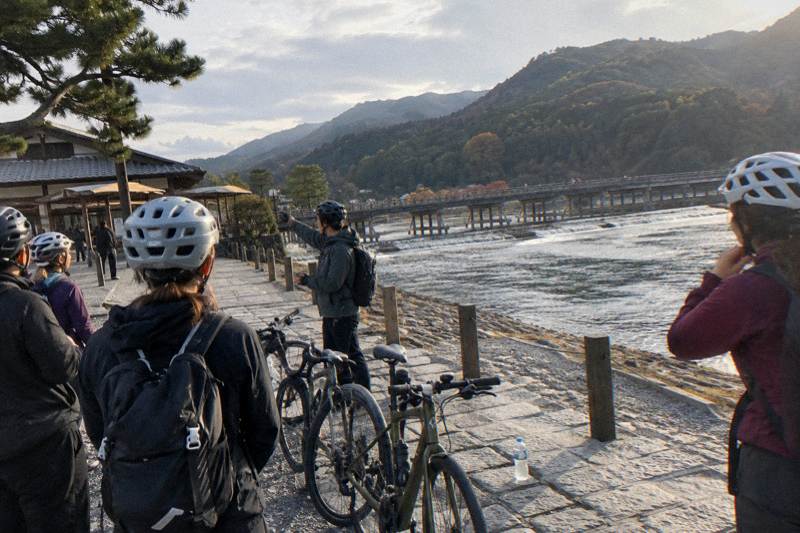
What Are The New Bicycle Rules In Japan For Visitors?
Japan's bicycle rules changed three times between April 2023 and April 2026: a helmet effort duty, a prison penalty for phone use, and fixed on-the-spot fines. Here is what each change means for a visitor riding in Kyoto.
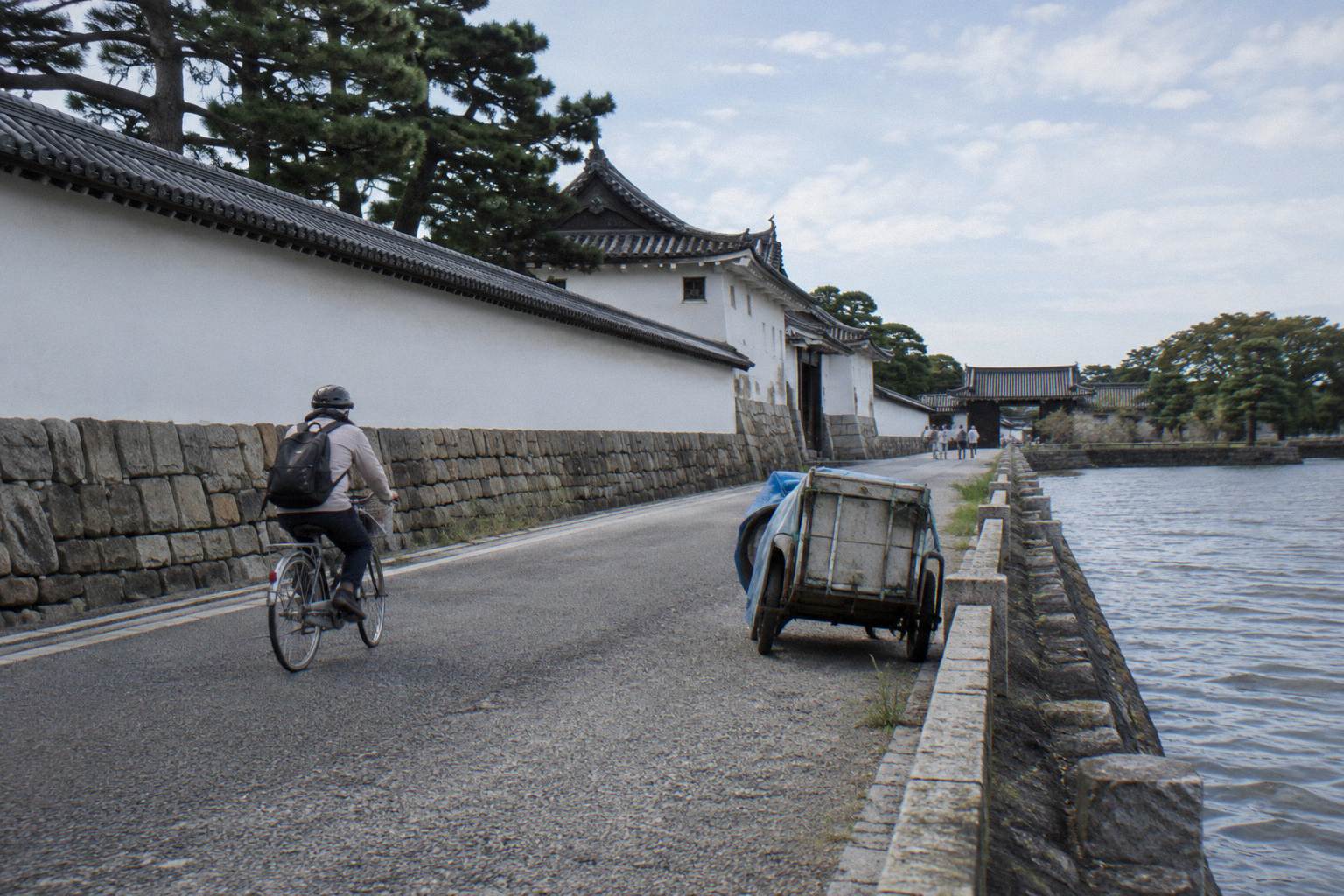
Riding in Kyoto got more complicated in writing between 2023 and 2026, but not much more complicated in practice: the changes target phones, helmets, insurance and minor violations, and a guided ride handles most of them for you. If you would rather have a guide set the pace and brief you on local rules, a led ride is the simplest way to absorb all three amendments at once.
| Fact | Detail |
|---|---|
| Helmet effort duty | Since 1 April 2023, every cyclist of every age must make an effort to wear a helmet; there is no fine attached |
| Phone while riding | Since 1 November 2024, holding a phone to talk or watch the screen can mean up to 6 months in prison or a 100,000 yen fine |
| Blue ticket system | From 1 April 2026, riders aged 16 and over pay fixed fines of 3,000 to 12,000 yen for minor violations instead of criminal procedure |
| Largest fixed fine | Holding or watching a phone while riding costs 12,000 yen under the fixed-fine table |
| Smallest fixed fine | Riding two abreast or carrying a second rider costs 3,000 yen |
| Insurance | Kyoto Prefecture requires bicycle liability insurance under its bicycle ordinance |
| E-bike status | A pedal-assist e-bike that meets the legal standard counts as a bicycle; a throttled vehicle does not |
| Removed bicycles | Kyoto City charges 3,500 yen to release a removed bicycle and stores it for 4 weeks |
The new rules are three dated changes that apply to every rider aged 16 and over, visitors included: a helmet effort duty for all ages since 1 April 2023 with no fine, a criminal penalty for holding a phone while riding since 1 November 2024 of up to 6 months in prison or a 100,000 yen fine, and fixed fines of 3,000 to 12,000 yen for minor violations from 1 April 2026.
The changes arrived in that order, and each one answered a different problem. The helmet duty addressed head injuries, the phone rule addressed screen use at speed, and the fine system cleared a backlog of minor cases that previously went through criminal procedure. Together they mean a rider who does the ordinary things wrong now pays for it on the spot, or worse, instead of receiving a warning.
For a visitor, the practical weight sits on the fixed-fine table. Ignoring a signal costs 6,000 yen, riding on the wrong side of the road costs 6,000 yen, failing to stop at a stop sign costs 5,000 yen, and riding with an umbrella up costs 5,000 yen, all named by the Kyoto City page on cycling rules. The umbrella figure catches visitors off guard more than any other, because a rainy afternoon in Kyoto tempts everyone to ride one-handed.
A guided ride does not exempt anyone from these rules, but it does put a guide in front of you who rides the route daily and calls the decisions: when to stop, where to wait, and how the group moves through signals. The rides below each include a helmet, which takes care of the 2023 duty without any planning on your part.
What Changed On 1 April 2026?
From 1 April 2026, riders aged 16 and over who commit minor violations pay a fixed fine under the blue ticket system instead of going through criminal procedure. Fines run 3,000 to 12,000 yen: 12,000 yen for a phone held or watched, 6,000 for ignoring a signal, 6,000 for the wrong side, 5,000 for a stop sign, 5,000 for an umbrella, and 3,000 for two abreast or a second rider.
Before this date, a minor cycling violation in Japan could send a rider into the criminal justice process, which in practice meant most minor cases went unpunished while a few were punished heavily. The blue ticket replaced that with something closer to a parking fine: a fixed amount, paid promptly, no court visit. The system is sometimes described by its Japanese name, aokippu, which literally means blue ticket.
The fixed-fine table is the piece visitors should read once before their trip. Here it is in full, with figures named by Kyoto City.
| Violation | Fixed fine |
|---|---|
| Holding or watching a phone while riding | 12,000 yen |
| Ignoring a traffic signal | 6,000 yen |
| Riding on the wrong (right) side of the road | 6,000 yen |
| Failing to stop at a stop sign | 5,000 yen |
| Riding with an umbrella up | 5,000 yen |
| Riding two abreast or carrying a second rider | 3,000 yen |
Note where the phone sits: both in this table at 12,000 yen and in the criminal statute from November 2024. A phone in hand is the one act that appears in both regimes, which tells you how seriously the legislature treats it. The finer point of which regime applies to which phone case belongs with the police, not with a travel planner; the safe conclusion is simply that the phone stays in a pocket or a bag.
Drunk cycling sits outside the fixed-fine system entirely and always has been banned at any level of drinking. Riding while impaired can mean up to 3 years in prison or a 500,000 yen fine, and lending a bike to a drunk rider carries the same maximum, per the same Kyoto City page. A night ride that includes a drink stop is a night ride that should end on foot or by train.
How Does The 1 November 2024 Phone Rule Work?
Since 1 November 2024, holding a phone to talk or watch the screen while riding can mean up to 6 months in prison or a 100,000 yen fine, and causing danger to others while using a phone raises the maximum to 1 year in prison or a 300,000 yen fine. The rule was national when it began and the fixed fine added in April 2026 did not replace it; the two now sit side by side.
This was the first of the three changes with a genuinely severe maximum, and it is the one that changes behaviour most. Before it, phone use while cycling fell under lighter general rules; after it, the act of holding a device became a specific offence with a prison term attached. The "causing danger" clause matters for visitors finding their way around an unfamiliar city: swerving while reading a map on the handlebar-mounted screen is precisely the scenario the heavier maximum was written for.
The practical fix is boring and complete: stop the bike before you look at anything. If you ride with a phone for navigation, the screen stays unreadable until you pull over, or the directions stay in earbuds (with a note that this site gives no guidance on earphone rules in Kyoto, as none are confirmed for the prefecture). On a guided ride the problem mostly disappears, because the guide is the navigator and your phone can stay buried for the duration.
A side point from the same Kyoto City page: a pedal-assist e-bike that meets the legal standard is treated as a bicycle, while a vehicle with a throttle, or one outside the standard, is a motorised bicycle or car. The e-bikes named on Kyoto rides, such as the Panasonic electric bicycles on the Palace, Castle And Temples tour and the Cannondale bikes on the Early Bird Bamboo Forest Ride, are bicycles in the eyes of the law.
Do Visitors Have To Wear A Helmet And Carry Insurance?
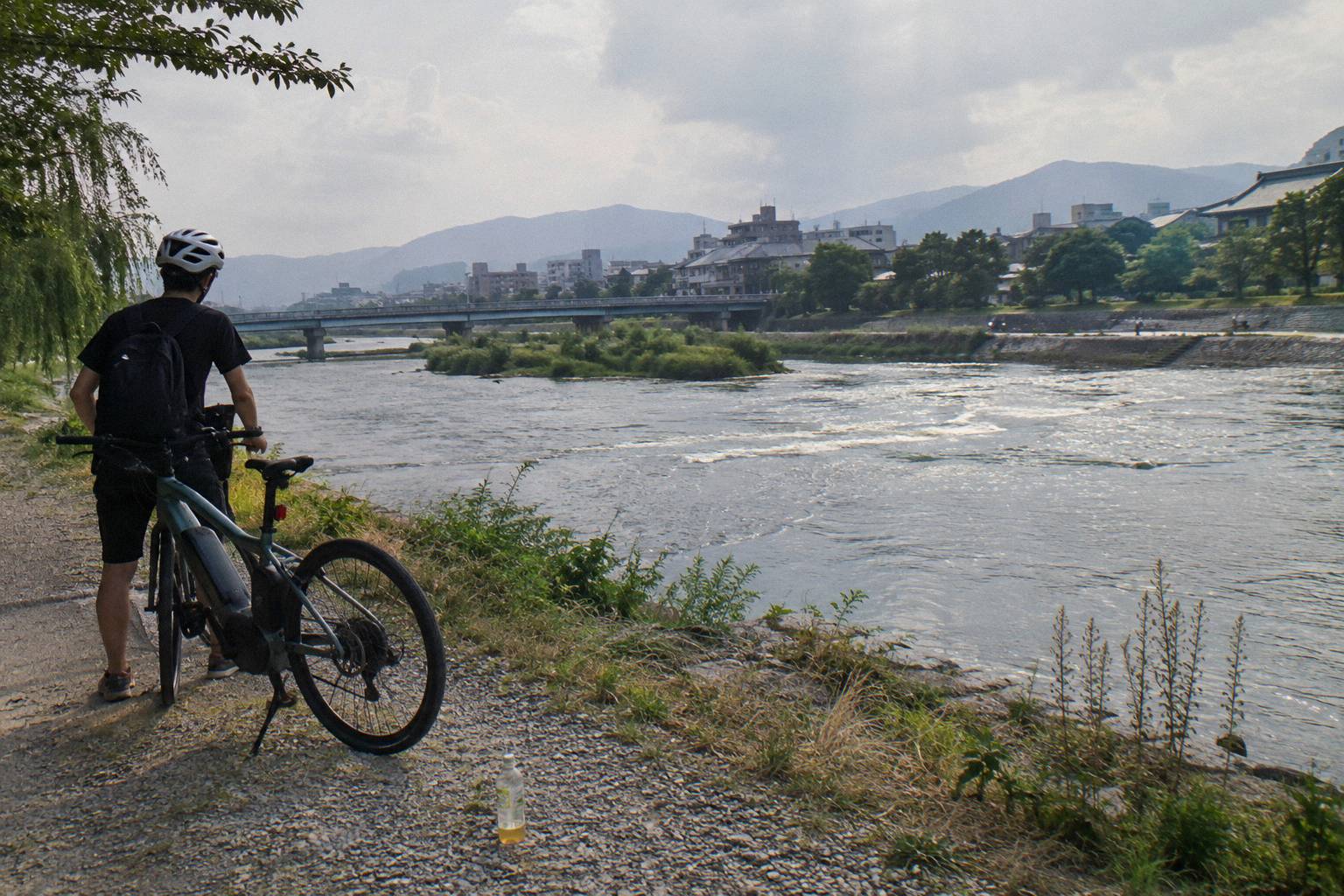
Since 1 April 2023 every cyclist of every age must make an effort to wear a helmet, an effort duty with no fine attached, and Kyoto Prefecture separately requires bicycle liability insurance under its bicycle ordinance. Insurance can be a bicycle accident policy or a personal-liability rider on home, car or accident cover, and the prefecture's page names all of those as acceptable.
The helmet duty is national and the wording is deliberate: effort, not mandate. Nobody is fined for riding bare-headed, and the Kyoto Prefecture page on the helmet effort duty says exactly that. The full detail of what the duty means for different ages has its own article, whether helmets are required on Japanese bikes, so one paragraph is enough here. Every ride discussed in this article includes a helmet in its price, which makes the duty automatic.
Insurance is the piece visitors most often miss. Kyoto Prefecture is one of the prefectures that requires bicycle liability insurance, meaning cover for damage you cause to others while riding. A short-term travel insurance policy with personal liability usually satisfies this, but the wording of your own policy decides it, so check before you travel rather than at the bike stand. The requirement and the acceptable policy types are set out on the Kyoto Prefecture page on bicycle liability insurance.
One roster inclusion stands out here: the Morning Ride From Station, run by 京都 ecoトリップ 本店, includes liability insurance alongside the helmet and a raincoat, from ¥14,000 per person for 3 hours 30 minutes. It is rated 5.0 from 20 reviews. That inclusion removes the insurance question from your planning entirely, which few rides in the city do.
Can You Still Ride On The Sidewalk?
Sidewalk riding remains the exception rather than the rule under the National Police Agency's five bicycle rules: the roadway is the principle, riders keep to the left, and the sidewalk is permitted only where signs or markings allow it, for children under 13, riders aged 70 and over, riders with disabilities, or when road conditions leave no safe alternative, with pedestrians coming first in every case.
None of this changed in the 2023 to 2026 wave; the five rules predate all three amendments. They are published in the National Police Agency bicycle safety leaflet. The reason the sidewalk question still belongs in this article is that the fixed-fine system from April 2026 tightened enforcement around everything the five rules covered, so the old slack is gone.
The fuller answer, including what the exception categories mean in practice on Kyoto streets, has its own article on sidewalk cycling rules in Japan. For a visitor the working version is simple: ride the road on the left unless a sign says otherwise, and treat any shared section as the pedestrian's space.
A guided group solves the judgement call. The guide knows which streets in their route permit sidewalk riding and which do not, and a group follows the guide's line rather than making individual decisions at every corner. Riding in a line behind a local is also, incidentally, the fastest way to internalise the left-side habit before you ever ride alone.
What Do The New Rules Mean On A Guided Ride?
On a guided ride the new rules mostly resolve themselves: the operator supplies a helmet, the guide leads the group through signals and intersections, and on some rides liability insurance is included by name. Your own responsibilities shrink to three things: keep the phone away, stay with the group, and hold an umbrella only when the bike is parked.
Take the three rides this article follows. The Gentle Backstreet Ride, formally "South Kyoto in a Nutshell: Gentle Backstreet Bike Tour!" from Cycle Kyoto, costs from ¥12,000 per person for 3 hours to 4 hours, is rated 5.0 from 279 reviews, takes riders aged 13 and over, and names a helmet and a Cannondale bike among its inclusions. The Silver Pavilion, Philosopher's Path ride from Kyoto Fun runs 4 hours from ¥14,500 per person, is rated 5.0 from 322 reviews, takes riders aged 12 and over, and includes an e-bike and a guide. Both carry free cancellation up to 24 hours before start, as does the Morning Ride From Station.
| Ride | From-price | Duration | Rating | Minimum age | Helmet named as included |
|---|---|---|---|---|---|
| Gentle Backstreet Ride (Cycle Kyoto) | ¥12,000 per person | 3 hours to 4 hours | 5.0 from 279 reviews | 13 | Yes |
| Morning Ride From Station (京都 ecoトリップ 本店) | ¥14,000 per person | 3 hours 30 minutes | 5.0 from 20 reviews | 13 | Yes, plus liability insurance |
| Silver Pavilion, Philosopher's Path (Kyoto Fun) | ¥14,500 per person | 4 hours | 5.0 from 322 reviews | 12 | Not named; e-bike and guide are |
Prices vary by date and group, and the booking page shows the price for your date. For the rules question specifically, the Gentle Backstreet Ride page is worth a look because it pairs the helmet with a route through residential south Kyoto, where left-side road riding is the norm and the guide's line is easy to follow. When you are weighing dates, Check availability before the calendar fills.
One more legal footnote for e-bike riders: because a compliant pedal-assist e-bike is a bicycle, all of the rules in this article apply to it unchanged. Riding an e-bike does not move you into a different vehicle class, and the fines are the same.
What Trips People Up Before You Book?
The three mistakes that cost riders money or their ride are: skipping the liability insurance check, because Kyoto Prefecture requires it and no helmet or guide substitutes for it; assuming the fixed fines only apply to residents, when Kyoto City's wording covers every rider aged 16 and over; and treating the umbrella fine as trivial, when a rainy day and a 5,000 yen penalty for one-handed riding arrive together every July, the wettest month at 223.6 mm.
The insurance mistake is the quietest. Nobody at a bike stand will ask to see a policy, but if you cause an injury, the prefectural requirement is what decides your exposure. Check your travel policy's personal-liability section at home, where fixing a gap costs one phone call.
The umbrella mistake has a weather dimension worth knowing. July averages 223.6 mm of rain and June 199.7 mm, with the rainy season running early June to mid July, per the Japan Meteorological Agency Kyoto monthly normals. A rain jacket instead of an umbrella keeps both hands on the bars and keeps 5,000 yen in your pocket. The Morning Ride From Station includes a raincoat for exactly this reason.
The third mistake is booking a ride and treating the free-cancellation flag as a rain plan. The rides named here all allow free cancellation up to 24 hours before start, but what happens when rain arrives mid-ride is the operator's call, so ask the operator if the forecast looks bad. August adds heat to the calculation: it is Kyoto's hottest month, with a mean of 28.5 °C and a daily high of 33.7, and the record daily maximum stands at 39.8 °C. A morning start, like the Early Bird Bamboo Forest Ride from Kyoto Bike Tour (from ¥16,000 per person, 3 hours to 4 hours, rated 5.0 from 773 reviews, minimum age 10), sidesteps the worst of the afternoon.
Where Do The New Rules Sit Among Kyoto's Other Cycling Regulations?
The 2023 to 2026 changes sit on top of a longer-standing framework: the National Police Agency's five riding rules, Kyoto Prefecture's liability insurance ordinance, and Kyoto City's removal system, under which an illegally parked bicycle is taken to a storage depot and costs 3,500 yen to reclaim, held for 4 weeks from the day after removal. The new fines are enforced against the old rules, not against new ones.
That framing helps make sense of the timeline. The five rules (roadway first, ride left, sidewalk as exception) already existed; what April 2026 added was a fast, cheap way to punish breaking them. The insurance ordinance predates everything in this article. The removal system, explained on the Kyoto City page on removed bicycles, has been charging 3,500 yen per bicycle for years; the removal strengthening areas cover nearly the whole city.
The complete reference, covering every rule a visitor will meet on a Kyoto street, is the full Kyoto cycling rules guide. This article answers only the new-law question; the guide carries the rest, from where a bike may be parked to how the removal depots work.
One clarification on scope: the fine table belongs to riders aged 16 and over, and Kyoto City's own page frames it in exactly those terms, with no exemption for short-term visitors. A family riding with younger children is outside the fixed-fine age band, though the helmet effort duty covers every age and the ordinary road rules still apply to everyone.
For deciding how all of this affects the kind of ride you book, weigh format and duration rather than price alone: a short led ride absorbs the rulebook for you, while a self-guided day puts every decision in your own hands. Kyoto Bike Tours covers every e-bike and pedal option the city's operators run. A guide carries the rulebook so you can carry the camera, in a pocket, off and away.
Common Questions About Japan's Bicycle Rules
What Are The New Bicycle Rules In Japan For Visitors?
Three dated changes apply to visitors: the helmet effort duty for every age since 1 April 2023 (no fine), the phone rule since 1 November 2024 (up to 6 months in prison or a 100,000 yen fine), and the blue ticket fixed-fine system from 1 April 2026 for riders aged 16 and over, with fines of 3,000 to 12,000 yen.
Do The Fixed Fines Apply To Foreign Tourists?
Kyoto City states the blue ticket system applies to cyclists aged 16 and over, with no visitor exemption in the wording. Treat every fine in the table as applying to you while riding in Kyoto.
What Is The Fine For Using A Phone On A Bike In Japan?
Under the fixed-fine table, holding or watching a phone while riding costs 12,000 yen, the largest figure on the list. Since 1 November 2024 the same act can also carry up to 6 months in prison or a 100,000 yen fine, rising to 1 year or 300,000 yen if danger is caused.
Can You Be Fined For Not Wearing A Helmet In Kyoto?
No. The helmet rule since 1 April 2023 is an effort duty for every age, and neither the prefecture nor the city attaches a fine to it. Most guided rides include a helmet anyway.
Is Insurance Required To Ride A Bike In Kyoto?
Yes. Kyoto Prefecture requires bicycle liability insurance under its bicycle ordinance. A bicycle accident policy or a personal-liability rider on home, car or accident cover all count, so check your travel policy before the trip.
What Happens If My Parked Bike Is Removed In Kyoto?
Illegally parked bicycles are taken to a city storage depot and held for 4 weeks from the day after removal. Reclaiming one costs 3,500 yen per bicycle, a fee the city says covers removal and storage.