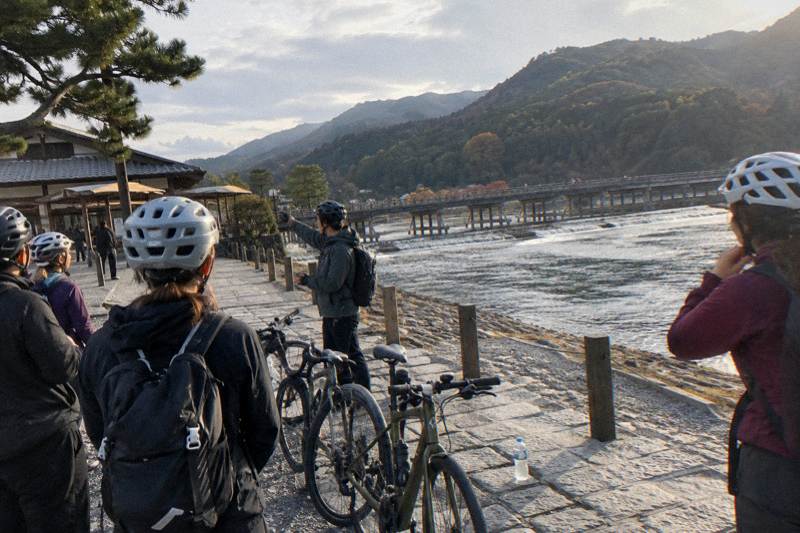
Kyoto Bike Rental: Prices, Shops And Pickup Points
Renting a bicycle in Kyoto looks like a simple transaction, and the rental counter is only the start: the helmet rule, the prefecture's insurance requirement and the 3,500 yen removal fee all belong to the rider who goes alone.
Short answer
A rider who rents alone in Kyoto arranges a bicycle, a helmet as an effort duty for every age since 1 April 2023, bicycle liability insurance required by Kyoto Prefecture, and legal parking where removal costs 3,500 yen per bicycle. Guided rides fold the bicycle into the fare, from ¥11,000 per person for a 4 hour e-bike ride to from ¥15,000 per person for 5 hours to 6 hours.
Renting a bicycle puts you in charge of the whole arrangement, and that arrangement is bigger than most visitors expect. Before comparing any rental counter, it helps to see what a guided gentle backstreet bike ride in South Kyoto already bundles: the bicycle, the helmet and a guide. This guide covers only the rental decision, meaning everything a rider arranges alone, and points to guided rides as the alternative for anyone who would rather not.
| Fact | Detail |
|---|---|
| Helmet rule | Effort duty for every cyclist of every age since 1 April 2023, with no fine |
| Insurance | Bicycle liability insurance required under the Kyoto Prefecture bicycle ordinance |
| Removed bicycle | 3,500 yen per bicycle to reclaim, held 4 weeks from the day after removal |
| Blue ticket | From 1 April 2026, riders aged 16 and over pay fixed fines of 3,000 to 12,000 yen for minor violations |
| Phone while riding | 12,000 yen fixed fine; holding a phone since 1 November 2024 can mean up to 6 months in prison or a 100,000 yen fine |
| Guided comparison | "Kyoto Backstreets and Hidden Gems E-Bike Tour" from ¥15,000 per person, 4.9 from 210 reviews, e-bike and helmets included |
| Cheapest guided comparison | "Kyoto: E-Bike Tour: Highlights, Backstreets & Local Secrets" from ¥11,000 per person, 5.0 from 148 reviews, E-Bike included |
What Does Renting A Bike In Kyoto Actually Involve?
Renting alone means arranging four things yourself: the bicycle, a helmet as an effort duty for every cyclist since 1 April 2023, bicycle liability insurance required by Kyoto Prefecture, and legal parking, because a removed bicycle costs 3,500 yen to reclaim. A guided ride folds the bicycle and helmet into the fare, so the rental decision is really about how much you want to arrange.
The rental counter hands over a bicycle and not much else. Everything around that handover is the rider's own responsibility under Kyoto's rules, and several of those rules carry real money. The helmet duty is the mildest: since 1 April 2023, every cyclist in Japan, regardless of age, must make an effort to wear one, an effort duty with no fine attached, as the Kyoto Prefecture page on the helmet duty explains. Ask the rental counter whether a helmet comes with the bicycle, because that varies and the answer belongs to the counter, not to any general rule.
Insurance is the piece riders most often miss. Kyoto Prefecture requires bicycle liability insurance under its bicycle ordinance, and the Kyoto Prefecture page on bicycle liability insurance notes that a personal-liability rider on a home, car or accident policy can satisfy the requirement, as can a dedicated bicycle accident policy. A rider who cannot show cover in any of those forms should ask the rental counter what it offers, since some counters bundle a policy and others do not, and no blanket claim covers them all.
Parking is the fourth arrangement, and it is the one with a fee attached in black and white. Kyoto City removes illegally parked bicycles across nearly the whole city, charges 3,500 yen per bicycle to release them, and stores them for 4 weeks from the day after removal. The full parking picture, including the depot hours, sits in the guide on where to leave bikes in Kyoto; the point here is that parking is part of the rental decision, not an afterthought.
How Much Does A Rental Cost Compared To A Guided Ride?
No rental price can be stated here, because none is verified: rental rates are set by each shop and vary by bicycle type and day, so a rider prices that at the counter. The guided side of the comparison is concrete: a 4 hour e-bike ride runs from ¥11,000 per person, and a 5 hours to 6 hours e-bike ride from ¥15,000 per person, with the bicycle, helmet and guide included in those fares.
A rider pricing a rental is really pricing a bundle they will assemble piece by piece: the bicycle for the hours they want, a helmet if the counter charges for one, insurance if their policies do not already cover them, and parking if their route needs it. Each piece is priced by a different party. That is the structural difference from a guided ride, where one fare covers the bicycle and the helmet and a guide's time, and the only variable left is the date.
- Budget Fare, Hidden Alleys¥11,000
- Crowd-Free E-Bike Ride¥13,000
- Higashiyama Heritage Ride¥13,500
- Fushimi Inari, Sento Stop¥13,500
- Morning Ride From Station¥14,000
- Silver Pavilion, Philosopher's Path¥14,500
- Backstreets, 5 To 6 Hours¥15,000
- Palace, Castle And Temples¥16,500
The guided fares worth holding in mind as the benchmark come from the roster and are printed plainly. "Kyoto: E-Bike Tour: Highlights, Backstreets & Local Secrets", run by SunnyCycleTour, is the budget comparison at from ¥11,000 per person for 4 hours, rated 5.0 from 148 reviews, minimum age 2, with an E-Bike included and a reusable water bottle for spring water. At from ¥15,000 per person, "Kyoto Backstreets and Hidden Gems E-Bike Tour", run by Memory Kyoto Bike Tour, runs 5 hours to 6 hours, rated 4.9 from 210 reviews, minimum age 3, and names as included an e-bike for everyone, bottled water, all fees and taxes, and helmets. You can see dates for the 5 to 6 hour backstreets ride to compare that fare with whatever a counter quotes you.
The frame is this: for a short solo spin, a rental can be the cheaper bundle, but the rider carries the helmet question, the insurance requirement, the parking risk and the route themselves. For anyone who wants a route and a guide with the bicycle, the guided fare is the number that already contains all of it.
What Rules Apply To A Rider On A Rental Bike?
The rental bicycle changes nothing about which rules apply. The blue ticket system, live since 1 April 2026, covers every rider aged 16 and over, and the Kyoto City page on cycling rules lists the fixed fines by violation: 12,000 yen for holding or watching a phone while riding, 6,000 yen for ignoring a signal, 6,000 yen for riding on the wrong side of the road, 5,000 yen for failing to stop at a stop sign, 5,000 yen for riding with an umbrella, and 3,000 yen for carrying a second rider or riding two abreast. The separate phone penalty from 1 November 2024 still stands alongside: up to 6 months in prison or a 100,000 yen fine for holding a phone to talk or watch the screen.
| Violation | Fixed fine |
|---|---|
| Holding or watching a phone while riding | 12,000 yen |
| Ignoring a signal | 6,000 yen |
| Riding on the wrong side of the road | 6,000 yen |
| Failing to stop at a stop sign | 5,000 yen |
| Riding with an umbrella | 5,000 yen |
| Carrying a second rider or riding two abreast | 3,000 yen |
Drunk cycling sits outside the fixed-fine system entirely and is banned at any level of drinking: alcohol-impaired riding can mean up to 3 years in prison or a 500,000 yen fine. One more detail from the same Kyoto City page matters for anyone offered a throttle bike: a pedal-assist e-bike that meets the legal standard is a bicycle, while a vehicle with a throttle or outside the standard is a motorised bicycle or car, not a bicycle, which puts it in a different legal category with different obligations. The full reference set of rules, fines and e-bike status is gathered in the guide to Kyoto's cycling rules for visitors.
None of this should put anyone off. The rules are knowable in a few minutes, and most of them match common sense: ride left, keep the phone in a bag, stop at the sign. A guided ride adds a second layer of safety, because the guide leads the line and the rider follows, which removes the navigation decisions where solo riders most often slip up.
Where Do You Park A Rental Bike, And What Does A Mistake Cost?
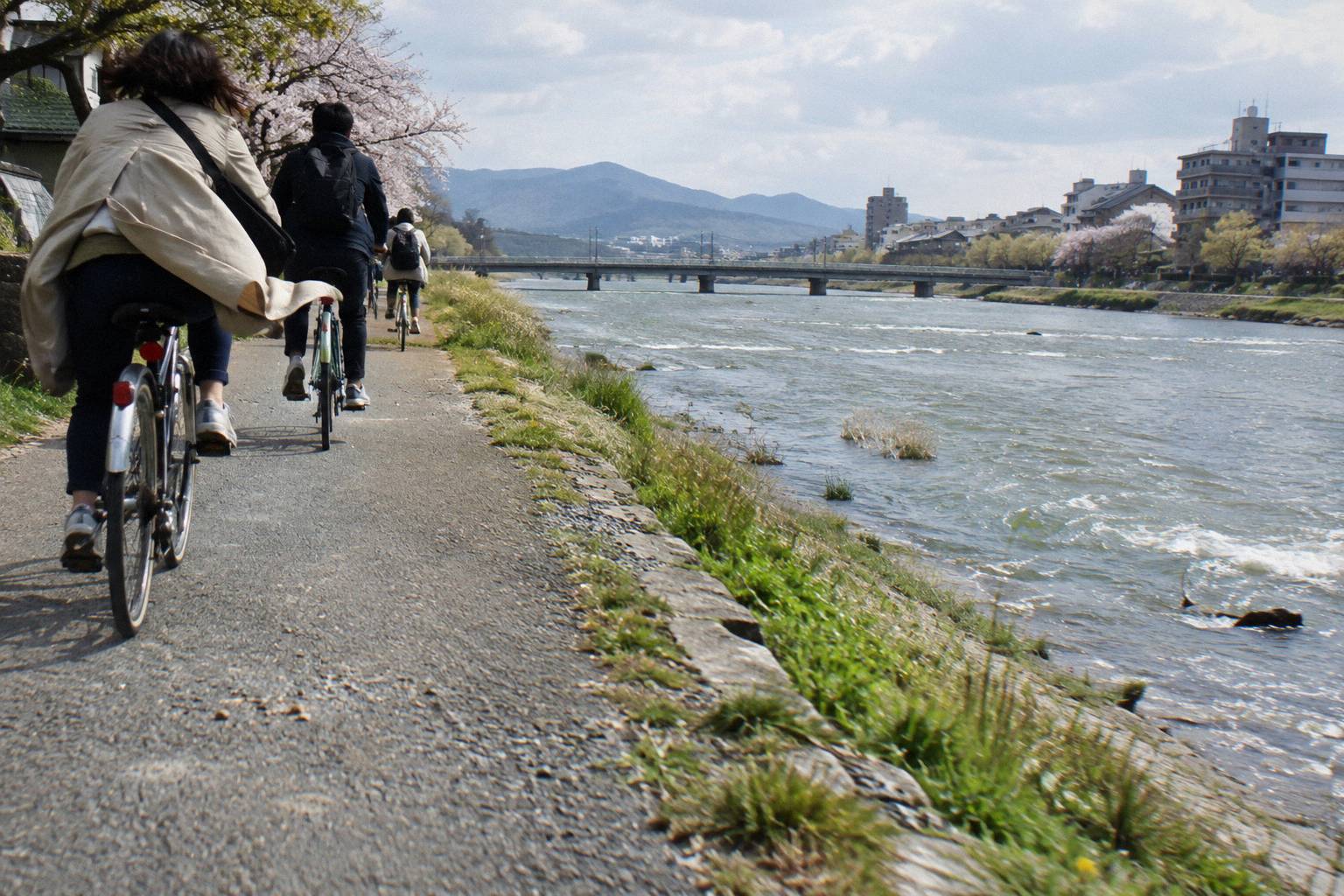
Illegally parked bicycles are removed across nearly all of Kyoto City, and reclaiming one costs 3,500 yen per bicycle, with storage held for 4 weeks from the day after removal; depots such as Sanjo Senbon open daily noon to 9 pm. A rider on a rental who parks wrongly pays that fee and then answers to the rental shop for the missing bicycle.
The removal machinery is documented on the Kyoto City page on removed bicycles, which explains that the 3,500 yen fee covers the cost of removal and storage, and that stored bicycles are held for 4 weeks from the day after removal. The city's "bicycle removal strengthening areas" cover nearly the whole city, so a rider should not assume any particular district is relaxed about parking. No area-specific rules for Gion, Kawaramachi, Kyoto Station or Arashiyama are confirmed on official pages, so the safe default everywhere is designated bicycle parking rather than a railing, a wall or a temple gate.
For a rental rider, the fee is only part of the cost. The rental contract sits between the rider and the shop, and a rider whose borrowed bicycle has been towed to a depot is a rider explaining a missing bicycle with a receipt. Two habits prevent the whole scenario: park only in designated bicycle parking, and keep the removal fee structure in mind as the price of improvising. The depot hours matter too, since a bicycle removed in the morning is retrievable the same day from noon, not instantly.
A guided ride sidesteps part of this section, since the guide leads the group and the rider follows. If parking logistics are the part of solo riding you dread, the question of guided versus self-guided cycling in Kyoto is worth settling before you stand at a counter.
On the rides compared here, cancellation is free up to 24 hours before start, so choosing a guided ride over a rental does not lock anything in. That matters if your plans in Kyoto are still fluid.
Which Guided Rides Bundle The Bicycle Into The Fare?
The three differ in who they suit. The Backstreets ride, run by Memory Kyoto Bike Tour, is the longest at 5 hours to 6 hours and takes riders from minimum age 3, rated 4.9 from 210 reviews, with everyone getting an e-bike plus bottled water, all fees and taxes, and helmets. The Gentle Backstreet Ride, run by Cycle Kyoto, is the shorter pedal-bike option at 3 hours to 4 hours, from ¥12,000 per person, minimum age 13, rated 5.0 from 279 reviews, and names a high quality Cannondale bicycle, helmet, bottled water and use of the bicycle as included. The Highlights ride from SunnyCycleTour is the cheapest entry at from ¥11,000 per person, minimum age 2, rated 5.0 from 148 reviews, and adds small touches such as a water omikuji fortune slip at Shimogamo Shrine. The rest of the planning pages sit on Kyoto Bike Tours.
| Ride | From price | Duration | Rating | Minimum age | Bicycle named as included |
|---|---|---|---|---|---|
| "Kyoto: E-Bike Tour: Highlights, Backstreets & Local Secrets" | ¥11,000 per person | 4 hours | 5.0 from 148 reviews | 2 | E-Bike |
| "South Kyoto in a Nutshell: Gentle Backstreet Bike Tour!" | ¥12,000 per person | 3 hours to 4 hours | 5.0 from 279 reviews | 13 | Cannondale bike |
| "Kyoto Backstreets and Hidden Gems E-Bike Tour" | ¥15,000 per person | 5 hours to 6 hours | 4.9 from 210 reviews | 3 | E-bike for everyone |
Prices vary by date and group, and the booking page shows the price for the date you pick. What does not vary is the structure: one fare, one booking, and the bicycle question answered before you arrive. For a rider whose whole hesitation about cycling in Kyoto is the paperwork around the bicycle, that structure is the product.
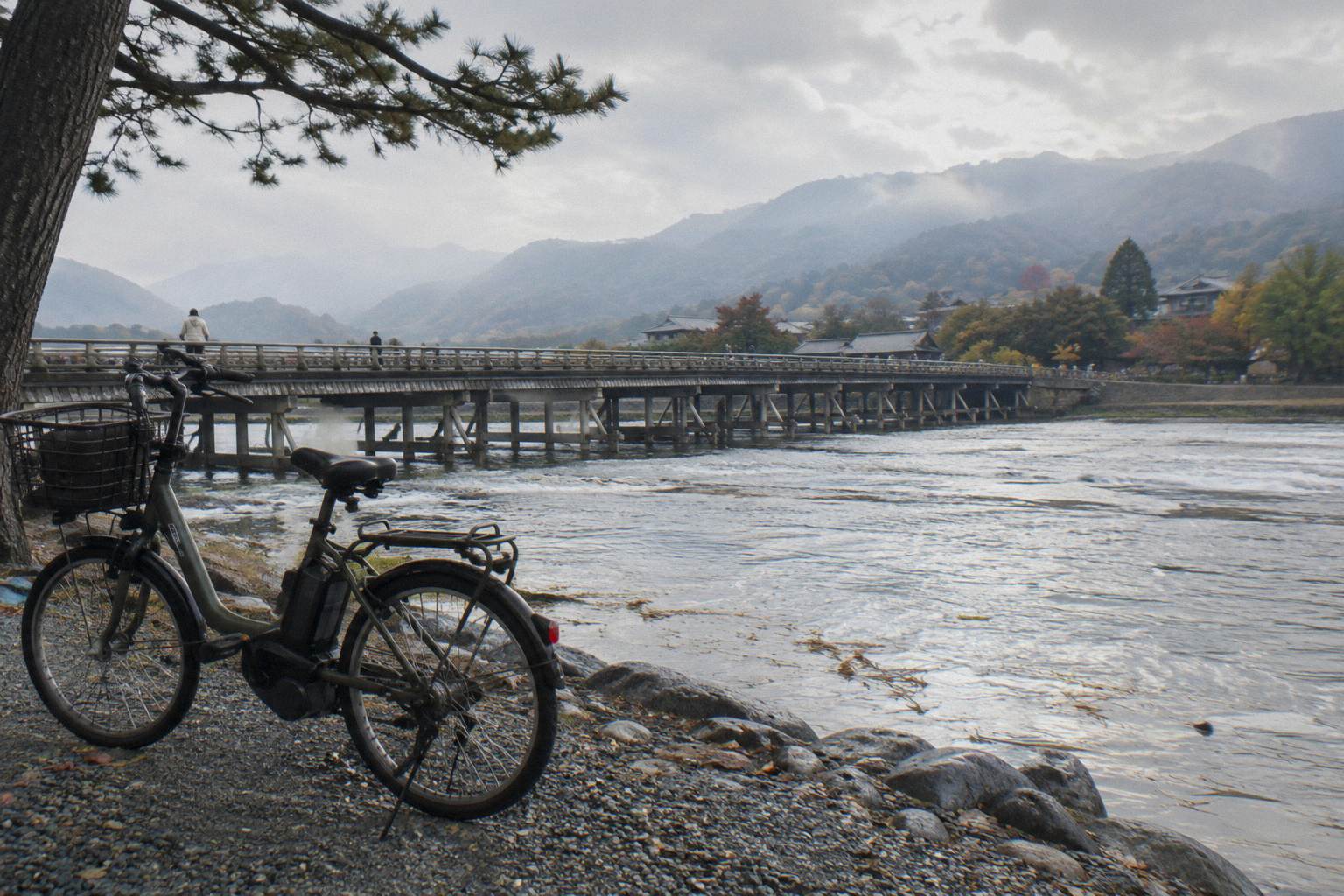
The Gentle Backstreet Ride suits a rider who prefers a regular multi-speed bicycle to an e-bike and wants the shorter time commitment. Its 5.0 from 279 reviews is the deepest review pool of the three, which gives that rating more weight than a similar score from a handful of guests.
When Is A Rental The Better Choice, And When Is It Not?
A rental suits a rider who knows the route, is comfortable with the rules and parking, and wants flexible timing; a guided ride suits a rider who wants the route decided and the bicycle, helmet and parking handled, which is why the from ¥11,000 to from ¥15,000 per person fares often win for a first visit. Ask the counter about helmets and insurance before paying, because those answers decide whether the rental bundle is actually cheaper.
Time flexibility is the rental's genuine advantage. A rental has no start time and no group, so a rider can leave at whatever hour the shop opens and stop wherever they like for as long as they like. Against that, a guided ride removes the three failure modes that eat a solo day: getting lost between stops, parking in the wrong place, and standing at a counter discovering that the helmet or the insurance cover costs extra or is unavailable.
| Arrangement | Rental rider | Guided ride |
|---|---|---|
| Bicycle | Hired at the counter, type subject to availability | Named in the ride's inclusions |
| Helmet | Effort duty since 1 April 2023, confirm at the counter | Named as included on the rides compared |
| Insurance | Prefecture requirement, rider arranges cover | Varies by ride, ask the operator |
| Route | Rider plans it alone | Set by the guide |
The way to price the comparison is to list what the rental bundle must contain and confirm each item at the counter: a bicycle of the type you want, a helmet, liability insurance or confirmation that your existing policies already satisfy the prefecture's requirement, and a parking plan for every stop. If any of those comes back blank, the gap is exactly what the guided fare fills. If you are still weighing the two paths, the e-bike versus regular bike decision for Kyoto is a separate question worth settling first, since it applies to rentals and guided rides alike.
One more consideration is the season. July is Kyoto's wettest month at 223.6 mm of rain and August the hottest with a mean of 28.5 °C and a daily high of 33.7, per the Japan Meteorological Agency Kyoto monthly normals. A rider on a rental in August has no guide deciding when the group pauses for shade and water; a rider on a guided ride does. That is a small thing on paper and a large thing on the road at a 33.7 degree daily high.
What Do E-Bike Rentals And Guided E-Bike Rides Differ On?
An e-bike rental hands the rider a pedal-assist bicycle that Kyoto City treats as a bicycle when it meets the legal standard, and leaves the same helmet, insurance and parking arrangements in the rider's hands; a guided e-bike ride names the electric bicycle in its inclusions, so the rider never has to ask whether an e-bike is available on the day. Availability certainty is the whole difference.
The e-bike question has a legal edge worth knowing before a counter conversation. Per the Kyoto City page on cycling rules, a pedal-assist e-bike meeting the legal standard is a bicycle in law, while anything with a throttle or outside the standard counts as a motorised bicycle or a car. A rider offered a throttle vehicle at a rental counter is being offered something that is not a bicycle under Japanese law, which changes where and how it can be ridden. The models and battery questions around e-bikes are covered in the guide to e-bike rental in Kyoto: models and battery range.
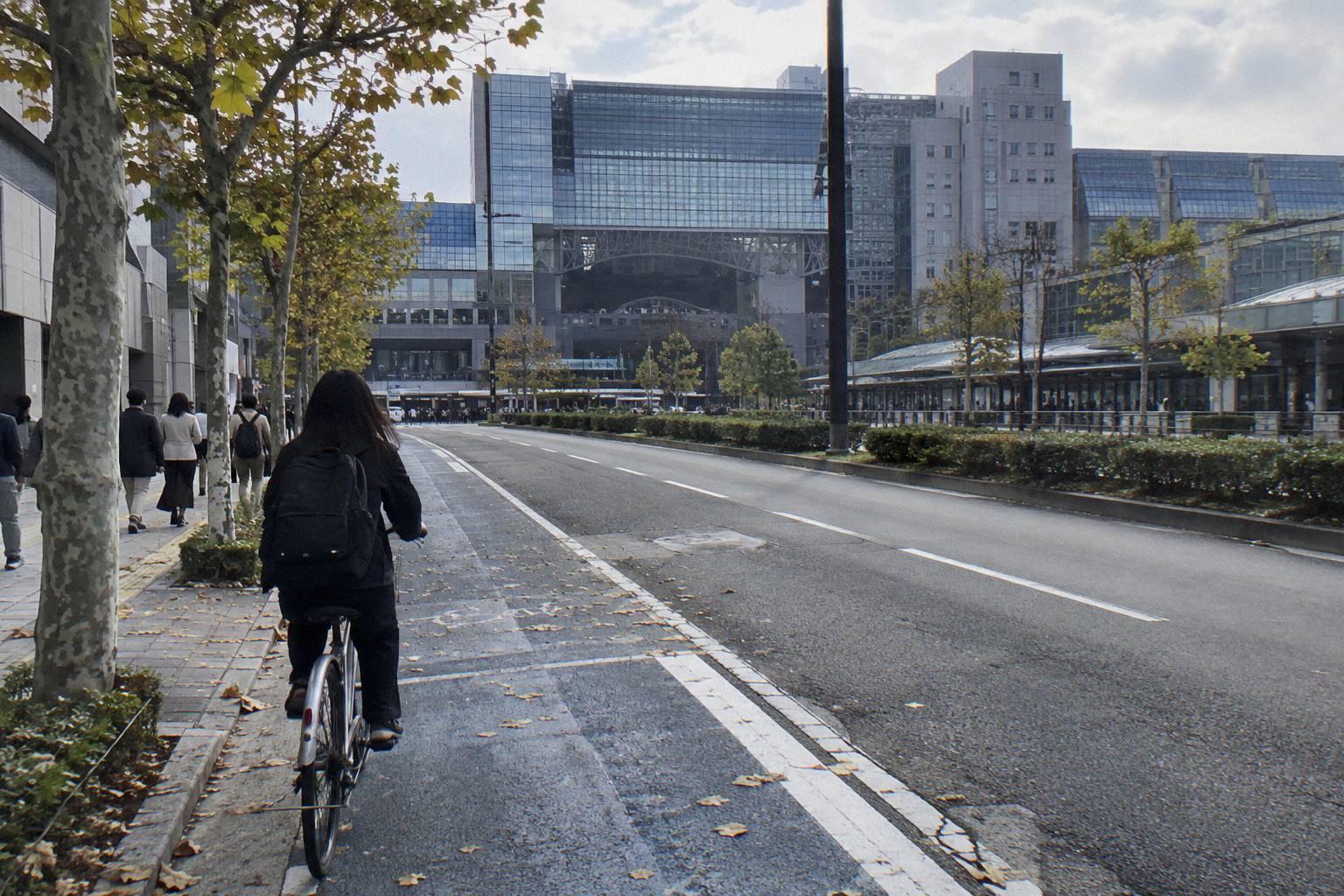
On the guided side, the inclusions are printed plainly per ride. The Backstreets ride gives everyone an e-bike as part of its from ¥15,000 per person fare. The Highlights ride includes an E-Bike at from ¥11,000 per person. The Full-Day E-Bike, Lunch Included ride ("Bike Kyoto's Grand Loop: Full-Day Kyoto E-Bike Tour - 5 Top Sites") includes an E-Bike plus a light lunch, admission fees and helmet at from ¥26,000 per person for 7 hours to 8 hours, rated 5.0 from 596 reviews, minimum age 16. A rider can check availability on that full-day format if the e-bike plus lunch bundle matches the day they have planned.
The practical difference is certainty. A rental rider can be told at the counter that the e-bikes are taken that day; a booked guided rider cannot, because the electric bicycle is named in what the fare buys. For anyone with their heart set on electric assist, that certainty has a value the raw fare comparison does not show.
What Trips People Up Before You Book
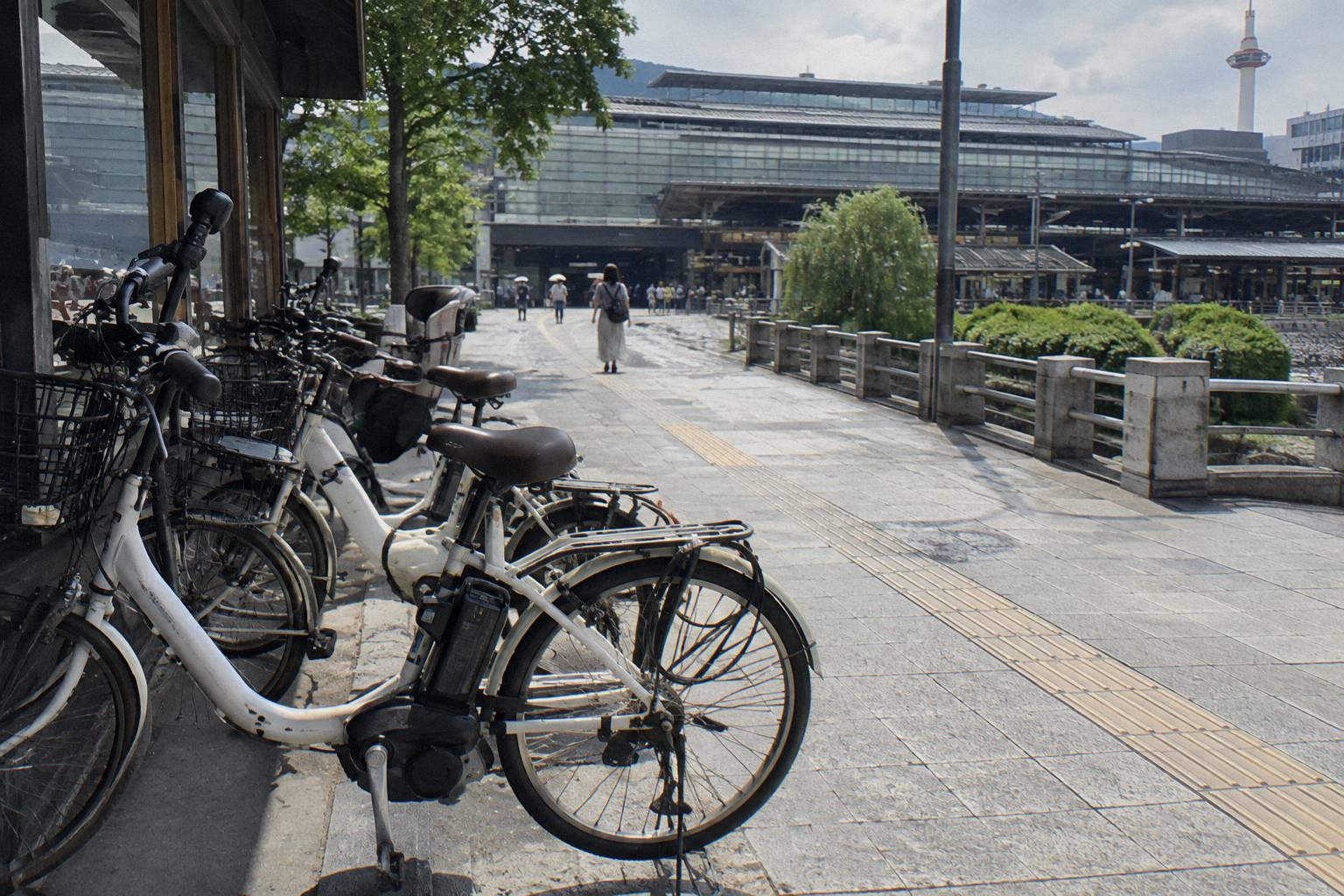
The four classic mistakes are skipping the insurance question, assuming a helmet comes automatically, parking anywhere that looks convenient, and comparing a bare rental rate against a guided fare without adding the helmet, insurance, parking and risk to the rental side. Each one is avoidable with a single question at the counter or a single glance at a ride's inclusions before booking.
The insurance mistake is the quietest. Kyoto Prefecture requires bicycle liability insurance, and many visitors already hold a policy with an individual-liability rider that satisfies it, but they never check, and the ones who hold nothing never ask the counter what it offers. One question settles it. The helmet mistake is similar: since 1 April 2023 the helmet is an effort duty for every age, and while no fine attaches, the effort is the rider's to make, so confirm the counter provides one before you pay.
The parking mistake costs actual money: 3,500 yen per removed bicycle plus the retrieval trip to a depot, held 4 weeks from the day after removal. The comparison mistake is the most common of all: a rental rate that looks like a bargain next to from ¥11,000 per person rarely includes a helmet, insurance, a guide or parking, and the gap narrows or vanishes once the additions are made.
The Highlights ride is the guided answer to the comparison mistake: one fare, from ¥11,000 per person, with the E-Bike inside it, rated 5.0 from 148 reviews and open to riders from minimum age 2. Check the live price for your date before deciding, since fares move with the season.
A fifth mistake deserves a line of its own: arriving in peak periods without a plan. Cherry blossom full bloom in Kyoto normally falls on 4 April by the observatory's 1991 to 2020 normals, though in 2026 it came on 30 March, and maple colouring normally arrives around 5 December, per the Japan Meteorological Agency Kyoto observations. Around those weeks, both rental counters and guided rides fill first, so the booking question is worth settling early rather than on the morning.
Common Questions About Renting A Bicycle In Kyoto
Do I Need Insurance To Rent A Bike In Kyoto?
Kyoto Prefecture requires bicycle liability insurance under its bicycle ordinance. A personal-liability rider on a home, car or accident policy can satisfy it, as can a dedicated bicycle policy. Ask the rental counter what it provides or check your existing policies before you ride.
Do I Have To Wear A Helmet On A Rental Bike?
Since 1 April 2023 every cyclist of every age in Japan must make an effort to wear a helmet. It is an effort duty with no fine, but the expectation applies to rental riders the same as everyone else. Confirm a helmet comes with the bicycle when you rent.
What Happens If My Rental Bike Gets Removed For Illegal Parking?
Kyoto City removes illegally parked bicycles across nearly the whole city. Reclaiming one costs 3,500 yen per bicycle, and the city stores removed bicycles for 4 weeks from the day after removal, with depots such as Sanjo Senbon open daily noon to 9 pm. You would then also answer to the rental shop for the bicycle.
Can I Get Fined While Riding A Rental Bike In Kyoto?
Yes. From 1 April 2026, riders aged 16 and over pay fixed fines of 3,000 to 12,000 yen for minor violations, including 12,000 yen for holding a phone while riding and 3,000 yen for riding two abreast. The rules apply to every rider, rental or otherwise.
Is A Guided Ride Cheaper Than Renting?
It depends on the bundle. A rental rate covers only the bicycle in many cases, and the rider adds a helmet, insurance and parking risk. Guided rides from ¥11,000 per person include the bicycle, helmet and guide, so for riders who would buy those pieces separately the guided fare is often the closer comparison than it first appears.
Are E-Bikes Treated Differently From Regular Bikes?
A pedal-assist e-bike meeting the legal standard is a bicycle under Japanese law. A vehicle with a throttle or outside the standard is classed as a motorised bicycle or a car, not a bicycle. Guided e-bike rides name the electric bicycle in their inclusions, so availability is settled at booking.