Cycling Kyoto In Summer Heat: Early Starts, Water And E-Assist
August in Kyoto averages a daily high of 33.7 °C. Here is how the heat should shape when you ride, which bike you pick and what the guided options include.
Short answer
August is Kyoto's hottest month, with a mean daily maximum of 33.7 °C and a record of 39.8 °C; July is the wettest at 223.6 mm. Summer riders do best with a morning start, carried water and, where the product names it, e-assist. Guided rides from ¥14,000 per person include bottled water on several products.
Riding Kyoto in summer is a scheduling decision before it is a fitness decision. The guided options that pair a morning start with water on board begin with the early bird bamboo forest ride, and this guide works through what the heat data and the ride inclusions say about choosing between them.
| Fact | Detail |
|---|---|
| Hottest month | August: mean 28.5 °C, mean daily max 33.7 °C, mean daily min 24.7 °C |
| July heat | Mean 27.3 °C, mean daily max 32.0 °C |
| Wettest month | July: 223.6 mm of rain |
| Record daily maximum | 39.8 °C, set on 19 July 2018 and 8 August 1994 |
| Rainy season | Early June to mid July |
| Early Bird Bamboo Forest Ride | From ¥16,000 per person, 3 to 4 hours, 5.0 from 773 reviews, bottled water included |
| Morning Ride From Station | From ¥14,000 per person, 3 hours 30 minutes, 5.0 from 20 reviews, water and raincoat included |
| Palace, Castle And Temples | From ¥16,500 per person, 6 hours 30 minutes, 600 ml bottle of water per participant |
Source for the climate rows: the Japan Meteorological Agency Kyoto monthly normals, 1991 to 2020.
How Hot Does Kyoto Actually Get In Summer?
August is the hottest month, with a mean daily maximum of 33.7 °C and a mean of 28.5 °C across day and night; July peaks lower at 32.0 °C but is the wettest month at 223.6 mm. The highest daily maximum on record is 39.8 °C, recorded twice, on 19 July 2018 and 8 August 1994. Overnight lows stay near 24 °C, so mornings begin warm rather than cool.
The Japan Meteorological Agency station data for Kyoto, using the 1991 to 2020 normals, gives the full picture month by month. June is already at a mean daily max of 28.1 °C with 199.7 mm of rain, September holds at 29.2 °C with 178.5 mm, and only by October does the mean daily max fall back to 23.4 °C. In practical terms, the riding window that feels moderate runs from roughly October to May, and the summer rider is always working around heat rather than with it.
The overnight numbers matter as much as the daytime peaks. A mean daily minimum of 24.7 °C in August means the city never cools fully before the sun returns, so an early ride starts warm and climbs from there. The Japan Meteorological Agency Kyoto observations also track the seasonal markers that frame the year: cherry blossom full bloom normally lands on 4 April and maple colouring on 5 December, which is why so many riders target the shoulders of the year instead of the summer middle.
| Month | Rain (mm) | Mean (C) | Mean Daily Max (C) | Mean Daily Min (C) |
|---|---|---|---|---|
| June | 199.7 | 23.3 | 28.1 | 19.2 |
| July | 223.6 | 27.3 | 32.0 | 23.6 |
| August | 153.8 | 28.5 | 33.7 | 24.7 |
| September | 178.5 | 24.4 | 29.2 | 20.7 |
Prices on every product below vary by date and group, and the booking page shows the price for the date you choose.
Is Cycling Kyoto In Summer Heat Manageable?
Yes, with the right format: the data shows a narrow comfortable window in the morning, and the roster offers rides built around exactly that. The Early Bird Bamboo Forest Ride runs 3 to 4 hours with bottled water included, from ¥16,000 per person, and the Morning Ride From Station runs 3 hours 30 minutes with water and a raincoat, from ¥14,000 per person. Both end before the afternoon peak builds.
The case for a guided ride in summer is partly a case for short duration. Every product's length is printed up front, and summer riders can simply pick the shorter ones. A 3 to 4 hour loop finishes while the mean daily max is still climbing; a 7 to 8 hour full-day loop spends its afternoon inside the hottest part of the day. That trade-off, hours versus coverage, is the central summer decision, and the price spread is wide enough to make it a real choice rather than a corner case.
Water is the second lever. Bottled water is named as included on the Early Bird Bamboo Forest Ride and on the Morning Ride From Station, and the Palace, Castle And Temples ride includes one 600 ml bottle of mineral water per participant. Carrying water is the baseline advice for any summer ride, guided or not; on these products it is handled for you. If you are weighing formats more broadly, the guided versus self-guided cycling trade-offs are worth reading before you commit.
The related ride deserves a direct mention here: the early bird Arashiyama ride is the summer-shaped product on this site, with a minimum age of 10, a native English speaking bilingual guide, and a Cannondale multi-speed bicycle included. Check availability for your dates before planning the rest of the day around it.
Should You Choose E-Assist For A Hot-Weather Ride?
E-assist is a ride feature only where the product names an e-bike, and several do: the Morning Ride From Station, the Palace, Castle And Temples ride and the full-day e-bike loops all include electric-assist bicycles in their inclusions. Legally, a pedal-assist e-bike that meets the national standard is classed as a bicycle under Kyoto City's rules, so it rides under the same road rules as any other bike.
The argument for e-assist in heat is straightforward: the motor takes a share of the pedalling, and the rider arrives at each stop with less effort spent. This guide makes no claim about hills or gradients, because no official elevation data backs one, but the effort reduction on flat ground is the point anyway. On a 33.7 °C afternoon the difference between a full pedal workload and assisted pedalling is the difference between finishing the route and cutting it short.
The Palace, Castle And Temples ride pairs its e-bikes with a summer-specific inclusion that no other product on this site names: an optional fan-cooled jacket rental, available on request during Kyoto's hot summer for ¥1,000 per day. Each participant also gets a new premium Panasonic electric bicycle and helmet, and a bilingual guide in English and Japanese. At 6 hours 30 minutes it is the longest of the three summer candidates, from ¥16,500 per person, and it has no reviews yet, so there is no rating to weigh.
If the rider-fit question is your main one, the e-bike versus regular bike decision guide covers it in full: who benefits from assist, what the legal status means, and where a standard multi-speed bike still makes sense.
Why Does An Early Start Matter More Than The Route?
The temperature curve answers that: with an August mean daily minimum of 24.7 °C and a mean daily max of 33.7 °C, the gap between the coolest and hottest part of an average day is about 9 degrees, and the morning side of that curve is where every hour of riding is cheapest. Route choice cannot change the temperature; timing can put your hours on the low side of the daily swing.
Early start here is a decision, not a clock time: no departure times are printed for these products, and the booking calendar shows the options for your date. What matters for planning is the structure. A ride that begins in the morning and runs 3 to 4 hours is over before the daily max arrives. A ride that starts at midday runs its whole length inside the peak. The products named in this guide are chosen because their durations keep them inside the first category.
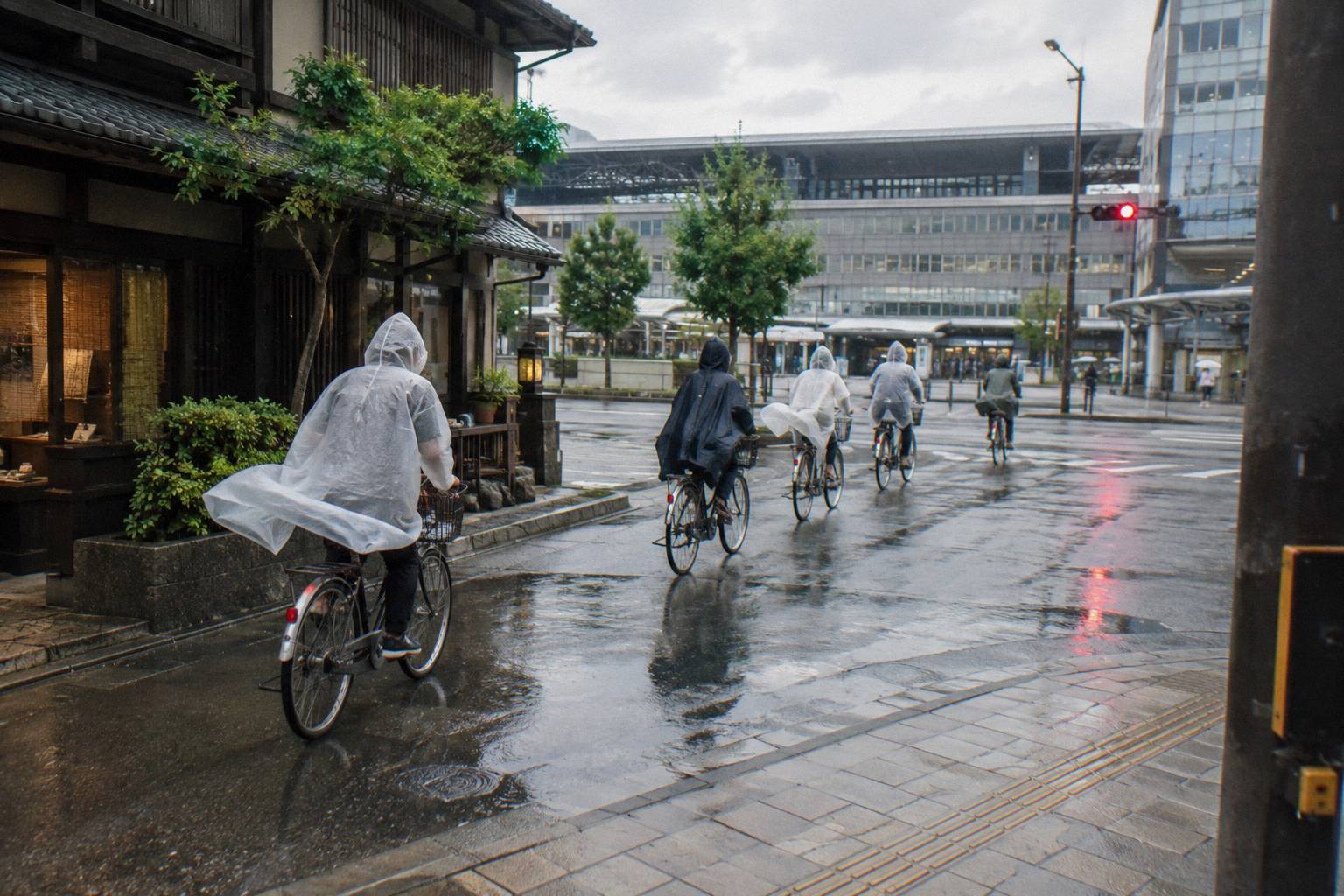
There is a second, quieter benefit: the rainy season runs early June to mid July, so a July rider is balancing two factors, heat and the wettest month of the year at 223.6 mm. The Morning Ride From Station includes a raincoat alongside its water, which is the only product on this site naming both. From ¥14,000 per person at 3 hours 30 minutes, with a minimum age of 13, it carries a 5.0 from 20 reviews, a small pool but a consistent one.
The morning logic connects to another page on this site: the best time of day for a Kyoto ride guide covers the timing question across the whole year, not just summer, and is the deeper read if your travel dates are flexible.
Which Ride Formats Suit A Hot Day Best?
Short morning products with water included suit a hot day best. The two clearest fits are the Early Bird Bamboo Forest Ride (3 to 4 hours, from ¥16,000 per person, 5.0 from 773 reviews) and the Morning Ride From Station (3 hours 30 minutes, from ¥14,000 per person, 5.0 from 20 reviews). The Palace, Castle And Temples ride is the long option, 6 hours 30 minutes, with a 600 ml water bottle and e-assist per participant.
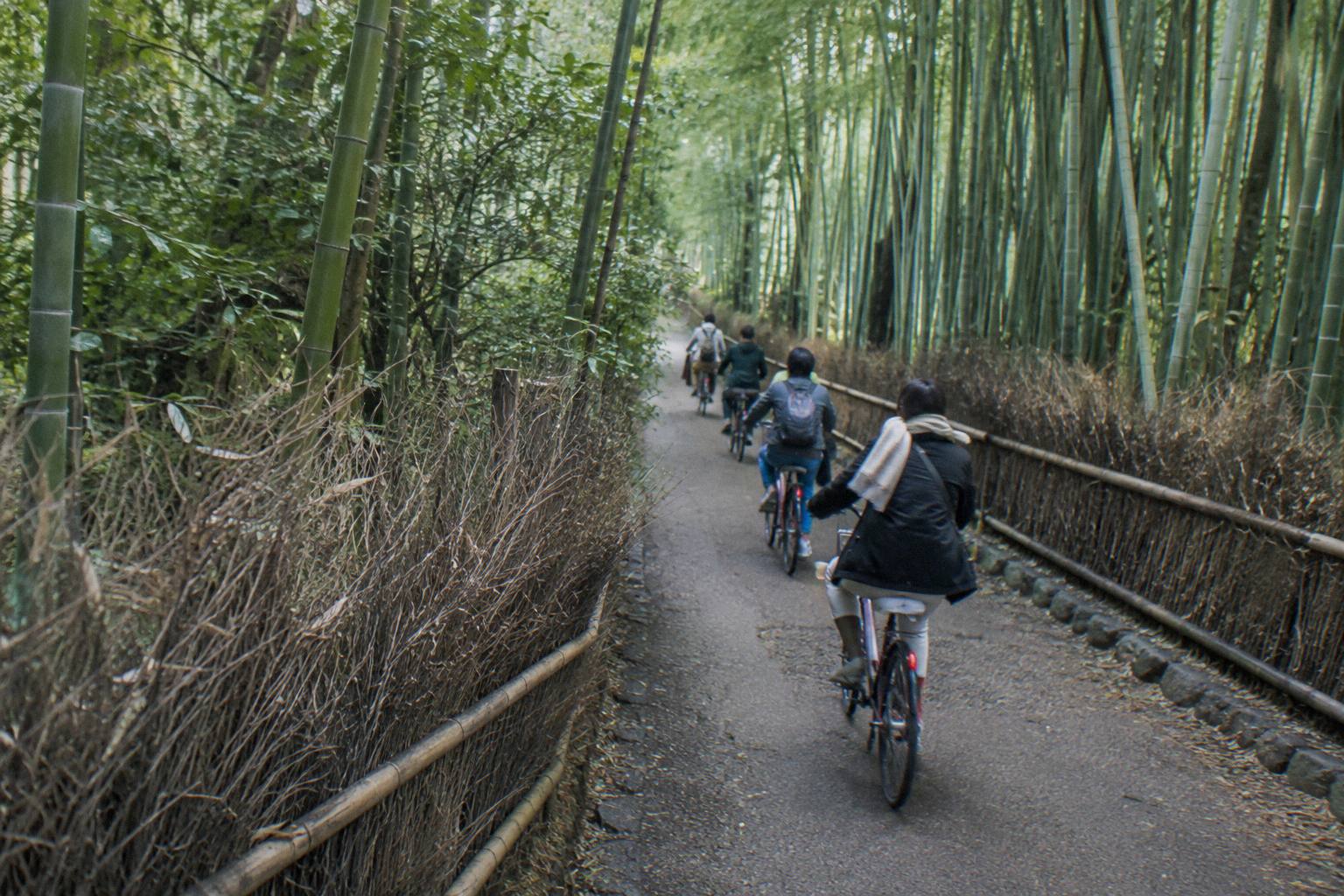
Duration is the axis to compare on, because it is printed for every product. Below 4 hours, the ride fits inside a morning. Above 6 hours, it does not, and the rider is choosing to spend the afternoon on the bike with the e-assist, the water inclusion and the optional cooling jacket as their mitigations. Neither choice is wrong; they are different bets about how much of Kyoto to see versus how much heat to absorb. Other pages covering the same trip are gathered on Kyoto Bike Tours.
| Product | Duration | From Price (Per Person) | Water Named As Included | E-Bike Named As Included |
|---|---|---|---|---|
| Early Bird Bamboo Forest Ride | 3 hours to 4 hours | ¥16,000 | Yes, bottled water | No, multi-speed bicycle |
| Morning Ride From Station | 3 hours 30 minutes | ¥14,000 | Yes, plus raincoat | Yes |
| Palace, Castle And Temples | 6 hours 30 minutes | ¥16,500 | Yes, 600 ml bottle | Yes, Panasonic premium |
All three carry free cancellation up to 24 hours before start, which matters in summer: a forecast you do not like is a legitimate reason to cancel without charge rather than ride into it. The full decision framework, including what a private format changes, is in the private versus small group riding guide.
Which Guided Rides Run Shorter For A Hot Day?
Two of the four rides include an e-bike as standard, which matters when August in Kyoto averages a daily maximum of 33.7 °C. Note that none of the rides state a start time or shade level, so the booking page calendar is where you pick a morning departure.
The two shortest options are the Northern Ride, Kinkaku-Ji at 3 hours 15 minutes and the Morning Ride From Station at 3 hours 30 minutes, and both include an e-bike. The Northern Ride has the lowest minimum age of the group at 9, with price on the booking page, while the Morning Ride From Station runs from ¥14,000 per person with a minimum age of 13. The other two, the Early Bird Bamboo Forest Ride and the Gentle Backstreet Ride, each last 3 to 4 hours and do not include an e-bike. On the Early Bird, an e-bike upgrade is an extra fee on request, if available. That ride starts at JR Saga Arashiyama Station and includes bottled water.
Age rules may decide for you before the clock does. The Northern Ride, Kinkaku-Ji takes riders from age 9, the Early Bird Bamboo Forest Ride from age 10, and the remaining two from age 13. On price, the Gentle Backstreet Ride is the cheapest stated option at from ¥12,000 per person, followed by the Morning Ride From Station at from ¥14,000 per person and the Early Bird Bamboo Forest Ride at from ¥16,000 per person. Remember that no listing promises a particular start time or a shaded route, so treat the booking page calendar as the place to lock in a morning slot, and use the free cancellation if the forecast turns.
| Ride | Duration | Price | E-Bike | Minimum Age |
|---|---|---|---|---|
| Northern Ride, Kinkaku-Ji | 3 hours 15 minutes | Price on the booking page | Included | 9 |
| Morning Ride From Station | 3 hours 30 minutes | From ¥14,000 per person | Included | 13 |
| Early Bird Bamboo Forest Ride | 3 to 4 hours | From ¥16,000 per person | Not included, upgrade on request for an extra fee, if available | 10 |
| Gentle Backstreet Ride | 3 to 4 hours | From ¥12,000 per person | Not included | 13 |
What Should You Carry And Wear For A Summer Ride?
Carried water is the baseline, and on the three products above it is already included, so the rider's own kit list is short: comfortable clothing for a mean daily max of 33.7 °C, sun protection, and whatever the booking page asks you to bring. Helmets are an effort duty for every cyclist of every age since 1 April 2023, and each of these rides includes one, so that box is ticked by the operator.
The helmet point deserves its sentence because it is a legal one. Under the rule introduced on 1 April 2023, cyclists of every age must make an effort to wear a helmet, with no fine attached; the Kyoto Prefecture page on the helmet effort duty sets it out. Every product named in this guide includes a helmet, which makes compliance automatic on a guided ride.
Clothing guidance is deliberately general here: the season's clothing decisions, including the rainy-season layer question, are covered once in the what to wear cycling in Kyoto guide, and this page does not repeat them. The summer-specific additions are water, which the rides provide, and the optional fan-cooled jacket on the Palace, Castle And Temples product at ¥1,000 per day.
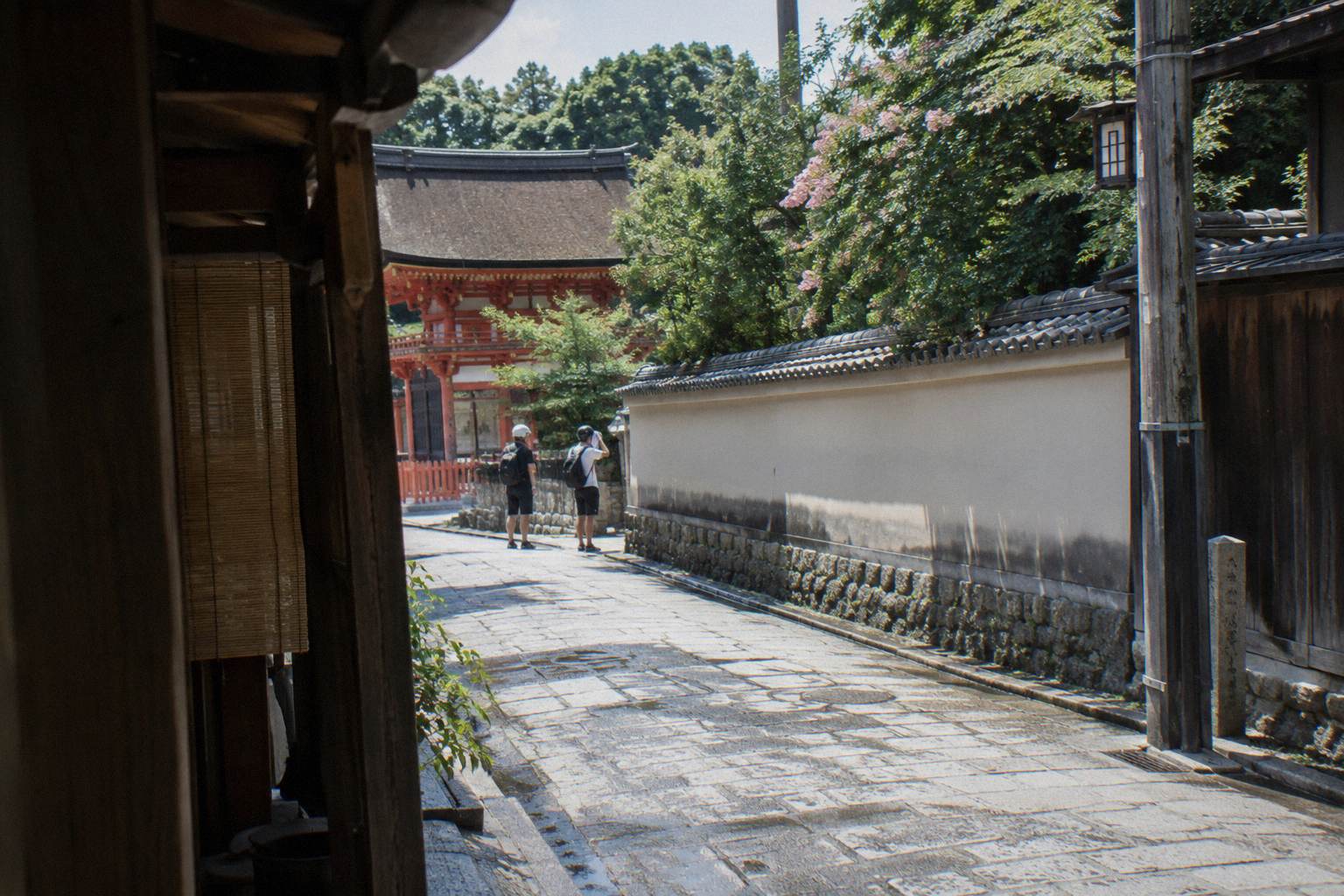
One more summer carry-over from the wider rules: bicycle liability insurance is required in Kyoto Prefecture under the prefectural ordinance, and the Kyoto Prefecture page on bicycle liability insurance names which policies satisfy it. Ask the operator whether the ride's own coverage applies to participants; the Hidden Gems e-bike product, for one, names insurance as excluded, so the question is worth one sentence at booking.
How Does Summer Rain Change The Plan?
July is the wettest month at 223.6 mm, ahead of June at 199.7 mm, and the rainy season runs early June to mid July; August rain drops to 153.8 mm while heat peaks. So a July rider plans for both wet and hot, and an August rider plans for heat with a lighter rain expectation, and the free cancellation window on every product lets a bad forecast cancel the day without cost.
The Morning Ride From Station is the only product on this site naming a raincoat among its inclusions, which quietly marks it as the all-weather morning option. Everyone else should treat a folded rain layer as part of the summer kit for July dates. Beyond that, the rain question for riders is covered fully in the rainy season cycling guide, and this page leaves the detail there.
- Budget Fare, Hidden Alleys¥11,000
- Crowd-Free E-Bike Ride¥13,000
- Higashiyama Heritage Ride¥13,500
- Fushimi Inari, Sento Stop¥13,500
- Morning Ride From Station¥14,000
- Silver Pavilion, Philosopher's Path¥14,500
- Backstreets, 5 To 6 Hours¥15,000
- Palace, Castle And Temples¥16,500
What summer rain does not change is the early-start logic. A wet July morning is still the coolest part of the day, still the part of the day the short rides are built around, and still the slot with free cancellation attached up to 24 hours before start on every product discussed here.
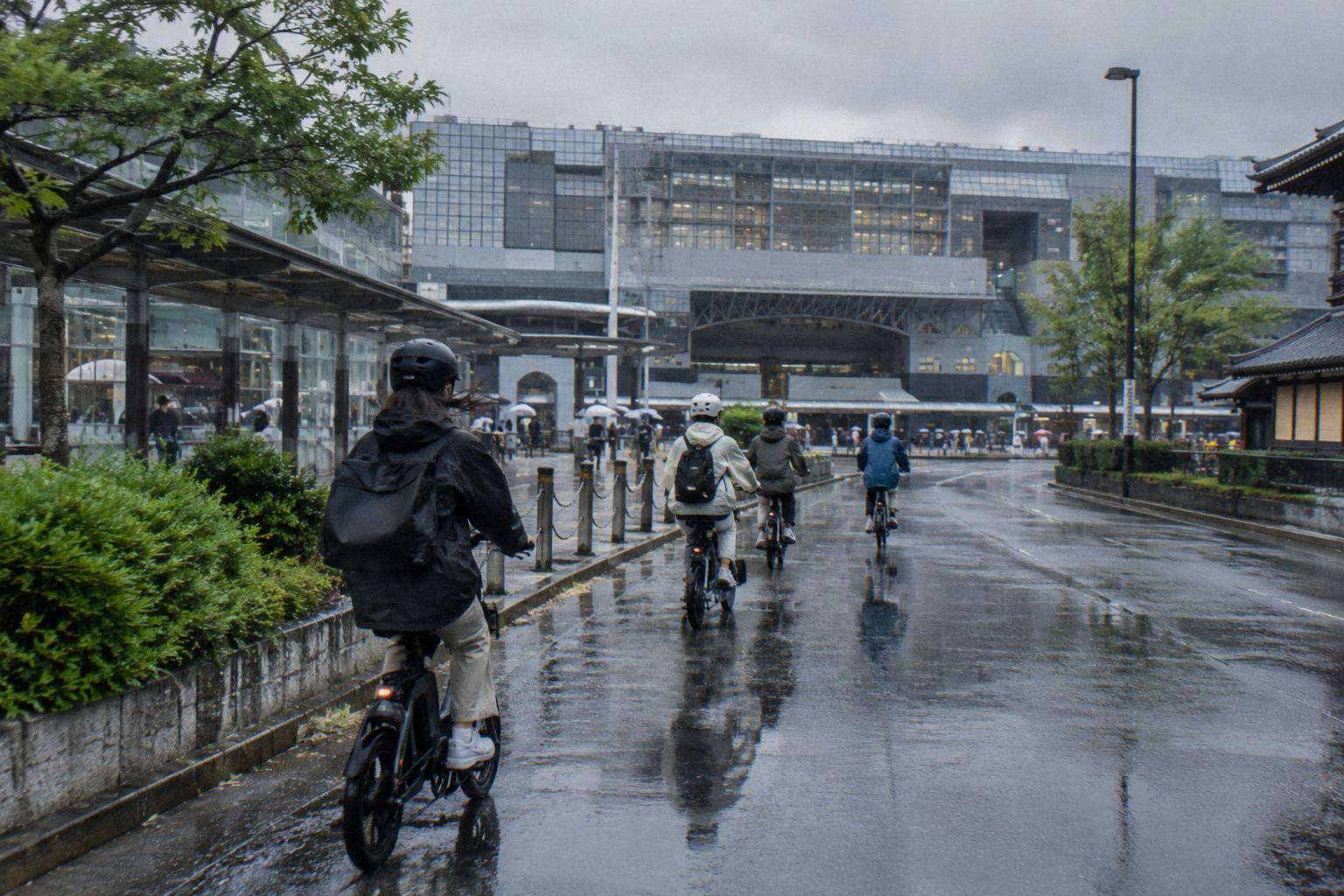
What Trips People Up Before You Book
The most common summer missteps are booking a long ride without checking its water inclusions, assuming every product includes an e-bike when several include a standard multi-speed bicycle instead, and ignoring the free cancellation window by committing to a fixed date early. Each costs nothing to avoid: the duration, inclusions and cancellation terms are printed per product, and the booking page shows the price for the date you choose.
The first mistake is picking by destination alone. Two products can share a morning slot and differ completely in what they hand you at the start: one includes bottled water, another a 600 ml bottle plus a Panasonic e-bike and helmet, a third names water but no e-bike. Read the inclusions line for the product itself, because no blanket statement about rides holds across the board.
The second is assuming the rating story. The Early Bird Bamboo Forest Ride carries a 5.0 from 773 reviews, the Morning Ride From Station a 5 from 20, and the Palace, Castle And Temples ride has no reviews at all. All three are real bookable products; only the first has a deep pool of feedback. A product with no reviews is not a worse product, it is an unreviewed one, and the inclusions and price are the evidence you do have.
The third is skipping the age check. Minimum ages on these three run 10, 13 and 10 respectively, and family groups with younger children need to know that before booking rather than at the meeting point. Ask the operator about anything the booking page leaves open; a single question beats a cancelled morning.
A fourth habit worth building is checking the start time against the day's heat, not just against your own schedule. An early bird departure is early for a reason: summer temperatures in Kyoto climb through the morning, and a ride that begins at dawn finishes before the worst of it. If a product offers a morning slot and a midday slot, the morning one is doing more for your comfort than any amount of water in the inclusions. Pair that timing with the kit list, and a helmet and a filled bottle matter far less than they otherwise would, because you are simply not out in the peak heat long enough to need them desperately.
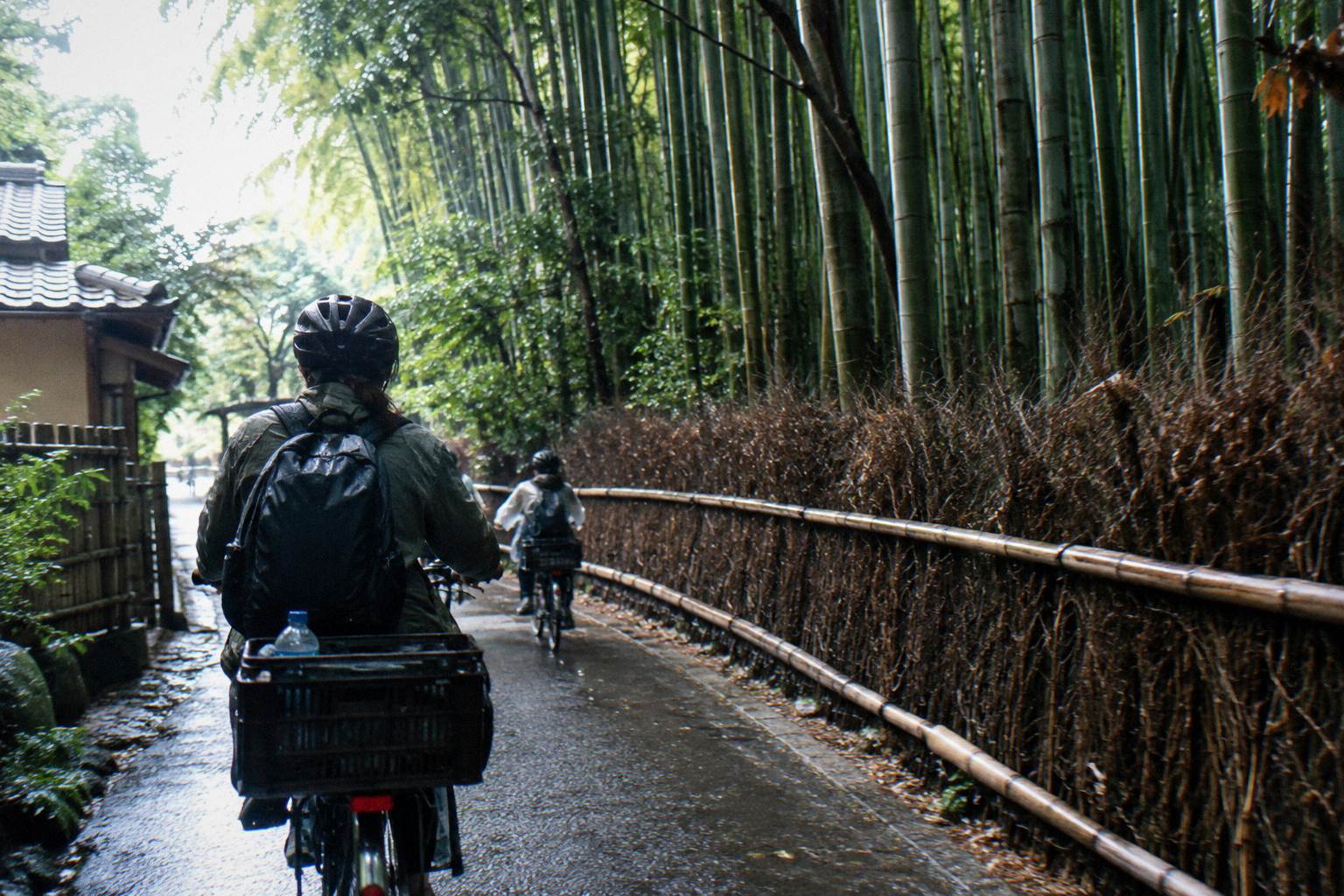
The cancellation window deserves a second look too, because in summer it is a weather tool and not just a scheduling convenience. A forecast can shift overnight, and free cancellation turns a committed date into a decision you can revisit. The practical approach is to book the date you want, note the cancellation cutoff, and recheck the forecast in the days before rather than the morning of. Riders who wait until the last minute to decide often find the morning slots already gone, which is how a flexible plan turns into a fixed one by accident.
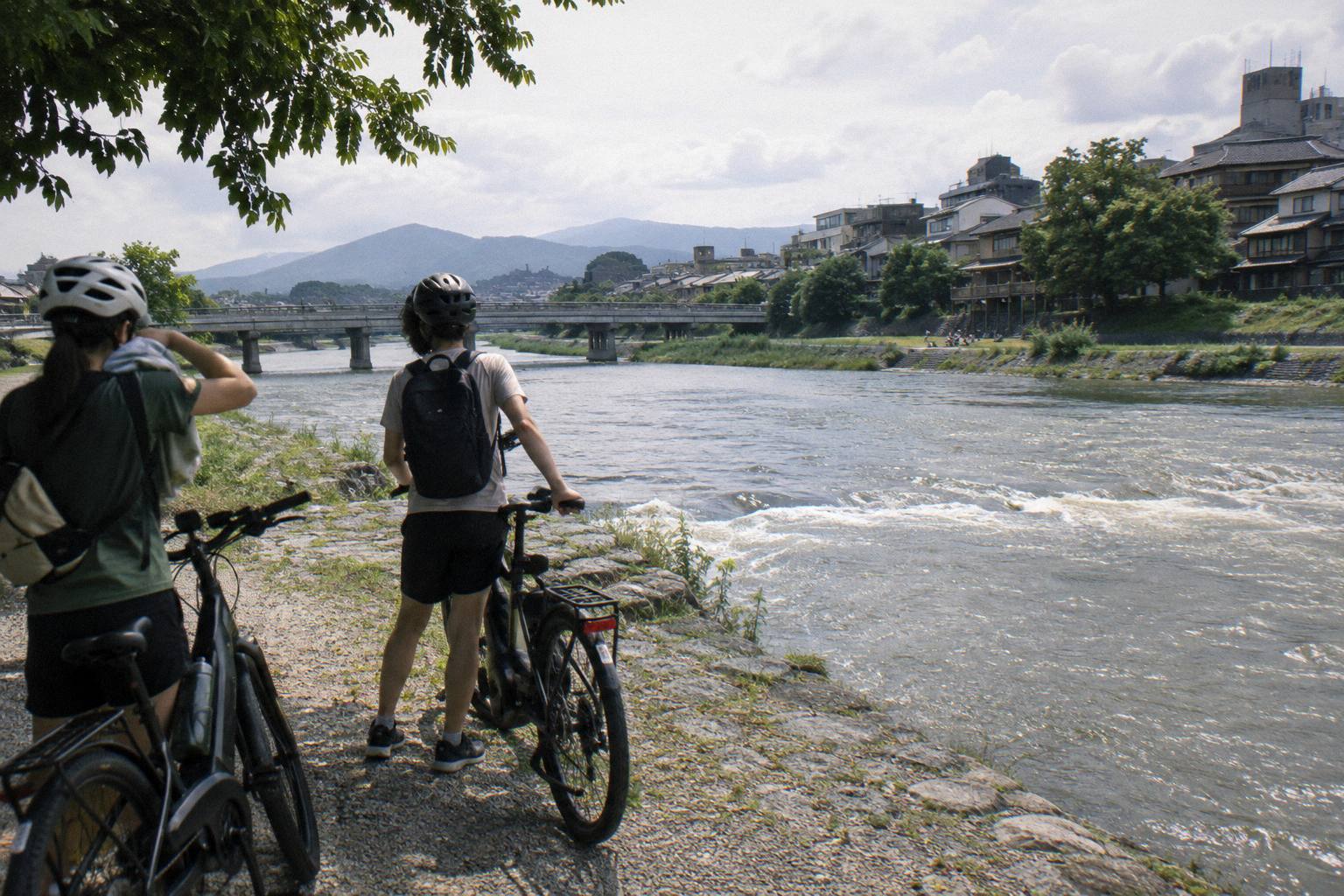
A summer plan built on these rides is one part timing, one part format and one part kit, and the roster covers all three: morning-shaped durations, water on board, e-assist where the product names it, and cancellation that lets the forecast have the final word. Riders who want the full seasonal comparison can read the cherry blossom riding guide for the spring alternative, where the heat question disappears entirely.
Common Questions About Riding In Kyoto Heat
How Hot Does Kyoto Get In Summer?
August is the hottest month with a mean daily maximum of 33.7 °C and a mean of 28.5 °C. The record daily maximum is 39.8 °C, set on 19 July 2018 and 8 August 1994, per the Japan Meteorological Agency Kyoto station data.
Is July Or August Better For Cycling In Kyoto?
July is cooler, with a mean daily max of 32.0 °C against 33.7 °C in August, but it is also the wettest month at 223.6 mm. August is hotter with less rain, 153.8 mm. Either way, a morning ride with water included is the format both months point toward.
Do Any Kyoto Rides Include Water In Summer?
Yes. The Early Bird Bamboo Forest Ride includes bottled water, the Morning Ride From Station includes water and a raincoat, and the Palace, Castle And Temples ride includes one 600 ml bottle of mineral water per participant.
Should I Pick An E-Bike For Riding Kyoto In Summer?
E-assist reduces the pedalling workload, which helps in heat. Products naming an e-bike include the Morning Ride From Station and the Palace, Castle And Temples ride. A pedal-assist e-bike meeting the legal standard is classed as a bicycle under Kyoto City rules.
What Is The Fan-Cooled Jacket Option?
The Palace, Castle And Temples ride offers an optional fan-cooled jacket rental on request during Kyoto's hot summer for ¥1,000 per day. It is the only product on this site naming that option.
Can I Cancel A Summer Ride If The Forecast Is Bad?
Every product discussed here carries free cancellation up to 24 hours before start, so a poor forecast can cancel the booking without charge. Prices vary by date and group, and the booking page shows the price for your date.