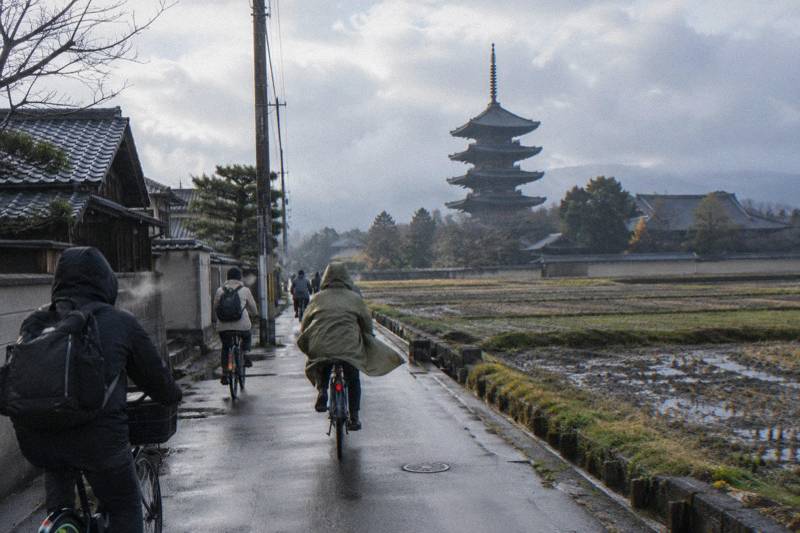
Cycling In Kyoto During Rainy Season: June Rides And Backup Plans
Rainy season in Kyoto runs early June to mid July, and July is the wettest month of the year at 223.6 mm. Riding is still possible: here is how the rain numbers stack up, which guided rides handle a damp day well, and what to do when the sky opens.
Short answer
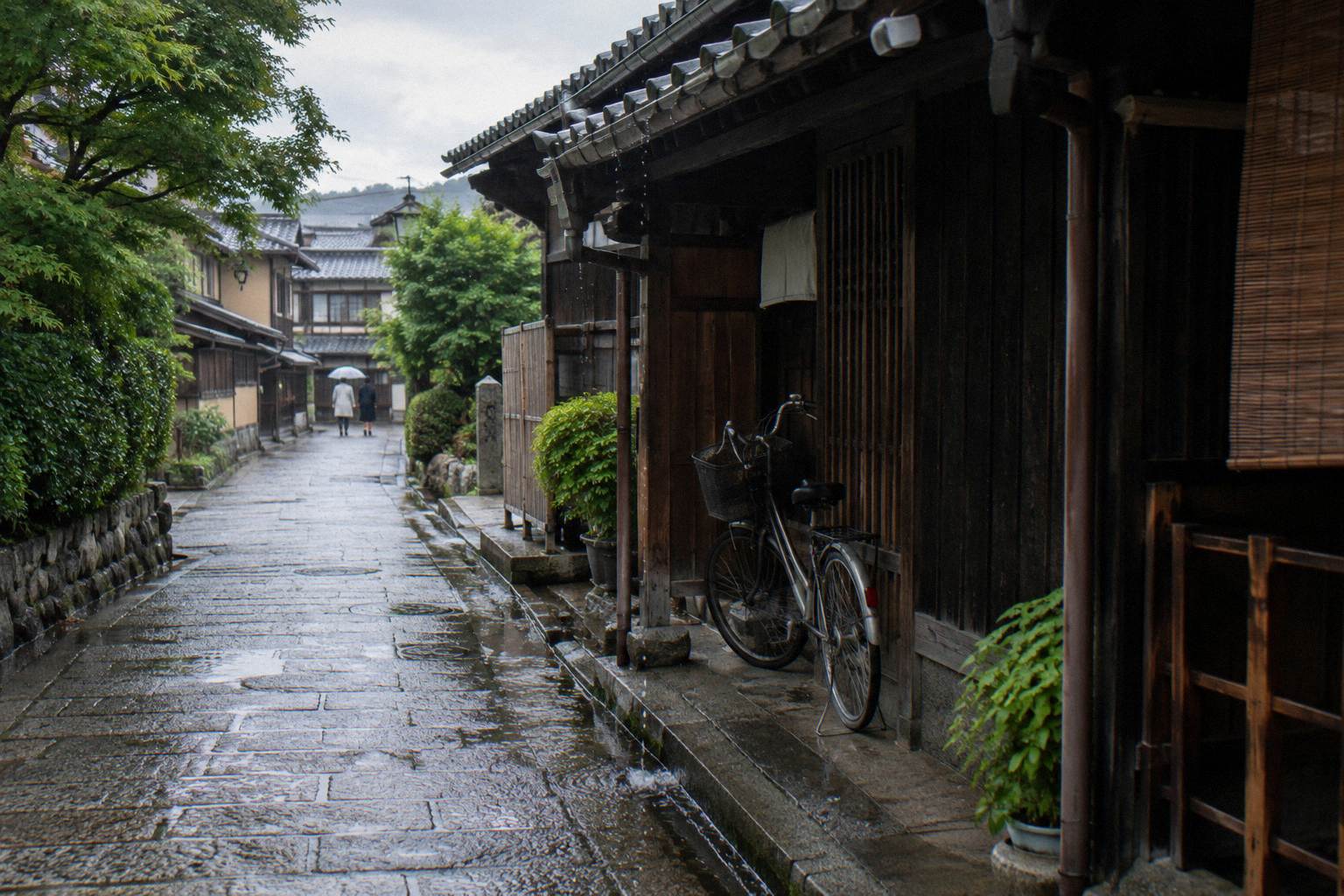
Kyoto's rainy season runs early June to mid July. June averages 199.7 mm of rain and July 223.6 mm, the wettest month on the Japan Meteorological Agency normals; September adds 178.5 mm. Guided e-bike rides still run, one includes a raincoat, and every listed ride here allows free cancellation up to 24 hours before start.
Kyoto in June is green, warm and wet, and most riders still want to be on a bike rather than a bus. If you are weighing a guided option for the damp weeks, the rides profiled below are the pedal-assist products that fit a changeable forecast best, all bookable through Kyoto Bike Tours.
| Fact | Detail |
|---|---|
| Rainy season timing | Early June to mid July (Kinki long-term normal) |
| June rainfall | 199.7 mm (JMA Kyoto normals 1991-2020) |
| July rainfall | 223.6 mm, the wettest month |
| September rainfall | 178.5 mm |
| Helmet rule | Effort duty for every age since 1 April 2023, no fine |
| Blue-ticket fines | Fixed fines of 3,000 to 12,000 yen for riders aged 16 and over since 1 April 2026 |
| Removed bicycle fee | 3,500 yen to reclaim, held for 4 weeks |
| Free cancellation | Up to 24 hours before start on the rides profiled below |
When Is Rainy Season In Kyoto?
Rainy season in Kyoto runs from early June to mid July, following the Kinki region's long-term normal. It is not a wall of daily downpours: the Japan Meteorological Agency normals show June averaging 199.7 mm of rain and July 223.6 mm, spread across wet and dry spells, with mean daytime highs of 28.1 °C in June and 32.0 °C in July. A booked ride can land on a bright morning or a soaked afternoon.
The useful mental model is two months of interrupted weather rather than constant rain. The Japan Meteorological Agency Kyoto monthly normals give June a monthly rainfall of 199.7 mm against 53.3 mm in January, but that total arrives in bursts: a humid, overcast stretch of several days, then clearer weather. Riders who book a morning departure and keep a flexible attitude usually still get their ride in.
Humidity is the quieter story. June's mean daily minimum is 19.2 °C and July's is 23.6 °C, so nights barely cool down. On a bike that reads as sweat rather than chill, and it changes what you wear more than whether you ride at all.
The season also feeds the scenery. June rain is what keeps Kyoto's moss, gardens and mountain backdrops intensely green, and the weeks either side of the season proper, late May and the second half of July, sit on the shoulder of the wettest period. If your dates are fixed inside the window, plan around the rain rather than against it.
How Much Rain Do June, July And September Actually Bring?
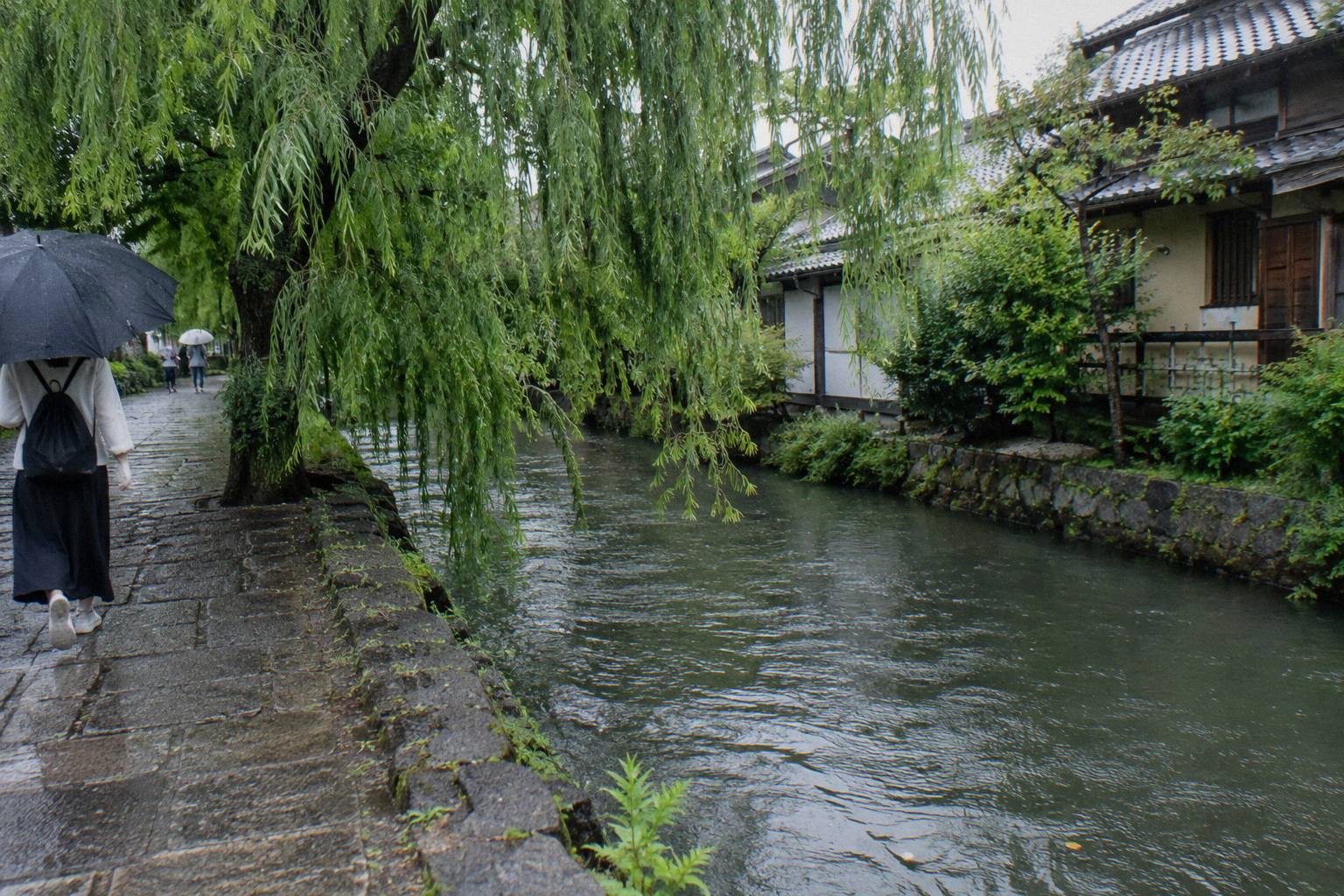
July is Kyoto's wettest month with 223.6 mm on the 1991-2020 normals, ahead of June at 199.7 mm and September at 178.5 mm. August is the hottest month, with a mean of 28.5 °C and a daily high of 33.7 °C, but it is drier than July. The wettest stretch of the calendar runs June through September, and anyone cycling in that window should treat rain gear and a cancellation plan as standard kit.
The full monthly picture from the observatory at Station Kyoto:
| Month | Rain (mm) | Mean temp (C) | Mean daily high (C) |
|---|---|---|---|
| May | 151.4 | 19.5 | 25.1 |
| June | 199.7 | 23.3 | 28.1 |
| July | 223.6 | 27.3 | 32.0 |
| August | 153.8 | 28.5 | 33.7 |
| September | 178.5 | 24.4 | 29.2 |
| October | 143.2 | 18.4 | 23.4 |
Two things follow from the table. First, June is the kindest wet month for riding: warm but not brutal, with highs around 28 °C, so a shower is a cooling event rather than a miserable one. Second, July combines the heaviest rainfall with real heat, which is why a short morning ride or a longer tour with indoor stops suits that month better than an exposed all-day effort.
The autumn follow-up matters too. September's 178.5 mm means the tail of summer is still wet, and the maple colouring that draws riders in late autumn has its official marker on 5 December per the Japan Meteorological Agency Kyoto observations, well after the rain eases. If your trip is flexible, October's 143.2 mm and 23.4 °C highs are the reward for waiting.
For anyone locked into June or July, the numbers are not a reason to skip the bike. They are a reason to book a ride whose length, inclusions and cancellation terms fit a changeable sky.
Which Guided Rides Suit A Wet-Weather Week?
For a wet-weather week in Kyoto, pick a guided ride that includes rain protection: the Beat the Crowds Pro-Curated Morning E-Bike Tour from Kyoto Station lists a raincoat among its inclusions, runs 3 hours 30 minutes from ¥14,000 per person, and holds a 5 rating from 20 reviews with a minimum age of 13. All three featured rides allow free cancellation up to 24 hours before start.
Start with the short one. The Morning Ride From Station, run by 京都 ecoトリップ 本店, is built around the first hours of the day, when June showers are least likely to have built up. Its inclusions name water, a raincoat, a helmet, use of the bicycle and liability insurance, so a passing shower does not end the outing. At 3 hours 30 minutes it is also the smallest chunk of your day to risk on a doubtful forecast. The morning e-bike tour page has the full details and dates.
For a mid-length day with a roofed break, the "4.5-Hour Kyoto Bike Tour with Lunch and UNESCO Zen Temples" from MagicalTrip Inc. runs 4 hours 30 minutes from ¥15,000 per person, minimum age 15, with a rating of 5.0 from 145 reviews. Its inclusions cover a local Kyoto lunch at a Japanese house, entrance to Kennin-ji temple, a certified guide, helmet if you need one, a bike lock and a rental bike with bodily injury liability insurance. A sit-down lunch and a temple stop give you two natural dry windows in a wet morning. Check availability on its booking page if a lunch break mid-ride sounds like the right shape for a June day.
The long option is the full-day ride. "Bike Kyoto's Grand Loop: Full-Day Kyoto E-Bike Tour - 5 Top Sites", from Kyoto Bike Tour, runs 7 hours to 8 hours from ¥26,000 per person, minimum age 16, with a rating of 5.0 from 596 reviews. It includes an e-bike, helmet, snacks, bottled water, admission fees and a light lunch. Five stops plus lunch means the day is broken into segments, several of them indoors or under temple eaves, which is how a longer ride survives a wet forecast. The trade-off is exposure: seven to eight hours in the saddle in July heat and humidity is a bigger commitment than a morning loop.
| Ride | Duration | From (per person) | Minimum age | Rain-relevant inclusion | Rating |
|---|---|---|---|---|---|
| Morning Ride From Station | 3 hours 30 minutes | ¥14,000 | 13 | Raincoat named as included | 5.0 from 20 reviews |
| UNESCO Zen Temples, Lunch | 4 hours 30 minutes | ¥15,000 | 15 | Sit-down lunch at a Japanese house | 5.0 from 145 reviews |
| Full-Day E-Bike, Lunch Included | 7 hours to 8 hours | ¥26,000 | 16 | Light lunch, snacks, admission fees | 5.0 from 596 reviews |
| Budget Fare, Hidden Alleys | 4 hours | ¥11,000 | 2 | Reusable water bottle; e-bike | 5.0 from 148 reviews |
The fourth row is the value play. "Kyoto: E-Bike Tour - Highlights, Backstreets & Local Secrets" from SunnyCycleTour runs 4 hours from ¥11,000 per person with a minimum age of 2, rating 5.0 from 148 reviews. It names a reusable water bottle for spring water and a water omikuji fortune slip at Shimogamo Shrine among its inclusions. It does not list a raincoat, so bring your own.
One more pairing fits the theme: the "South Kyoto: E-Bike Highlights & Local Cultural Experiences" ride, also from SunnyCycleTour, includes a towel for the sento, the public bath, plus amazake and a fox-shaped ema, from ¥13,500 per person over 4 hours. A sento stop is about as good as a wet-day mid-ride break gets. It has too few reviews for a rating claim, so judge it on its inclusions.
For contrast on the rule side of wet riding, the Kyoto cycling rules reference covers the full fine schedule, insurance duty and where e-bikes stand legally; the summary below only covers what rain changes.
What Do Rainy-Season Road Rules Add For Cyclists?
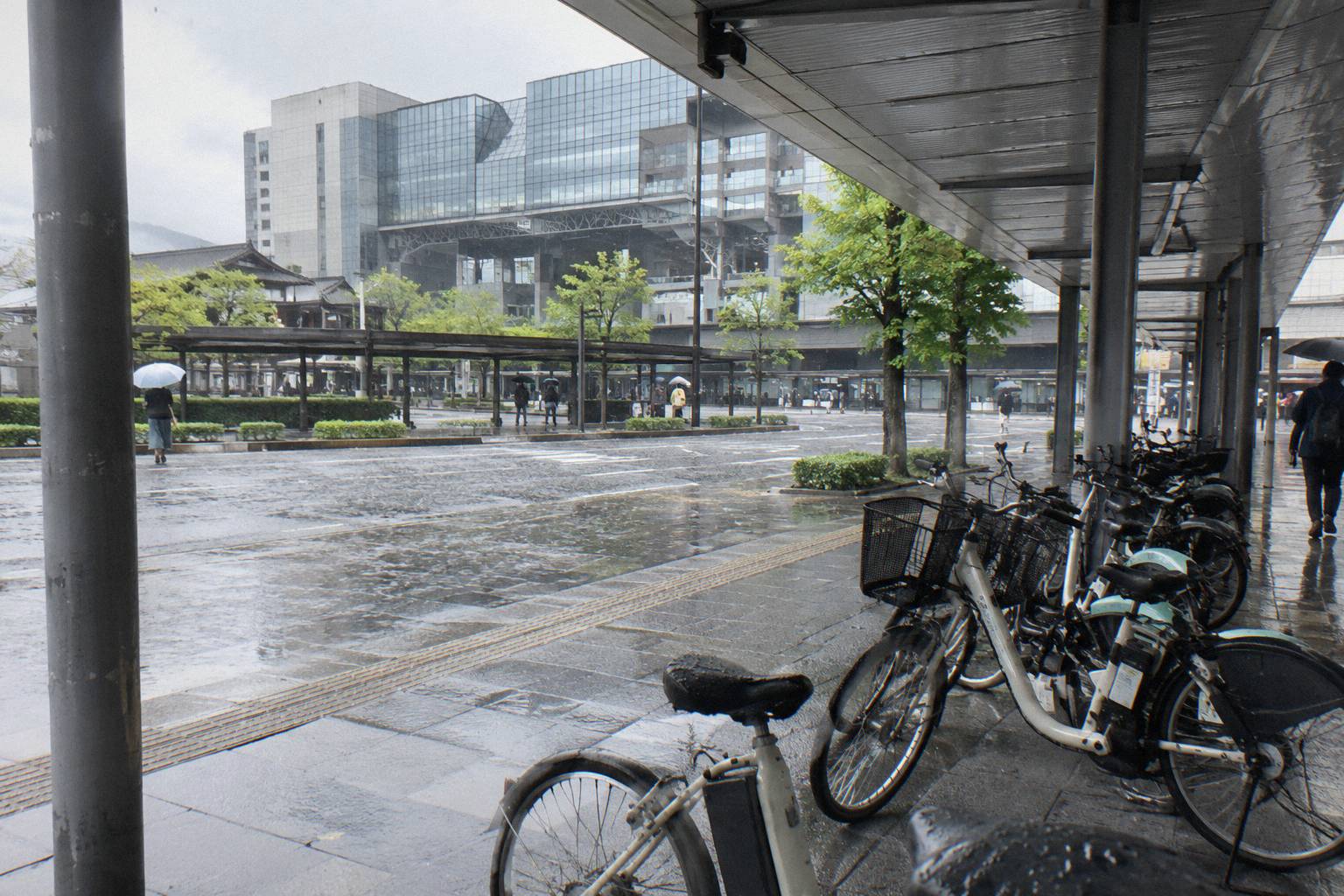
Holding an umbrella while riding carries a 5,000 yen fixed fine for riders aged 16 and over under the blue-ticket system that began 1 April 2026, so rain gear must be worn, not carried. Holding a phone while riding is 12,000 yen under the same system. Kyoto Prefecture separately requires bicycle liability insurance, and helmets are an effort duty for every age since 1 April 2023.
The umbrella fine is the one that catches visitors. Instinct says raise a brolly in a shower; the Kyoto City page on cycling rules lists riding with an umbrella among the public-safety violations at 5,000 yen. A rain jacket and, if you like, a brimmed cycling cap replace the umbrella entirely. Guided rides make this easy: guides set the dress standard at the start.
Parking matters more in the rain too. Riders who duck under a shop eave and leave a bike against a wall can return to a removal notice. Kyoto City removes bicycles from designated areas across nearly the whole city, charges 3,500 yen to release one, and holds it for 4 weeks from the day after removal, per the Kyoto City removed-bicycles page. Storage depots such as Sanjo Senbon open daily noon to 9 pm. On a guided ride the leader handles parking, which is one quiet argument for booking rather than going alone in the wet season.
- Budget Fare, Hidden Alleys¥11,000
- Crowd-Free E-Bike Ride¥13,000
- Higashiyama Heritage Ride¥13,500
- Fushimi Inari, Sento Stop¥13,500
- Morning Ride From Station¥14,000
- Silver Pavilion, Philosopher's Path¥14,500
- Backstreets, 5 To 6 Hours¥15,000
- Palace, Castle And Temples¥16,500
Insurance is the last piece. Kyoto Prefecture requires bicycle liability insurance under its ordinance; an individual-liability rider on a home, car or accident policy counts, as explained on the Kyoto Prefecture liability insurance page. Several rides here include liability or bodily injury cover in their inclusions: the Morning Ride From Station names liability insurance, and the Zen Temples lunch ride names bodily injury liability insurance with its rental bike. For the rest, check your own travel policy before you ride.
| Rule or fee | Amount | Applies to |
|---|---|---|
| Riding with an umbrella | 5,000 yen fixed fine | Riders aged 16 and over |
| Phone held or watched while riding | 12,000 yen fixed fine | Riders aged 16 and over |
| Ignoring a signal | 6,000 yen fixed fine | Riders aged 16 and over |
| Failing to stop at a stop sign | 5,000 yen fixed fine | Riders aged 16 and over |
| Removed bicycle reclaim fee | 3,500 yen per bicycle | Any removed bicycle, held 4 weeks |
| Helmet | Effort duty, no fine | Every cyclist, every age |
What Should You Wear And Pack For A Wet Ride?
Dress for rain you can ride in rather than rain you shelter from: a breathable rain jacket replaces the umbrella, which carries a 5,000 yen fine when held aloft on a bike. June's mean daily high of 28.1 °C and July's 32.0 °C mean heavy waterproofs will overheat you, so light layers, quick-drying clothing and water-tolerant shoes work better than mountaineering gear. Every ride here includes a helmet or names one on request.
The humidity drives the packing list more than the rainfall totals do. With June nights bottoming out at 19.2 °C, nothing dries overnight on a hotel chair, so bring two of anything you plan to wear on consecutive ride days. Quick-dry shirts beat cotton. A cheap packable jacket handles the typical 20-minute shower; save the heavy shell for a day with a genuinely bad forecast.
Footwear is the most under-planned item. Kyoto's temple approaches and canal-side lanes shed water, and wet socks in 28 °C heat blister fast. Sandals with a grip sole or lightweight trail shoes that dry overnight both work. Skip anything suede.
The helmet question answers itself: it has been an effort duty for every age since 1 April 2023, with no fine attached, per the Kyoto Prefecture helmet page, and each ride profiled here names a helmet in its inclusions. On a wet road the case for wearing the one you are handed needs no arguing.
One habit worth copying from local commuters: carry a small towel. Several shrine and temple stops involve walking through grounds where you will want dry hands for photos, ema plaques and the water omikuji slip that the Budget Fare, Hidden Alleys ride includes at Shimogamo Shrine.
| Item | Why It Earns Its Place |
|---|---|
| Packable rain jacket | Replaces the umbrella, which carries a 5,000 yen fine on a bike |
| Two sets of quick-dry clothing | June nights stay near 19 °C, so wet kit rarely dries overnight |
| Grip-soled sandals or fast-drying shoes | Temple approaches and lanes shed water in rain |
| Small towel | Dry hands at shrine and photo stops |
| Helmet | Effort duty since 1 April 2023; included or on request on every ride above |
What Backup Plans Work When The Rain Wins?
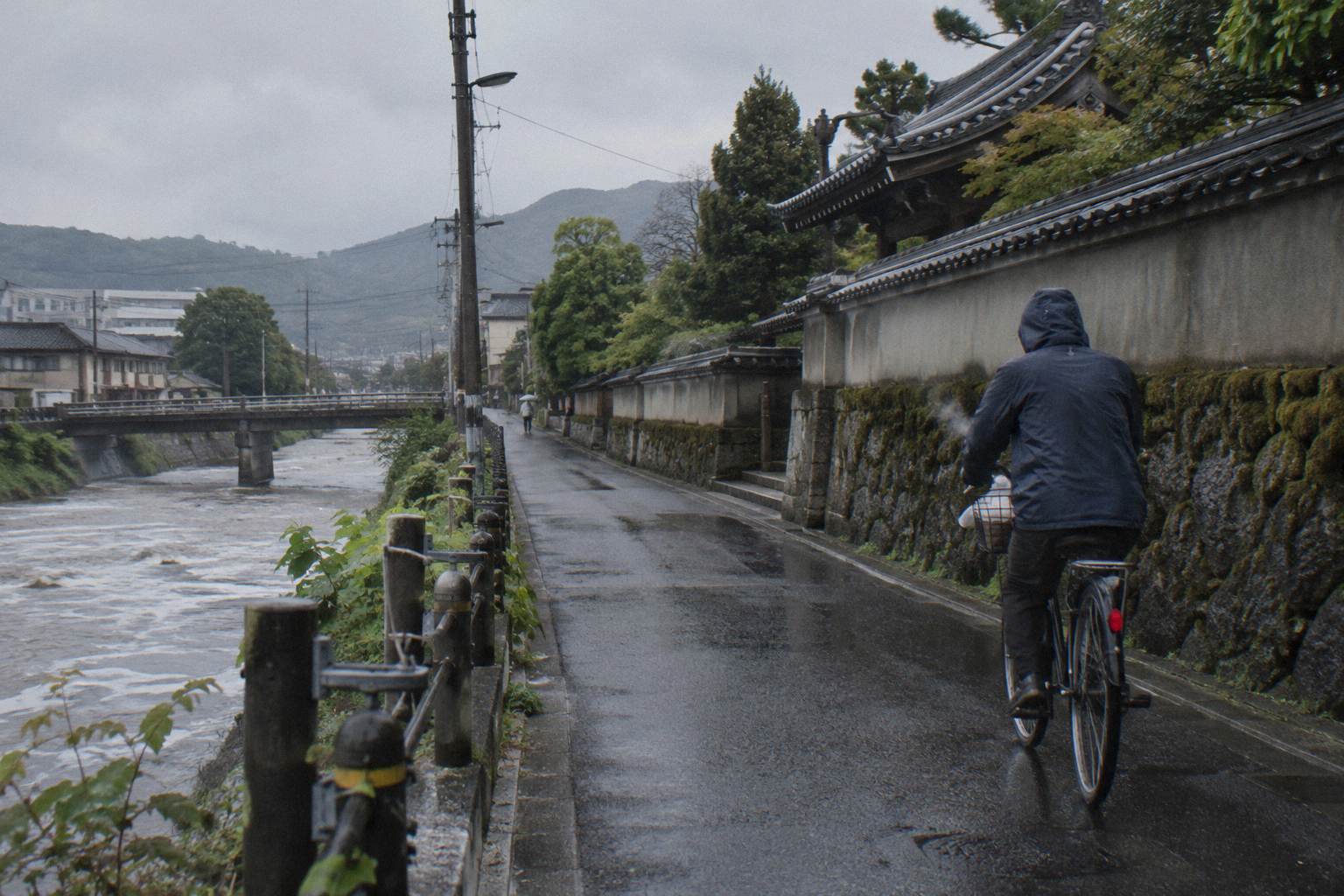
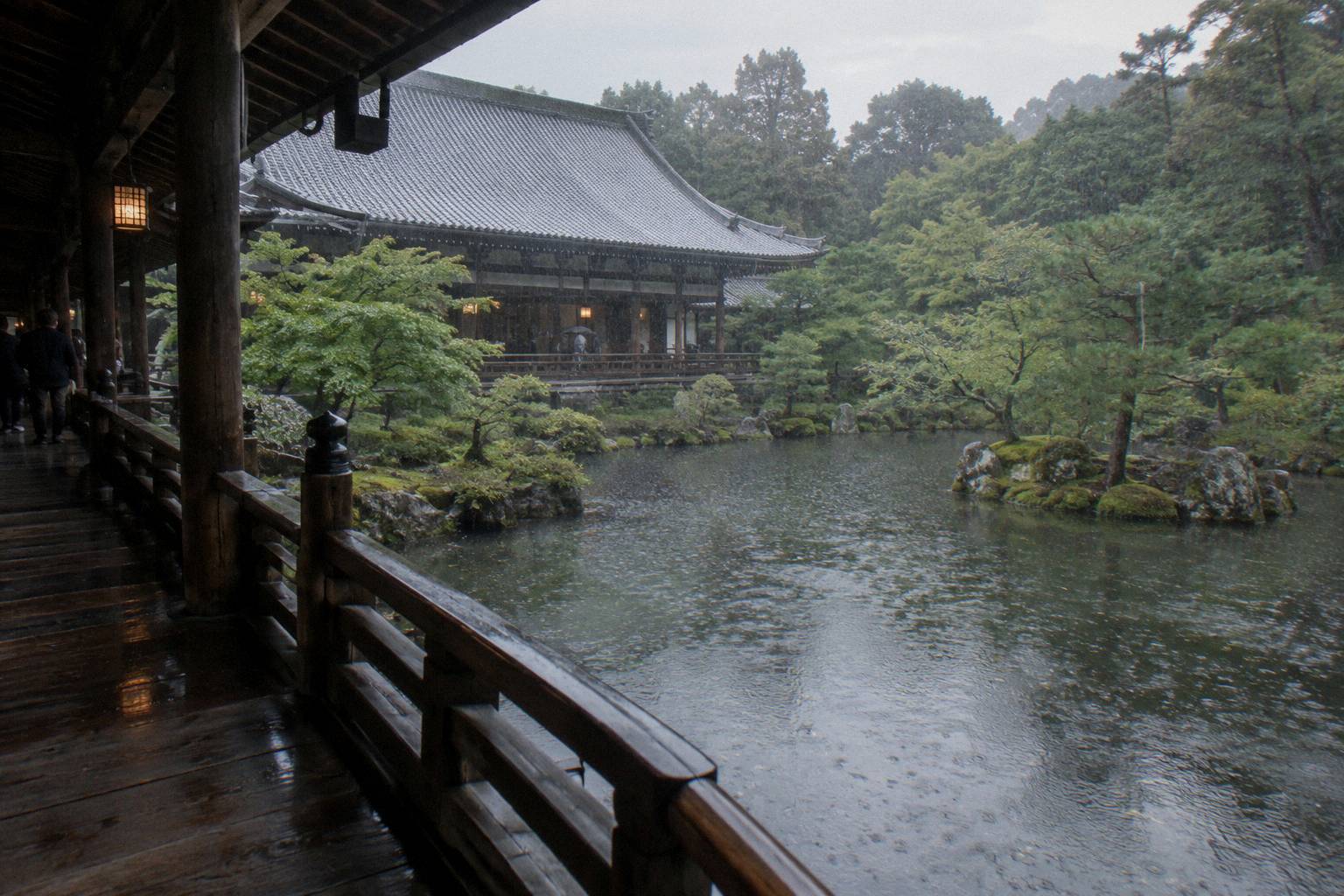
On a truly soaked day, Kyoto's roofed and garden stops do the work a bike ride would have: Tenryu-ji's garden costs 500 yen and opens 8:30 to 17:00, Kinkaku-ji charges 500 yen from 9:00 to 17:00, and Ginkaku-ji charges 1,000 yen, a fee that doubled on 1 April 2026. Fushimi Inari Taisha is free, and its roughly 10,000 torii gateways give you a walkable backup that costs nothing.
Think of the backup plan as a shortened version of the ride you booked. The same stops a guided loop covers, Tenryu-ji, Kinkaku-ji, Ginkaku-ji, are reachable by other means, and their admission fees are small enough that a rained-off morning costs little. Nijo Castle admission starts from 800 yen general, with the castle plus Ninomaru Palace combination from 1,300 yen, and the castle closes at 17:00 with admission ending at 16:00. Walking between two or three of these on a wet day keeps the itinerary intact even when the bike stays parked.
The second backup is time-shifting rather than cancelling. Free cancellation up to 24 hours before start applies to every ride profiled here, so a forecast that turns overnight costs you nothing: cancel the morning slot, rebook for the next clear morning. In a season where June delivers 199.7 mm across the month, the odds of a better day within 48 hours are decent.
The third is the ride that carries its own shelter. A lunch stop at a Japanese house, as the Zen Temples ride includes, or a sento visit with towel provided, as the South Kyoto Cultural Experiences ride includes, turns the wet hours into the break hours. If a multi-day forecast looks grim, pick the tour with the most indoor minutes per yen rather than the longest route.
Whatever you choose, leave the removal areas alone with your bike. The 3,500 yen reclaim fee and the trip to a depot that opens at noon cost more than the temple ticket you were trying to stay dry for. If you are weighing guided against self-guided for a wet week, the guided or self-guided cycling decision walks through the trade-offs.
Should You Still Book A Ride For June Or July?
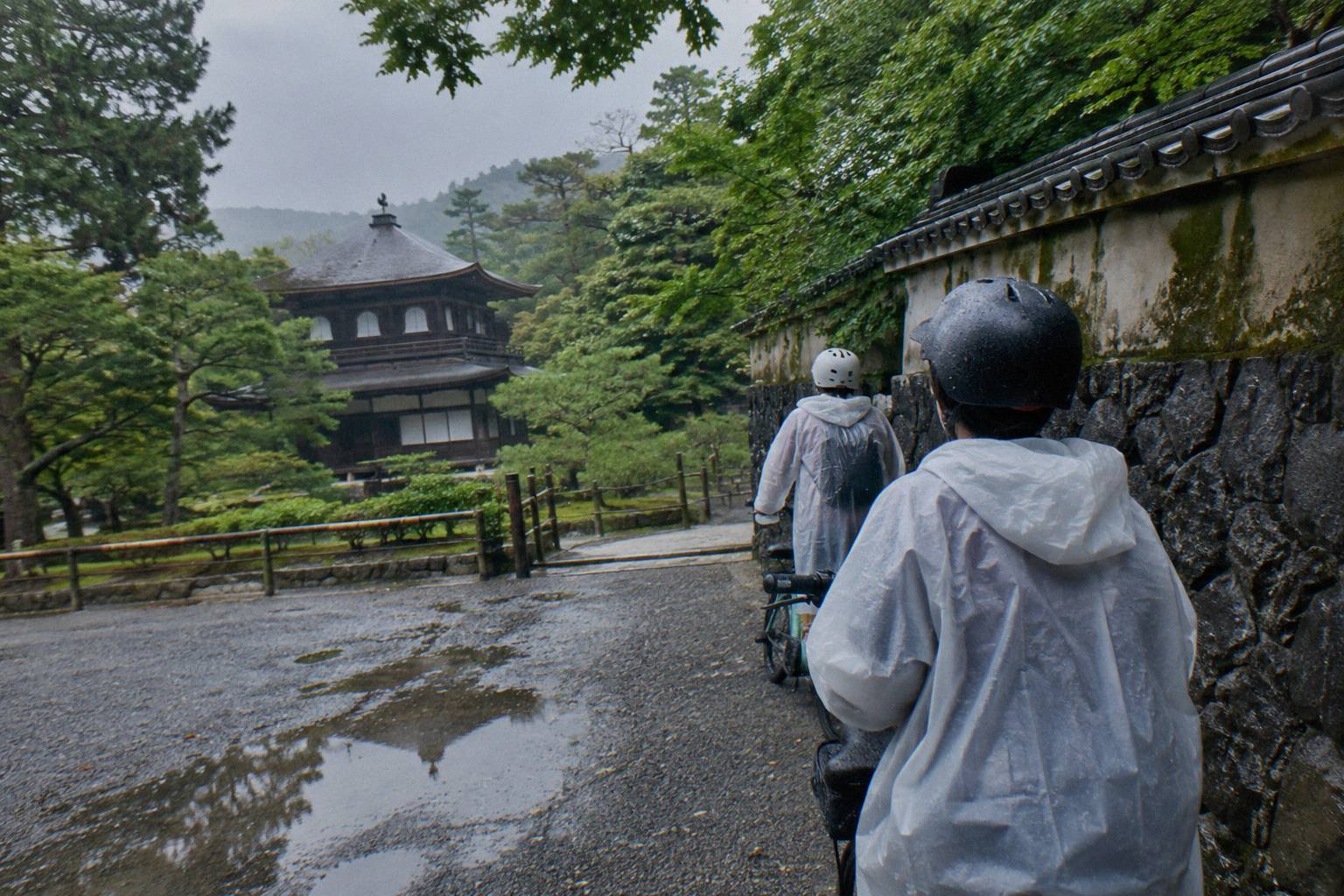
Yes, with two conditions: book a ride with free cancellation up to 24 hours before start, and choose a duration you would enjoy even in light rain. June's 199.7 mm and July's 223.6 mm are monthly totals, not daily verdicts, and rides like the Morning Ride From Station, which includes a raincoat, are built with damp days in mind. A bad forecast the night before costs nothing to act on.
Booking ahead still matters in the wet weeks. Short morning rides have small group sizes, and June weekends fill with visitors who chose the season deliberately for the green scenery and lower crowd pressure relative to spring. Booking early and cancelling late, inside the free window, gives you both a held seat and an exit.
Match the ride to the month. In June, with highs near 28 °C, a 4-hour loop such as the Budget Fare, Hidden Alleys ride at from ¥11,000 per person or the Silver Pavilion, Philosopher's Path ride at from ¥14,500 per person (4 hours, minimum age 12, rating 5.0 from 322 reviews) is comfortable even under cloud. In July, when 32.0 °C highs combine with the year's heaviest rain, prefer the 3 hour 30 minute morning format or a longer day packed with indoor stops like the Grand Loop.
One thing no one can tell you in advance is an operator's rain policy for the day itself: at what point a ride is cancelled, delayed or run shortened is the operator's call. Ask the operator when you book if a heavy-rain contingency matters to your group.
The wider question of ride pricing and formats, private versus small group, half-day versus full-day, is covered in the guided ride prices compared guide if you want the full market picture before committing to a June date. For the book-or-wait question on a single booked ride during rain, the blog on what happens to a guided ride when it rains answers that case directly.
What Trips People Up Before You Book
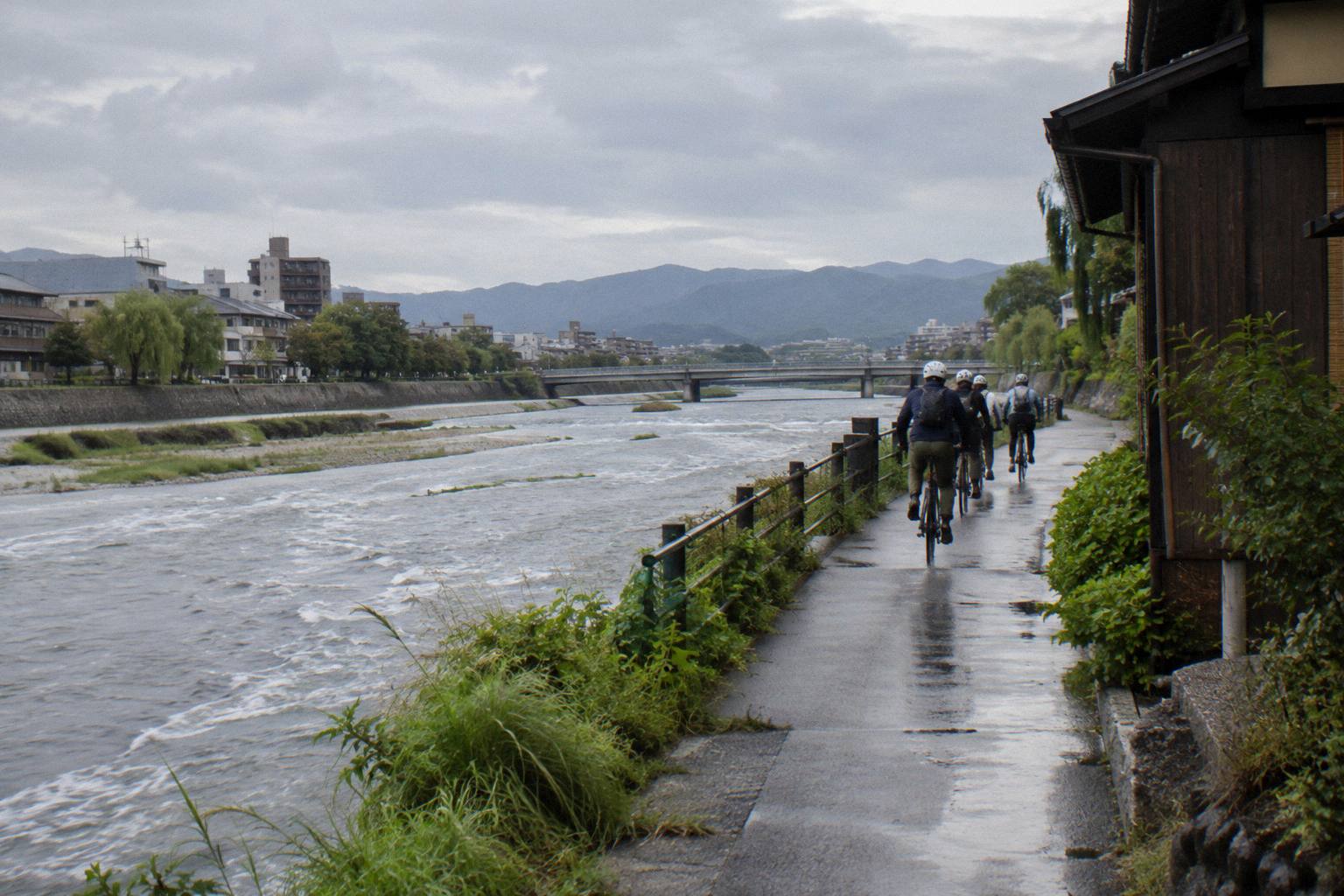
The four recurring rainy-season mistakes are holding an umbrella on the bike (a 5,000 yen fine for riders 16 and over), booking a long ride with no cancellation exit and losing the fee to a washout, leaving a bicycle in a removal area (3,500 yen to reclaim), and dressing for cold rain when June and July deliver warm rain near 28 to 32 °C. All four are cheaper to avoid than to remedy.
The umbrella mistake is the one visitors make in the moment rather than at booking. A shower starts, the umbrella comes out, and the fine schedule applies regardless of how light the traffic is. A packable jacket solves it permanently.
The cancellation mistake works in reverse: riders wait for a clear forecast before booking anything, find the morning rides full, and end up with no ride at all. Book first, use the 24-hour free window as your insurance, and cancel only if the forecast actually turns.
The parking mistake hits independent riders hardest, but even a guided group can have a bike removed where the leader's instructions are ignored. The reclaim fee is 3,500 yen, the depots hold bikes for 4 weeks, and the nearest depot to your hotel may not be near at all. Ask where the bikes are being left before you walk off toward the ticket gate.
The clothing mistake is milder but universal: heavy waterproofs in 28 °C heat soak you from the inside instead of the outside. Light layers, quick-dry fabrics and shoes that tolerate water beat a mountaineering shell every time in a Kyoto June.
Common Questions About Rainy Season Rides
When Is Rainy Season In Kyoto?
Early June to mid July, per the Kinki region's long-term normal. June averages 199.7 mm of rain and July 223.6 mm, the wettest month of the year on the 1991-2020 normals.
Is July Hotter And Wetter Than June For Cycling?
Yes on both counts. July brings 223.6 mm of rain against June's 199.7 mm, and a mean daily high of 32.0 °C against June's 28.1 °C. Short morning rides suit July; longer loops are more comfortable in June.
Can I Hold An Umbrella While Riding A Bike In Kyoto?
No. Riding with an umbrella carries a 5,000 yen fixed fine for riders aged 16 and over under the blue-ticket system in force since 1 April 2026. Wear a rain jacket instead.
What Happens To A Guided Ride When It Rains?
That is the operator's decision on the day. Every ride covered here allows free cancellation up to 24 hours before start, so you can cancel the evening before if the forecast is bad, and the Morning Ride From Station includes a raincoat for passing showers.
Which Ride Is Best For A Wet June Day?
Formats with indoor stops work well: the Zen Temples lunch ride (from ¥15,000 per person, 4 hours 30 minutes) has a sit-down lunch at a Japanese house, and the Grand Loop full-day ride (from ¥26,000 per person) breaks its 7 to 8 hours across five sites plus lunch.
What Are Good Backup Plans If The Rain Wins?
Roofed and garden stops with small fees: Tenryu-ji's garden at 500 yen, Kinkaku-ji at 500 yen, Ginkaku-ji at 1,000 yen, or Fushimi Inari Taisha free, with around 10,000 torii gateways along its paths. Rebook the ride for the next clear morning inside the free cancellation window.