What To Wear Cycling In Kyoto: Shoes, Layers And Temple Etiquette
Kyoto's climate swings from a January mean of 4.8 °C to an August daily high of 33.7 °C, so what you wear on a ride depends far more on the month than on fashion. This guide matches Japan Meteorological Agency normals to what local guided rides already provide.
Short answer
Dress for Kyoto's month, not a guess: January means a mean of 4.8 °C and gloves matter, while August averages a daily high of 33.7 °C and breathable layers win. Many guided rides include helmets, water and sometimes raincoats, so check your tour's inclusions before packing. Temple stops keep their own hours and fees, from Kinkaku-ji at 500 yen to Ginkaku-ji at 1,000 yen.
Preparing for a ride in Kyoto starts with the two things you control: the month you ride in and the tour you book. The Early Bird bamboo and hidden-gems ride is one of several formats that range from three-hour morning loops to full-day e-bike circuits, and each handles helmets, water and wet weather differently. Match your clothing to the season first, then let the tour's inclusions shrink your packing list.
| Fact | Detail |
|---|---|
| Coldest month (mean) | January, 4.8 °C |
| Hottest month (mean daily high) | August, 33.7 °C |
| Wettest month | July, 223.6 mm |
| Rainy season | Early June to mid July |
| Helmet rule | Effort duty for every age since 1 April 2023, no fine |
| Riding with an umbrella | 5,000 yen fixed fine since 1 April 2026 |
| Tenryu-ji garden | 500 yen, 8:30 to 17:00 |
| Ginkaku-ji | 1,000 yen adult since 1 April 2026 |
What Should You Wear Cycling In Kyoto By Month?
In Kyoto, dress by month: January and February demand gloves, a warm base layer and a shell for means of 4.8 °C and 5.4 °C, while July and August call for breathable fabrics with daily highs averaging 32.0 and 33.7 °C. April and October are light-layer months around 14 to 18 °C, and with rain peaking in July at 223.6 mm, a packable shell belongs in your kit from early June to mid July.
The Japan Meteorological Agency publishes monthly normals for Kyoto from a 30-year baseline, and the same table drives both what to wear and when locals book rides. Use it as a planning range rather than a forecast: the operator and the weather decide what any single day delivers.
| Month | Mean C | Daily High C | Rain mm | Layering takeaway |
|---|---|---|---|---|
| Jan | 4.8 | 9.1 | 53.3 | Warm base, gloves, shell |
| Feb | 5.4 | 10.0 | 65.1 | Same as January, slightly milder |
| Mar | 8.8 | 14.1 | 106.2 | Mid layers, light shell |
| Apr | 14.4 | 20.1 | 117.0 | Light layers, arm warmers |
| May | 19.5 | 25.1 | 151.4 | Short sleeves plus a thin layer |
| Jun | 23.3 | 28.1 | 199.7 | Breathable, rain shell handy |
| Jul | 27.3 | 32.0 | 223.6 | Lightest kit, wettest month |
| Aug | 28.5 | 33.7 | 153.8 | Heat-focused, sun cover |
| Sep | 24.4 | 29.2 | 178.5 | Still hot, keep the rain shell |
| Oct | 18.4 | 23.4 | 143.2 | Light layers, comfortable riding |
| Nov | 12.5 | 17.3 | 73.9 | Mid layers, evenings cool fast |
| Dec | 7.2 | 11.6 | 57.3 | Warm base and gloves return |
Two details from the Japan Meteorological Agency Kyoto monthly normals matter more than the headline numbers. Night-time lows stay above 23 °C in July and August, so a ride that ends at dusk feels as warm as one that starts at noon. And September still averages 178.5 mm of rain, which surprises riders who assume the wet season ended with July.
Seasonal landmarks sharpen the picture. Cherry blossom normally reaches full bloom on 4 April, though 2026 peaked on 30 March, and maple colouring normally arrives on 5 December. Those dates frame the two peak riding windows, and both sit in months where a removable layer beats a single warm one. The Japan Meteorological Agency Kyoto phenology observations hold the full record if you are timing a spring or autumn trip.
One last note on the extremes: Kyoto's highest daily maximum on record is 39.8 °C, set in 2018 and matched in 1994. If you are riding in August, plan around heat rather than distance, and lean on morning departures.
How Do You Layer For A Kyoto Ride?
Layer in threes: a moisture-moving base, one insulating mid layer you can shed, and a wind or rain shell that packs small. The logic is the gap between mornings and afternoons: April runs from a 9.2 °C low to a 20.1 °C high, so a ride that starts cool often ends warm. Three thin layers cover every month except deep winter, when you add a heavier mid layer and gloves.
Guided rides make this easier because they set the pace and the stops. The "Kyoto Bamboo Forest & Hidden Gems: Early Bird Easy Bike Tour", known here as the Early Bird Bamboo Forest Ride, runs 3 to 4 hours from ¥16,000 per person with a 5 rating from 773 reviews, and it supplies a helmet and bottled water. Short morning formats like that reward a light layer you can remove once the sun is up.
Longer formats change the math. A 7 to 8 hour full-day ride such as "Bike Kyoto's Grand Loop: Full-Day Kyoto E-Bike Tour - 5 Top Sites" crosses more of the day's temperature range than any morning loop, so the removable mid layer matters more than the base. The same goes for the "Discover Kyoto by Bike Full Day Tour", a full-day ride at 7 to 8 hours from ¥19,500 per person, rated 5.0 from 28 reviews.
Fabric choice does quiet work here. A cotton t-shirt that soaks through in July stays wet for the rest of the ride, while a synthetic or merino base dries during a temple stop. The same principle applies to the shell: a heavy waterproof jacket turns into a sauna at a 32 °C daily high, so a thin packable shell covers July's 223.6 mm of rain without overheating you between showers.
Hands and head deserve a mention in the cold half of the year. January's mean daily minimum is 1.5 °C, and fingers on handlebars feel that before anything else does. Thin gloves that still let you work a bell or gear shifter solve it. For the summer half, a brimmed cap under the helmet and covered shoulders do more for comfort than any fabric upgrade.
If you are weighing a guided format against riding on your own, the guided versus self-guided Kyoto cycling comparison breaks down who carries what. A guide handles navigation and timing; you still handle your own clothing either way.
What Do Rides Already Include So You Pack Less?
Several Kyoto rides include items that would otherwise sit on your packing list: helmets, bottled water, and in one case a raincoat. The "Beat the Crowds: Pro-Curated Morning E-Bike Tour, Kyoto Sta" includes a raincoat, water, helmet and liability insurance in its from ¥14,000 per person price. Read your tour's inclusions before buying anything, because the operator may already supply the heaviest items.
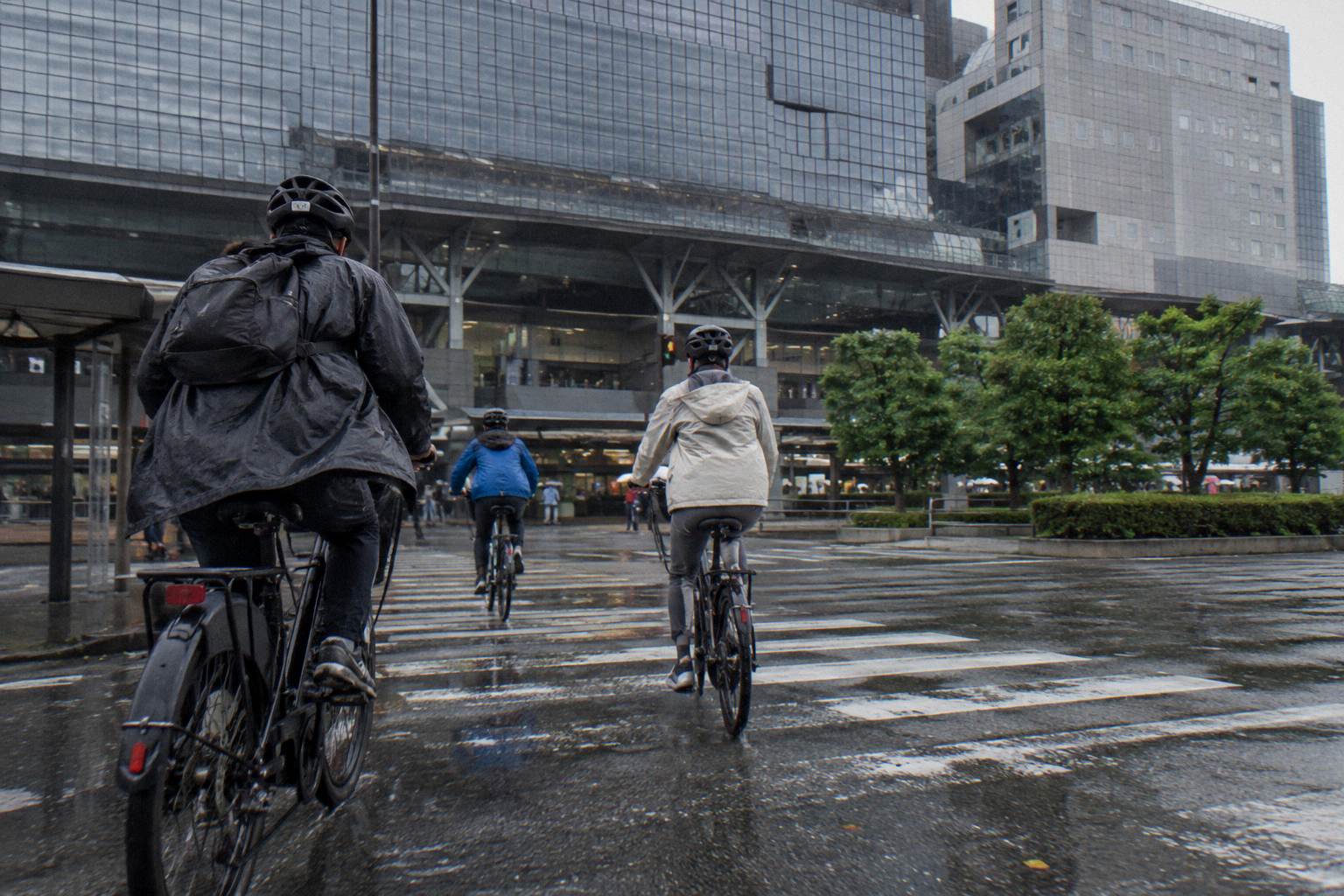
The Morning Ride From Station, as that tour is called for short, runs 3 hours 30 minutes, carries a 5 rating from 20 reviews, and sets a minimum age of 13. Its raincoat inclusion is unusual on this city's roster: most rides list a helmet and water but leave wet-weather gear to you. If your tour does not name a raincoat, bring your own shell, especially between early June and mid July.
Lunch-inclusive rides shift your food packing too. The "4.5-Hour Kyoto Bike Tour with Lunch and UNESCO Zen Temples", or UNESCO Zen Temples, Lunch, runs 4 hours 30 minutes from ¥15,000 per person, is rated 5.0 from 145 reviews, sets a minimum age of 15, and includes a local lunch at a Japanese house, Kennin-ji entry, a helmet if you need one and a bike lock. That is a midday meal, a lock and head protection already handled.
| Ride | Duration | From price | What it includes that shapes your kit |
|---|---|---|---|
| Morning Ride From Station | 3 hours 30 minutes | ¥14,000 per person | Raincoat, water, helmet, liability insurance |
| Early Bird Bamboo Forest Ride | 3 hours to 4 hours | ¥16,000 per person | Helmet, bottled water |
| UNESCO Zen Temples, Lunch | 4 hours 30 minutes | ¥15,000 per person | Lunch, helmet if needed, bike lock |
| Palace, Castle And Temples | 6 hours 30 minutes | ¥16,500 per person | Helmet, water, all entrance fees |
The longest of those four, "Kyoto E-Bike Tour of Palace, Castle, Temples and Hidden Gems", called Palace, Castle And Temples here, runs 6 hours 30 minutes from ¥16,500 per person with a minimum age of 10, and includes all entrance fees plus a bottle of mineral water per rider. It has no reviews yet, so judge it on its inclusions rather than a rating. It also offers an optional fan-cooled jacket rental in hot summer for ¥1,000 per day, a small fee that answers the August heat question directly.
For a wider view of what different formats charge, the guided ride price comparison for Kyoto lines up half-day, full-day and private options side by side.
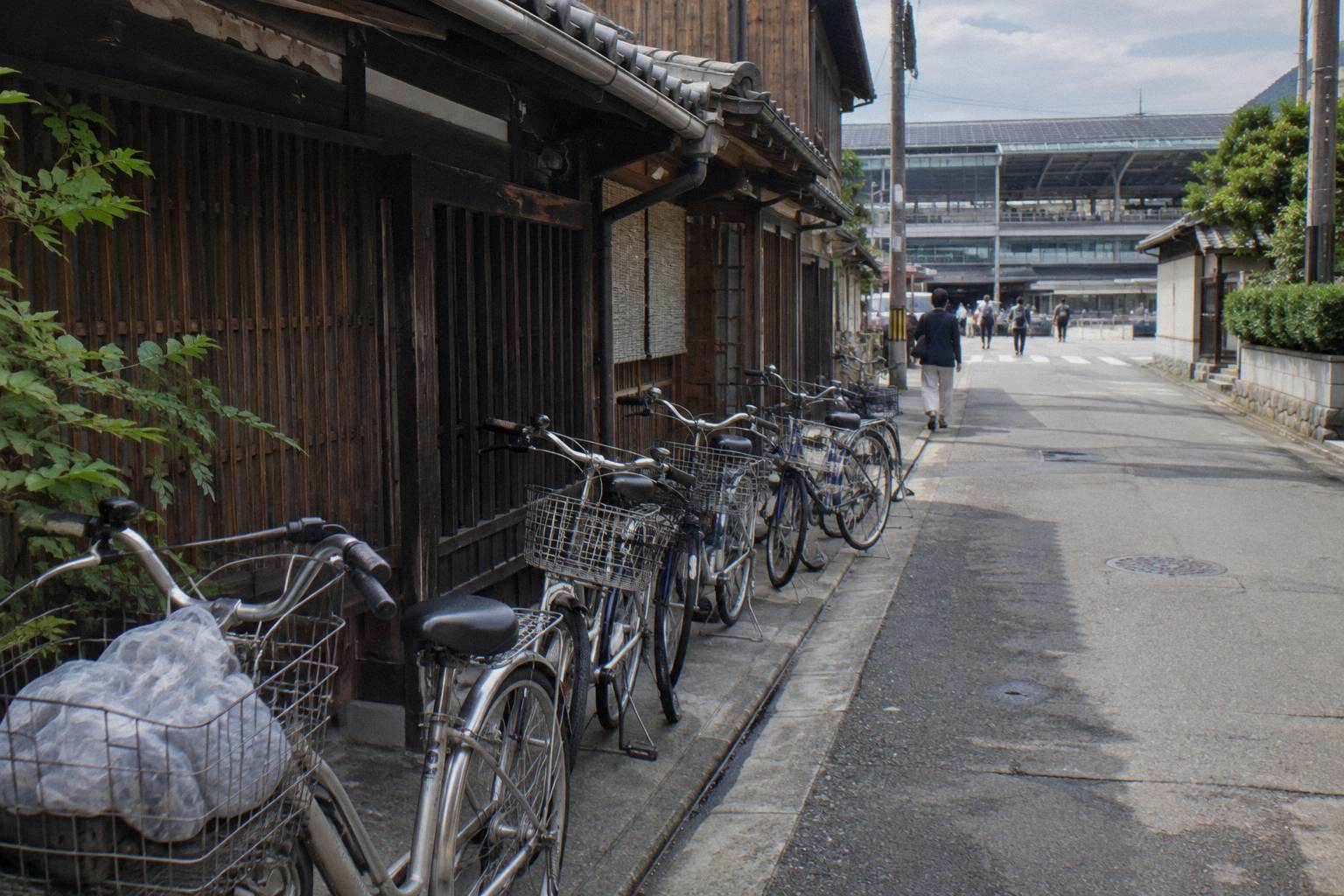
One exclusion worth checking on any ride you book: several tours name hotel pickup and drop-off as excluded. If you carry a daypack because you are heading to a temple afterward, remember you will be riding to the meeting point under your own steam, so weatherproof outer layers matter for that leg too.
What Shoes And Clothing Fit A Temple Stop?
No verified dress code or shoe rule applies to Kyoto temple visits, so check the temple's own page before you go. What is documented is practical: temples charge entry fees and keep fixed hours, so plan clothing around walking garden paths and carrying or wearing your riding shoes. Comfortable flat-soled shoes that grip pedals and stone steps alike cover both halves of a ride that includes Tenryu-ji, Kinkaku-ji or Ginkaku-ji.
The fee and hours picture is concrete where the dress question is not. Tenryu-ji's garden costs 500 yen for high school age and older and opens 8:30 to 17:00, per the Tenryu-ji visitor page. Kinkaku-ji charges 500 yen general admission and opens 9:00 to 17:00 all year, per its official access page. Ginkaku-ji raised its adult fee from 500 to 1,000 yen on 1 April 2026, per the Ginkaku-ji official page.
| Temple | Adult entry | Hours |
|---|---|---|
| Tenryu-ji (garden) | 500 yen | 8:30 to 17:00 |
| Kinkaku-ji | 500 yen | 9:00 to 17:00 |
| Ginkaku-ji | 1,000 yen since 1 April 2026 | 8:30 to 17:00, 1 March to 30 November |
| Fushimi Inari Taisha | No admission fee | No closing time stated by the shrine |
Rides that bundle those fees remove one more packing concern, cash. Palace, Castle And Temples includes all entrance fees. The "Explore Heritage and Landmarks of Kyoto with E-Bike Ride" includes entry to both Kiyomizu-dera and Ginkaku-ji in its from ¥13,500 per person price for a 4 hour ride. Where fees are not included, carry coins: 500 yen entries are common, and Ginkaku-ji now asks 1,000.
Fushimi Inari Taisha charges no admission fee, per the Fushimi Inari Taisha FAQ, which also describes around 10,000 torii gateways along the mountain paths. A ride that stops there needs nothing from your pocket, only shoes you are happy to walk in.
Beyond that, the limit of the documentation is the dress question itself. Kyoto's temples publish hours and fees, not clothing rules, on the pages read for this guide. Loose, breathable clothing that covers shoulders works everywhere, and riders who pack one neat layer for a temple stop have never had to regret it. Planning a route that strings several temples together? The Higashiyama cycling route guide covers the eastern hill temples.
What Rules Affect What You Carry On The Ride?
Kyoto's cycling rules touch your kit in three ways: helmets are an effort duty for every age since 1 April 2023 with no fine attached, holding a phone while riding risks a 12,000 yen fixed fine or worse, and riding with an umbrella open costs 5,000 yen since 1 April 2026. That last one means a rain jacket replaces an umbrella permanently. The prefecture also requires bicycle liability insurance, which some tours include and others leave to you.
The blue-ticket system, live since 1 April 2026, applies to every rider aged 16 and over and covers minor violations with fixed fines from 3,000 to 12,000 yen instead of criminal procedure. The Kyoto City page on cycling rules lists the specifics, gathered below.
| Violation | Fixed fine |
|---|---|
| Phone held or watched while riding | 12,000 yen |
| Ignoring a signal | 6,000 yen |
| Riding on the wrong side of the road | 6,000 yen |
| Failing to stop at a stop sign | 5,000 yen |
| Riding with an umbrella | 5,000 yen |
| Carrying a second rider or riding two abreast | 3,000 yen |
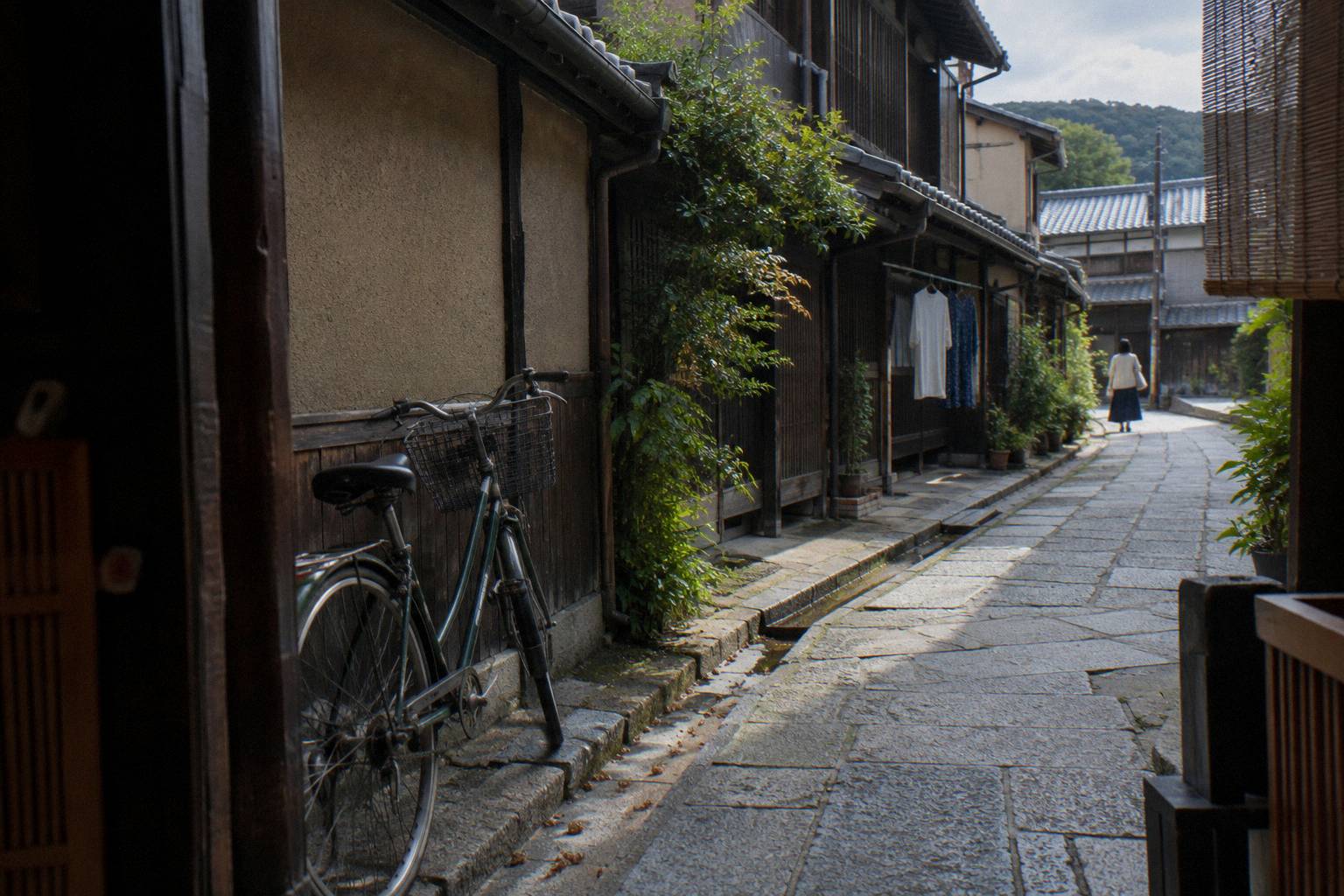
The phone rule carries a second layer. Since 1 November 2024, holding a phone to talk or watch the screen while riding can mean up to 6 months in prison or a 100,000 yen fine. Practically, that puts your phone in a pocket or a handlebar mount before you set off, and it makes a handlebar bag or jersey pocket part of your kit rather than an optional extra. The full rule set lives in the Kyoto cycling rules guide.
The helmet duty comes from the Kyoto Prefecture page on the helmet effort duty. Every cyclist of every age is asked to make the effort; no fine backs it. Every roster ride that names a helmet includes one, and one ride lists it as "helmet if you need", so you rarely need to bring your own, but a rider who prefers a personal helmet can carry it.
Insurance is the quiet one. Kyoto Prefecture requires bicycle liability insurance, and the Kyoto Prefecture page on bicycle liability insurance explains that a rider on a home, car or accident policy counts. Morning Ride From Station includes liability insurance in its price, while "Kyoto E-Bike Tour of Hidden Gems Backstreets and Temples" lists insurance as excluded. If your ride excludes it, check whether your travel policy covers you before arrival.
Parking is the last carry-related item. Kyoto removes illegally parked bicycles, charges 3,500 yen to reclaim one and stores it for 4 weeks, so a lock is not optional if you stop anywhere unattended. One lunch ride includes a bike lock; otherwise bring your own, and the Kyoto bike parking guide explains where leaving a bike is safe.
What Do Summer Heat And Rain Change About Your Kit?
Summer changes two things: you ride earlier and carry less. August averages a daily high of 33.7 °C, so breathable fabric, sun cover and an early start matter more than any equipment choice. Rain peaks in July at 223.6 mm and September still brings 178.5 mm, so a packable shell stays in the kit until October. Winter flips the problem: January's mean of 4.8 °C demands gloves and a windproof layer instead.
Morning formats are the structural answer to heat. The Early Bird Bamboo Forest Ride runs 3 to 4 hours and the Morning Ride From Station 3 hours 30 minutes, both finished before the afternoon peak. If you are wondering whether timing matters that much, the best time of day for cycling in Kyoto covers the question in depth.
For rain, the practical split is simple. Riders booked on Morning Ride From Station get a raincoat in the price. Everyone else brings a shell, and from early June to mid July, the rainy season window, that shell rides in the bag every single day regardless of the morning sky.
One tour meets the heat with equipment: Palace, Castle And Temples offers an optional fan-cooled jacket rental for ¥1,000 per day during Kyoto's hot summer. It is a small fee against a 6 hour 30 minute ride in August, and a rare case where the operator has thought about the heat problem explicitly. Everyone else should plan clothing around it themselves, and the summer heat cycling guide goes deeper on riding through the hot months.
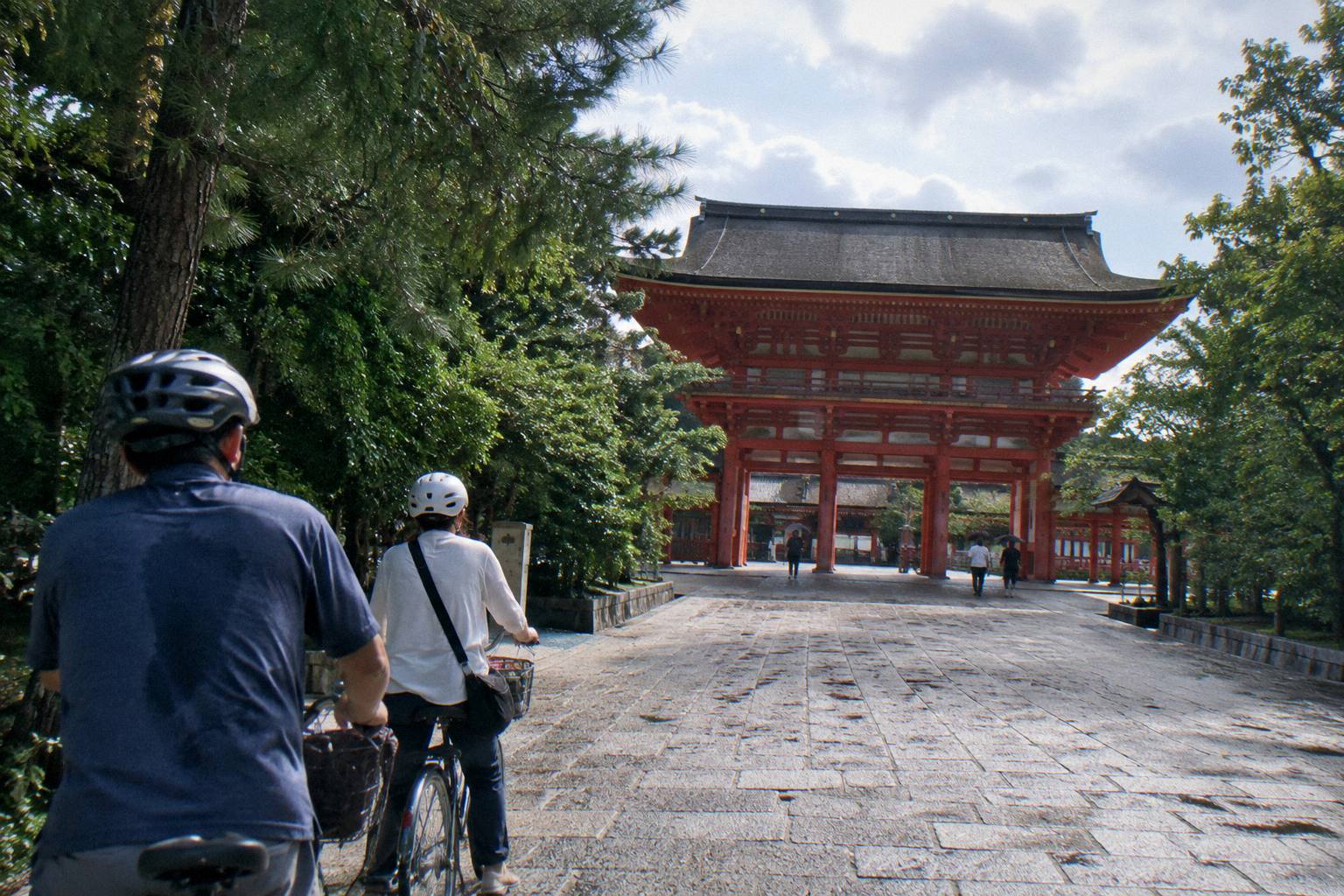
Spring and autumn need less deliberation. April's 20.1 °C daily high and October's 23.4 °C make those the easiest clothing months on the calendar, which is part of why they bracket the two marquee seasons: cherry blossom normally at full bloom on 4 April, maple colouring normally on 5 December. A light layer for the morning and short sleeves for midday covers both.
What Trips People Up Before You Book
The recurring mistakes are packing an umbrella instead of a rain jacket, buying a helmet before reading inclusions, and forgetting that temple fees are cash. The umbrella habit now costs 5,000 yen under the blue-ticket system, most rides supply helmets, and 500 yen and 1,000 yen entries add up over a day of temple stops. Checking your tour's included and excluded lists before you pack prevents all three.
The first mistake is treating an umbrella as rain gear. It is a 5,000 yen fine on a bicycle since 1 April 2026, and it was never a good idea on two wheels. A packable shell does the same job legally.
The second is duplicating what the tour provides. Helmets appear in the inclusions of the Early Bird Bamboo Forest Ride, Morning Ride From Station and the lunch rides alike. Read first, buy second.
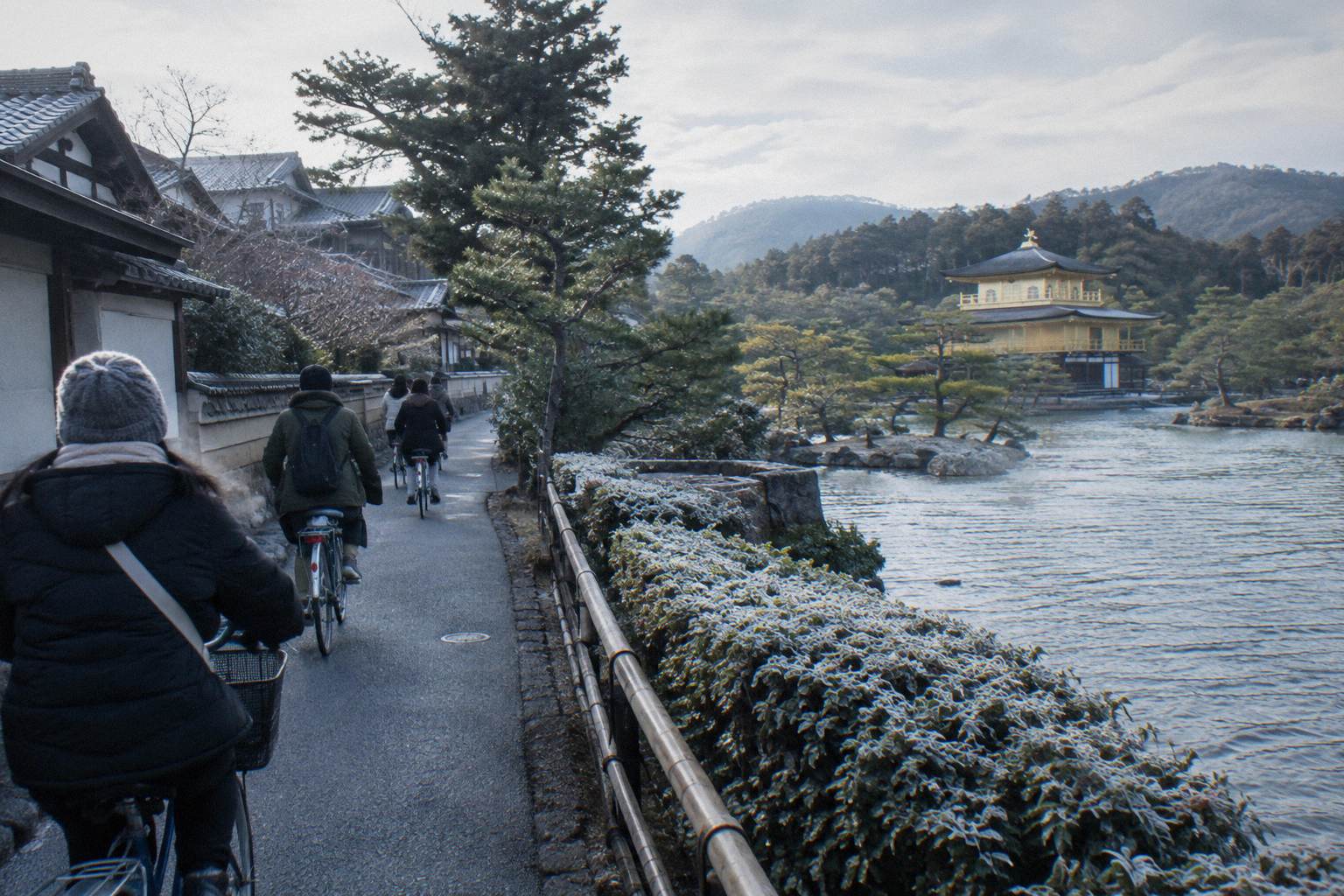
The third is underestimating temple stops. Hours are fixed: Tenryu-ji 8:30 to 17:00, Kinkaku-ji 9:00 to 17:00. Fees are modest but cash-based, and rides that exclude entrance fees leave you paying at the gate. Carry coins.
The fourth is ignoring the insurance question. Kyoto Prefecture requires bicycle liability insurance. One ride includes it, another lists it as excluded, so a two-minute check of your travel policy closes the gap.
The fifth is packing for the wrong month. Riders who visited in April assume October feels the same and riders who only know summer underestimate a 1.5 °C January night. The monthly table above exists to be checked, not guessed.
Finally, do not leave booking to arrival week. Many rides list free cancellation up to 24 hours before start, which means booking early costs nothing if plans shift, while waiting risks the date you want. The advance booking question for Kyoto rides covers the timing in full. If a date is already in mind, checking availability early tells you what the month and the operator can offer.
One closing thought from Kyoto Bike Tours: the riders who enjoy a Kyoto ride most are rarely the ones with the most gear. They are the ones who checked the month, read the inclusions, and packed a shell they barely used.
Common Questions About Ride-Day Clothing
What Should I Wear Cycling In Kyoto In Summer?
Breathable synthetic or merino base layers, sun cover for shoulders and neck, and a light packable shell for July and September showers. August averages a daily high of 33.7 °C, so morning rides and light colors help more than any single garment.
Do I Need To Bring My Own Helmet?
Usually not. Helmets are an effort duty for every age since 1 April 2023, with no fine, and most rides on this site's roster include one. The Early Bird Bamboo Forest Ride and Morning Ride From Station both list a helmet in their inclusions.
Can I Ride With An Umbrella In Kyoto?
No. Riding with an umbrella open carries a 5,000 yen fixed fine under the blue-ticket system in force since 1 April 2026. A rain jacket is the legal and practical alternative, and one morning tour includes a raincoat in its price.
What Do Temple Visits Require Clothing-Wise?
No verified dress code exists on official temple pages, so check the temple's own page before your visit. What is documented is fees and hours: Tenryu-ji's garden is 500 yen, Kinkaku-ji 500 yen, and Ginkaku-ji 1,000 yen for adults since 1 April 2026.
What Shoes Work For A Kyoto Bike Ride?
Flat-soled comfortable shoes that work on pedals and on temple stone paths. No shoe rule is verified for Kyoto's temples, so choose on comfort and grip rather than formality.
Is A Raincoat Included On Kyoto Bike Tours?
On one ride, yes: "Beat the Crowds: Pro-Curated Morning E-Bike Tour, Kyoto Sta" includes a raincoat, water and helmet in its from ¥14,000 per person price. Most other rides list helmets and water but not rain gear, so bring your own shell if yours does not.