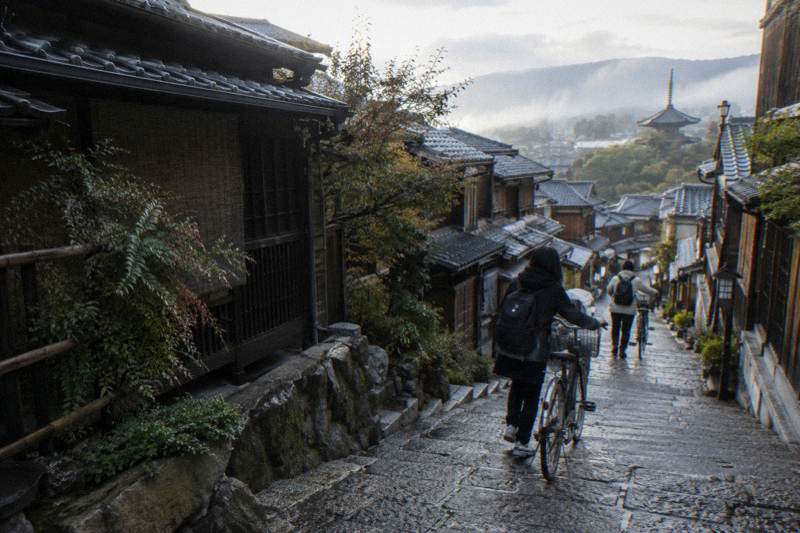
Higashiyama Cycling Route: Temples, Slopes And Where To Dismount
Higashiyama holds the densest run of temple stops in Kyoto, from Kiyomizu-dera at the south end to Ginkaku-ji at the north, and several guided e-bike rides cover it in four to eight hours.
Short answer
A Higashiyama e-bike ride runs from ¥11,000 per person for 4 hours (Budget Fare, Hidden Alleys, 5.0 from 148 reviews) or from ¥13,500 per person for the Higashiyama Heritage Ride, which includes Kiyomizu-dera and Ginkaku-ji entrance fees. Ginkaku-ji costs 1,000 yen for adults since 1 April 2026. A full-day alternative runs 7 to 8 hours from ¥19,500 per person.
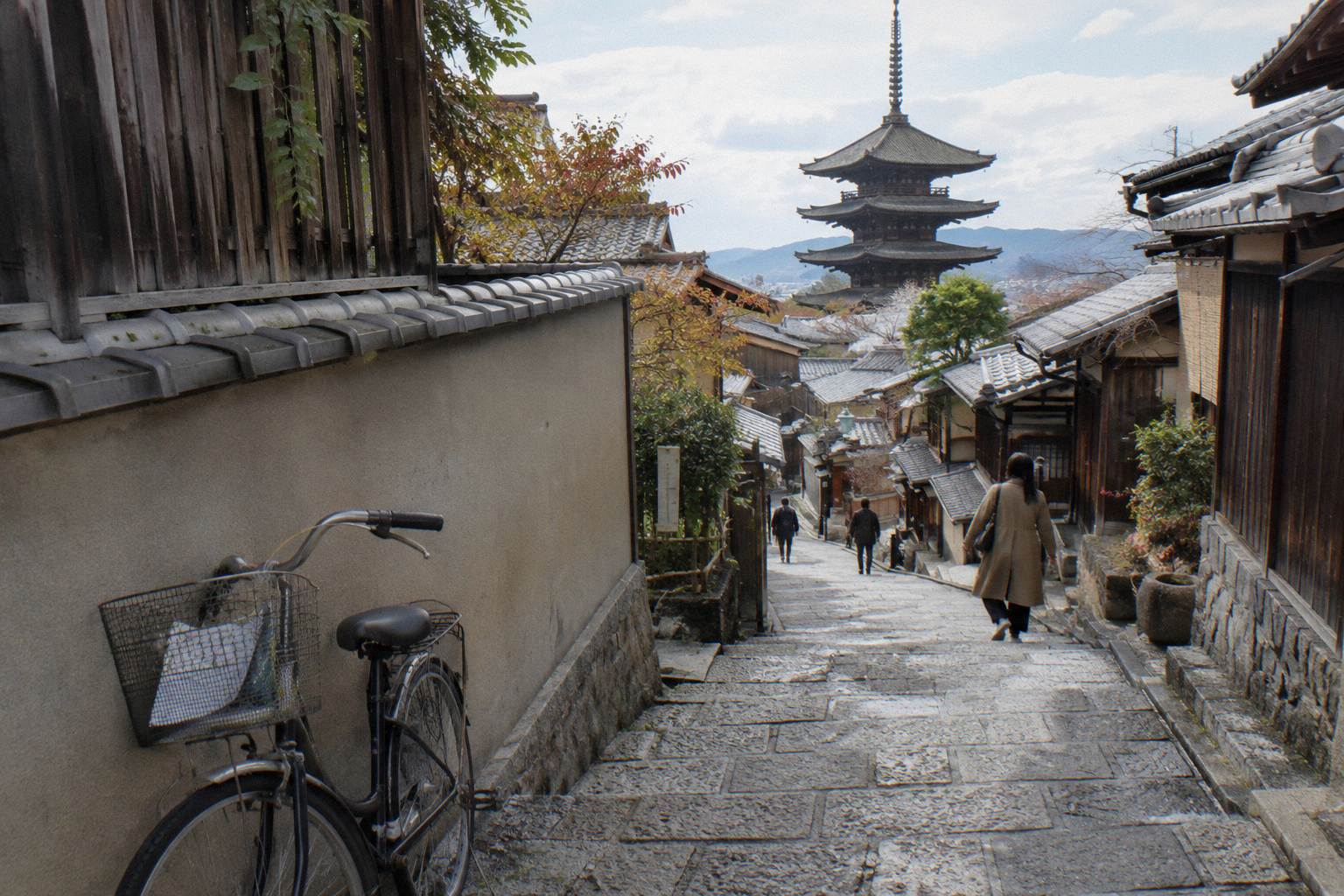
Higashiyama, the hillside district on Kyoto's east side, is one of the most rideable temple zones in the city, and the Higashiyama Heritage e-bike ride is one of several guided options built around it. This guide sets out the stops that carry verified facts, the rides that cover them, and how to decide between a half-day and a full-day format.
| Fact | Detail |
|---|---|
| Higashiyama Heritage Ride | From ¥13,500 per person, 4 hours, minimum age 12, Kiyomizu-dera and Ginkaku-ji entrance fees included |
| Budget Fare, Hidden Alleys | From ¥11,000 per person, 4 hours, 5.0 from 148 reviews, minimum age 2 |
| Full-Day Ride, No Meal | From ¥19,500 per person, 7 to 8 hours, 5.0 from 28 reviews, minimum age 10 |
| Ginkaku-ji admission | 1,000 yen adult, 500 yen child, since 1 April 2026 |
| Ginkaku-ji hours | 8:30 to 17:00 from 1 March to 30 November; 9:00 to 16:30 from 1 December to end of February |
| Helmet rule | Effort duty for every age since 1 April 2023, no fine |
| Cancellation | Free up to 24 hours before start on the rides above |
Can You Cover Higashiyama's Temples In One Ride?
Yes, with an e-bike and a guide, and the roster makes the case plainly: the Higashiyama Heritage Ride covers the district in 4 hours and names both Kiyomizu-dera and Ginkaku-ji entrance fees as included, which means the far ends of Higashiyama sit within one guided session. A full-day variant stretches the same idea to 7 or 8 hours. Which stops a given departure actually reaches is set by the operator and by the day itself.
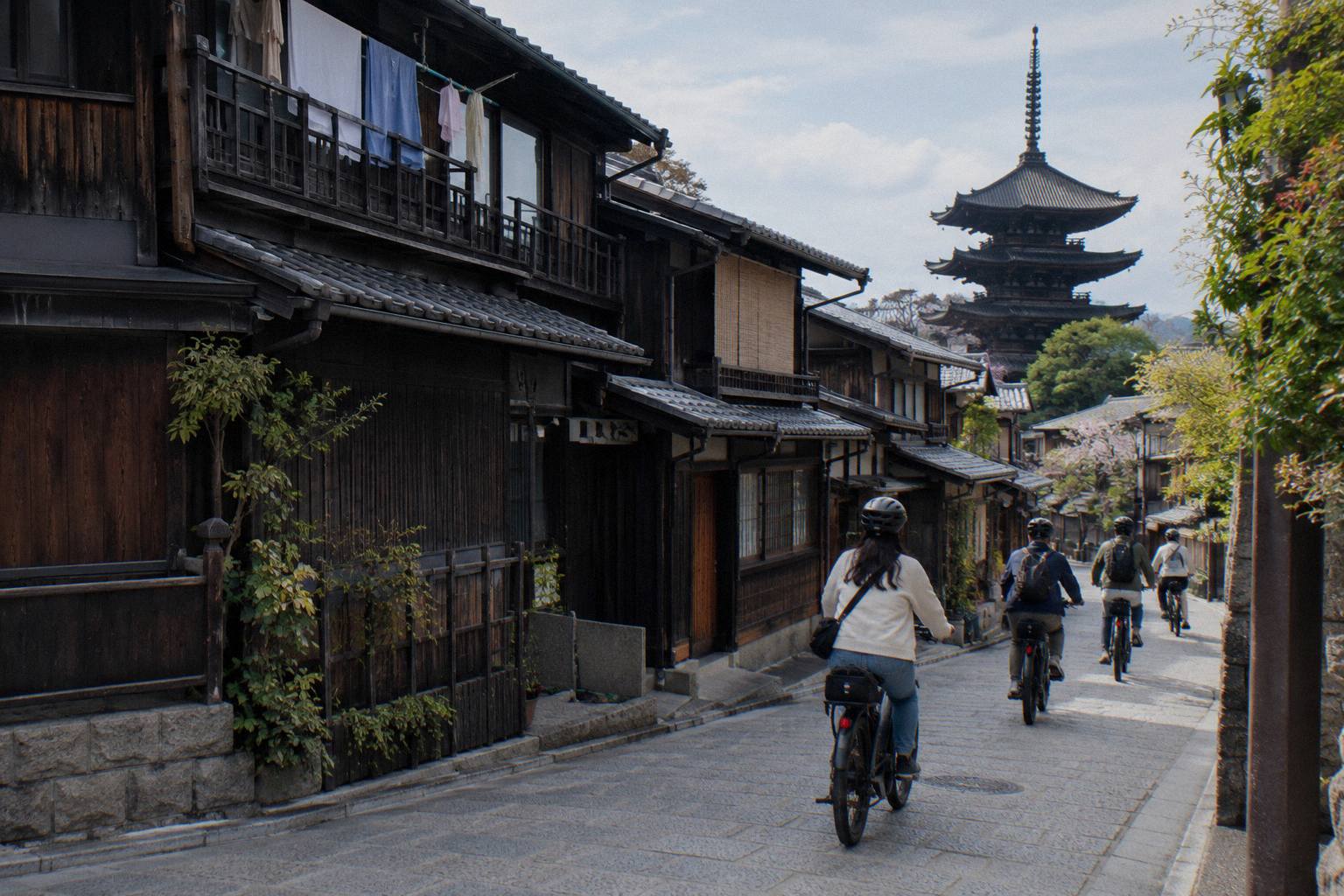
The district runs roughly south to north: Kiyomizu-dera at the southern end, Yasaka Shrine at the Gion edge, Heian Shrine a little further north-east, and Ginkaku-ji at the top end near the start of the Philosopher's Path. A ride that names Kiyomizu-dera and Ginkaku-ji in the same 4-hour window is covering the full length of the district, which is why the two flagship rides lean on e-bikes rather than pedal bikes. Electric assist turns a string of temple stops into one continuous session instead of a series of separate trips.
The rides also differ in who they take: the Higashiyama Heritage Ride has a minimum age of 12, Budget Fare, Hidden Alleys has a minimum age of 2, and the Full-Day Ride, No Meal sets it at 10. Ages and durations come from each product's own terms, so match the ride to your group rather than the other way round. A family with a toddler has one right answer on this page; a pair of adults has three.
It helps to think of Higashiyama as a corridor rather than a single site. Temples, shrine grounds and preserved lanes stack along one north-south line, and the gaps between them are where the riding happens. That structure is exactly what a guided e-bike format is built for: short rides between long stops, with the guide handling the route-finding so the day stays about the places rather than the map.
Which Rides Actually Ride Higashiyama?
Three rostered e-bike rides cover the district directly, and they differ in price, pace and review record: the Higashiyama Heritage Ride runs 4 hours from ¥13,500 per person with two temple fees included, Budget Fare, Hidden Alleys runs 4 hours from ¥11,000 per person with a 5.0 from 148 reviews, and the Full-Day Ride, No Meal runs 7 to 8 hours from ¥19,500 per person with a 5.0 from 28 reviews.
The Higashiyama Heritage Ride ("Explore Heritage and Landmarks of Kyoto with E-Bike Ride"), run by Fun Group Japan, is the product built for exactly this route: its name and its inclusions both point at the two anchor temples, and its 4-hour duration suits a morning or afternoon slot. It includes the entrance fee for Kiyomizu-dera and Ginkaku-ji along with the electric bicycle, and excludes meals and drinks. It has fewer than 15 reviews, so no star claim applies to it; its case rests on the included entrance fees and the itinerary rather than a review pool.
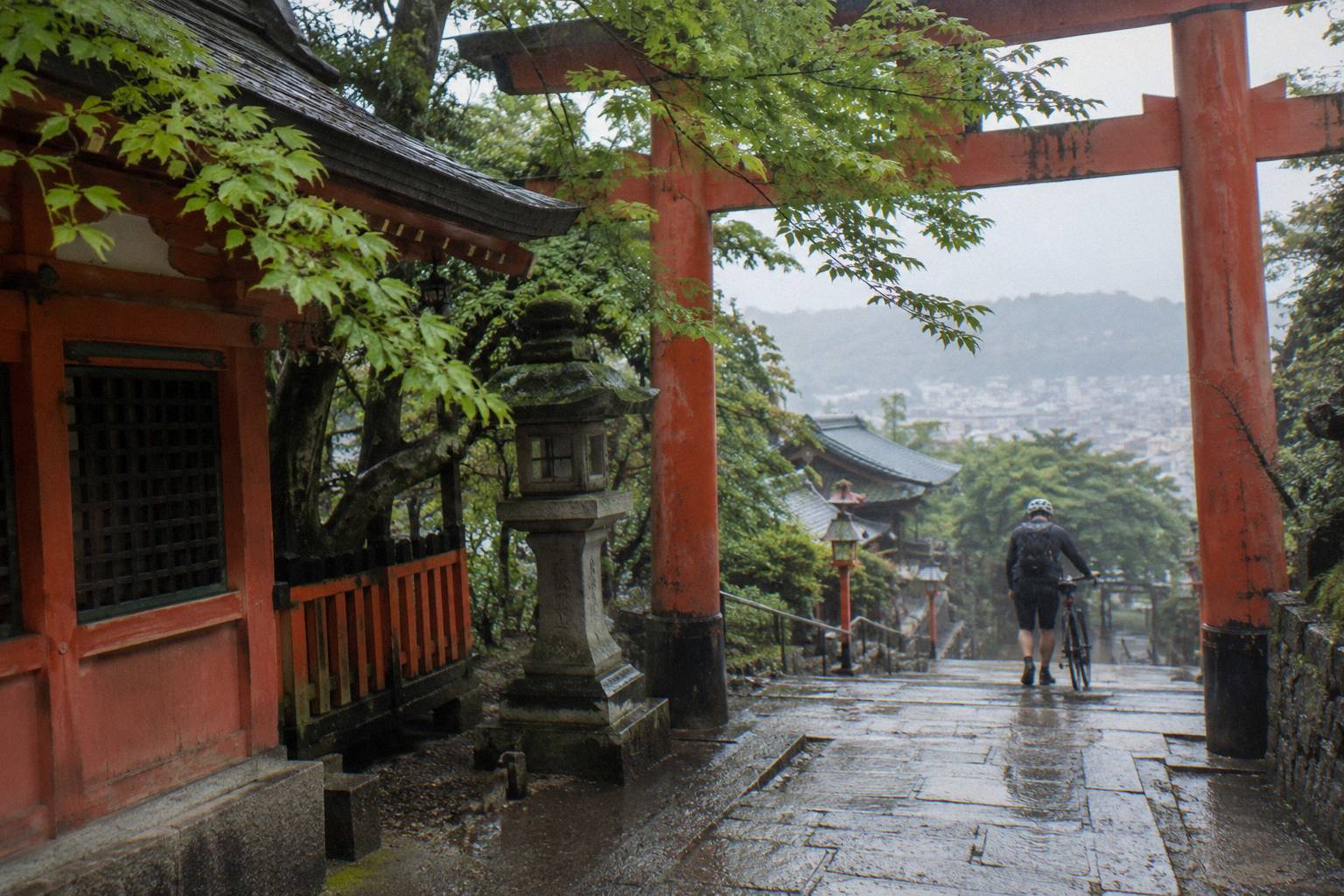
Budget Fare, Hidden Alleys ("Kyoto: E-Bike Tour: Highlights, Backstreets & Local Secrets"), run by SunnyCycleTour, is the cheaper 4-hour option and the only one of the three with a substantial review pool at this length. It includes a reusable water bottle for spring water, a water omikuji fortune slip at Shimogamo Shrine and the e-bike, and its minimum age of 2 makes it the natural family pick of the trio. Its 5.0 from 148 reviews is the deepest review record of any ride on this page. Prices vary by date and group, so check the live price for your date before comparing headline numbers.
The full-day comparison, "Discover Kyoto by Bike Full Day Tour," runs 7 to 8 hours and includes bottled water, entrance fees and the e-bike, with lunch excluded. A longer day means more stops and more time at each one; a 4-hour day means a tighter loop. If you are weighing the two, the guide comparing guided ride prices sets out the value trade-off across the whole rostered set.
What Do The Temple Stops Cost And When Are They Open?
Ginkaku-ji costs 1,000 yen for adults and 500 yen for children, and has charged the adult rate since 1 April 2026; its hours run 8:30 to 17:00 from 1 March to 30 November and 9:00 to 16:30 from 1 December to the end of February. On the Higashiyama Heritage Ride that fee is already folded into the tour price, and Kiyomizu-dera's entrance is included on the same ride.
Kiyomizu-dera and Yasaka Shrine sit at the southern end of the rideable line. The Heritage Ride's inclusion of Kiyomizu-dera's entrance fee is the only verified pricing fact for that stop here; if you are riding independently rather than guided, ask the temple directly for the current admission. Yasaka Shrine marks the Gion edge of the district and makes a natural mid-ride pause on most Higashiyama itineraries.
Heian Shrine sits slightly east of the main north-south lane, and Ginkaku-ji closes the route at the north. For a fuller picture of how the north end connects onward, the Philosopher's Path by bike guide continues the line from Ginkaku-ji.
| Stop | Fee | Hours | Rostered ride that names it |
|---|---|---|---|
| Kiyomizu-dera | Included on the Higashiyama Heritage Ride | Ask the temple or operator | Higashiyama Heritage Ride |
| Yasaka Shrine | Ask the shrine | Ask the shrine | Not named by a roster inclusion |
| Heian Shrine | Ask the shrine | Ask the shrine | Not named by a roster inclusion |
| Ginkaku-ji | 1,000 yen adult, 500 yen child | 8:30 to 17:00 (1 Mar to 30 Nov); 9:00 to 16:30 (1 Dec to end Feb) | Higashiyama Heritage Ride |
The Ginkaku-ji fee doubled from 500 yen to the current adult rate on 1 April 2026, and the winter hours close half an hour earlier than the summer ones, per the Ginkaku-ji official page. That closing time is the one hard clock on the whole route: every other stop on this page either has no verified hours or is folded into a ride that reaches it mid-session. Riders planning an independent loop in winter should treat late afternoon at the north end as a risk and start there instead.
One practical note on Yasaka Shrine and Heian Shrine: neither appears in any rostered ride's named inclusions, and neither has a verified fee or hours statement usable here. They are still places a Higashiyama ride passes or pauses at by the operator's choice, so treat them as route context rather than ticketed stops, and ask the operator where the ride actually breaks.
Do You Dismount Anywhere On The Route?
Dismounting on Higashiyama is a decision for the operator or the rider, not a published rule: no official statement was found requiring cyclists to walk any section of the district, so this guide prints no dismount rule at all. Guided rides handle it in practice, with the guide leading, the group following, and narrower or busier sections walked at the guide's discretion as ordinary road judgment.
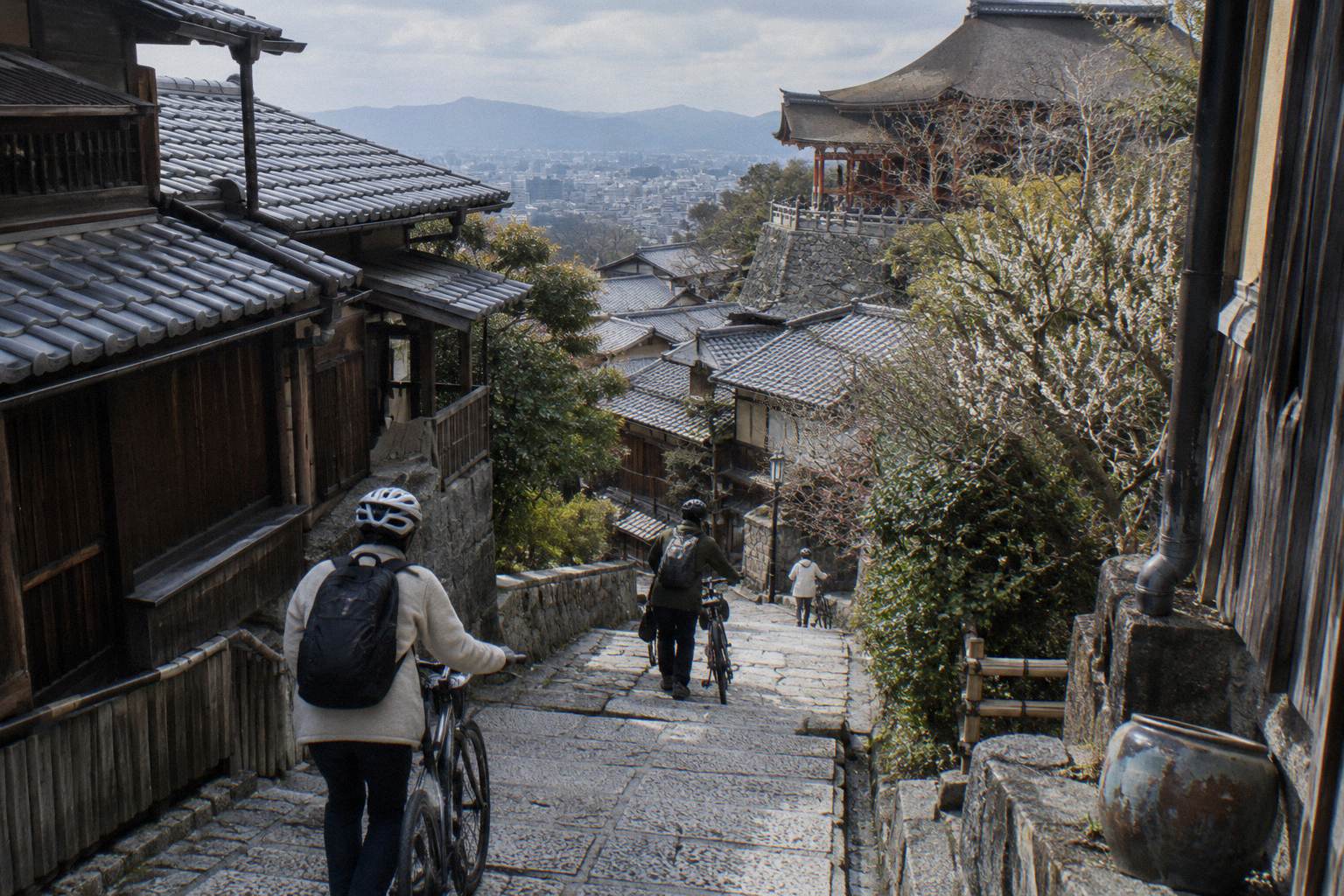
The general rules that do apply are the national ones: ride on the left, keep to the roadway in principle, and treat the sidewalk as the exception with pedestrians first, per the National Police Agency bicycle safety leaflet. Since 1 April 2026, riders aged 16 and over who commit minor violations pay a fixed fine instead of going through criminal procedure, as set out on the Kyoto City page on cycling rules. The full set of fines and rules is collected in the Kyoto cycling rules guide, which is the reference for anyone riding independently in the district.
Helmets are an effort duty for every age since 1 April 2023, with no fine attached, per the Kyoto Prefecture page on the helmet effort duty. All three Higashiyama rides provide an e-bike, and the district's lanes reward the assist when you are moving between temple stops all day. On a guided ride, the practical dismount question never really arises for you: the guide sets the pace and the walking, and the group simply follows.
- Budget Fare, Hidden Alleys¥11,000
- Crowd-Free E-Bike Ride¥13,000
- Higashiyama Heritage Ride¥13,500
- Fushimi Inari, Sento Stop¥13,500
- Morning Ride From Station¥14,000
- Silver Pavilion, Philosopher's Path¥14,500
- Backstreets, 5 To 6 Hours¥15,000
- Palace, Castle And Temples¥16,500
For independent riders the judgment is your own, and the sensible default is the one every local rider uses: walk where the lane is crowded, narrow or shared with pedestrians, and ride where the road gives you clean space. Nothing in the rules forbids riding the district roads, and nothing in them guarantees any particular lane is rideable on a busy day. Conditions decide, minute by minute.
Half-Day Or Full-Day: Which Format Suits Higashiyama?
Choose the 4-hour ride, from ¥11,000 to ¥13,500 per person, if you want the core temple line with time to spare for the rest of your day. Choose the Full-Day Ride, No Meal, from ¥19,500 per person, if you prefer more stops and a slower pace; it holds a rating of 5.0 from 28 reviews, though lunch is excluded.
| Ride | Duration | From-price | Reviews | Minimum age |
|---|---|---|---|---|
| Higashiyama Heritage Ride | 4 hours | ¥13,500 per person | Under 15, no star claim | 12 |
| Budget Fare, Hidden Alleys | 4 hours | ¥11,000 per person | 5.0 from 148 reviews | 2 |
| Full-Day Ride, No Meal | 7 to 8 hours | ¥19,500 per person | 5.0 from 28 reviews | 10 |
Price differences reflect what each ride includes as much as its length. The Heritage Ride folds two temple entrance fees into its price. The full-day ride includes entrance fees generally but not lunch, so midday food is your own arrangement. Budget Fare, Hidden Alleys includes the e-bike and small shrine extras but names no temple fee either way. Two rides with similar headline numbers can cover quite different days, which is why the inclusions column matters as much as the price column when you compare. The full index of guides sits on Kyoto Bike Tours.
The half-day format suits a Kyoto trip where Higashiyama is one of several things in the day: you ride the temple line in a morning or afternoon and keep the rest of the day for Gion, the riverside or somewhere else entirely. The full-day format suits a trip where the eastern side of the city is the main event, and it pairs naturally with the wider loop covered in the full-day cycling loop guide.
For the wider format question, whether guided beats self-guided riding in Kyoto covers navigation and route-finding trade-offs, and whether an e-bike or regular bike fits you covers the rider-fit side. Both feed directly into the Higashiyama decision, since the district is dense enough that route-finding is the main friction and assist is the main comfort.
When Is The Best Season To Ride Higashiyama?
Spring and late autumn are the two windows the observatory data points to: cherry full bloom normally lands 4 April and maple colouring normally lands 5 December in Kyoto, and the 2026 bloom ran early with full bloom on 30 March. Those dates are the Japan Meteorological Agency's long-term normals and records for its Kyoto station, framed as reference points rather than promises about any single week.
Summer riding needs planning around heat: August is the hottest month with a mean of 28.5 °C and a daily high of 33.7, and July is the wettest at 223.6 mm, per the Japan Meteorological Agency Kyoto monthly normals. A 4-hour ride is easier to slot into a summer morning than a 7 to 8 hour day; the seasonal planning is set out in the summer heat cycling guide and the rainy season cycling guide.
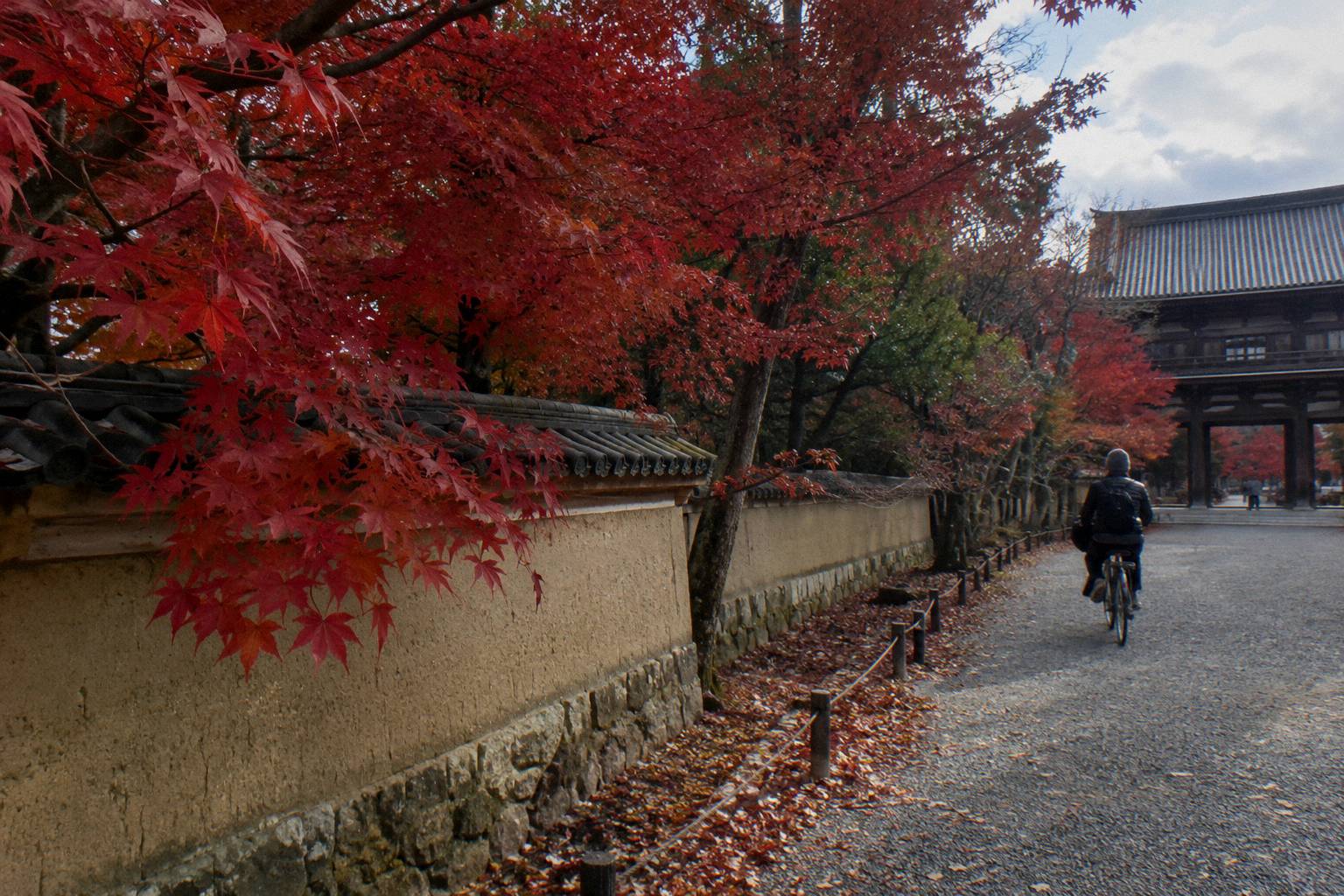
The blossom and leaf dates come from the Japan Meteorological Agency Kyoto observations: the record range for full bloom runs from 24 March in 2023 to 17 April in 1965, and the maple date tracks a single official marker tree rather than any district's peak. Weather, bloom and crowds decide what a given day delivers; the ride goes either way, and free cancellation up to 24 hours before start is the backstop when a day turns.
The evening deserves a mention too: "Discover Kyoto at Night by Bike" runs 3 hours 45 minutes with a 4.9 from 53 reviews, and the night cycling guide covers the after-dark format in detail. If you want the wider picture of the city on two wheels, whether Kyoto works as a cycling city is a useful companion read, and the cherry blossom cycling guide goes deeper on the spring window.
| Month window | What the normals say | Riding implication |
|---|---|---|
| Late March to early April | Full bloom normal 4 April (2026: 30 March) | Book guided rides ahead; demand peaks |
| Early June to mid July | Rainy season | Short 4-hour rides easier to rebook |
| July | Wettest month, 223.6 mm | Free cancellation up to 24 hours matters |
| August | Hottest month, mean 28.5 °C, high 33.7 | Morning rides over full days |
| Late November to early December | Maple colouring normal 5 December | Full-day rides suit the light |
What Does Higashiyama Riding Ask Of You Legally?
Kyoto Prefecture requires bicycle liability insurance, helmets are an effort duty for every age with no fine, and the blue-ticket fines from 1 April 2026 apply to every rider aged 16 and over: holding a phone while riding costs 12,000 yen, ignoring a signal or riding on the wrong side costs 6,000, and riding with an umbrella costs 5,000. Guided riders should still ask the operator what coverage the ride itself carries, since roster products differ.
The insurance requirement is set by the prefecture's bicycle ordinance, and an individual-liability rider on a home, car or accident policy counts, per the Kyoto Prefecture page on bicycle liability insurance. Two roster products name insurance explicitly in opposite directions, one including it and one excluding it, so the question is worth asking of whichever ride you book rather than assuming.
A pedal-assist e-bike that meets the legal standard counts as a bicycle, so the assisted rides on this page sit inside the ordinary bicycle rules. That matters for the phone fines above all: a rider checking a map mid-ride with the phone in hand is exposed to the 12,000 yen fixed fine, and a guide with a fixed route removes most of the reason to do it.
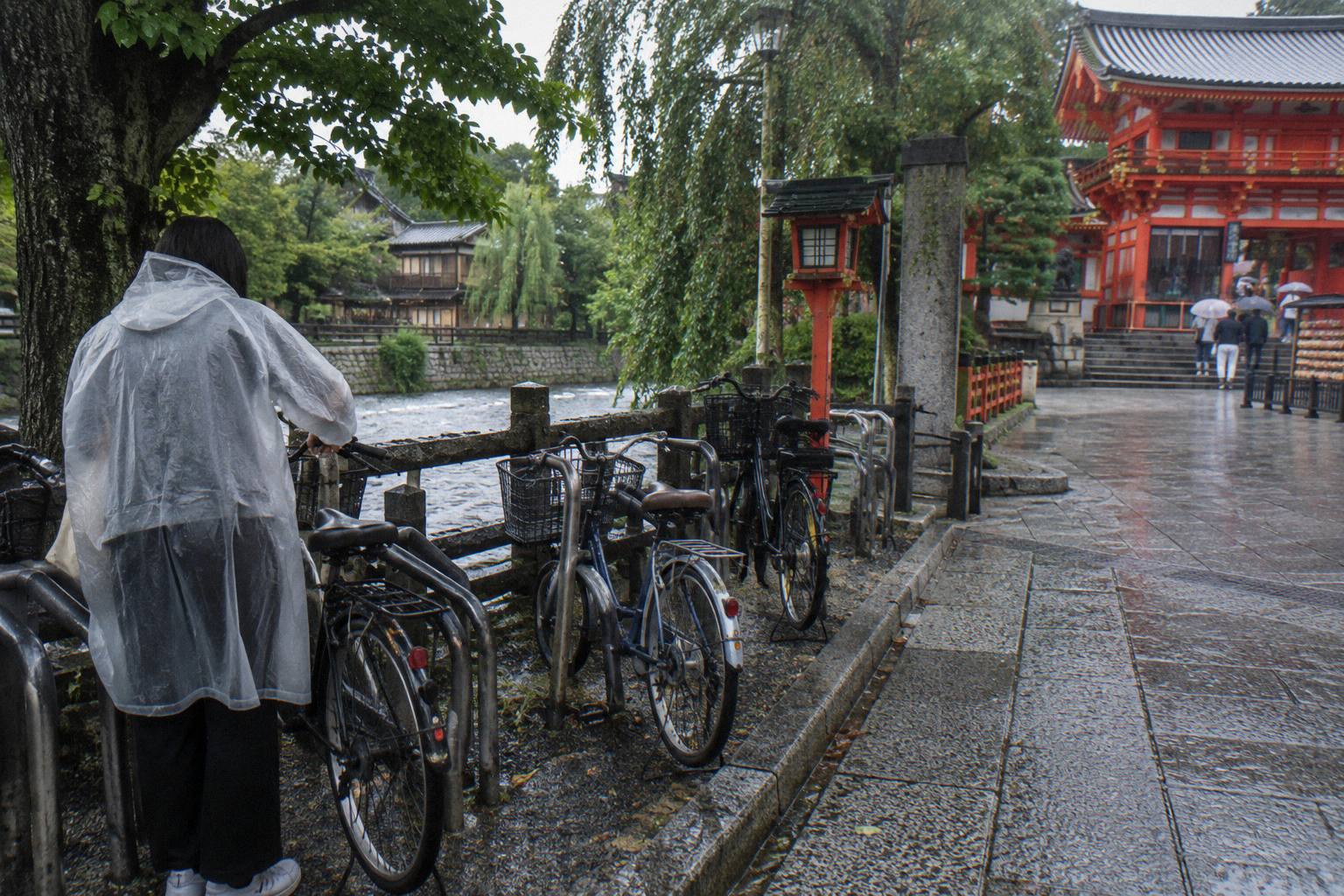
Parking matters in Higashiyama because illegally parked bicycles are removed across nearly the whole city and cost 3,500 yen to reclaim, held for 4 weeks from the day after removal, per the Kyoto City page on removed bicycles. On a guided ride the operator handles where bikes wait at each stop; riding alone means using designated parking, and the bike parking guide lists what is verified.
Free cancellation up to 24 hours before start applies to all three rides featured here, which matters when weather turns. The question of how guided rides handle rain has its own answer, and the cancellation terms are the backstop either way. Check dates for the ride that fits your group on the booking page, or check availability beside the full-day ride's page.
What Trips People Up Before You Book
The three common misses are assuming all Higashiyama rides include temple fees, assuming one 4-hour ride fits every group's ages, and forgetting that the district's lanes are shared space under ordinary road rules. Each ride sets its own inclusions and minimum age, so a family with a toddler and a pair of adults have different right answers here: Budget Fare, Hidden Alleys takes riders from age 2, while the Higashiyama Heritage Ride starts at 12.
The fee inclusion question is the costliest one. The Heritage Ride names Kiyomizu-dera and Ginkaku-ji entrance fees as included; the other two rides name no temple fee either way, so a rider comparing headline prices may be comparing different totals. Ask the operator what each price covers for your date, and check the booking calendar for the day you want before committing a whole afternoon to a comparison that the booking page settles in a minute.
Timing is the third. Ginkaku-ji closes at 17:00 in the warm half of the year and 16:30 in winter, and the shrine and temple sites set their own hours independently of any ride. A route that reaches the far north end late in a winter afternoon may find the gate closed, and no operator can change that. Booking a morning slot is the simple hedge, and it doubles as the heat hedge in summer.
A fourth trip-up is worth naming even though it sits outside the booking itself: arriving by rental bike and parking it casually near a temple. Removal is active across nearly the whole city and reclaiming a removed bicycle costs 3,500 yen, so independent riders should plan where the bike waits at each stop before setting off, not after arriving. Guided riders hand that problem to the operator.
| Mistake | What it costs you | Simple fix |
|---|---|---|
| Comparing headline prices only | Hidden temple fees on some rides | Ask what each price covers |
| Ignoring minimum ages | A ride the group cannot join | Match age 2, 10 or 12 to your party |
| Reaching Ginkaku-ji late in winter | A closed gate at 16:30 | Book a morning slot |
| Parking an independent bike casually | 3,500 yen to reclaim it | Use designated parking at each stop |
Common Questions About Higashiyama Rides
Can You Cycle Around Higashiyama?
Yes, with an e-bike and a guide. Three rostered rides cover the district, running 4 hours or 7 to 8 hours, with from-prices of ¥11,000 to ¥19,500 per person. Dismounting on any section is a decision for the operator or rider; no published rule requires it.
How Much Does A Higashiyama E-Bike Tour Cost?
From ¥11,000 per person for Budget Fare, Hidden Alleys (4 hours, 5.0 from 148 reviews), from ¥13,500 per person for the Higashiyama Heritage Ride (4 hours, two temple fees included), and from ¥19,500 per person for the Full-Day Ride, No Meal (7 to 8 hours, 5.0 from 28 reviews). Prices vary by date and group.
How Long Does A Higashiyama Ride Take?
The two 4-hour rides cover the core temple line including Kiyomizu-dera and Ginkaku-ji; the full-day ride runs 7 to 8 hours for more time at each stop. All three include the e-bike and allow free cancellation up to 24 hours before start.
Is Ginkaku-Ji Included In A Higashiyama Ride?
On the Higashiyama Heritage Ride, yes: the entrance fee for Ginkaku-ji and Kiyomizu-dera is named as included. Bought alone, Ginkaku-ji costs 1,000 yen for adults and 500 yen for children, with hours of 8:30 to 17:00 from 1 March to 30 November and 9:00 to 16:30 in winter.
Do Children Need A Helmet On A Kyoto E-Bike Ride?
Helmets have been an effort duty for every cyclist of every age since 1 April 2023, with no fine attached. Guided rides typically provide helmets, and minimum ages vary by product: 2 on Budget Fare, Hidden Alleys, 10 on the full-day ride and 12 on the Higashiyama Heritage Ride.
When Is The Best Time Of Year To Ride Higashiyama?
Cherry full bloom normally lands 4 April and maple colouring 5 December per the Japan Meteorological Agency's Kyoto normals. August is the hottest month (mean 28.5 °C) and July the wettest (223.6 mm), so a morning 4-hour ride suits summer and a full day suits spring or autumn.