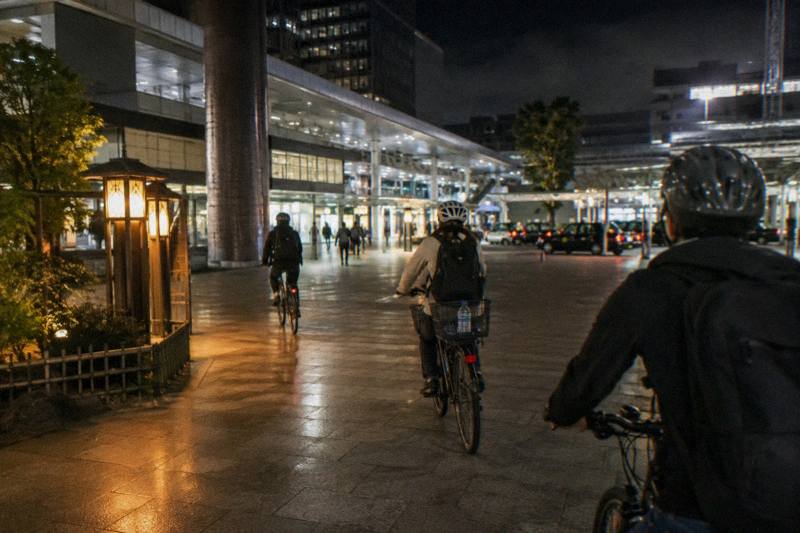
Kyoto Night Cycling: Evening Rides, Lighting And Safety
Two guided evening rides cover Kyoto after dark: a lantern-lit night ride of 3 hours 45 minutes and a 3 hour e-bike tour of Fushimi Inari and Tofuku-ji. The road rules stay the same at night, so fines, helmets and insurance matter exactly as they do at noon.
Short answer
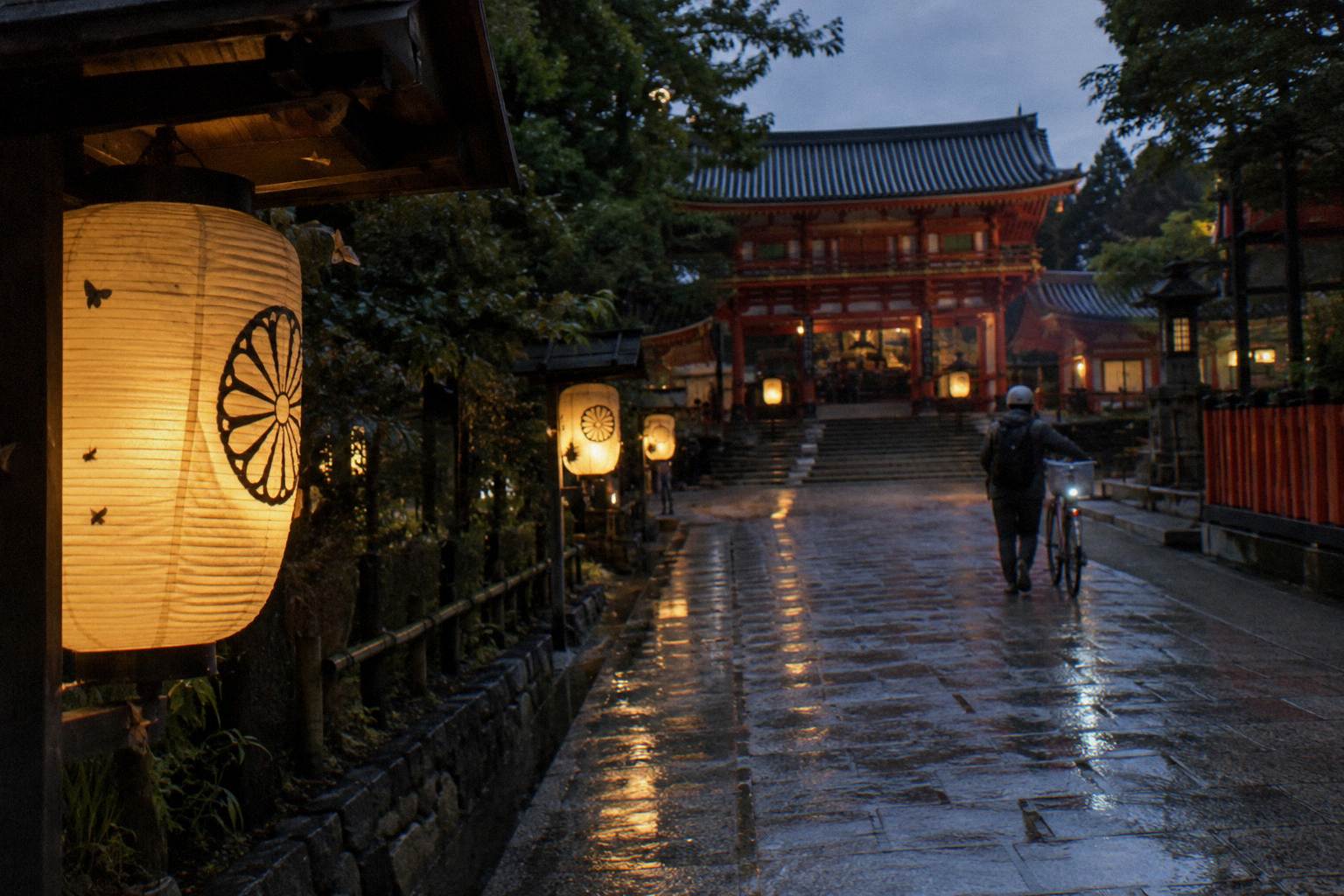
Kyoto has two bookable evening rides: Discover Kyoto at Night by Bike (3 hours 45 minutes, 4.9 from 53 reviews, minimum age 10) and Kyoto: Evening E-Bike Tour of Fushimi Inari & Tofuku-ji (3 hours, e-bike, helmet and entrance tickets included). Road rules are unchanged at night: riders aged 16 and over face fixed fines of 3,000 to 12,000 yen, helmets are an effort duty for every age, and bicycle liability insurance is required in Kyoto Prefecture.
Evening cycling in Kyoto is a small but real corner of the guided riding on offer here: two products cover the city after dark, one by lantern light and one by e-bike to Fushimi Inari and Tofuku-ji. If you are weighing a night ride against a daytime one, the differences come down to the stops, the start of your evening, and the rules that apply on the road once the sun is down.
| Fact | Detail |
|---|---|
| Night ride on offer | Discover Kyoto at Night by Bike, 3 hours 45 minutes |
| Rating | 4.9 from 53 reviews |
| Minimum age, night ride | 10 |
| Evening e-bike ride | Kyoto: Evening E-Bike Tour of Fushimi Inari & Tofuku-ji, 3 hours |
| Fixed fines from 1 April 2026 | 3,000 to 12,000 yen, riders aged 16 and over |
| Phone while riding | 12,000 yen fixed fine; up to 6 months prison or 100,000 yen since 1 November 2024 |
| Helmet | Effort duty for every age since 1 April 2023, no fine |
| Insurance | Bicycle liability insurance required under the Kyoto Prefecture ordinance |
Is A Night Ride In Kyoto Worth Booking?
Two evening rides cover the after-dark hours: Discover Kyoto at Night by Bike runs 3 hours 45 minutes, carries a 4.9 rating from 53 reviews, and takes riders aged 10 and over, while the Evening E-Bike Tour of Fushimi Inari & Tofuku-ji runs 3 hours on electric assist. Neither publishes a price in advance, so the answer depends on whether an evening slot suits your day more than a morning one.
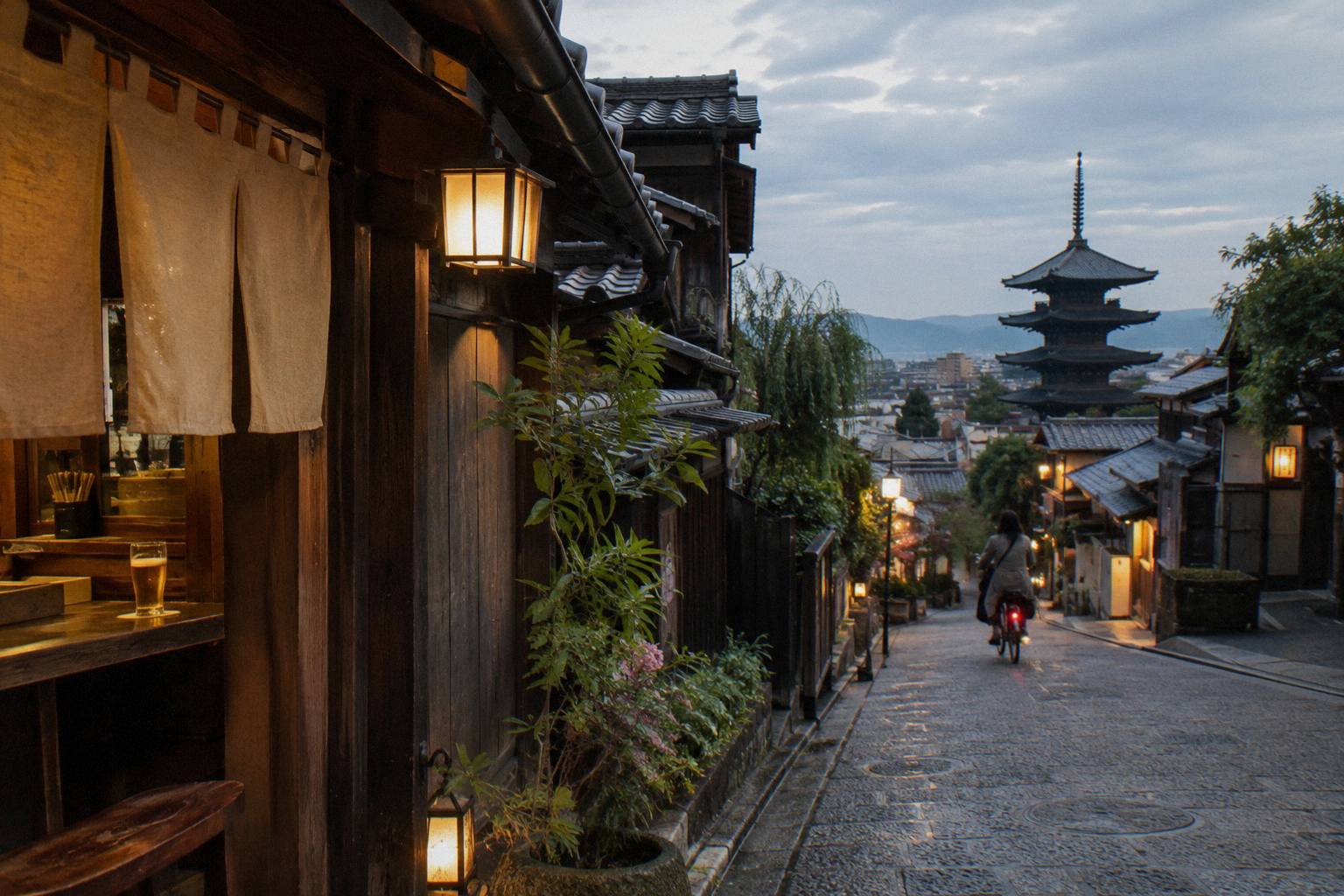
The case for a night ride is mostly about the shape of your day. Kyoto's headline temples close in the late afternoon: Tenryu-ji's visitor page lists last admission at 4:50 pm, and Kinkaku-ji closes at 5:00 pm. A daytime ride therefore competes with every other visitor for those opening hours, while an evening ride uses the hours after the ticket booths shut, when the streets, shrines and lantern-lit lanes are what is left to see.
The night ride, operated under the name Night Ride By Lantern Light, includes bottled water, use of a bicycle and all entrance fees, with hotel transportation and guide gratuities excluded. Free cancellation up to 24 hours before start applies. The full card for Discover Kyoto at Night by Bike shows what is arranged for you. Its 4.9 from 53 reviews is a rating drawn from a moderate pool, which tells you the format has a track record without telling you anything about a specific date.
The evening e-bike ride from Kyoto Heritage Bike Tour covers Fushimi Inari and Tofuku-ji over 3 hours, with electric bike rental and helmet, entrance tickets, bike parking fees and a bilingual English and Japanese guide included. It carries no rating yet on the booking page, so there is no review signal to weigh; the decision rests on the itinerary and the inclusions instead.
One thing a night ride does not change is the paperwork. Helmets have been an effort duty for every cyclist in Japan since 1 April 2023, per the Kyoto Prefecture page on the helmet duty, and both evening products name a helmet or a bicycle in their inclusions. The riding rules are identical at midnight and at noon, which is the subject further down.
What Evening Rides Can You Book In Kyoto?
There are exactly two evening products to choose between: a 3 hour 45 minute lantern-lit night ride rated 4.9 from 53 reviews with a minimum age of 10, and a 3 hour e-bike tour to Fushimi Inari and Tofuku-ji with entrance tickets and parking fees included. A morning e-bike tour from Kyoto Station, 3 hours 30 minutes, is the closest alternative if an evening slot does not fit.
The two evening rides split along a clear line. The lantern-lit night ride is a general city tour: water, bicycle and entrance fees included, gratuities and hotel transport excluded, minimum age 10. The Fushimi Inari evening ride is a targeted one: two named stops in the south of the city, an e-bike under you, and a bilingual guide who narrates in English and Japanese.
The morning alternative exists for a reason. Some travellers find that an evening commitment conflicts with dinner plans in a city where restaurants fill up, and a morning ride from Kyoto Station, from ¥14,000 per person with raincoat and liability insurance included, scratches a similar itch at the other end of the day. Its rating is 5.0 from 20 reviews, a small pool, but a consistent one so far.
Prices on the two evening products are set by date, and the booking page shows the figure for the evening you choose. If budget is the deciding factor, compare the date you actually want rather than working from a single number, since evening availability and group size both move the price. The comparison below lines up everything that is published for each product.
| Ride | Duration | Rating | Minimum age | Named inclusions | Cancellation |
|---|---|---|---|---|---|
| Night Ride By Lantern Light | 3 hours 45 minutes | 4.9 from 53 reviews | 10 | Bottled water; use of bicycle; all entrance fees | Free up to 24 hours before start |
| Evening Ride, Fushimi Inari | 3 hours | No rating yet | Check the booking calendar | E-bike and helmet; entrance tickets; bike parking fees; bilingual guide | Free up to 24 hours before start |
| Morning Ride From Station | 3 hours 30 minutes | 5.0 from 20 reviews | 13 | Water; raincoat; helmet; bicycle; liability insurance | Free up to 24 hours before start |
Read the table as a decision grid rather than a ranking. The lantern ride has the deepest review pool of the three; the evening e-bike ride has the most logistics wrapped in, since parking fees and tickets are unusual inclusions; the morning ride is the only one of the three with a published from-price and a raincoat. For the full picture across all dayparts, the guide comparing guided ride prices puts every product side by side.
What Do Fushimi Inari And Tofuku-ji Offer After Dark?
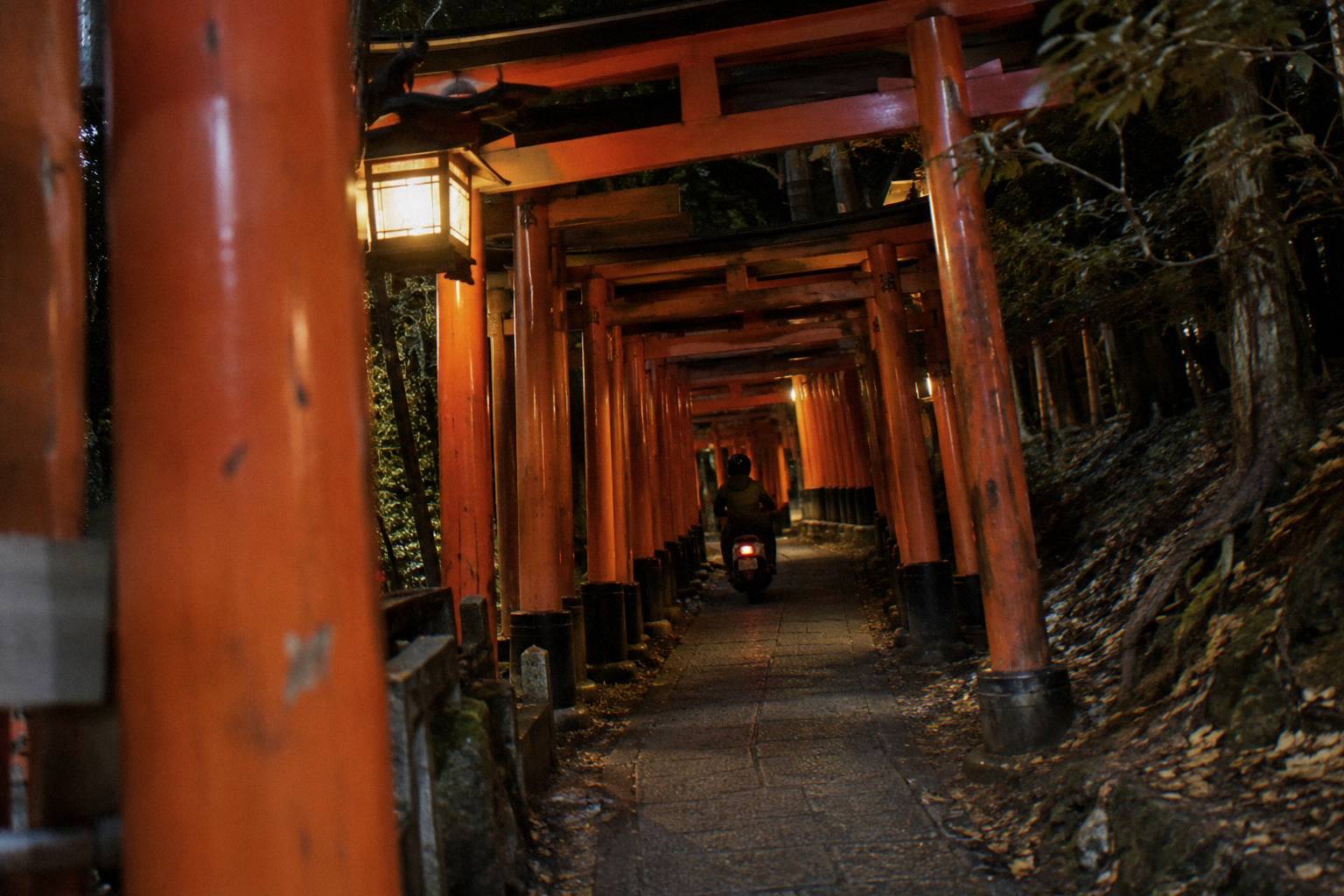
The evening e-bike ride pairs two southern landmarks: Fushimi Inari Taisha, which charges no admission fee and counts around 10,000 torii gateways along its mountain paths, and Tofuku-ji, whose Hojo garden and Tsutenkyo bridge area each carry a fee. The shrine's paths have no closing time stated by the shrine itself, which is what makes an evening visit structurally possible where a ticketed temple would not be.
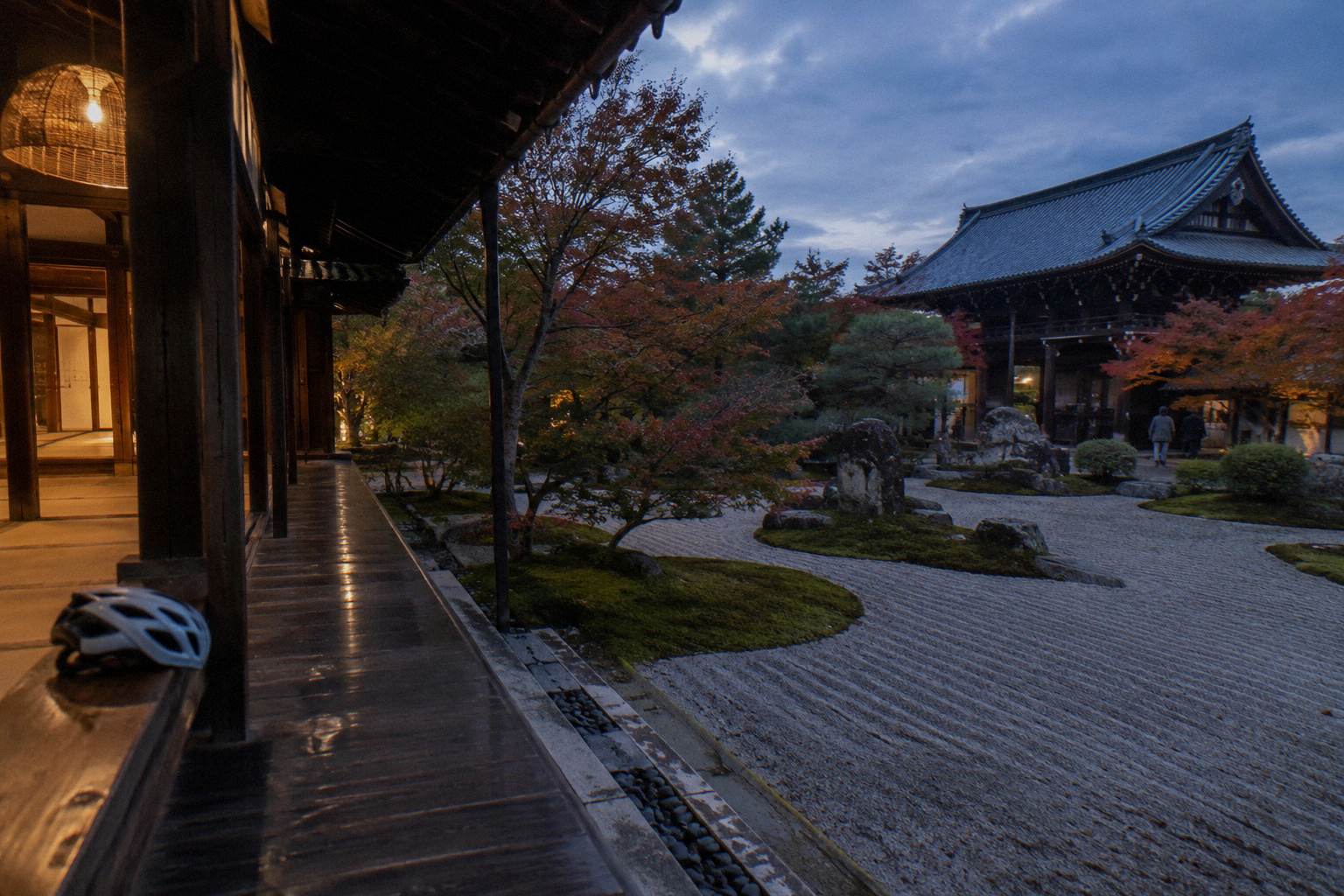
Fushimi Inari is the southern anchor of the ride, and its structure explains the format: a shrine with no gate, no fee and no posted closing time can be visited when everything else has shut. The shrine's FAQ page describes around 10,000 torii of all sizes climbing the mountain, and it is the density of those gates, lit after dark, that draws evening visitors. The ride's route page at Fushimi Inari by bike covers the daytime version of the same decision.
- Budget Fare, Hidden Alleys¥11,000
- Crowd-Free E-Bike Ride¥13,000
- Higashiyama Heritage Ride¥13,500
- Fushimi Inari, Sento Stop¥13,500
- Morning Ride From Station¥14,000
- Silver Pavilion, Philosopher's Path¥14,500
- Backstreets, 5 To 6 Hours¥15,000
- Palace, Castle And Temples¥16,500
Tofuku-ji is the second stop, and it is a different kind of visit: a fee-charging temple whose combined ticket runs 1,000 yen and whose Tsutenkyo bridge area costs 1,000 yen in the foliage period. Because the evening ride names entrance tickets as included, the fee question is handled for you on the product, but the temple's own schedule still governs which areas are reachable on a given evening; ask the operator when you book if the garden areas matter to you.
If your date falls in late November or early December, the foliage pricing at Tofuku-ji interacts with the timing. The Japan Meteorological Agency Kyoto observations put the maple colouring normal at 5 December, with 2025 colouring on 10 December, so a ride in that window catches the pricing period and the colour together. That is a date fact from the observatory's reference tree, not a promise about any single evening.
For readers weighing the two evening options, the Fushimi Inari ride is the tighter, more targeted one: two stops, an e-bike, and the parking and ticket handling done for you. You can check availability for your dates, or read the evening e-bike tour of Fushimi Inari in full first.
Do The Road Rules Change At Night?
No. Every rule that applies at midday applies after dark: ride on the left, the roadway is the principle and the sidewalk the exception, and since 1 April 2026 riders aged 16 and over pay fixed fines of 3,000 to 12,000 yen for minor violations instead of facing criminal procedure. Holding or watching a phone while riding carries a 12,000 yen fine, and drunk cycling is banned at any level of drinking, night or day.
The blue ticket system is the single most important thing to understand before riding in Kyoto in the evening, because a relaxed after-dark ride is exactly when riders drift into the small violations it covers. The Kyoto City page on cycling rules lists the fixed amounts, and they apply to every rider aged 16 and over. The table below sets out the ones most likely to matter on an evening ride.
| Violation | Fixed fine | Why it matters at night |
|---|---|---|
| Phone held or watched while riding | 12,000 yen | Checking a map or a message mid-ride is the most common slip |
| Ignoring a signal | 6,000 yen | Quiet intersections after dark tempt riders through |
| Riding on the wrong side of the road | 6,000 yen | Empty streets make wrong-side riding feel harmless |
| Failing to stop at a stop sign | 5,000 yen | Low traffic does not remove the obligation |
| Riding with an umbrella | 5,000 yen | Evening showers make this tempting |
| Two abreast or carrying a second rider | 3,000 yen | Social riding in a group after dark |
Two further penalties sit outside the fixed-fine system and apply regardless of the hour. Since 1 November 2024, holding a phone to talk or watch the screen can mean up to 6 months in prison or a 100,000 yen fine, and causing danger while using a phone up to 1 year or 300,000 yen. Drunk cycling is criminal at any level of drinking: up to 3 years or a 500,000 yen fine for alcohol-impaired riding, and lending a bike to a drunk rider carries the same exposure. An evening ride that starts near a dinner with drinks needs a sober rider, full stop.
The sidewalk question resolves the same way at night. Per the National Police Agency bicycle safety leaflet, the roadway is the principle and the sidewalk the exception, permitted where signs or markings allow, for children under 13, riders aged 70 and over, riders with disabilities, or when road conditions leave no safe alternative, with pedestrians first. Darkness does not widen those exceptions. The sidewalk riding question is covered in its own post, and the full reference set lives in Kyoto cycling rules for visitors.
A guided evening ride absorbs most of this: the guide leads, sets the line through intersections, and handles parking, which matters because Kyoto City removes illegally parked bicycles and charges 3,500 yen to reclaim one. Riding with a guide is the simplest way to keep the blue ticket system a thing you read about rather than a thing you meet.
Is An E-Bike The Right Choice For An Evening Ride?
The evening Fushimi Inari ride puts an electric-assist bicycle under every participant, with helmet included, and the morning alternative from Kyoto Station is also an e-bike product. Legally, a pedal-assist e-bike that meets the standard is a bicycle, while a throttle vehicle is not, so the assisted rides stay within the ordinary bicycle rules.
The practical argument for assist in the evening is duration and energy. A 3 hour ride at the end of a sightseeing day asks legs that have already walked temples all afternoon, and the electric motor spreads that effort. The rider-fit question in general is covered in e-bike or regular bike in Kyoto, but for evening products specifically, both options on the table are assisted or standard bicycle products with a guide leading, so the choice is about the itinerary rather than the machine.
Helmets come with both evening products in their named inclusions, which aligns with the law: every cyclist of every age has been under an effort duty to wear one since 1 April 2023, with no fine attached. That duty applies on a rental, on a guided ride and on your own bicycle alike. The wider set of guides lives on Kyoto Bike Tours.
Insurance is the quiet part of the picture. Kyoto Prefecture requires bicycle liability insurance under its ordinance, per the prefecture's insurance page, and a personal-liability rider on home, car or accident cover counts. The morning ride from Kyoto Station names liability insurance among its inclusions; for the two evening products, ask the operator what coverage the booking carries before you ride.
What Should You Plan Around An Evening Ride?
Plan three things: dinner, weather and the calendar. July is Kyoto's wettest month at 223.6 mm, August the hottest with a mean of 28.5 °C, and the observatory's maple colouring normal is 5 December, so the season you ride in shapes the evening more than the hour does. Both evening products offer free cancellation up to 24 hours before start, which lets you hold a date and decide late.
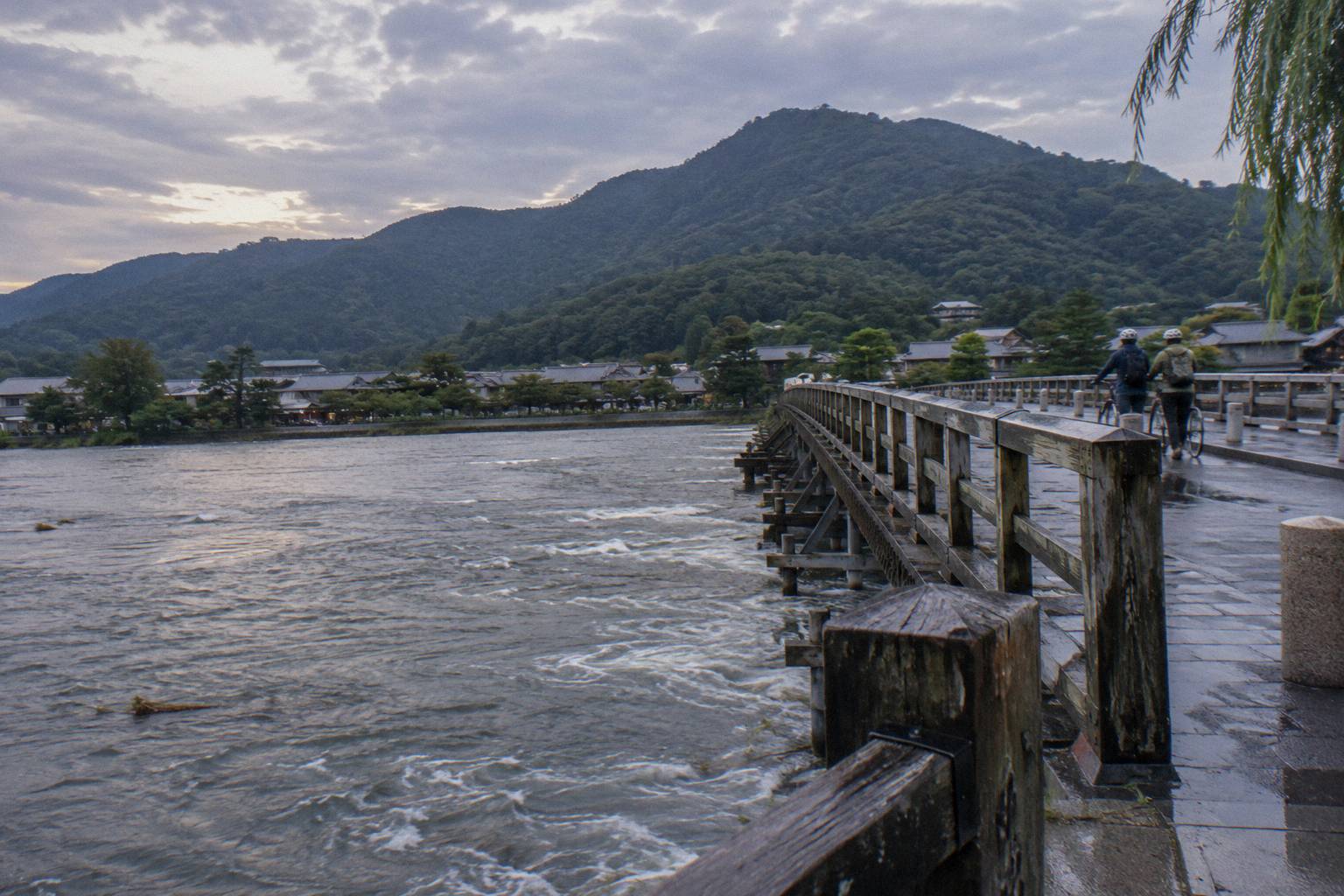
Dinner first, because a 3 hour or 3 hour 45 minute evening ride occupies the hours when most people eat. The evening Fushimi Inari ride includes no meal, and the lantern-lit night ride names no food among its inclusions either, so book a late table or eat beforehand; several daytime products, such as the UNESCO Zen Temples ride with its local lunch, handle the meal question that the evening ones do not. If a ride-with-dinner is the goal, the evening format is not where it lives.
Weather second. The Japan Meteorological Agency Kyoto monthly normals show July as the wettest month at 223.6 mm and August as the hottest, with a mean of 28.5 °C and a daily high of 33.7 °C; the record daily maximum stands at 39.8 °C. An August evening ride starts in serious heat, and a July one carries the highest rainfall odds of the year, roughly early June to mid July for the rainy season proper. What actually happens with weather on the day is the operator's call, and the guide to rides in the rain covers that question in detail.
The calendar third. Cherry blossom full bloom in Kyoto has a normal date of 4 April, with 2026 full bloom recorded on 30 March, and maple colouring a normal of 5 December. Those are observatory reference dates, not promises about any single evening, but they tell you which weeks carry blossom lighting and which carry foliage. Evening rides in those windows are worth holding early, since both products allow free cancellation up to 24 hours before start, which makes an early booking low-risk.
| Season marker | Normal or figure | What it means for an evening ride |
|---|---|---|
| Cherry full bloom | Normal 4 April (2026: 30 March) | The blossom weeks draw the most evening interest; book early |
| Maple colouring | Normal 5 December (2025: 10 December) | Late-autumn rides coincide with Tofuku-ji's foliage pricing |
| Rainiest month | July, 223.6 mm | Highest odds of a weather disruption; rainy season early June to mid July |
| Hottest month | August, mean 28.5 °C, daily high 33.7 °C | Evening rides start in strong heat; water is included on the night ride |
| Record daily maximum | 39.8 °C | The upper bound of what an August day can deliver |
One last planning note: the lantern-lit night ride takes riders aged 10 and over, while the evening Fushimi Inari ride asks you to check the booking calendar for its age minimum. If you are riding with children, the age line decides the product before any itinerary question does, and the cycling with kids guide covers the family angle more broadly.
How Does A Night Ride Compare To A Morning One?
The trade is stops against slots: the evening rides reach Fushimi Inari and Tofuku-ji, which stay reachable after ticketed temples close, while morning products such as the ride from Kyoto Station, 3 hours 30 minutes from ¥14,000 per person, cover the city at the hour when the day's crowds are thinnest. Your dinner plans and your arrival day usually settle it faster than any itinerary comparison.
The mechanics differ in three ways. Duration: the lantern night ride runs 3 hours 45 minutes against 3 hours 30 minutes for the morning ride, a near match, while the evening Fushimi Inari ride is the shortest at 3 hours. Review depth: the night ride's 4.9 from 53 reviews is the largest pool of the three, against 5 from 20 for the morning ride and no rating yet for the evening e-bike. Price transparency: the morning ride publishes from ¥14,000 per person, the evening pair does not, so an evening booking means checking the date-specific figure on the booking page.
The stop lists diverge more than the numbers suggest. A morning ride competes with the whole city's opening hours and wins on early access to them; an evening ride gives up ticketed interiors and gains the lantern-lit streetscape, the torii of Fushimi Inari and whatever Tofuku-ji areas the operator's arrangement covers. Neither is objectively better; they photograph differently and eat into different parts of the day.
There is also the day-shape argument. Travellers arriving in Kyoto by shinkansen in the afternoon cannot take a morning ride that day, but an evening one fits, and the free cancellation up to 24 hours before start means a train delay does not strand the booking. For a fuller treatment of timing, the best time of day for cycling in Kyoto weighs the whole day against itself.
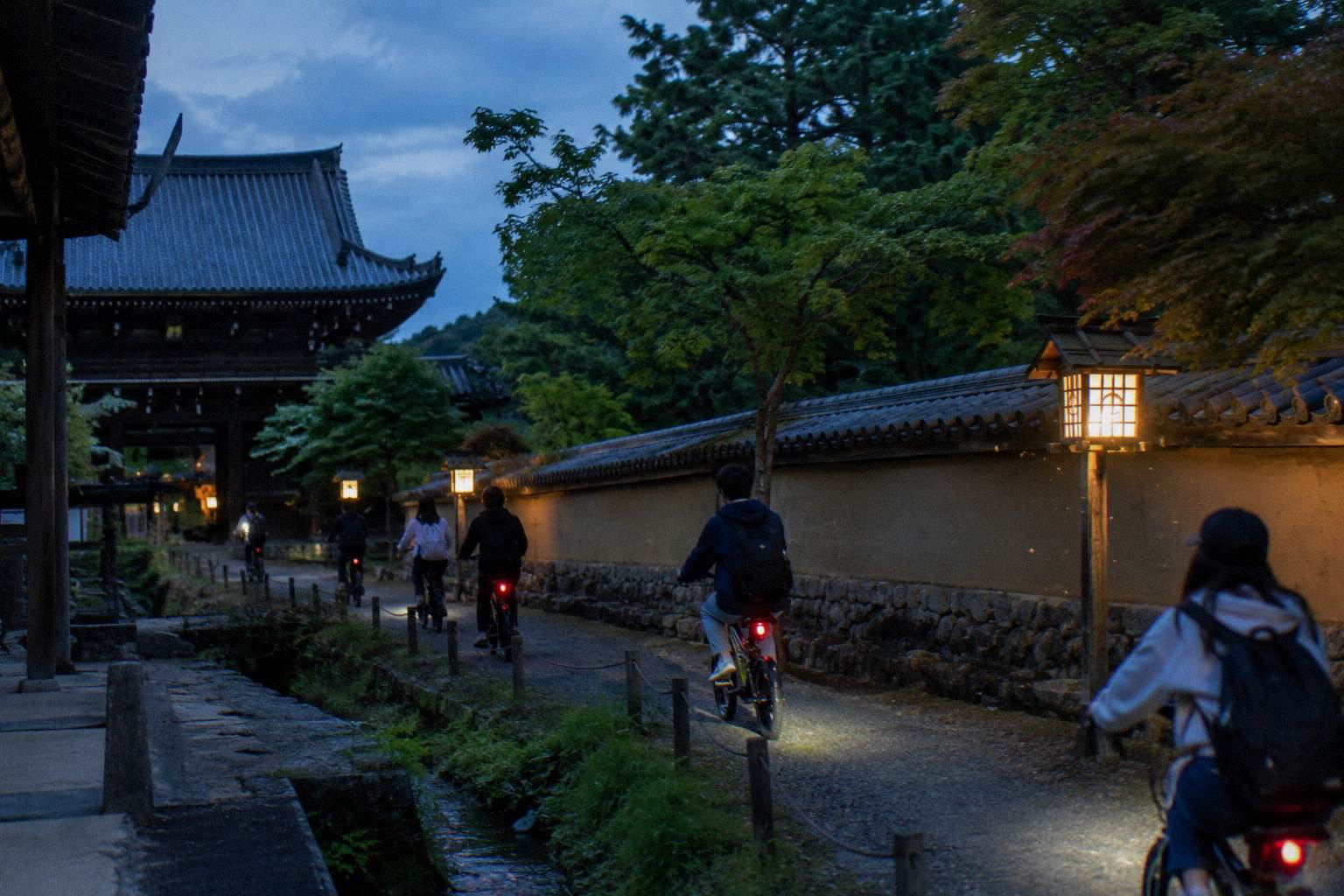
If the lantern ride is the one that fits, its full details are on the Discover Kyoto at Night by Bike page, and the operator's card handles the date-specific price. A similar two-stop southern itinerary also exists in daytime form, the Fushimi Inari and Sento Stop ride, which adds a sento visit with towel and amazake included for riders of any minimum age listed on its card.
What Trips People Up Before You Book
The recurring mistakes are assuming the evening rides publish prices (they do not; the booking page shows the date-specific figure), skipping dinner planning because neither evening product includes a meal, and assuming night riding has looser rules, when the blue ticket fines of 3,000 to 12,000 yen and the phone and drunk-cycling bans apply identically after dark.
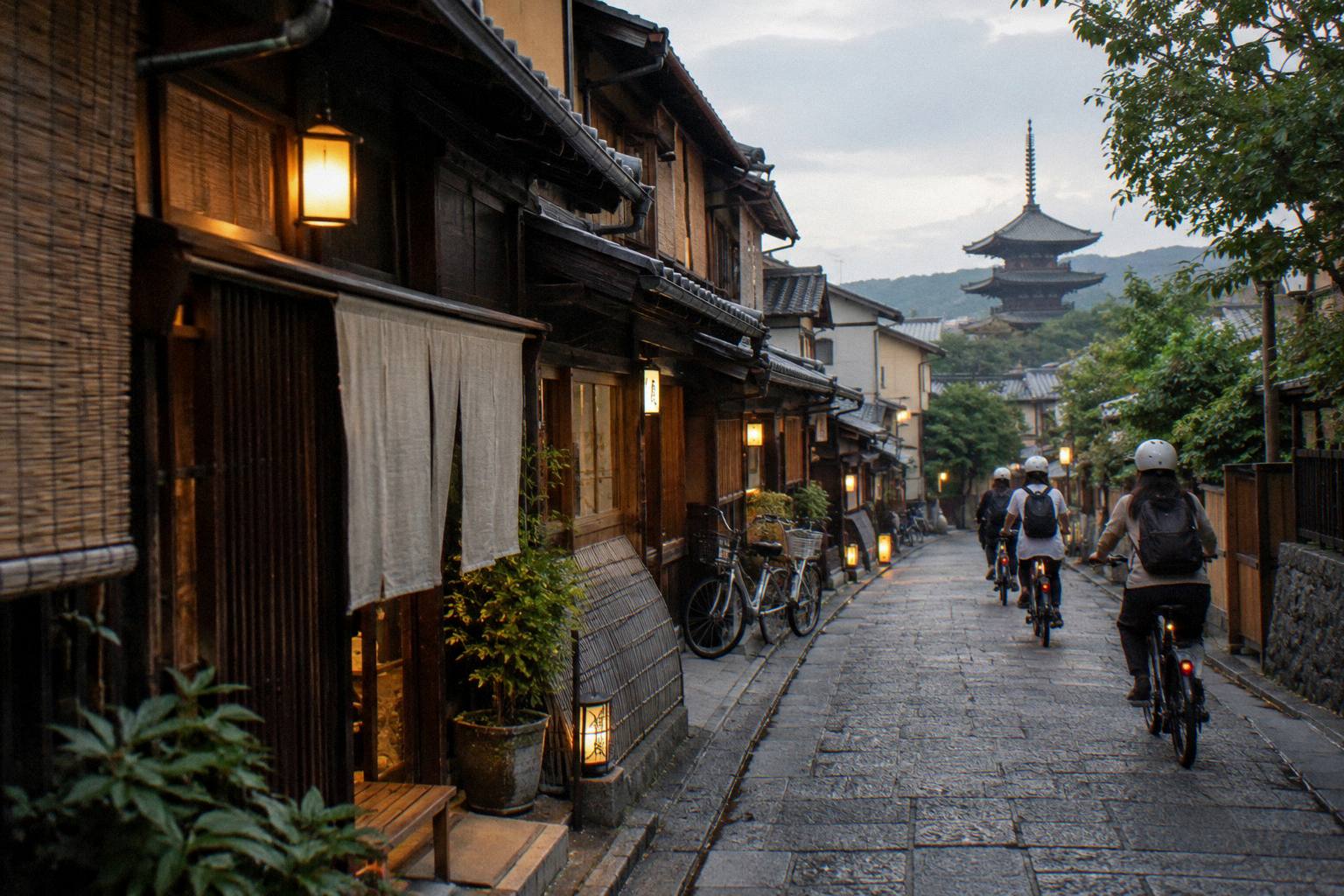
The first mistake is price shopping from memory. The lantern night ride and the evening Fushimi Inari ride both carry no advance price, so any figure you recall from another traveller or another season does not apply; check the booking page for your date before building a budget. The morning ride from Kyoto Station is the one that publishes from ¥14,000 per person, and comparing a dated evening price against that published morning figure is the only like-for-like that exists.
The second is the age line. The night ride takes riders aged 10 and over, the morning ride 13 and over, and the evening e-bike ride asks you to check the booking calendar. Booking first and checking ages second is how families end up rebooking, and while free cancellation up to 24 hours before start softens the cost, it does not recover the evening.
The third is treating the helmet effort duty as optional in spirit. Since 1 April 2023 every cyclist of every age must make an effort to wear one, with no fine attached, and both evening products put a helmet or bicycle in the inclusions. Wear what the ride provides; the duty applies to visitors on the same terms as residents.
The fourth is skipping the insurance question. Kyoto Prefecture requires bicycle liability insurance, and only the morning ride names liability insurance among its inclusions. For either evening ride, ask the operator what the booking covers, or confirm that your own travel or accident policy carries a personal-liability rider, which the prefecture accepts.
The fifth is ignoring the weather window. An August evening starts around serious heat, a July evening carries the year's highest rainfall normals, and both products leave the weather call to the operator on the day. Book with the free cancellation in mind, watch the forecast on the day, and do not plan an evening ride as the unmoveable anchor of a tight itinerary.
Common Questions About Evening Rides In Kyoto
Is There A Night Bike Tour In Kyoto?
Yes. Discover Kyoto at Night by Bike runs 3 hours 45 minutes, is rated 4.9 from 53 reviews, takes riders aged 10 and over, and includes water, bicycle and all entrance fees. A second evening option, the Evening E-Bike Tour of Fushimi Inari & Tofuku-ji, runs 3 hours on electric assist.
Can You Visit Fushimi Inari In The Evening?
Fushimi Inari Taisha charges no admission fee and states no closing time for its mountain paths, and the evening e-bike tour is built around an evening visit. The paths carry around 10,000 torii gateways, and the shrine's own FAQ confirms no fee.
Are The Cycling Rules Different At Night In Kyoto?
No. Since 1 April 2026 riders aged 16 and over face fixed fines of 3,000 to 12,000 yen for minor violations at any hour, holding a phone while riding costs 12,000 yen, and drunk cycling is banned at any level. Helmets are an effort duty for every age since 1 April 2023.
What Is Included On The Evening E-Bike Tour Of Fushimi Inari And Tofuku-Ji?
Electric bike rental and helmet, entrance tickets, bike parking fees and a bilingual English and Japanese guide are included. The ride runs 3 hours, and no price is published in advance, so the booking page shows the figure for your date.
Do The Evening Rides Include Dinner?
Neither evening product names a meal among its inclusions. The lantern night ride includes bottled water and entrance fees; the Fushimi Inari evening ride includes tickets and parking. Plan dinner before or after the ride.
Can I Cancel An Evening Ride If My Plans Change?
Both evening products offer free cancellation up to 24 hours before start. That makes holding a date low-risk while your itinerary settles, including on arrival days when train timing is uncertain.