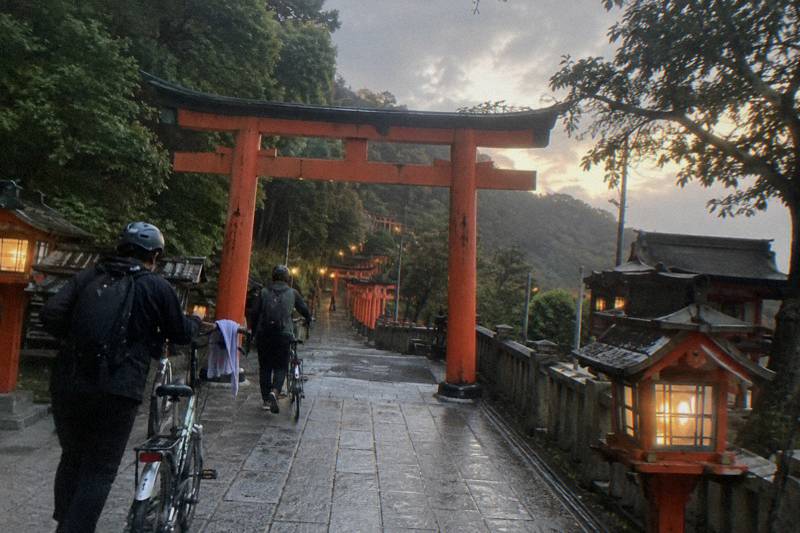
Fushimi Inari By Bike: Route, Parking And Timing
Fushimi Inari is free to enter, lined with around 10,000 torii gateways, and reachable on a guided e-bike ride from central Kyoto. Here is the route logic, the parking rules, the fees and the timing.
Short answer
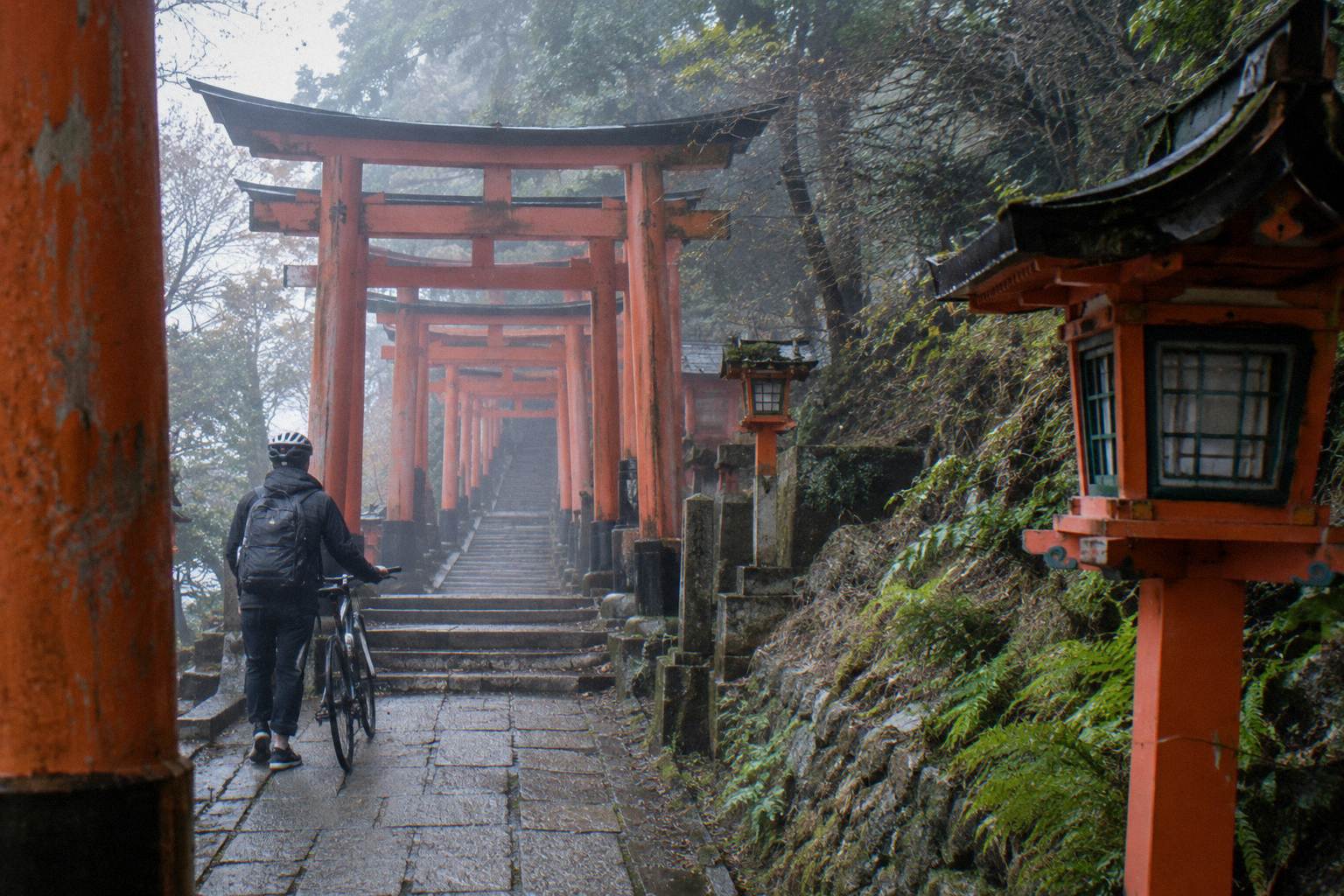
Fushimi Inari Taisha has no admission fee and around 10,000 torii gateways along its mountain paths. Guided e-bike rides that pair the shrine with Tofuku-ji or a sento bath run from ¥13,500 per person for about 4 hours. Illegally parked bikes are removed by Kyoto City and cost 3,500 yen to reclaim, so use designated parking.
Riding south to the torii gates works best as a planned outing rather than a spontaneous one, and the Fushimi Inari sento e-bike ride is built around exactly this stretch of the city, pairing the shrine with a neighbourhood bathhouse, while its sister evening tour adds Tofuku-ji to the same southern loop.
| Fact | Detail |
|---|---|
| Fushimi Inari Taisha admission | No fee |
| Torii gateways | Around 10,000 of all sizes along the mountain paths |
| Tofuku-ji Hojo garden | 600 yen from 1 November 2026 |
| Tofuku-ji combined ticket | 1,000 yen |
| Removed bicycle reclaim fee | 3,500 yen per bicycle, held 4 weeks |
| Helmet rule | Effort duty for every age since 1 April 2023, no fine |
| Guided south Kyoto e-bike ride | From ¥13,500 per person, 4 hours |
| Rainy season | Early June to mid July |
What Does Riding To Fushimi Inari By Bike Actually Look Like?
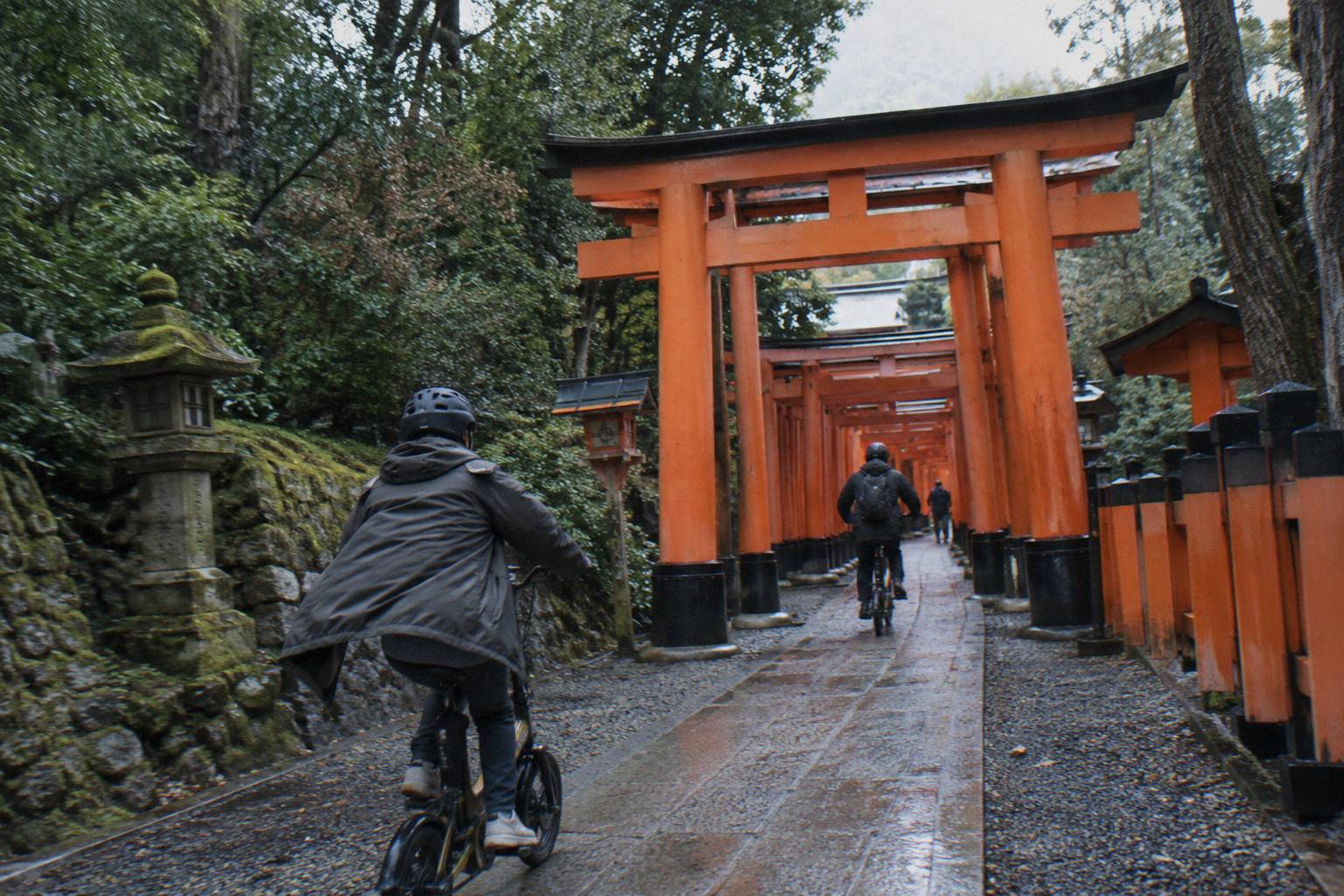
A ride to Fushimi Inari is a south-of-city outing: you pedal out of central Kyoto, lock or park the bicycle near the shrine, then continue on foot up through the torii tunnels, because the mountain paths are for walking, not riding. Guided versions, such as the Fushimi Inari, Sento Stop ride by SunnyCycleTour, fold the shrine into a 4-hour loop that also stops at a neighbourhood sento bathhouse.
The shrine itself sits at the base of Mount Inari in the south of the city. Its own FAQ describes around 10,000 torii gateways of all sizes along the mountain paths, per the Fushimi Inari Taisha FAQ page, and admission is free. What that means in practice is that the cycling part of the day gets you to and from the district, and the exploring part is on foot. No tour rides through the gates themselves.
That split shapes the whole plan. You want a bike you are comfortable leaving parked for an hour or more, a route that does not dead-end, and ideally a guide who knows which approach streets carry less traffic. This is where the guided format earns its fee: the guide leads the ride, the bicycle parking is arranged, and the walking section starts from a known spot. Independent riders can do the same day, but they carry the parking question, the navigation and the temple fees themselves, and in a district where the on-foot section is long, those small tasks add up.
For riders weighing the whole city, Kyoto Bike Tours covers the other districts separately, and the sibling write-ups on cycling routes across Kyoto place this southern ride in context. Fushimi Inari pairs naturally with Tofuku-ji, which sits between the shrine and the city centre, and that pairing is exactly what the two dedicated rides on this page do.
How Do You Get From Central Kyoto To Fushimi Inari By Bike?
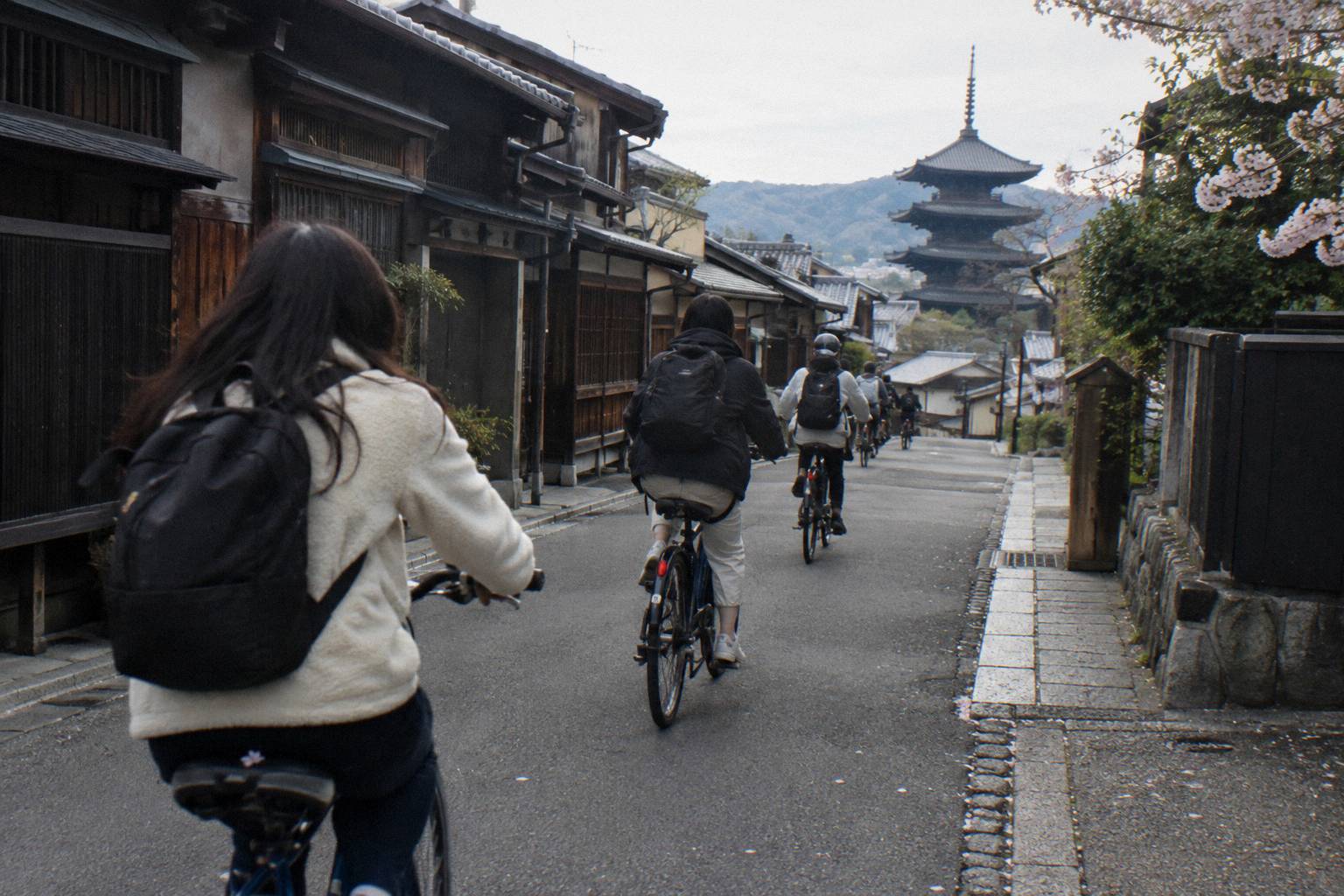
The shrine sits south of central Kyoto, and the ride out is a straightforward urban pedal through the city grid on roads shared with cars. There is no official published cycling distance or time for the approach, and none is estimated here; the structure that matters is that Fushimi Inari pairs cleanly with Tofuku-ji and the Higashiyama districts on a loop. A guided ride removes the route-finding entirely.
Riding in Kyoto follows the National Police Agency's five rules: the roadway is the principle, ride on the left, and the sidewalk is the exception where signs permit it or where road conditions leave no safe alternative. The Kyoto City page on cycling rules sets out how those rules are enforced, and since 1 April 2026 riders aged 16 and over who commit minor violations pay a fixed fine of 3,000 to 12,000 yen instead of going through criminal procedure.
Two of the fines matter on a long urban approach. Holding a phone while riding is 12,000 yen under the fixed-fine system, and since 1 November 2024 it can also mean up to 6 months in prison or a 100,000 yen fine. Ignoring a signal is 6,000 yen. A guide who knows the turn sequence removes the temptation to check a map mid-ride, which is the single most common way visitors collect that particular fine.
If you would rather ride the approach solo, the trade-offs between guided and independent riding are worked through in guided versus self-guided cycling, and the full rule set, including the blue-ticket system and insurance requirement, sits in the Kyoto cycling rules reference. Note that Kyoto Prefecture requires bicycle liability insurance for riders, which most guided products satisfy through their own cover; ask the operator to confirm what theirs includes. Solo riders should check that their travel or personal policy carries a liability rider before setting out, since the prefecture treats that cover as a requirement rather than a suggestion.
Which Guided Rides Include Fushimi Inari?
Two rides build Fushimi Inari into their itinerary: the Fushimi Inari, Sento Stop ride by SunnyCycleTour, from ¥13,500 per person for 4 hours, which adds a fox-shaped ema, amazake and a towel for a sento bathhouse stop, and the Evening Ride, Fushimi Inari by Kyoto Heritage Bike Tour, 3 hours, which pairs the shrine with Tofuku-ji and covers entrance tickets and bicycle parking fees. A full-day grand loop also sweeps through the south with lunch included.
The two shrine-focused rides split by mood. The sento ride is a daytime cultural loop: electric bike, reusable water bottle, a fox-shaped ema to write a wish on, amazake to drink, and a towel for the bathhouse, with a minimum age of 1 so families can join. The evening ride is tighter at 3 hours and moves the shrine visit toward dusk hours, with a bilingual guide, e-bike, helmet and entrance tickets included; its price is on the booking page, since it varies by date.
| Ride | Operator | Duration |
|---|---|---|
| South Kyoto: E-Bike Highlights & Local Cultural Experiences | SunnyCycleTour | 4 hours |
| Kyoto: Evening E-Bike Tour of Fushimi Inari & Tofuku-ji | Kyoto Heritage Bike Tour | 3 hours |
| Bike Kyoto's Grand Loop: Full-Day Kyoto E-Bike Tour - 5 Top Sites | Kyoto Bike Tour | 7 hours to 8 hours |
The daytime sento ride is the natural pick if you want the shrine plus a slice of everyday Kyoto life; you can see dates for the Fushimi Inari sento ride before deciding. For a longer day that carries the south-ride logic across five sites, the Grand Loop option is detailed below, and it carries the strongest review record of the three at 5.0 from 596 reviews.
What Does It Cost To Combine Fushimi Inari And Tofuku-ji?
Entry costs are low: Fushimi Inari Taisha charges no admission fee, and Tofuku-ji from 1 November 2026 charges 600 yen for the Hojo garden and 600 yen for the Tsutenkyo bridge and Kaisando, 1,000 yen during the autumn foliage period, with a combined ticket at 1,000 yen. The guided rides start from ¥13,500 per person for the 4-hour sento loop; the evening shrine-and-Tofuku-ji ride shows its price on the booking page.
The evening ride is the one that bundles the temple side: entrance tickets and bicycle parking fees are named as included, so the 600 yen garden fee is not something you settle on the day. The sento ride includes the bathhouse towel and the amazake rather than temple entries, which suits its neighbourhood-bath itinerary.
Tofuku-ji sits between Fushimi Inari and the city centre, which is why every shrine-focused itinerary can fold it in without backtracking. The foliage-period pricing matters if you are riding in late November: the Tsutenkyo bridge and Kaisando fee doubles to 1,000 yen in that window, and the bridge is the famous view, so budget accordingly.
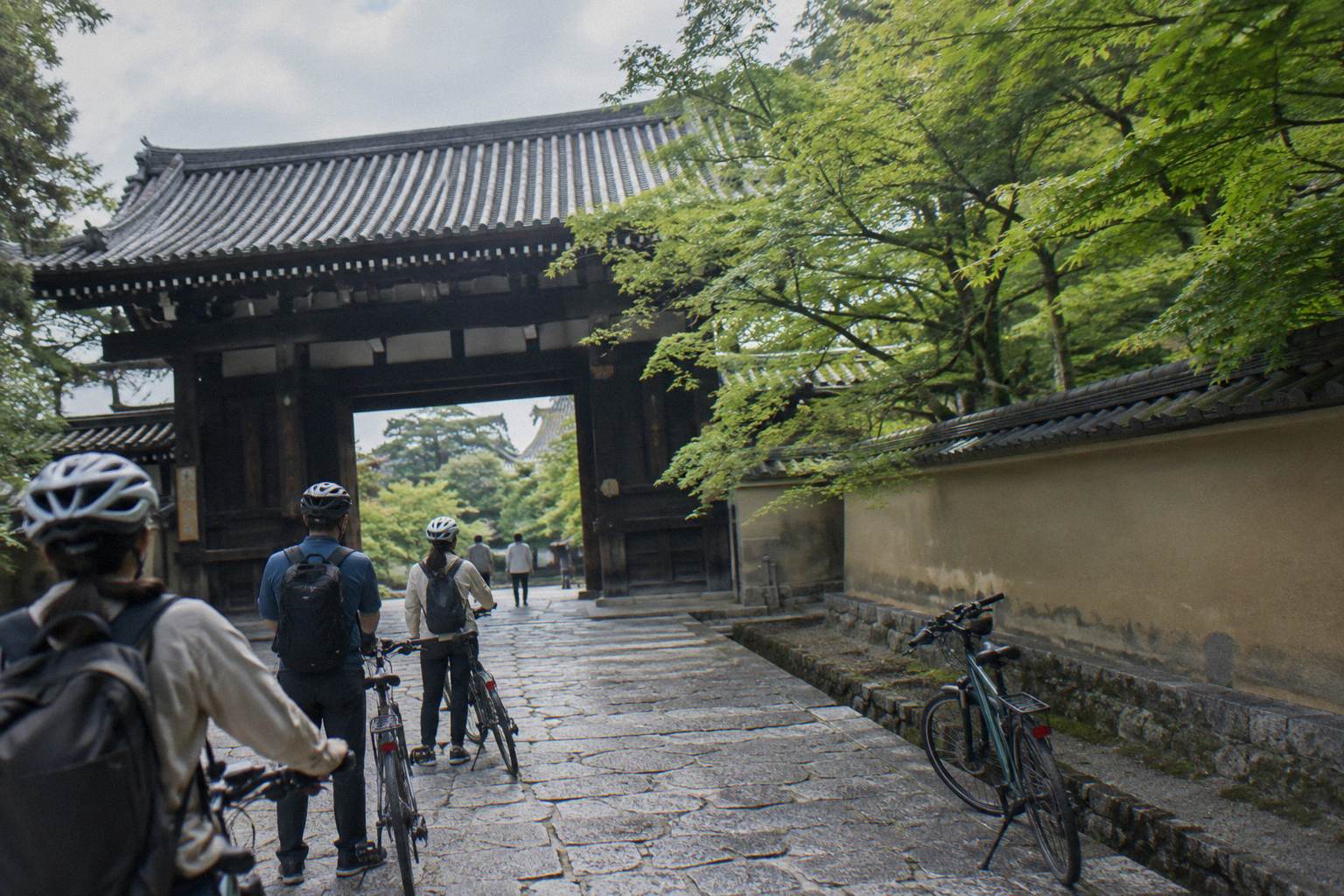
| What the ride bundles | Sento ride (SunnyCycleTour) | Evening ride (Kyoto Heritage Bike Tour) |
|---|---|---|
| E-bike | Included | Included |
| Helmet | Not named | Included |
| Entrance tickets | Not named | Included |
| Bicycle parking fees | Not named | Included |
| Food or drink extras | Fox-shaped ema, amazake, reusable water bottle, sento towel | Not named |
Prices for the rides themselves vary by date and group, and the booking page shows the price for the date you choose. For riders comparing formats across the whole city, the guided ride price comparison lines up durations and inclusions side by side.
Where Do You Leave The Bike At Fushimi Inari?
Kyoto City removes illegally parked bicycles across nearly the whole city and charges 3,500 yen per bicycle to reclaim one, holding it for 4 weeks from the day after removal. There is no Fushimi-specific parking rule published, so the practical answer is to use designated bicycle parking near the shrine, or to take a guided ride where the parking is arranged and, on the evening tour, its fees are included.
- Budget Fare, Hidden Alleys¥11,000
- Crowd-Free E-Bike Ride¥13,000
- Higashiyama Heritage Ride¥13,500
- Fushimi Inari, Sento Stop¥13,500
- Morning Ride From Station¥14,000
- Silver Pavilion, Philosopher's Path¥14,500
- Backstreets, 5 To 6 Hours¥15,000
- Palace, Castle And Temples¥16,500
The mechanics are unforgiving. Kyoto City's bicycle removal page explains that the 3,500 yen fee covers removal and storage, that storage depots such as Sanjo Senbon open daily from noon to 9 pm, and that unclaimed bicycles are held for 4 weeks. Leaning a bike against a wall near the shrine approach for a two-hour walk up the mountain is exactly the behaviour the removal programme targets.
The sento ride sidesteps the question by pairing the shrine with a bathhouse stop where the group stays together; the evening ride names bicycle parking fees among its inclusions, so the guide handles where the bikes wait during the Tofuku-ji and shrine visits. Either way, parking is the strongest single argument for the guided format on this particular outing, because the on-foot section at Fushimi Inari is long compared with a typical temple stop.
For the full picture on legal parking across the city, see where to leave bikes in Kyoto. If you are renting independently instead of riding with a guide, ask the operator where they expect the bike to be parked during your shrine visit; that one question is worth more than any amount of guesswork at the shrine gate. If you do return to a missing bike, the depot hours above are the window for reclaiming it, and the fee is paid per bicycle, so a couple riding together faces double.
When Should You Ride To Fushimi Inari?
Timing follows two calendars. Climate first: Kyoto's rainiest month is July at 223.6 mm and its hottest is August at a mean of 28.5 °C, with a daily high of 33.7 °C, while spring and autumn are the comfortable riding windows. Crowd second: the shrine is free and its paths have no stated closing time, so early and late visits are the usual approach, and the evening ride exists precisely for the late slot.
The Japan Meteorological Agency Kyoto monthly normals give the frame below. April sits at a mean of 14.4 °C with 20.1 °C daily highs, November at 12.5 °C: the two months that line up with the cherry and maple seasons are also the two most forgiving months for a 4-hour ride with a long walking section.
| Month | Rainfall | Mean temperature | Mean daily high |
|---|---|---|---|
| January | 53.3 mm | 4.8 °C | 9.1 °C |
| April | 117.0 mm | 14.4 °C | 20.1 °C |
| July | 223.6 mm | 27.3 °C | 32.0 °C |
| August | 153.8 mm | 28.5 °C | 33.7 °C |
| November | 73.9 mm | 12.5 °C | 17.3 °C |
The seasonal markers come from the observatory's own records: the normal full bloom for Kyoto's cherry reference trees is 4 April, though in 2026 it arrived on 30 March, and the maple colouring normal is 5 December, a figure taken from the official marker tree rather than any single district. The rainy season runs roughly early June to mid July, and what happens to a guided ride in wet weather is covered in whether rides run in rain.
For heat specifically, the summer heat cycling guide goes deeper; Kyoto's record daily maximum is 39.8 °C, so an August afternoon ride with a mountain walk attached deserves an early start or a different month. The same logic runs the other way in January, the coldest and driest month on the normals table: crisp, clear days suit riding, but the walking section at the shrine is largely in shade, so an extra layer earns its place in the saddle bag more reliably than in April.
What Should You Know About The Torii Paths And The Walking Section?
The torii are the visit: around 10,000 gateways of all sizes line the mountain paths, the shrine charges nothing, and no closing time is stated by the shrine itself, though that is not the same as a promise of access at any hour. Plan on walking, not riding, once inside; the guided rides park the bicycles and continue on foot with the guide leading the walking section.
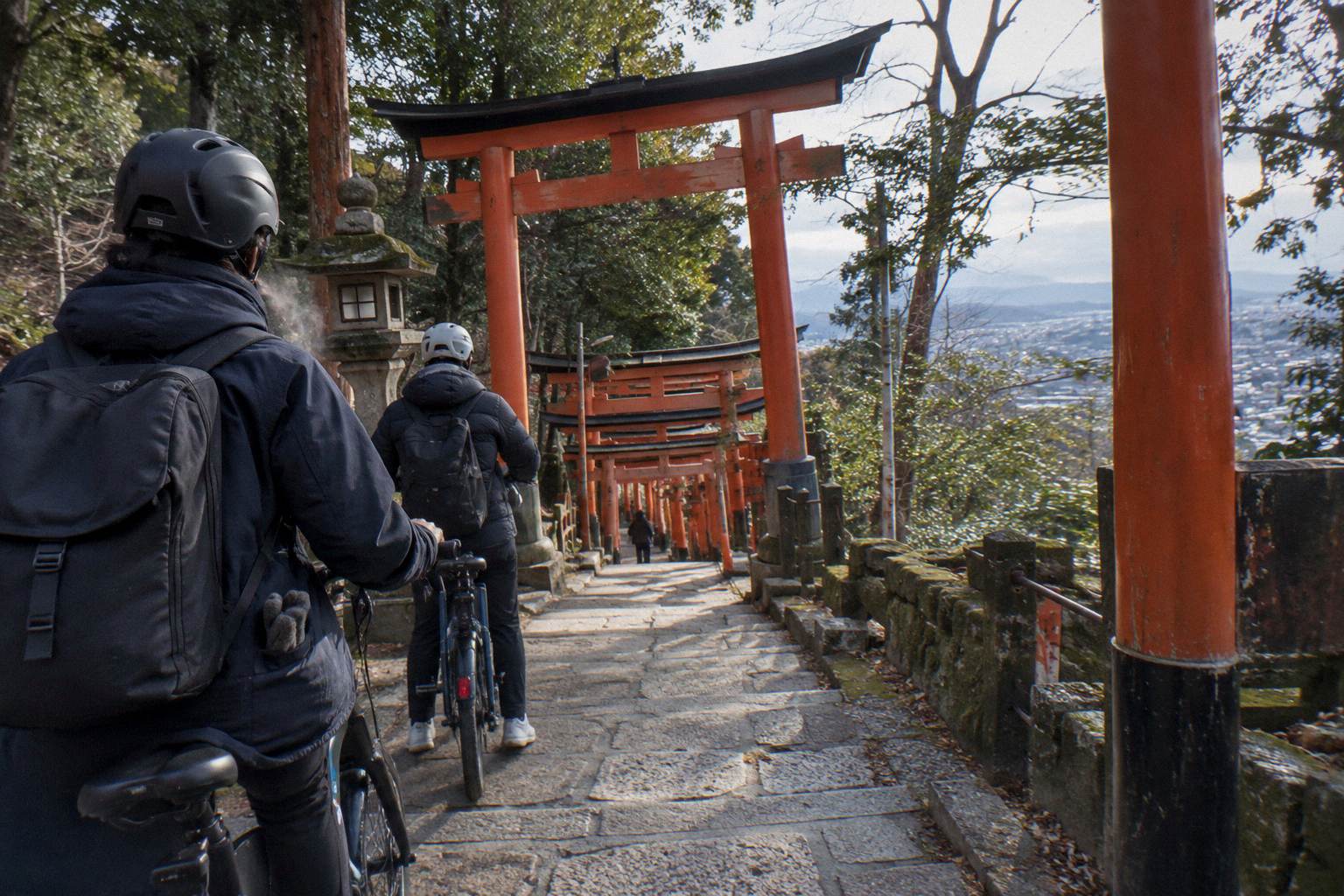
The gates are donated by individuals and companies, which is why their sizes vary along the paths, and the density increases along the main climb. The walking circuit at an unhurried pace is the bulk of most visits, which is another reason the 4-hour sento ride and the 3-hour evening ride allocate their time the way they do: a shorter shrine window with a bathhouse or temple stop, rather than a full circuit.
One practical note on helmets: since 1 April 2023 every cyclist of every age must make an effort to wear one, an effort duty with no fine attached, per the Kyoto Prefecture page on the helmet effort duty. Every guided product named on this page includes a helmet in its inclusions, so the question answers itself on a ride.
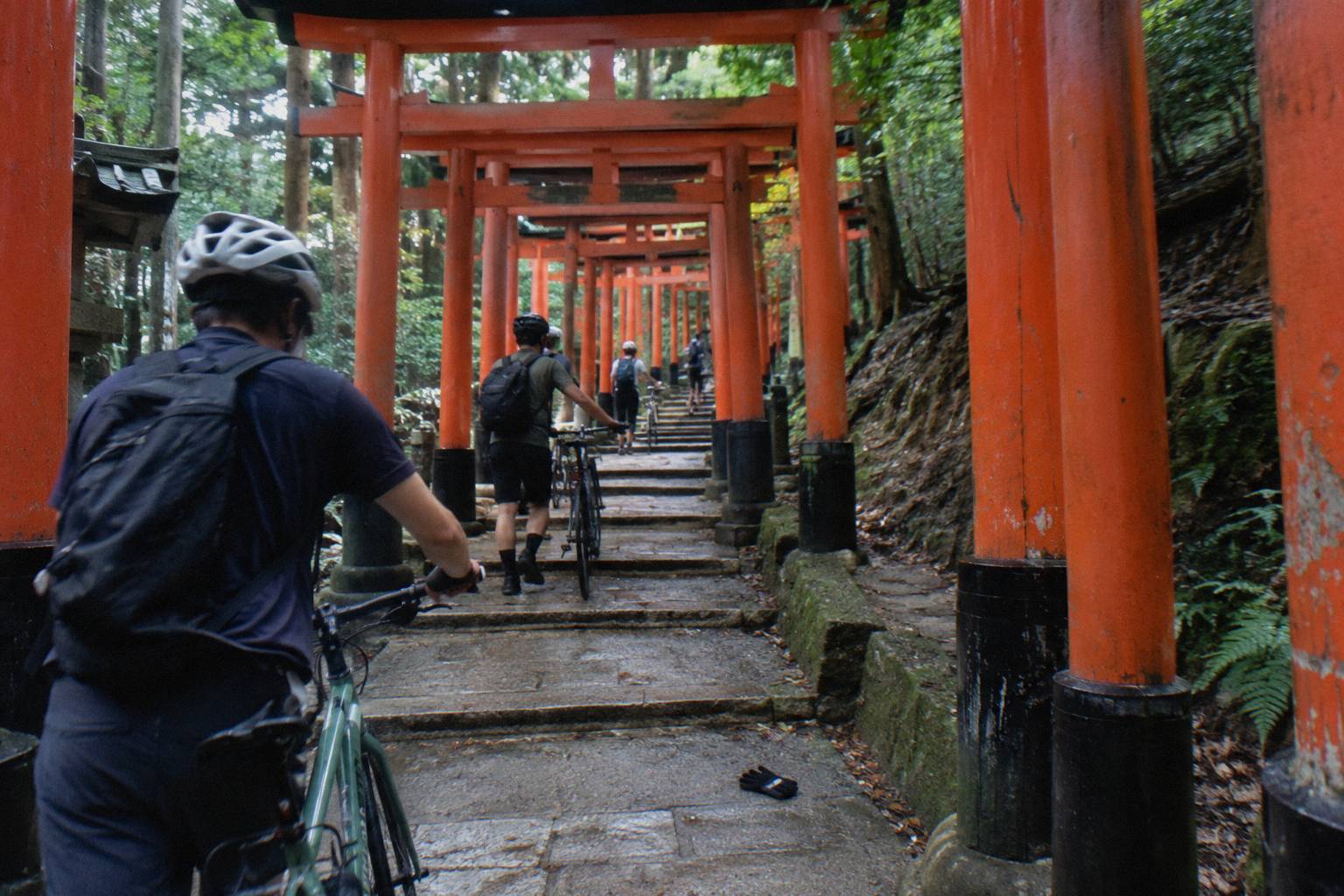
Riders who want the gates without a full-day commitment can check the evening shrine ride here, or read up on the best time of day to cycle in Kyoto before fixing a slot.
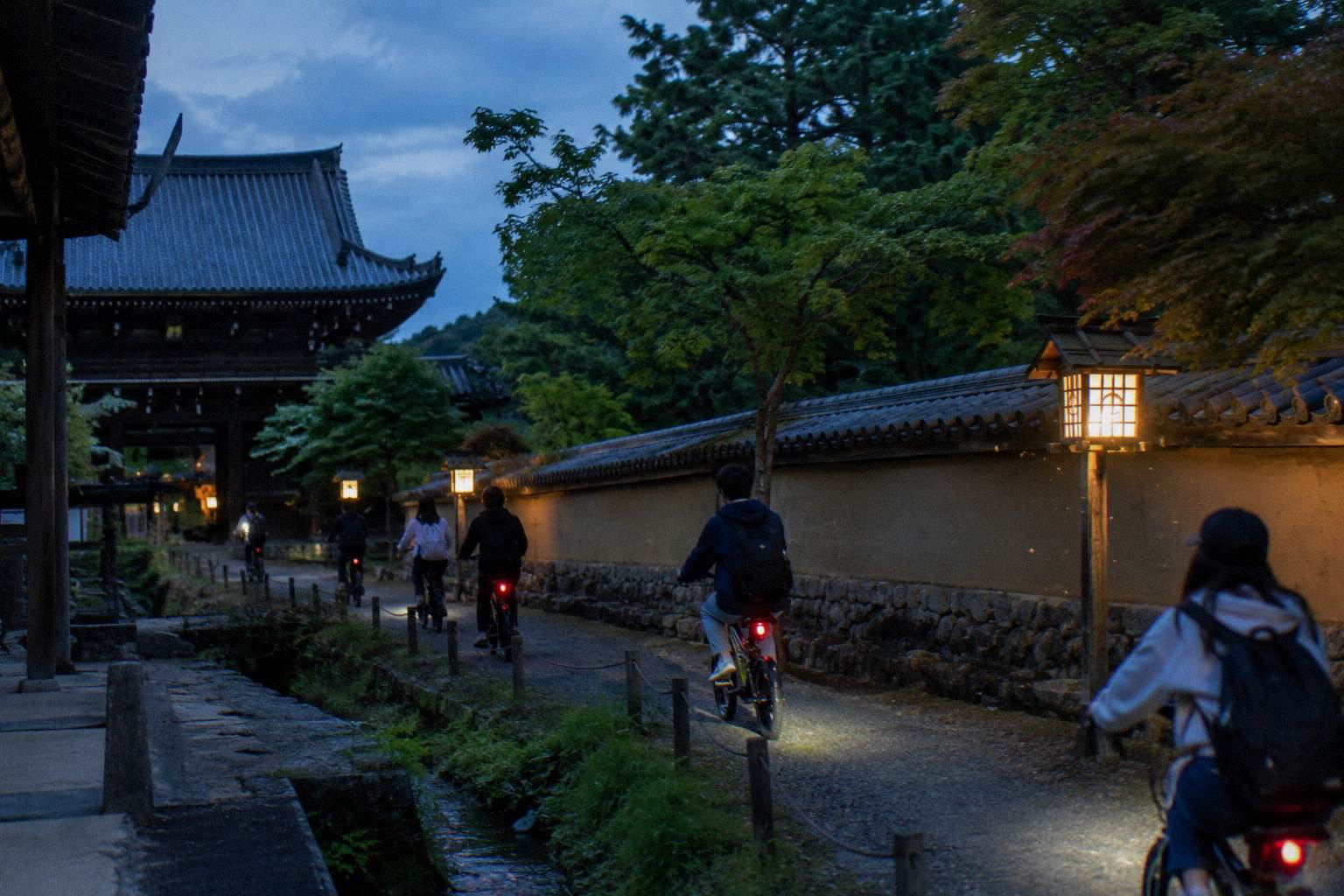
The evening format also deserves a word on timing in autumn: the Tsutenkyo bridge at Tofuku-ji is one of the city's foliage anchors, and the foliage-period fee of 1,000 yen applies there, so an evening ride in late November trades a higher entry cost for the season the district is known for. If a longer day suits better, the full-day Grand Loop folds the south into a 7 to 8 hour itinerary with a light lunch, snacks and e-bike included, rated 5.0 from 596 reviews, from ¥26,000 per person with a minimum age of 16.
For families priced out by that minimum age, the sento ride's minimum age of 1 is the outlier across Kyoto's ride options, and the cycling with kids guide covers what to ask before booking with young children. Ask specifically about seat fit and about how the walking section is paced for small legs, since the shrine circuit is on foot.
What Trips People Up Before You Book
The avoidable mistakes cluster around four things: parking the bike informally near the shrine and paying 3,500 yen to reclaim it, checking a phone while riding and collecting a 12,000 yen fine, assuming the torii paths can be ridden when they are walked, and booking a late-November Tofuku-ji visit without knowing the foliage-period fees apply. Each has a one-line fix, and guided rides neutralise the first two outright.
Parking first, because it is the expensive one. The removal fee is per bicycle, so a couple riding together can face 7,000 yen in reclaim costs, plus a trip to a storage depot that opens from noon. Designated parking or a guided ride solves it.
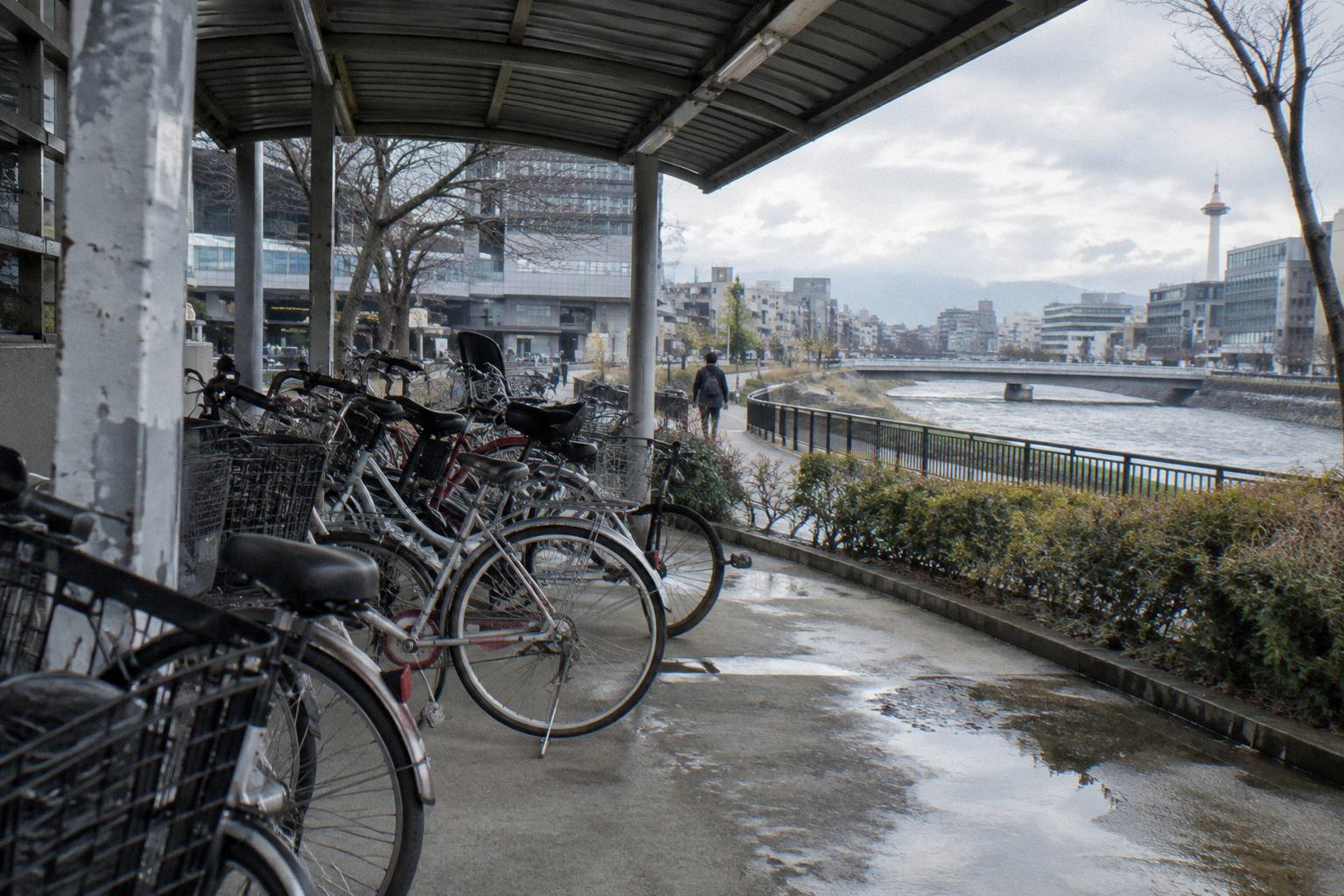
Second, the phone habit. The 12,000 yen fixed fine applies to every rider aged 16 and over, and the criminal penalty for holding a phone has applied since 1 November 2024. Mount the phone, stop to navigate, or ride with a guide and let someone else hold the route.
Third, expectations of the shrine section. The mountain paths are walked, and a full circuit takes real time; a ride that schedules 4 hours total is giving you a taste of the paths plus its other stops, not the whole mountain. Riders who want the complete torii circuit should plan extra time on foot after the ride ends.
Fourth, minimum ages and formats. The Grand Loop sets 16, the sento ride sets 1, and the evening ride fits between them; check the booking calendar for the evening ride's price on your date before assuming any of the three fits the budget. For a south-city alternative at a gentler pace, the Gentle Backstreet Ride by Cycle Kyoto, from ¥12,000 per person, 3 to 4 hours, rated 5.0 from 279 reviews, covers the neighbourhood side without the shrine.
Finally, timing. April and November are the comfortable riding months by the observatory normals; July brings the heaviest rain and August the hottest afternoons, and no operator can promise what the sky does on the day, which is why the free cancellation up to 24 hours before start on every ride named here matters more than it looks. Book the date you want, watch the forecast as it firms up, and use the cancellation window if the month's weather turns against you.
Two small booking details are easy to miss on the checkout page. Every ride named here runs with a live guide rather than a self-guided map, which is what lets the guide take on the parking and the phone-handling problems described above; if you were expecting a hire-and-go format, adjust the plan before you pay. And the evening ride's price moves by date, so the figure you see on a friend's screenshot or an old forum post may not be the figure on your calendar, which is the only one that counts.
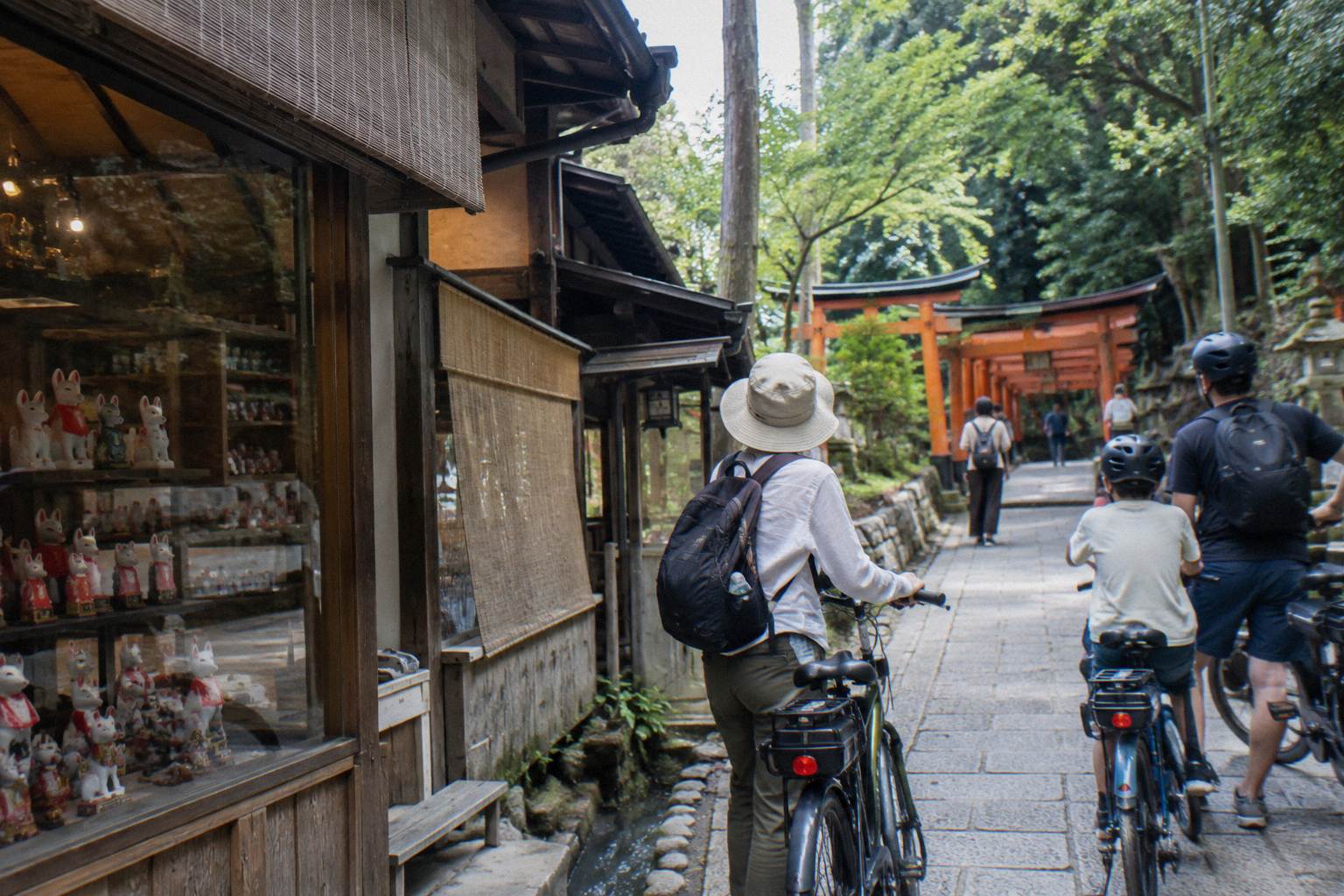
One last thing to settle before you click book: who is in the group. A family with a child under 16 rules out the Grand Loop but fits the sento ride, whose minimum age of 1 makes it the practical choice for riders with small children. Couples without age constraints have all three open to them, and the deciding question becomes hours and season rather than eligibility: the 4-hour sento format, the evening slot, or the full-day Grand Loop across five sites. Settle that mix first and the cancellation window becomes a safety net rather than a fallback you end up needing.
Whichever of the three fits, the shape of the day is the same: ride south with a guide, walk the torii paths, and let someone else handle the parking, the tickets and the turn sequence. Check availability on the ride that matches your month and your group, and hold the date while it is still open.
Common Questions About Riding To Fushimi Inari
Is Fushimi Inari Free To Visit?
Yes. Fushimi Inari Taisha charges no admission fee. The paths are lined with around 10,000 torii gateways of all sizes, and no closing time is stated by the shrine, though that is not a promise of access at any hour.
Can You Ride A Bike Through The Torii Gates?
No. The mountain paths are walked, not ridden. Guided rides park the bicycles and continue on foot; the sento ride and the evening shrine-and-Tofuku-ji ride both structure their itineraries around that walking section.
How Much Does It Cost To Combine Fushimi Inari And Tofuku-Ji?
The shrine is free. Tofuku-ji charges 600 yen for the Hojo garden and 600 yen for the Tsutenkyo bridge and Kaisando from 1 November 2026, rising to 1,000 yen in the foliage period, with a combined ticket at 1,000 yen. The evening guided ride includes the entrance tickets and the bicycle parking fees.
What Happens If I Park My Bike Illegally Near The Shrine?
Kyoto City removes illegally parked bicycles across nearly the whole city and charges 3,500 yen per bicycle to reclaim one. Stored bikes are held for 4 weeks from the day after removal, and storage depots open from noon daily. Use designated parking or a guided ride.
Which Guided Rides Include Fushimi Inari?
The Fushimi Inari, Sento Stop ride by SunnyCycleTour, from ¥13,500 per person for 4 hours with a sento bathhouse stop, and the Evening Ride, Fushimi Inari by Kyoto Heritage Bike Tour, 3 hours, pairing the shrine with Tofuku-ji. A full-day grand loop also covers the south with lunch, from ¥26,000 per person.
When Is The Best Month To Ride To Fushimi Inari?
By the observatory normals, April and November offer the most comfortable riding temperatures. July is the wettest month at 223.6 mm and August the hottest with a mean of 28.5 °C. Cherry full bloom normally lands around 4 April and maple colouring around 5 December, both worth planning around rather than promising.