Is Kyoto A Good City For Cycling?
Kyoto works for cyclists who follow a few clear rules: ride left, park legally, carry insurance. Rules, seasons, tour formats and prices explained.
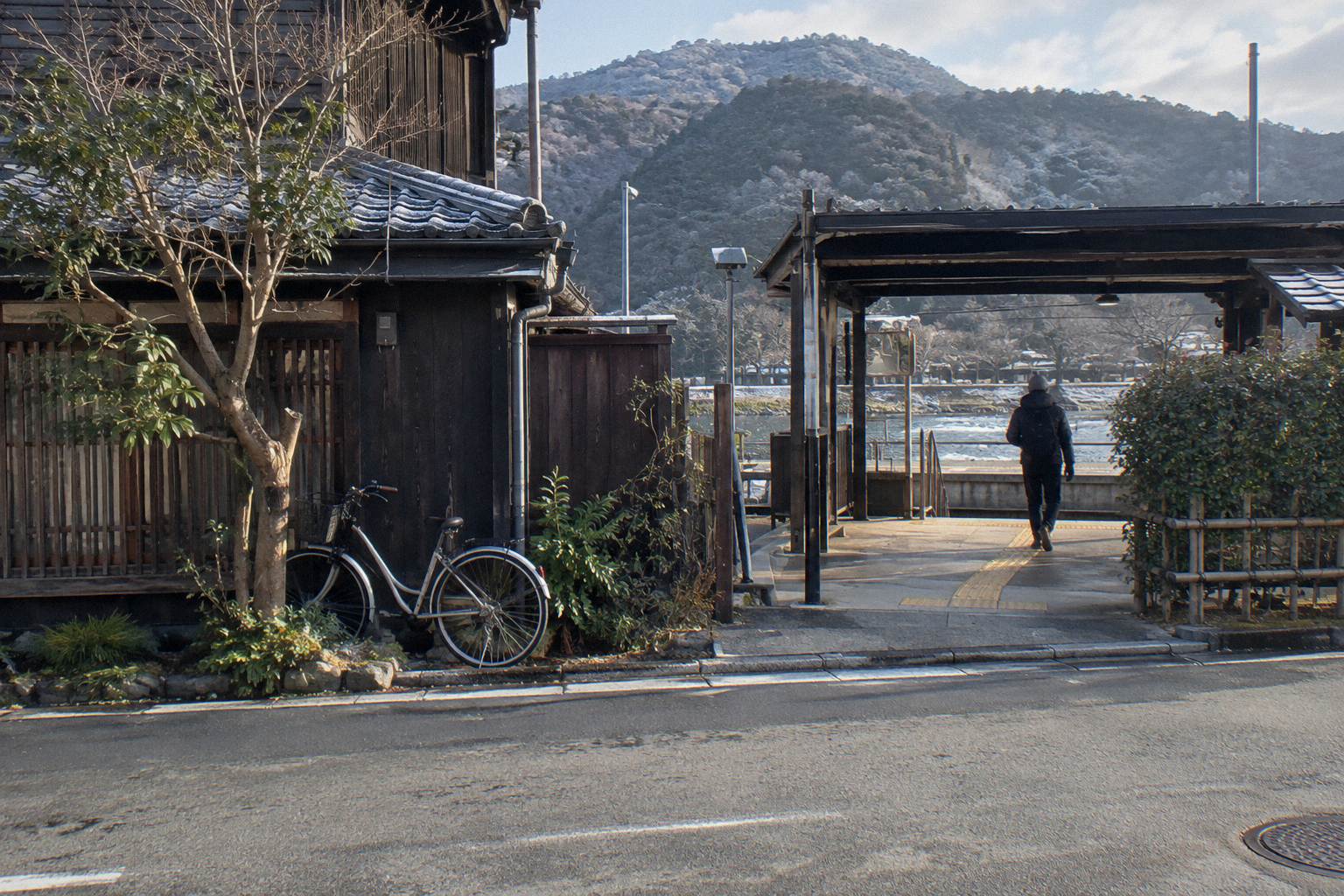
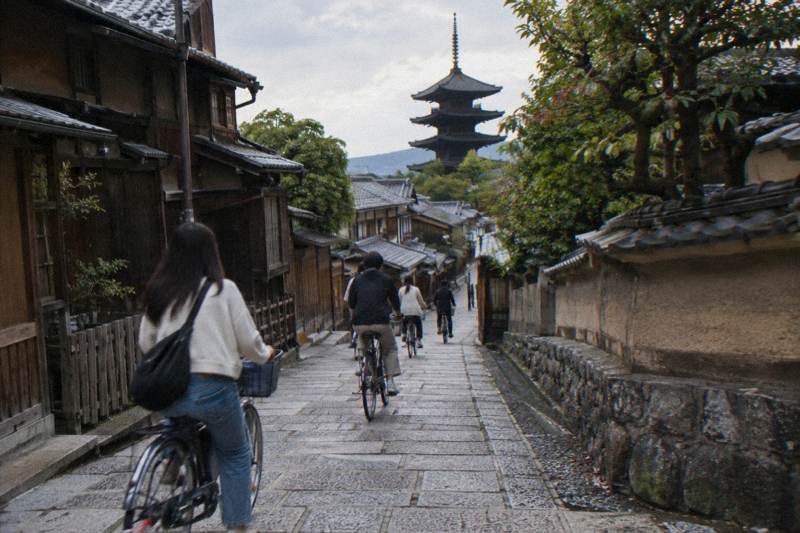
Kyoto is a compact basin city where a bicycle covers the gaps between temple districts that trains and buses bridge awkwardly, and the guided formats collected by Kyoto Bike Tours show how riding here works in practice, such as the gentle backstreet ride through south Kyoto. Before deciding whether the city suits you, the rules matter more than the terrain: Kyoto has specific, enforceable expectations of riders.
| Fact | Detail |
|---|---|
| Road position | Ride on the left; the sidewalk is an exception where signs permit, for under 13s, over 70s, or when no safe alternative exists |
| Helmet | Effort duty for every age since 1 April 2023, no fine |
| Minor violations | Riders 16 and over pay fixed fines of 3,000 to 12,000 yen under the blue-ticket system since 1 April 2026 |
| Phone while riding | 12,000 yen fixed fine; holding a phone has been punishable by up to 6 months prison or a 100,000 yen fine since 1 November 2024 |
| Insurance | Kyoto Prefecture requires bicycle liability insurance |
| Illegal parking | Removed bicycles cost 3,500 yen to reclaim and are held 4 weeks |
| Hottest month | August, mean 28.5 °C, daily high 33.7 °C |
| Wettest month | July, 223.6 mm |
Yes, for riders who follow the rules. Kyoto enforces left-side riding, fixed fines for riders aged 16 and over, a helmet effort duty and mandatory liability insurance, and removes illegally parked bicycles for a 3,500 yen reclaim fee. In exchange, a guided ride from ¥11,000 per person covers temple districts in 3 hours to 8 hours, and formats range from a private tour to a full-day loop with lunch.
The answer depends on what kind of rider you are. Kyoto's street grid is regular and the city sits on flat basin land between the Katsura River and the Higashiyama hills, but no official source quantifies gradients for the northern temple areas, so this article makes no terrain claims. What can be stated precisely is the legal framework, because Kyoto City and Kyoto Prefecture publish it in detail.
The core rules come from the National Police Agency's five principles: the roadway is the default, ride on the left, and treat the sidewalk as an exception where pedestrians come first. The Kyoto City page on cycling rules adds the enforcement layer, including the blue-ticket system that has applied fixed fines to riders aged 16 and over since 1 April 2026. The same page settles a question e-bike riders often ask: a pedal-assist bicycle that meets the legal standard counts as a bicycle, while a vehicle with a throttle or outside the standard does not.
The practical takeaway for a first visit: a guided ride removes most of the decision burden, because the operator handles the route, the parking and the bicycle. The three formats in the selection above represent the range, from a short early-morning ride in Arashiyama to a 4-hour e-bike circuit of the Silver Pavilion and Philosopher's Path.
What Rules Decide Whether Cycling Works In Kyoto?
Four rules shape the experience: ride on the left side of the road, wear a helmet as an effort duty that carries no fine, carry bicycle liability insurance as Kyoto Prefecture requires, and park only in designated spots because removal costs 3,500 yen. Fixed fines from 3,000 to 12,000 yen apply to riders aged 16 and over, with phone use the most expensive at 12,000 yen.
The helmet rule is the newest of the duties. Since 1 April 2023, every cyclist of every age must make an effort to wear one, and the Kyoto Prefecture page on the helmet effort duty confirms there is no fine attached. In practice, every ride product on this site that names a helmet in its inclusions provides one, so a guided rider rarely needs to source their own.
Insurance is the rule visitors most often miss. Kyoto Prefecture's bicycle ordinance requires riders to hold bicycle liability insurance, which can be a dedicated bicycle accident policy or a personal-liability rider on home, car or accident cover, as the Kyoto Prefecture page on bicycle liability insurance explains. Some ride products name insurance in their inclusions, such as the 4.5-Hour Kyoto Bike Tour with Lunch and UNESCO Zen Temples, which pairs its rental bike with bodily injury liability insurance, and the Morning Ride From Station, which lists liability insurance alongside its helmet and raincoat. Two products state the opposite: the Hidden Gems, 4 Hours ride and the Northern Ride, Kinkaku-Ji both name insurance as excluded, which shifts the arrangement to the rider.
| Fixed fine | Amount (yen) |
|---|---|
| Holding or watching a phone while riding | 12,000 |
| Ignoring a traffic signal | 6,000 |
| Riding on the wrong side of the road | 6,000 |
| Failing to stop at a stop sign | 5,000 |
| Riding with an umbrella | 5,000 |
| Riding two abreast or carrying a second rider | 3,000 |
The phone rule deserves separate mention because the penalties escalate beyond the fixed fine. Since 1 November 2024, holding a phone to talk or watch the screen can mean up to 6 months in prison or a 100,000 yen fine, and causing danger while using a phone can mean up to 1 year or 300,000 yen. Drunk cycling is banned at any level of drinking, with penalties up to 3 years or 500,000 yen for impaired riding, and lending a bicycle to a drunk rider carries the same maximum.
Where Do You Leave A Bicycle In Kyoto?
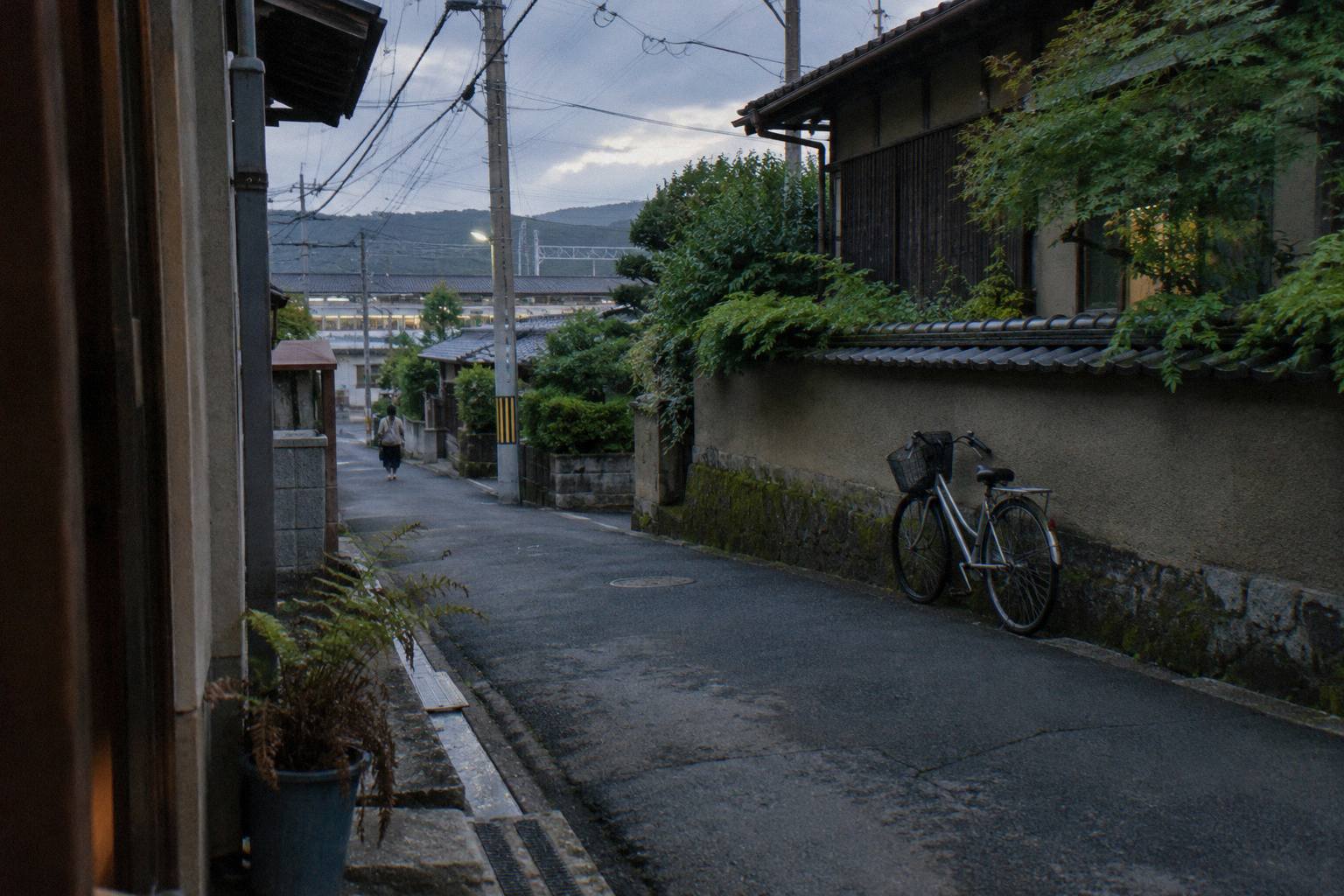
In designated bicycle parking, because Kyoto City removes illegally parked bicycles across almost the whole city and charges 3,500 yen per bicycle to release them from storage, where they are held for 4 weeks from the day after removal. Storage depots such as the one at Sanjo Senbon open daily from noon to 9 pm, and the removal zones cover nearly all of the central districts.
The mechanics are simple and expensive to learn by accident. The Kyoto City page on removed bicycles states the fee covers the removal and storage costs, and the four-week hold means a bike left at a station exit can be gone before you return from a day trip. No area-specific parking rules for Gion, Kawaramachi or Arashiyama appear on official pages, so the general rule is the only safe assumption anywhere in the city.
A guided ride sidesteps this entirely: the operator manages where bicycles wait during temple stops, and several products name bicycle parking fees in their inclusions, including the Kyoto E-Bike Tour of Palace, Castle, Temples and Hidden Gems and the Kyoto: Evening E-Bike Tour of Fushimi Inari & Tofuku-ji. The UNESCO Zen Temples, Lunch ride even names a bike lock among its inclusions. The guide on where to leave bikes covers the decision for riders going alone.
Does The Weather In Kyoto Suit Cycling Year Round?
Broadly yes, with two months that need care. July is the wettest month at 223.6 mm of rain and August is the hottest with a mean of 28.5 °C and a daily high of 33.7 °C, while the shoulder months of April, May, October and November combine mild means of 12.5 to 19.5 °C with less rain. The rainy season runs early June to mid July, and the record daily maximum is 39.8 °C.
The climate table comes from the Japan Meteorological Agency Kyoto monthly normals for 1991 to 2020, and it makes the seasonal choice straightforward. January is coldest and driest at a mean of 4.8 °C and 53.3 mm, which suits a rider who prefers cold to wet. The record daily maximum of 39.8 °C was set on 19 July 2018 and 8 August 1994, and three of the six hottest days on record fell in 2024, 2025 and 2026.
| Month | Rain (mm) | Mean (C) | Daily High (C) |
|---|---|---|---|
| January | 53.3 | 4.8 | 9.1 |
| April | 117.0 | 14.4 | 20.1 |
| July | 223.6 | 27.3 | 32.0 |
| August | 153.8 | 28.5 | 33.7 |
| October | 143.2 | 18.4 | 23.4 |
| November | 73.9 | 12.5 | 17.3 |
The seasonal markers add a timing dimension beyond temperature. The Kyoto observatory's cherry blossom full bloom normal is 4 April (30 March in 2026), and maple colouring normally arrives on 5 December, per the Japan Meteorological Agency Kyoto observations. Those dates are observatory reference points, not promises, and the operator decides what runs in any weather. The cherry blossom riding guide and the summer heat guide go deeper on each window.
One summer detail worth knowing: the Kyoto E-Bike Tour of Palace, Castle, Temples and Hidden Gems lists an optional fan-cooled jacket rental at ¥1,000 per day for the hot months, a small signal that August riding is taken seriously here. That same 6 hours 30 minutes ride, from ¥16,500 per person with all entrance fees included, also builds in a flexible lunch break, which is a sensible shape for a long summer day.
The calendar matters in another way. Night illumination viewing at Kiyomizu-dera typically runs late March to early April and again in November and December, which lines up neatly with the two shoulder windows above. Summertime events at the Kamo River deltas run from May through September, and the Gozan no Okuribi bonfire finale on 16 August can draw such large evening crowds that some roads in the Okazaki area close. None of that stops a cyclist, but anyone booked around mid August should expect detours on the evening of the 16th and plan the ride for earlier in the day.
Which Rides Show What A Guided Day Looks Like?
Three formats bracket the range: the Gentle Backstreet Ride at from ¥12,000 per person for 3 hours to 4 hours, minimum age 13, rated 5.0 from 279 reviews; the Silver Pavilion, Philosopher's Path ride at from ¥14,500 per person for 4 hours, minimum age 12, rated 5.0 from 322 reviews; and the Early Bird Bamboo Forest Ride at from ¥16,000 per person, rated 5.0 from 773 reviews, minimum age 10.
Each pairs a Cannondale or electric bicycle with a guide, water and a helmet, and each carries free cancellation up to 24 hours before start, which matters when the July rain decides the day for you. The differences are district and format rather than difficulty: south backstreets, the eastern temple corridor, or Arashiyama before the day visitors arrive. Prices vary by date and group, and the booking page shows the price for the date you choose.
The Early Bird Bamboo Forest Ride (Kyoto Bamboo Forest & Hidden Gems: Early Bird Easy Bike Tour) is the ride to check first if Arashiyama is the priority; its tour page covers the full inclusion list, and the title itself carries the operator's "Easy" framing. Check availability if the date is firm.
- Budget Fare, Hidden Alleys¥11,000
- Crowd-Free E-Bike Ride¥13,000
- Higashiyama Heritage Ride¥13,500
- Fushimi Inari, Sento Stop¥13,500
- Morning Ride From Station¥14,000
- Silver Pavilion, Philosopher's Path¥14,500
- Backstreets, 5 To 6 Hours¥15,000
- Palace, Castle And Temples¥16,500
The e-bike category widens the choice further. The Hidden Gems, 4 Hours ride (Kyoto E-Bike Tour of Hidden Gems Backstreets and Temples) is rated 5.0 from 214 reviews with a 4-hour duration, and the Backstreets, 5 To 6 Hours ride (Kyoto Backstreets and Hidden Gems E-Bike Tour) runs from ¥15,000 per person with a minimum age of 3, one of the few products that opens the format to young families. The Crowd-Free E-Bike Ride (Pedal Adventure Kyoto E-Bike tour) runs from ¥13,000 per person for 4 hours and is rated 5.0 from 21 reviews, with dietary requirements catered for when flagged ahead of booking. For the full decision, see whether an e-bike or regular bike suits you.
Two other formats round out the picture. The Private Ride, Snacks Included (The Beauty of Kyoto by Bike: Private Tour) is a 2 hours 30 minutes private option rated 4.8 from 51 reviews, marked carbon neutral, with a local drink or snack included, and the Night Ride By Lantern Light (Discover Kyoto at Night by Bike) runs 3 hours 45 minutes with all entrance fees included, rated 4.9 from 53 reviews. For riders who want the shortest guided commitment in the city, the private half-day format is the lowest-friction entry point; the private versus small group guide weighs the two.
What Do The Temple Stops Cost On Top?
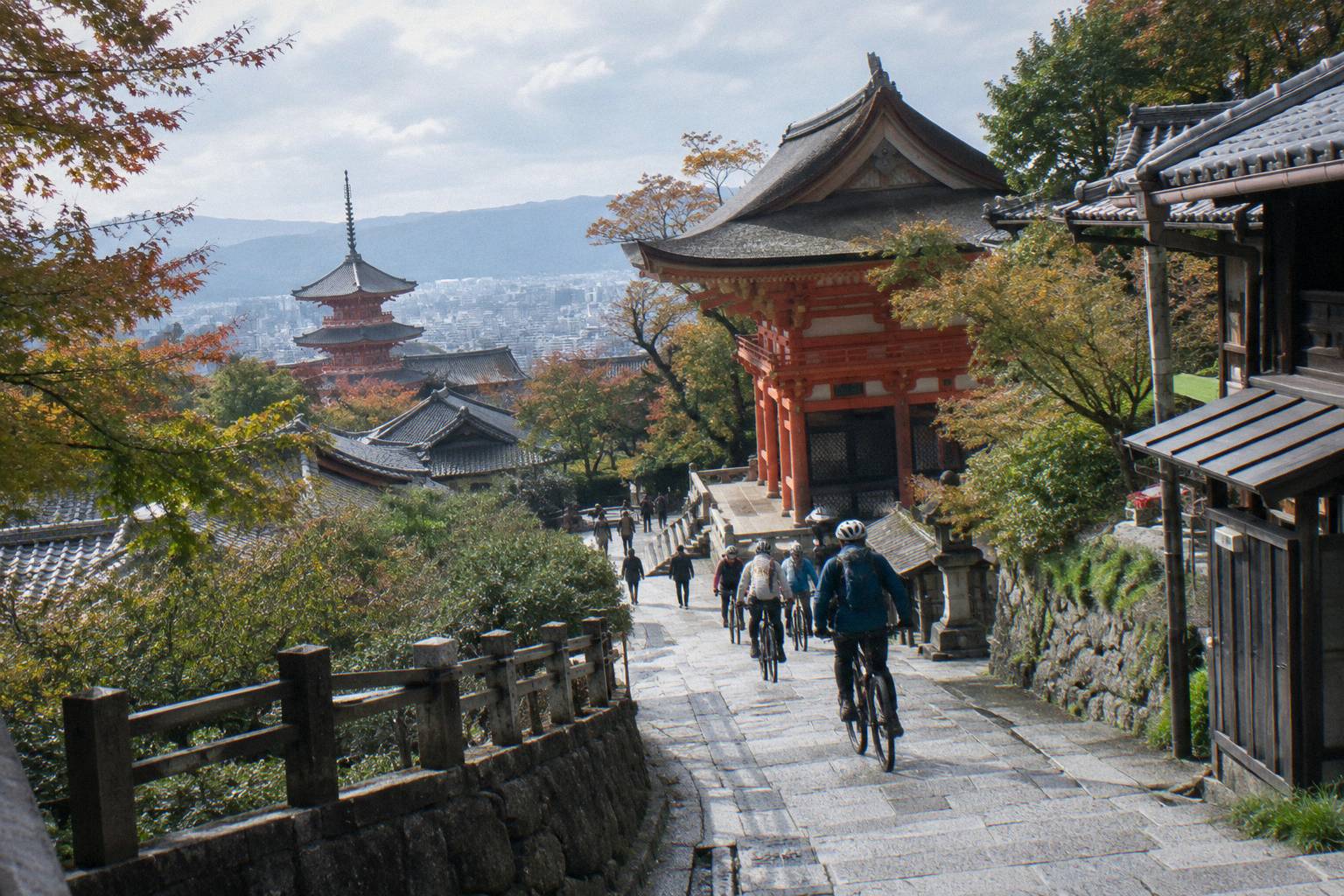
Most major stops are cheap or free: Fushimi Inari Taisha charges no admission, the Arashiyama bamboo path is free to walk, Tenryu-ji's garden is 500 yen, Kinkaku-ji is 500 yen, and Ginkaku-ji is 1,000 yen for adults after doubling on 1 April 2026. Several rides bundle admission, including the Silver Pavilion ride and the Higashiyama Heritage Ride, which names entrance to both Kiyomizu-dera and Ginkaku-ji.
The fees matter because they reveal which rides actually save you administration. A ride that names admission or entrance fees in its inclusions, such as Bike Kyoto's Grand Loop: Full-Day Kyoto E-Bike Tour (from ¥26,000 per person, 7 hours to 8 hours, rated 5.0 from 596 reviews, minimum age 16), removes the queue-and-coins step at every gate. Rides that exclude lunch or fees leave those decisions to you.
| Stop | Admission | Hours |
|---|---|---|
| Fushimi Inari Taisha | Free | No closing time stated |
| Arashiyama bamboo path | Free to walk | Public path, no gate |
| Tenryu-ji garden | 500 yen (high school and older) | 8:30 to 17:00 |
| Kinkaku-ji | 500 yen general | 9:00 to 17:00 |
| Ginkaku-ji | 1,000 yen adult | 8:30 to 17:00 (1 March to 30 November) |
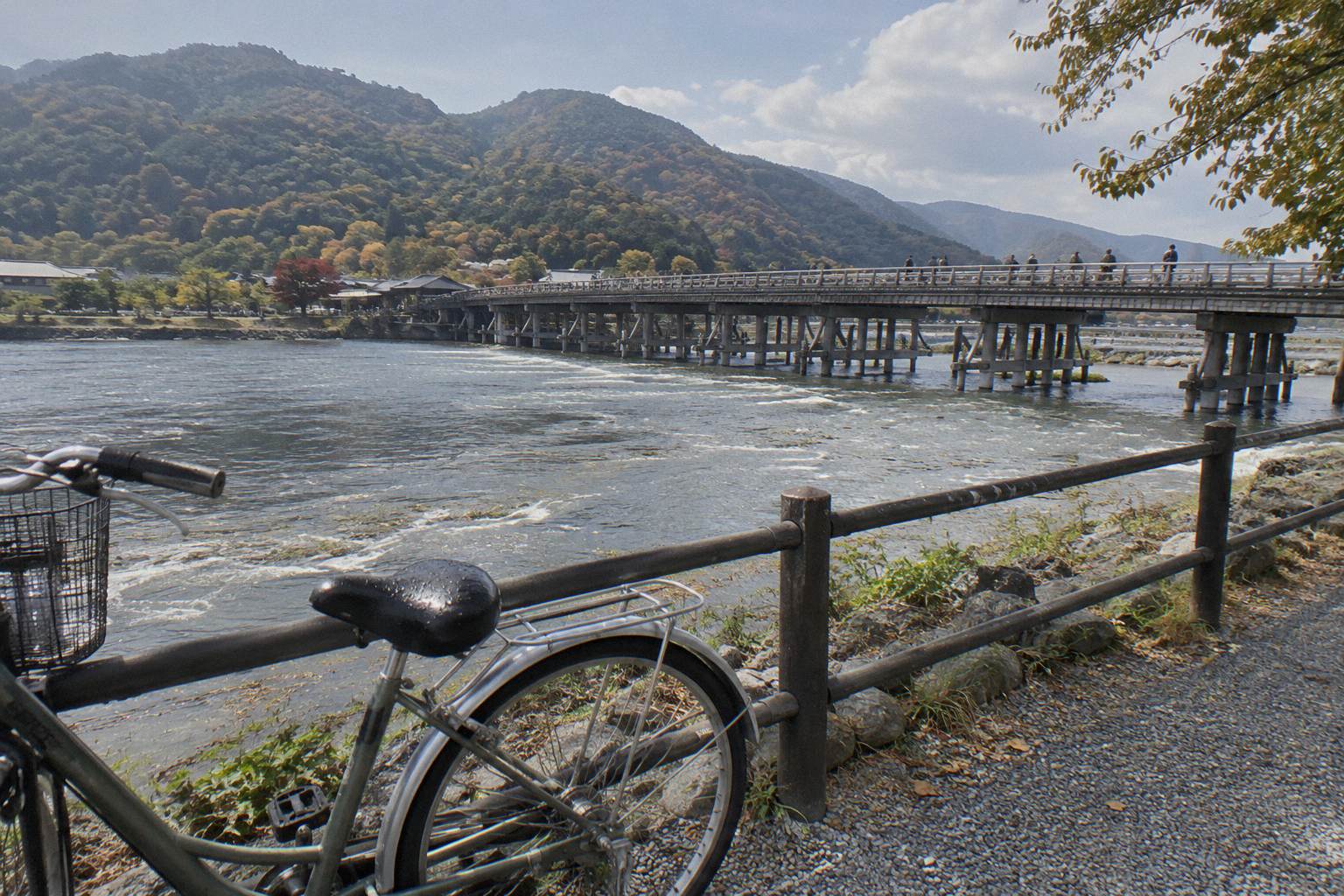
Fushimi Inari's roughly 10,000 torii gateways, as the Fushimi Inari Taisha FAQ describes them, make it the highest-value free stop on any southern route, and Togetsukyo Bridge has anchored Arashiyama for over four hundred years per the Kyoto Tourism page on Togetsukyo Bridge. Tenryu-ji keeps the same 8:30 to 17:00 window year round with last admission at 4:50 pm, per the Tenryu-ji visitor page, and Kinkaku-ji stays open all year from 9:00 to 17:00. The Fushimi Inari by bike route guide covers that ride in detail.
What Trips People Up Before You Book?
Four mistakes recur: parking outside designated areas and paying the 3,500 yen removal fee, skipping the liability insurance Kyoto Prefecture requires, holding a phone while riding at a 12,000 yen fixed fine with criminal penalties since 1 November 2024, and choosing a ride whose minimum age excludes a family member, since minimums on these products run from 1 to 16.
The age spread is wider than most visitors expect. The Fushimi Inari, Sento Stop ride (South Kyoto: E-Bike Highlights & Local Cultural Experiences, from ¥13,500 per person) sets a minimum age of 1, while the Full-Day E-Bike, Lunch Included ride requires 16 and the UNESCO Zen Temples, Lunch ride requires 15. Check the number on the tour page before booking for a family.
A second trap is assuming all products include lunch or an e-bike. Several name a meal, such as the Early Bird With Lunch ride and the Countryside Ride, Lunch Included, while the Full-Day Ride, No Meal (Discover Kyoto by Bike Full Day Tour, from ¥19,500 per person, rated 5.0 from 28 reviews) explicitly excludes lunch. Read inclusions per product; the ride price comparison guide lines them up.
Third, book ahead in season: whether a date needs advance booking is covered in the advance-booking question, and free cancellation up to 24 hours before start, which every ride named above carries, means early booking costs nothing if plans change. Fourth, check the live price for your date rather than budgeting from the from-price, since prices vary by date and group and the peak weeks price higher.
Finally, do not assume weather decides itself; the operator decides what runs, and the rain-day guide explains the usual handling.
So, is Kyoto a good city for cycling? For a rider who follows four published rules and picks a ride format that matches their party's ages and stamina, yes, and the selection below is the practical way to test it on a first visit.
Common Questions About Cycling In Kyoto
Is Kyoto A Good City For Cycling?
Yes, for riders who follow the rules: ride on the left, wear a helmet as an effort duty, carry liability insurance and park in designated areas. Guided rides from ¥11,000 per person cover the main temple districts in 3 hours to 8 hours.
Can Tourists Rent A Bike In Kyoto Without A License?
The rental decision, including what a rider arranges alone, is covered in the rental prices and shops guide; guided rides supply the bicycle, helmet and guide as part of the booking.
Do You Have To Wear A Helmet Cycling In Japan?
Since 1 April 2023 every cyclist of every age must make an effort to wear a helmet. It is an effort duty with no fine, and every ride product here that names a helmet provides one.
What Happens To A Guided Ride In Kyoto When It Rains?
The operator decides what runs. Every ride named on this page carries free cancellation up to 24 hours before start, so a wet forecast does not lock you in.
When Is The Best Month To Cycle In Kyoto?
By climate, April, May, October and November are mildest. July is the wettest month (223.6 mm) and August the hottest (mean 28.5 °C). Cherry full bloom normally falls on 4 April and maple colouring on 5 December per the Kyoto observatory.
What Happens If I Park My Bike Illegally In Kyoto?
Kyoto City removes it and charges 3,500 yen per bicycle to reclaim, holding it for 4 weeks from the day after removal. Depots such as Sanjo Senbon open daily noon to 9 pm.