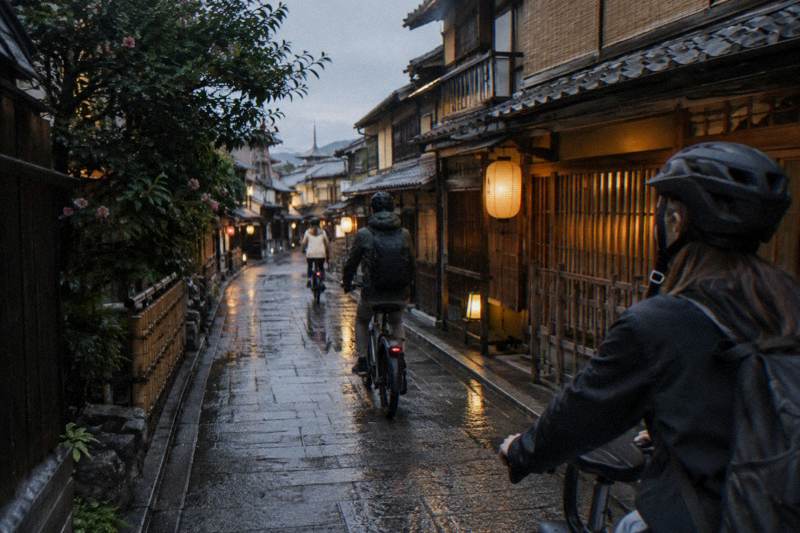
Nishijin Cycling: Weaving District Backstreets By Bike
Nishijin's weaving backstreets sit between Kyoto Imperial Palace Park and the Kitano Shrine area, and a small set of guided e-bike rides pass through them by their own titles. This guide lines up those rides by duration, price, minimum age and inclusions.
Short answer
Nishijin's weaving backstreets sit in northwest Kyoto near the Imperial Palace, and three roster rides touch the area: the Palace, Castle And Temples ride (from ¥16,500, 6 hours 30 minutes, age 10+), Hidden Gems, 4 Hours (4 hours, age 12+) and the Crowd-Free E-Bike Ride (from ¥13,000, 4 hours, age 12+). All three include an e-bike and free cancellation up to 24 hours before start.
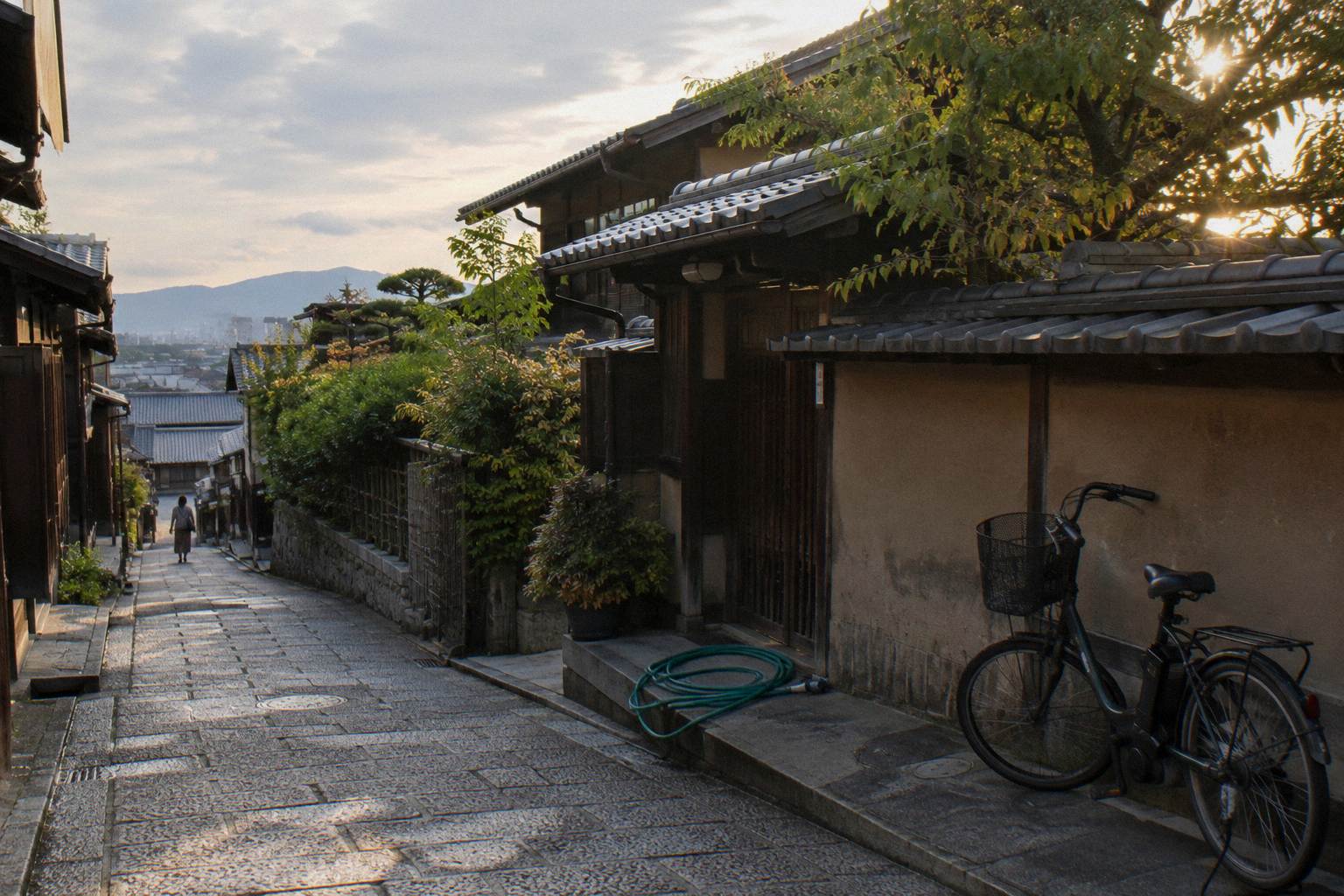
Nishijin sits in northwest Kyoto, a district of weaving workshops and long residential lanes between Kyoto Imperial Palace Park and the Kitano area, and it is reachable on several guided e-bike rides, among them the Palace, Castle And Temples e-bike ride. The district is a residential one rather than a ticketed sight, so the practical question for a rider is which guided product actually passes through, and what each one includes for the money.
| Fact | Detail |
|---|---|
| Where Nishijin sits | Northwest Kyoto, beside Kyoto Imperial Palace Park and the Nishijin Textile Center |
| Kyoto Imperial Palace | Open to all visitors, no advance application, free entry |
| Closest full-day roster ride | Palace, Castle And Temples, from ¥16,500 per person, 6 hours 30 minutes, minimum age 10 |
| Backstreet half-day option | Hidden Gems, 4 Hours, 4 hours, minimum age 12, rated 5.0 from 214 reviews |
| Budget e-bike option | Crowd-Free E-Bike Ride, from ¥13,000 per person, 4 hours, rated 5.0 from 21 reviews |
| Helmet rule | Effort duty for every age since 1 April 2023, no fine attached |
| Bike removal fee | 3,500 yen per bicycle to reclaim a removed bike in Kyoto City |
| Wettest month | July, 223.6 mm of rain on the 1991 to 2020 normals |
Where Is Nishijin And Why Ride It?
Nishijin is Kyoto's historic weaving district in the northwest of the city, a grid of residential lanes and low wooden houses a short ride west of Kyoto Imperial Palace Park, with the Nishijin Textile Center as its most recognisable landmark. Unlike the temple districts east of the Kamo River, it has no single ticketed monument, which suits a slow backstreet ride rather than a walking itinerary.
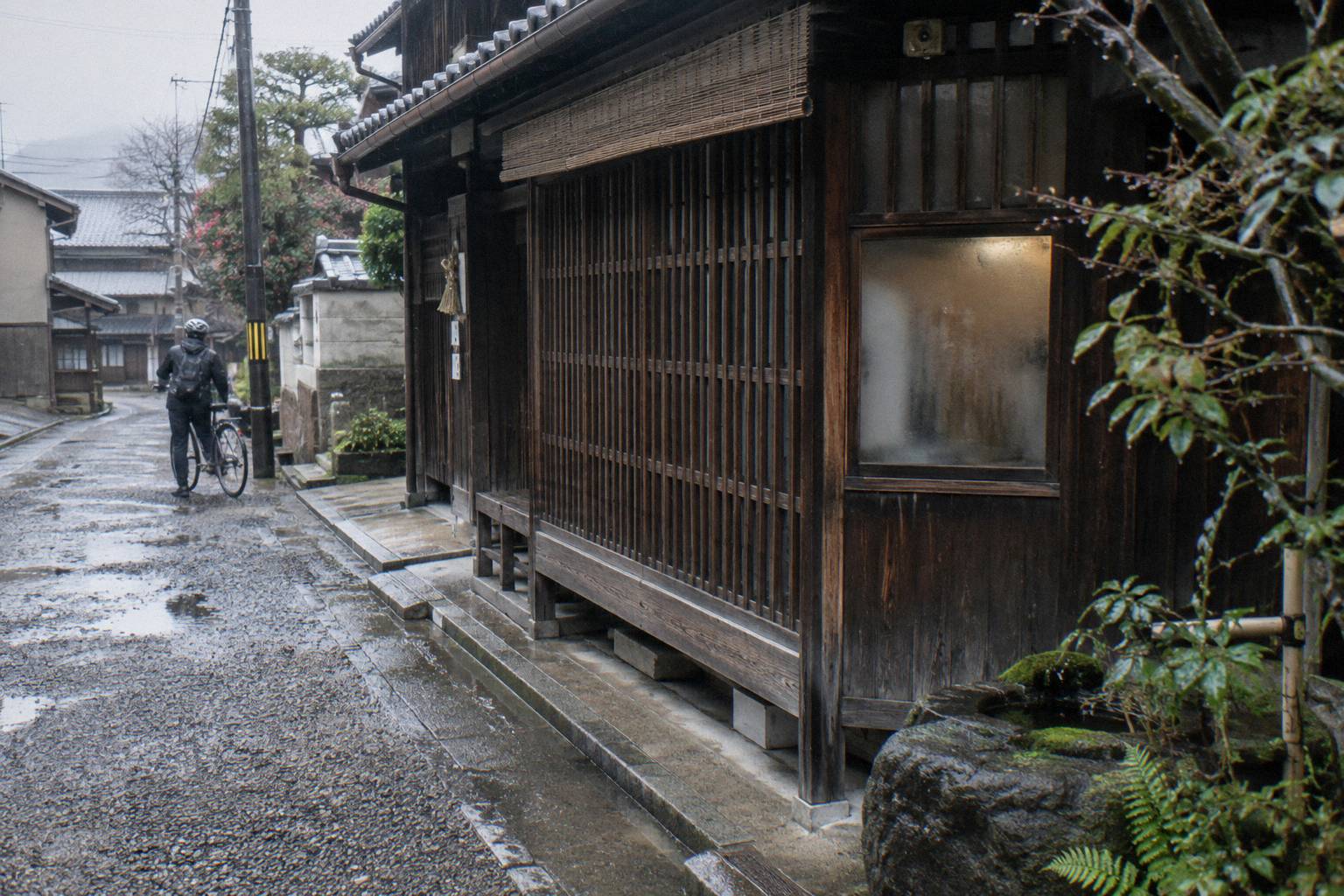
The district's identity comes from Nishijin weaving, the textile trade that gave the neighbourhood its name and filled its lanes with workshops and weavers' houses. Riding through today, the draw is the texture of ordinary Kyoto: long straight streets, machiya fronts, small shrines and corner shops, with none of the queue pressure of the Higashiyama or Arashiyama sights.
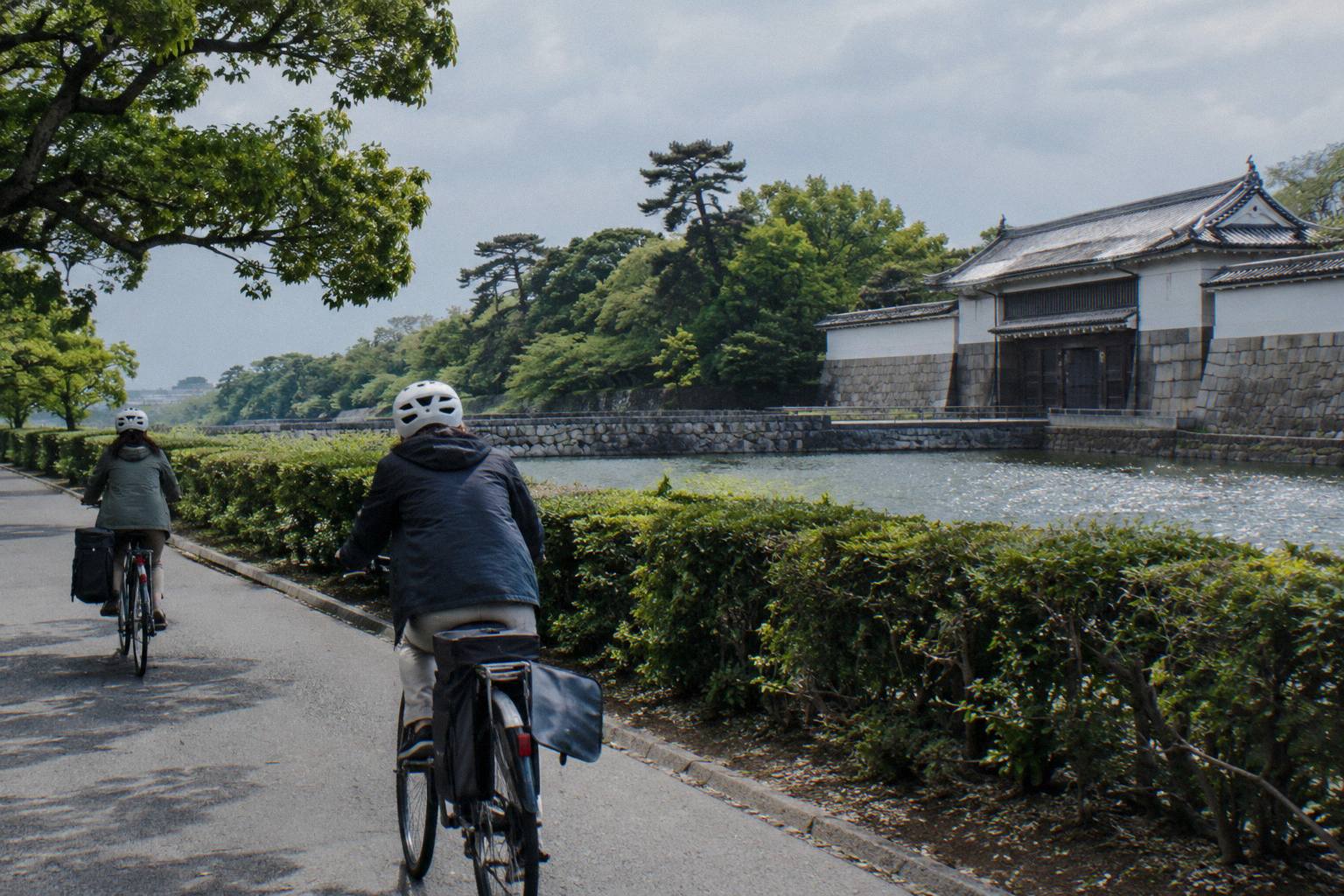
The anchor sight on the eastern edge is the Kyoto Imperial Palace inside its park. The palace is open to all visitors with no advance application and entry is free, which makes it an easy stop on a ride that crosses the district eastward toward the Kamo River. Several guided products use the palace park and the surrounding government and residential streets as the spine of a longer route, then cut west into lanes like Nishijin's.
For a rider choosing between neighbourhoods, the comparison is this: Arashiyama gives you the bamboo grove and the Togetsukyo Bridge, Higashiyama gives you temple gates and stone lanes, and Nishijin gives you the working city. If your last trip already covered the headline sights, that is the case for pointing the bike northwest. The northern Kyoto cycling guide covers how Nishijin combines with Kinkaku-ji on a longer day.
Which Guided Rides Pass Through Nishijin?
Three rides in the e-bike collection reach the Nishijin and Imperial Palace area by their own titles: Palace, Castle And Temples (from ¥16,500 per person, 6 hours 30 minutes, minimum age 10), Hidden Gems, 4 Hours (4 hours, minimum age 12, rated 5.0 from 214 reviews) and the Crowd-Free E-Bike Ride (from ¥13,000 per person, 4 hours, minimum age 12). All three run with free cancellation up to 24 hours before the start.
The widest coverage comes from "Kyoto E-Bike Tour of Palace, Castle, Temples and Hidden Gems", the product shortened to Palace, Castle And Temples. Its title names the palace and a castle alongside the temples and hidden lanes, and its 6 hours 30 minutes runtime is the longest of the three, which is what lets it stitch Nishijin's backstreets together with ticketed sights in a single day. It carries no rating yet, so judge it on its inclusions rather than a review score.
The half-day alternative is "Kyoto E-Bike Tour of Hidden Gems Backstreets and Temples" (Hidden Gems, 4 Hours), a 4-hour ride with a guide in person in English and use of a bicycle included. Its 5.0 from 214 reviews is the deepest review pool of the three, and its title puts backstreets first, which matches what a Nishijin-focused rider is shopping for. Its price is shown on the booking page rather than quoted here, so check the date you want.
The third is "Pedal Adventure Kyoto E-Bike tour : True Kyoto Avoid the crowds" (Crowd-Free E-Bike Ride), from ¥13,000 per person for 4 hours, rated 5.0 from 21 reviews, minimum age 12. It includes bottled water, a helmet, use of a bicycle and an in-person guide in English or Japanese. Of the three, it is the lowest from-price, which makes it the natural pick for a rider who wants the neighbourhood texture without the full-day commitment.
Between them, the three products cover the spectrum a Nishijin rider actually faces: a long day with entrance fees folded in, a mid-length backstreet ride with the strongest review record, and a shorter budget ride. The sections below compare them on the details that decide it: duration, what is included, minimum ages and where each one spends its time.
Full-Day Or Four Hours: Which Fits A Backstreet Rider?
The Palace, Castle And Temples ride suits a rider who wants Nishijin plus the ticketed sights in one outing and can spend 6 hours 30 minutes riding, while Hidden Gems, 4 Hours and the Crowd-Free E-Bike Ride suit a rider who prefers the lanes themselves and wants the rest of the day free. The full-day ride is also the only one of the three with a minimum age of 10.
Duration is the first divider. Six and a half hours is most of a daylight day in winter, and the ride's own inclusion list assumes that: each participant gets a new premium Panasonic electric bicycle, a helmet, one 600 ml bottle of mineral water, all entrance fees, all parking fees and a bilingual guide in English and Japanese. Lunch is not included, but the ride takes a flexible lunch break, so you choose where and what to eat. The electric assist matters on a day that long; the question of e-bike or regular bike in Kyoto usually answers itself once the runtime passes five hours.
The 4-hour rides concentrate instead. Four hours is a morning or an afternoon, which leaves room for a temple visit or a textile stop on foot afterwards. Hidden Gems, 4 Hours includes a guide in person in English and use of a bicycle, with insurance named as excluded, so check whether your travel policy covers you before booking. The Crowd-Free E-Bike Ride includes bottled water, a helmet, use of a bicycle and a bilingual guide, with gratuities excluded, so budget for a tip if you want to leave one.
| Ride | Duration | From-price | Minimum age | Meal |
|---|---|---|---|---|
| Palace, Castle And Temples | 6 hours 30 minutes | ¥16,500 per person | 10 | Not included, flexible lunch break |
| Hidden Gems, 4 Hours | 4 hours | On the booking page | 12 | Not named as included |
| Crowd-Free E-Bike Ride | 4 hours | ¥13,000 per person | 12 | Not named as included |
| UNESCO Zen Temples, Lunch | 4 hours 30 minutes | ¥15,000 per person | 15 | Local Kyoto lunch included |
Prices vary by date and group, and the booking page shows the price for the date you pick. If lunch matters to you, a fourth product belongs in the comparison: "4.5-Hour Kyoto Bike Tour with Lunch and UNESCO Zen Temples" (UNESCO Zen Temples, Lunch), from ¥15,000 per person, minimum age 15, rated 5.0 from 145 reviews, which pairs a sit-down lunch in a Japanese house with temple stops. It is a pedal-bike product with helmets available, so it suits a rider who wants a meal factored in more than the e-assist itself.
What Does The Palace, Castle And Temples Ride Include?
Palace, Castle And Temples includes all entrance fees, all bicycle parking fees, a premium Panasonic electric bicycle and helmet per rider, a 600 ml bottle of mineral water and a bilingual English and Japanese guide, from ¥16,500 per person. The named extras are optional: a fan-cooled jacket rental at ¥1,000 per day in summer, and a gratuity. Free cancellation applies up to 24 hours before the start.
The entrance-fee inclusion is the part that changes the maths on a long day. Kyoto's sights charge individually: Kinkaku-ji is 500 yen, Ginkaku-ji is 1,000 yen for adults after its fee doubled on 1 April 2026, and Nijo Castle admission runs from 800 yen general with castle plus Ninomaru Palace at 1,300. A ride that names all entrance fees as included removes those per-stop decisions, though the exact stops on the day are the operator's to set, so treat the title as the route family rather than a fixed checklist.
| Sight | Admission | Hours |
|---|---|---|
| Kinkaku-ji | 500 yen general, 300 yen school students | 9:00 to 17:00, all year |
| Ginkaku-ji | 1,000 yen adult since 1 April 2026, 500 yen child | 8:30 to 17:00 from 1 March to 30 November |
| Kyoto Imperial Palace | Free, no advance application | Ask on the day |
| Nijo Castle | From 800 yen general | Admission 8:45 to 16:00, closes 17:00 |
The parking-fee inclusion is quieter but practical. Kyoto City removes illegally parked bicycles across nearly the whole city and charges 3,500 yen per bicycle to release one from storage, where bikes are held for four weeks from the day after removal, as explained on the Kyoto City page on removed bicycles. A guided ride that pays for proper parking at each stop keeps the group out of that system entirely, which is one of the genuine advantages of guided over self-guided cycling in Kyoto.
The e-bike itself is named: a new premium Panasonic electric bicycle per participant. Under Japanese law a pedal-assist e-bike that meets the national standard counts as a bicycle, so it can go wherever a bicycle can, a distinction spelled out on the Kyoto City page on cycling rules. You can read the full product breakdown on the Palace, Castle And Temples tour page, or check availability for your date.
One more practical note on this ride: its minimum age of 10 is the lowest of the three Nishijin-area products, and every participant rides their own e-bike. Children under 10 cannot join it, and the half-day alternatives both set the bar at 12, so families with younger riders need to look at the family-specific options covered in the cycling with kids guide instead.
How Do The Half-Day Backstreet Rides Compare?
Hidden Gems, 4 Hours carries the deeper review record at 5.0 from 214 reviews, while the Crowd-Free E-Bike Ride is cheaper at from ¥13,000 per person with 5.0 from 21 reviews. Both run 4 hours, set a minimum age of 12 and include free cancellation up to 24 hours before start. The practical difference is that Hidden Gems excludes insurance, while the Crowd-Free ride excludes gratuities.
Start with the review pools, because they tell different stories. A 5.0 from 214 reviews is a score built on hundreds of riders, which makes it the more statistically settled choice. A 5.0 from 21 reviews is a strong start on a small pool: encouraging, but a tenth of the sample size. Neither figure predicts your day, and the rides themselves differ in operator, group and route, so read the score as context rather than a verdict.
- Budget Fare, Hidden Alleys¥11,000
- Crowd-Free E-Bike Ride¥13,000
- Higashiyama Heritage Ride¥13,500
- Fushimi Inari, Sento Stop¥13,500
- Morning Ride From Station¥14,000
- Silver Pavilion, Philosopher's Path¥14,500
- Backstreets, 5 To 6 Hours¥15,000
- Palace, Castle And Temples¥16,500
Inclusions differ in kind rather than volume. Hidden Gems names a guide in person in English and use of a bicycle, with insurance explicitly excluded. The Crowd-Free E-Bike Ride names bottled water, a helmet, use of a bicycle and an in-person guide in English or Japanese, and asks that you flag allergies or dietary requirements ahead of booking since vegetarian options can usually be catered for with notice. If you like the sound of the lower-priced option, the Crowd-Free E-Bike tour page has the live dates.
The insurance point deserves a sentence of its own. Kyoto Prefecture requires bicycle liability insurance under its bicycle ordinance, and the prefecture's guidance accepts a personal-liability rider on home, fire or car policies as satisfying it, per the Kyoto Prefecture page on bicycle liability insurance. A product that excludes insurance leaves that duty with you, so check your travel policy before you ride.
What Trips People Up Before You Book
The common Nishijin booking mistakes are assuming the 4-hour rides carry the same inclusions as the full-day one, missing that both half-day options set a minimum age of 12, forgetting that insurance is excluded on Hidden Gems, and planning the day without checking the cancellation window. Every one of the three rides offers free cancellation up to 24 hours before start, which covers the rest.
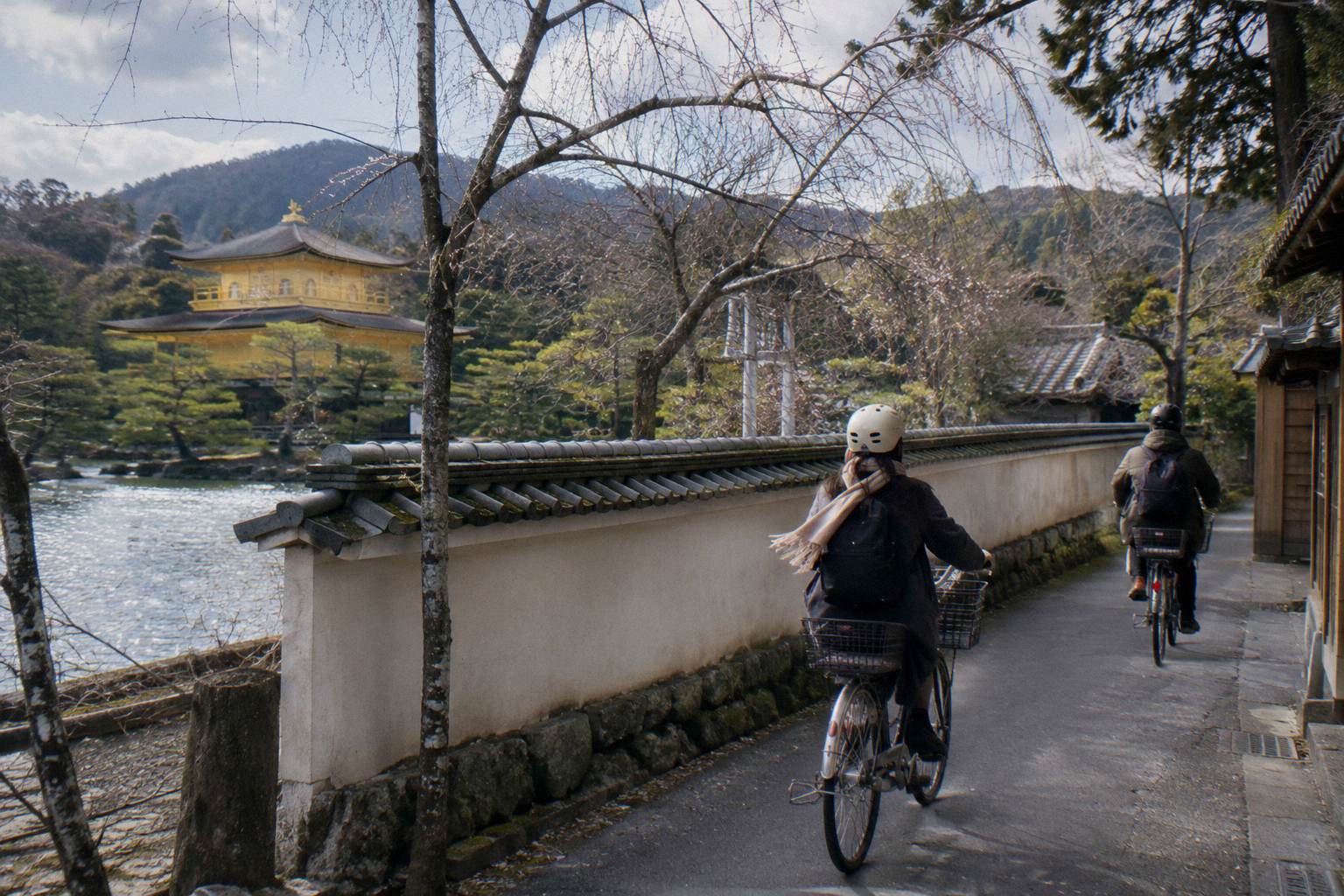
The inclusion mistake is the expensive one. Palace, Castle And Temples folds entrance fees and parking into its price; the two half-day rides do not name entrance fees as included. A rider who books Hidden Gems expecting the Kinkaku-ji ticket to be covered will pay the 500 yen at the gate themselves. Read each product's own inclusion list before comparing prices, because the from-prices are not like for like.
The age rule catches families. Two of the three rides start at 12, and the lunch-including Zen temple alternative starts at 15. A ten-year-old can ride the full-day product but neither half-day one, which inverts the usual assumption that shorter rides suit younger children.
Weather planning is the third. July is Kyoto's wettest month on the 1991 to 2020 normals at 223.6 mm, with the rainy season running roughly early June to mid July, and August is the hottest with a mean of 28.5 °C and a daily high of 33.7, per the Japan Meteorological Agency Kyoto monthly normals. The 24-hour free-cancellation window is what lets you move the ride if a storm day lands on your date; the rain question is covered in more depth in what happens to a guided ride when it rains.
What Rules Apply While You Ride Nishijin?
Riders aged 16 and over face fixed fines of 3,000 to 12,000 yen for minor cycling violations since 1 April 2026: 12,000 yen for holding a phone, 6,000 for ignoring a signal or wrong-side riding, 5,000 for a stop-sign failure or riding with an umbrella, and 3,000 for two-abreast riding or a passenger. Helmets have been an effort duty for every age since 1 April 2023 with no fine attached.
Nishijin's lanes are residential, and the rules that matter there are the ones about priority and parking. The National Police Agency's five rules for cyclists put the roadway first, riding on the left, with the sidewalk as the exception where signs permit it and with pedestrians taking priority, as set out in the National Police Agency bicycle safety leaflet. On a guided ride the guide sets the line and pace, which is most of the compliance work done for you.
| Violation | Fixed fine |
|---|---|
| Holding or watching a phone | 12,000 yen |
| Ignoring a signal | 6,000 yen |
| Riding on the wrong side of the road | 6,000 yen |
| Failing to stop at a stop sign | 5,000 yen |
| Riding with an umbrella | 5,000 yen |
| Two abreast or carrying a second rider | 3,000 yen |
The phone rule is the one with real teeth beyond the fixed fine. Since 1 November 2024, holding a phone to talk or watch the screen while riding can mean up to 6 months in prison or a 100,000 yen fine, and causing danger while using a phone can mean up to 1 year or 300,000 yen. On a weaving-district lane with narrow sightlines, that is a rule worth taking literally: stop and dismount to check a map.
The helmet duty is softer. Kyoto Prefecture explains on its page on the helmet effort duty that every cyclist of every age must make an effort to wear one, with no penalty attached. In practice the question answers itself here, because the Palace, Castle And Temples ride and the Crowd-Free E-Bike Ride both name a helmet in their inclusions. The full reference lives in the Kyoto cycling rules guide.
When Is The Best Season For A Nishijin Ride?
Spring and autumn give Nishijin its two standout windows: cherry blossom normally reaches full bloom on 4 April in Kyoto, 30 March in 2026, and maple colouring normally arrives on 5 December, both per the Japan Meteorological Agency's Kyoto observations. Summer rides are hot and July is the wettest month, so riders booking then should lean on the 24-hour free cancellation every ride carries.
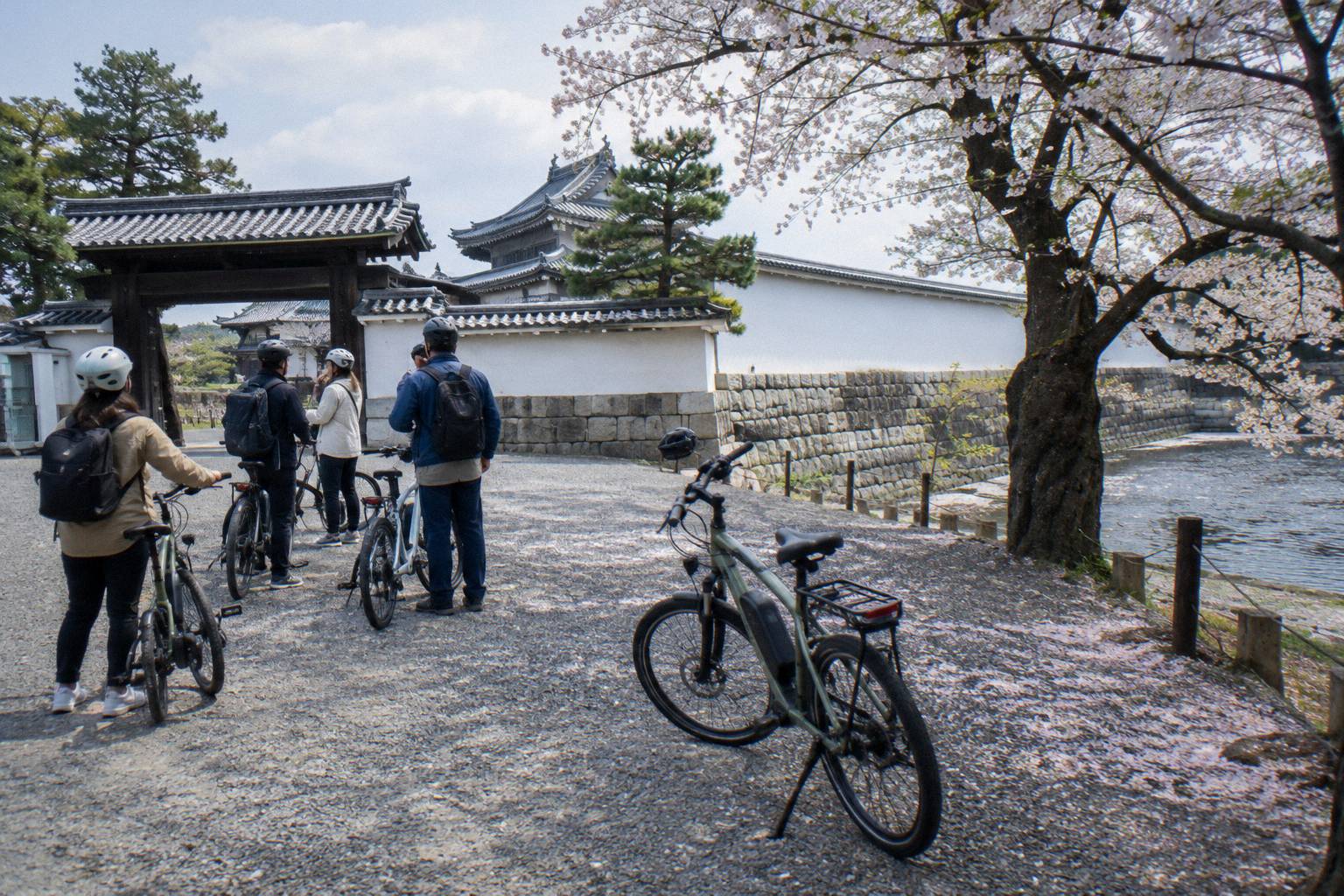
The blossom normal comes from the observatory's 1991 to 2020 record, and the spread around it is wide: flowering has ranged from 16 March in 2021 to 9 April in 1984, and full bloom from 24 March in 2023 to 17 April in 1965, according to the Japan Meteorological Agency Kyoto observations. Treat the dates as the middle of a range, not a promise, and let the free-cancellation window do the adjusting once the forecast firms up.
The district's residential streets are a decent fit for the hot months in one respect: there is no single gate where you queue outdoors. Still, a 6 hours 30 minutes ride in a month with a mean daily high of 33.7 °C is a commitment, and the operator's optional fan-cooled jacket rental at ¥1,000 per day exists precisely for Kyoto's hot summer. The half-day rides are the sensible summer format, and the summer heat cycling guide covers the rest of the tactics.
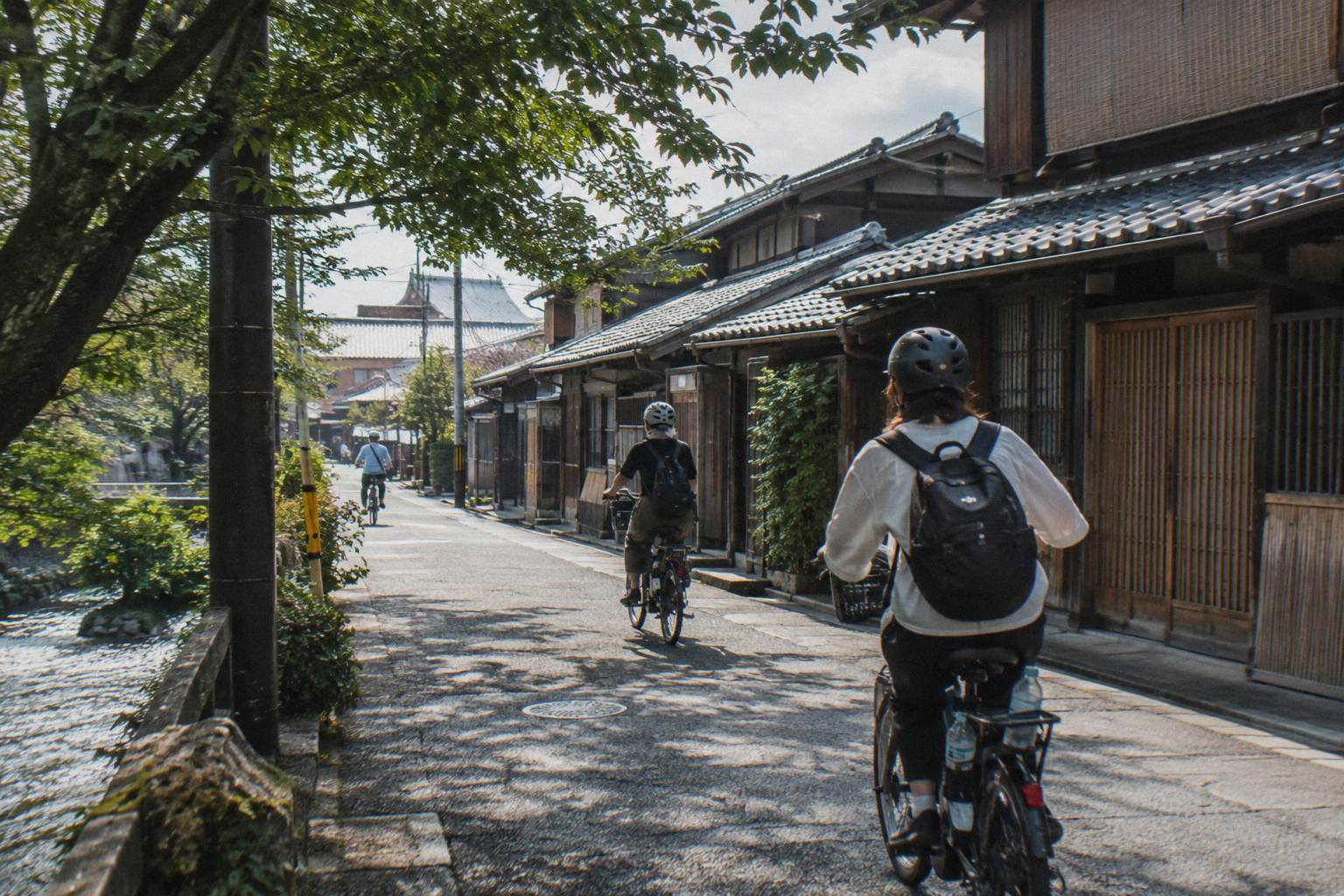
Autumn suits the neighbourhood differently. Maple colouring normally lands on 5 December and ginkgo yellowing on 24 November, and Nishijin's temple fringe participates without the crowd pressure of the eastern sights. A late-November Hidden Gems ride and a stroll afterwards makes a full day of it, and the timing detail sits in the autumn leaves cycling guide.
How Does Nishijin Fit Into A Longer Kyoto Route?
Nishijin works as the northwest quarter of a loop that crosses Kyoto Imperial Palace Park, continues to Kinkaku-ji or the Kamo River paths, and returns toward the city centre, roughly the shape the Palace, Castle And Temples ride traces over 6 hours 30 minutes. A rider building their own day can borrow that geometry, but a guided product hands the parking, fines and route-finding to someone else.
The palace park is the natural hinge. Entry to the palace is free with no advance application, so it costs nothing to pass through on the way east or west. Kinkaku-ji sits further northwest, open 9:00 to 17:00 all year at 500 yen general admission, per the Kinkaku-ji access page, and pairs naturally with the weaving district on a northern loop; the Kinkaku-ji and northern hills cycling guide maps that combination in full.
For the ride itself, the half-day products spend their 4 hours inside this northwest quadrant, while the full-day product extends it toward the castle and temple stops its title names. If you want the backstreets plus the palace without a full day, Hidden Gems, 4 Hours is the balanced pick: the strongest review record of the three, a backstreet-first route, and an afternoon left over for Kinkaku-ji on foot.
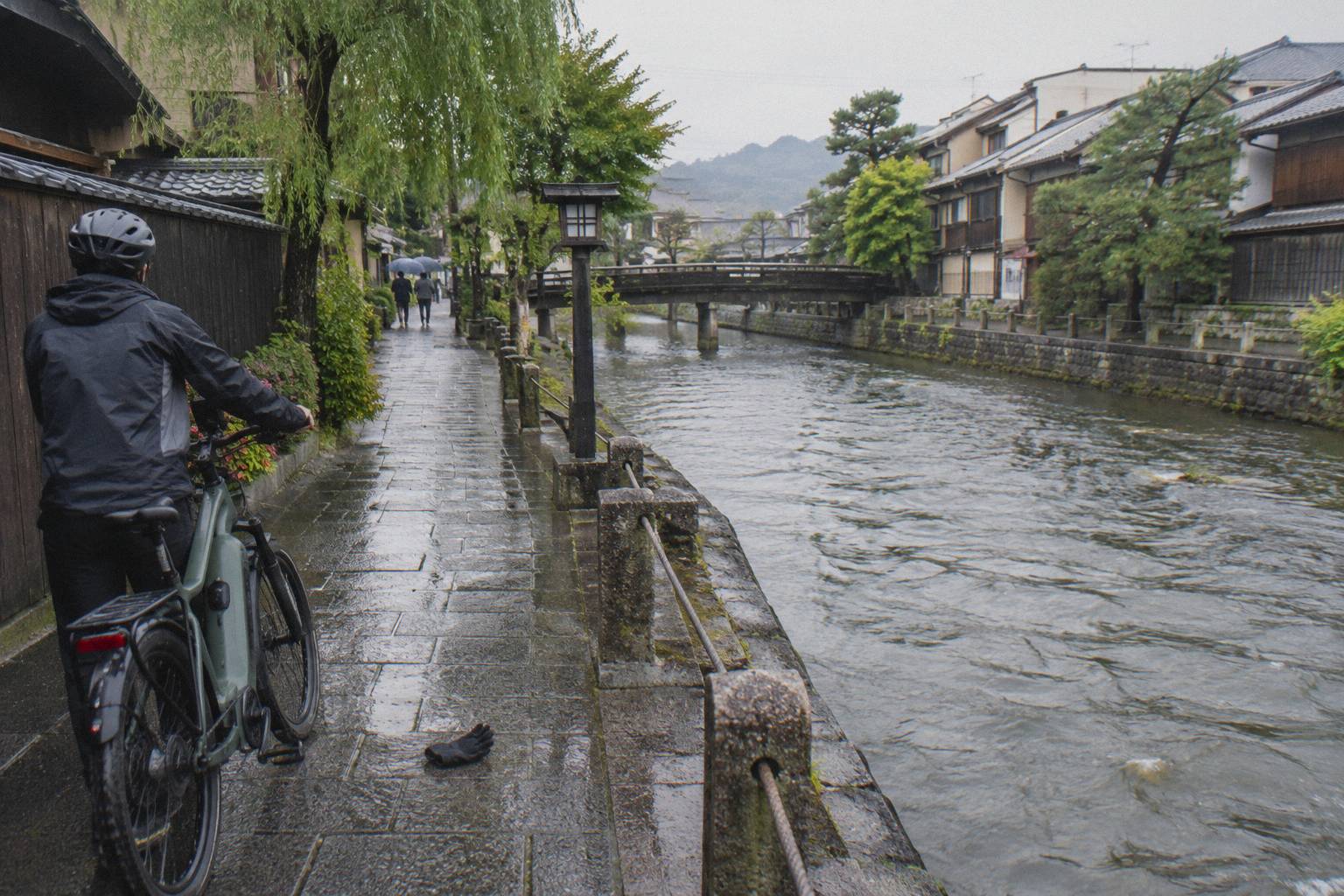
One caution before you plan a do-it-yourself version: the removal system does not take holidays. Bicycles left outside designated parking in the removal areas are taken to depots such as Sanjo Senbon, held for four weeks, and cost 3,500 yen to reclaim. On a guided ride with parking fees included, that risk is the operator's; on a self-guided day it is yours, and the bike parking guide covers where the legal spots are.
The weaving district itself rewards the slower format. A 4-hour ride leaves time for a stop at the Nishijin Textile Center and still delivers the lanes, while the 6-and-a-half-hour ride adds the ticketed sights but compresses the lingering. Decide which of those two days you actually want before you compare prices, because the from-prices are close enough that the format should decide it, not the yen.
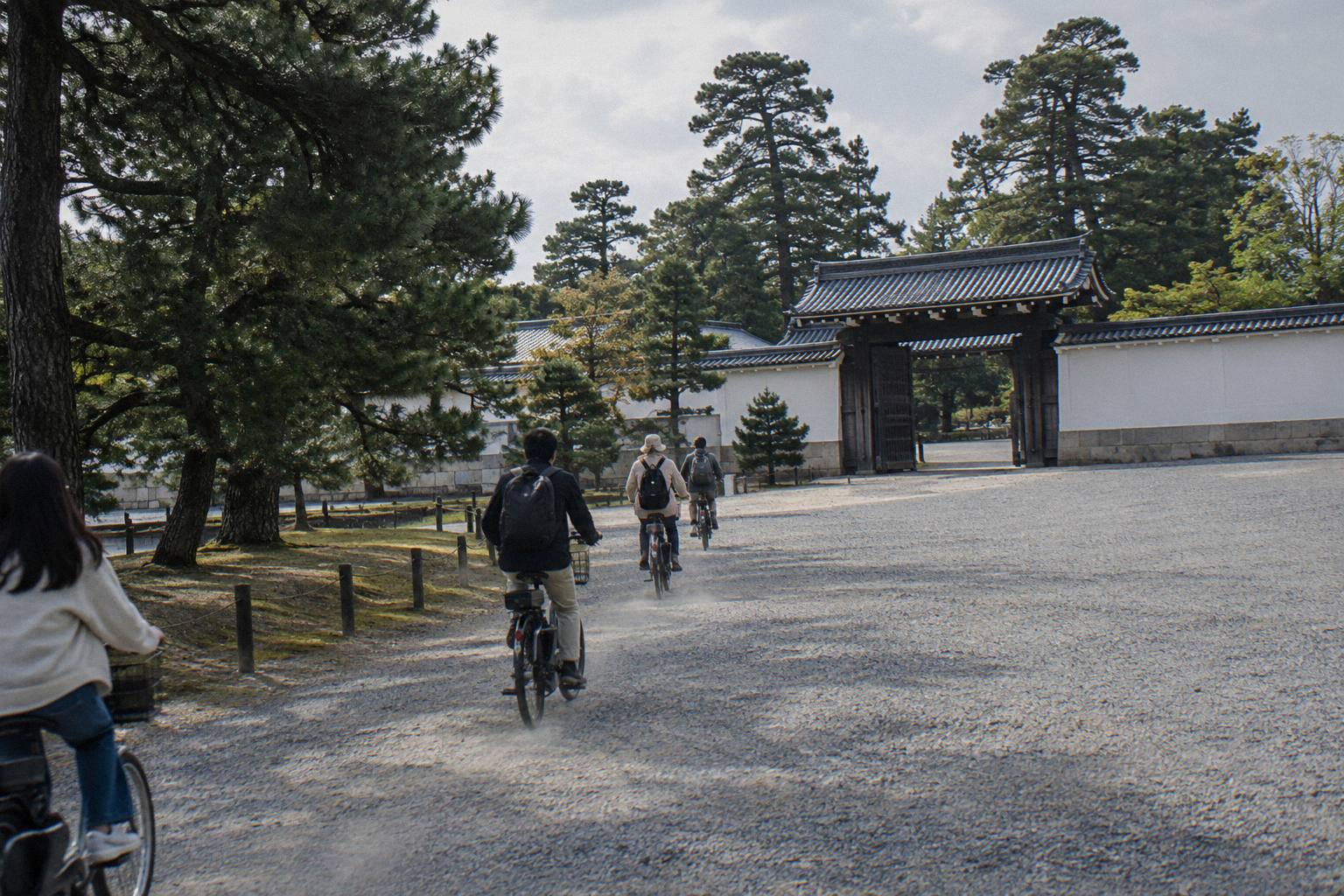
Whichever ride you pick, all three share the same escape hatch: free cancellation up to 24 hours before the start, with the price for your date shown on the booking page. That combination makes Nishijin an easy district to commit to early in a trip planning cycle and adjust later, and the rest of the Kyoto riding picture is one click away at Kyoto Bike Tours.
Common Questions About Nishijin Rides
Is Nishijin Worth Visiting By Bike?
Nishijin is a residential weaving district rather than a ticketed sight, so a bike suits it well: the lanes are long and straight, the Kyoto Imperial Palace on its edge is free to enter with no advance application, and three guided e-bike rides pass through the area, from 4 to 6 hours 30 minutes.
Which Guided Tours Go Through Nishijin?
Palace, Castle And Temples (from ¥16,500 per person, 6 hours 30 minutes, minimum age 10), Hidden Gems, 4 Hours (4 hours, minimum age 12, rated 5.0 from 214 reviews) and the Crowd-Free E-Bike Ride (from ¥13,000 per person, 4 hours, minimum age 12) all cover the Nishijin and palace area by their titles. Each is a separate bookable product with its own inclusions.
Can You Cycle To Kyoto Imperial Palace?
The palace is open to all visitors with no advance application and entry is free, and the Palace, Castle And Temples ride names the palace in its title with all parking fees included. Check the booking calendar for the exact route on your date.
What Is The Nishijin Textile Center?
The Nishijin Textile Center is the district's most recognisable landmark, dedicated to the Nishijin weaving trade that gave the neighbourhood its name. It sits in the heart of the weaving district west of Kyoto Imperial Palace Park and works as a mid-ride stop on a day through the area.
How Much Does A Guided Bike Ride Through Nishijin Cost?
From-prices among the area's rides start at ¥13,000 per person for the 4-hour Crowd-Free E-Bike Ride and run to ¥16,500 per person for the 6 hours 30 minutes Palace, Castle And Temples ride with entrance fees included. Hidden Gems, 4 Hours shows its price on the booking page. Prices vary by date and group.
Do You Need A Helmet For A Bike Ride In Kyoto?
Helmets have been an effort duty for cyclists of every age since 1 April 2023, with no fine attached. The Palace, Castle And Temples ride and the Crowd-Free E-Bike Ride both include a helmet, so on a guided product the question is settled for you.