Kinkakuji Area And The Northern Hills By Bike
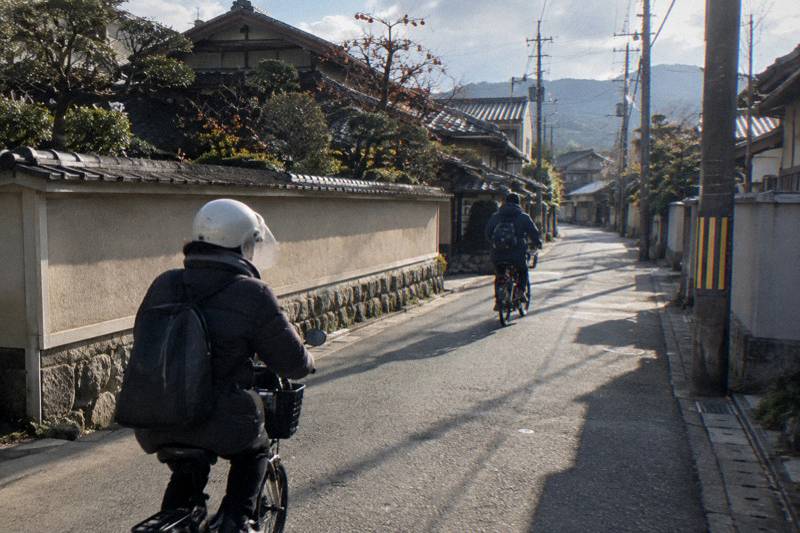
Kinkaku-ji, the Golden Pavilion, sits in the north of Kyoto where guided e-bike rides run past the Imperial Palace grounds, temple lanes and quiet residential blocks. Here is what a ride to the Golden Pavilion involves, which roster products cover the area, and what to sort out before you book.
Short answer
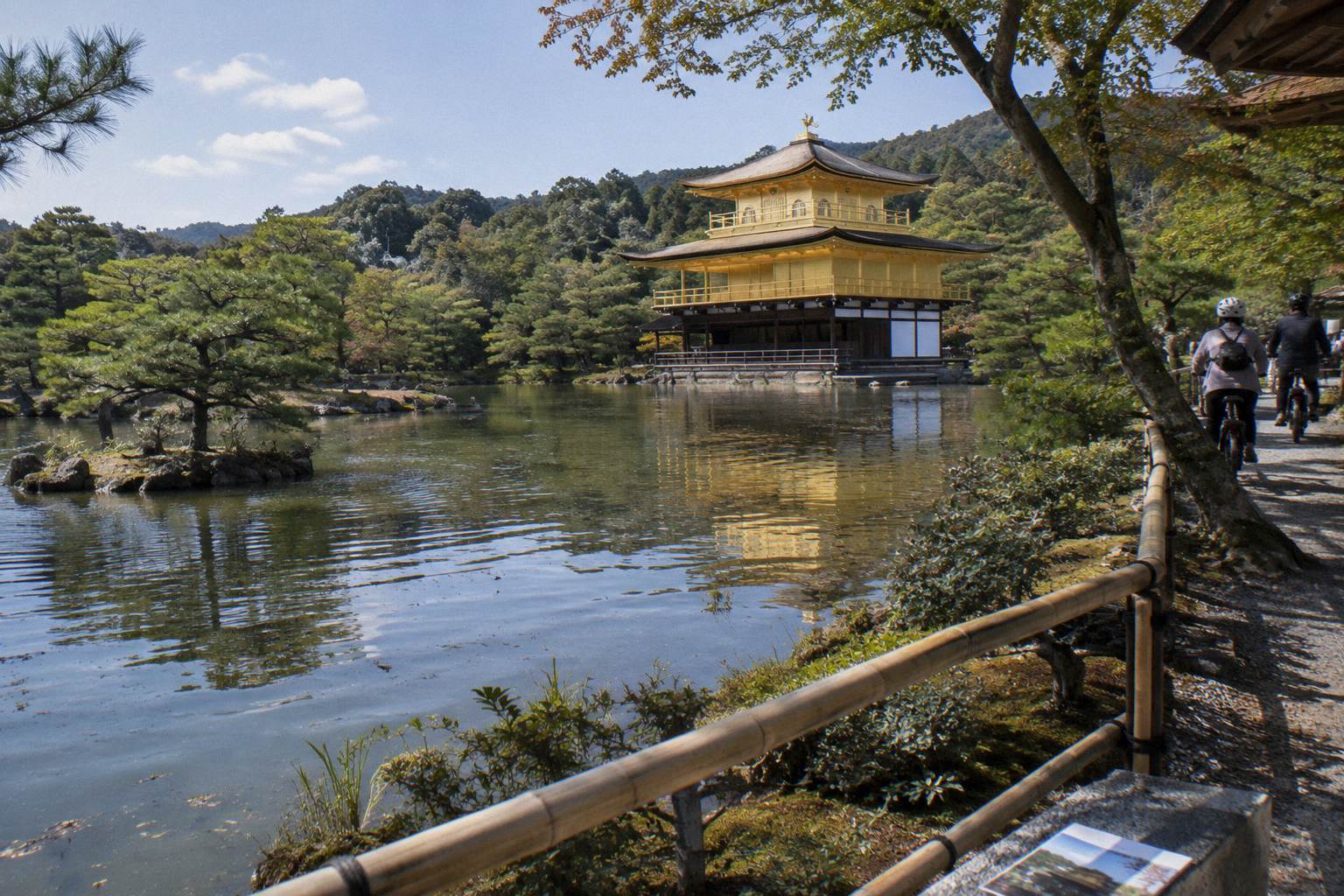
Kinkaku-ji costs 500 yen for adults and 300 yen for primary and middle school students, and is open 9:00 to 17:00 all year. Guided e-bike rides that include the Golden Pavilion run from 3 hours 15 minutes to 6 hours 30 minutes, with minimum ages from 9 to 10, and the Northern Ride includes the Kinkaku-ji entrance fee and the e-bike in one booking.
Riding north from central Kyoto is one of the most satisfying ways to reach the Golden Pavilion, and the guided electric rides gathered here, led by the Northern Ride to Kinkaku-ji, include three options that cover Kinkaku-ji and the districts around it. This guide lines up those rides against the temple's own fees and opening hours, the road rules that apply on the way, and the seasonal numbers that should shape when you go.
| Fact | Detail |
|---|---|
| Kinkaku-ji admission | 500 yen general; 300 yen primary and middle school students |
| Kinkaku-ji hours | 9:00 to 17:00, open all year (may change for exhibitions) |
| Northern Ride, Kinkaku-Ji duration | 3 hours 15 minutes |
| Rides covering the north | Minimum ages from 9 to 12 depending on the product |
| Helmet rule | Effort duty for every age since 1 April 2023, no fine attached |
| Blue-ticket fines | Since 1 April 2026, 3,000 to 12,000 yen for riders aged 16 and over |
| Hottest month | August, mean 28.5 °C, daily high 33.7 °C |
| Removed bicycle fee | 3,500 yen to reclaim, held 4 weeks |
Can You Reach Kinkakuji On A Guided E-Bike Ride?
Yes. Three guided e-bike products on this site include the Golden Pavilion or the northern district around it, and the most direct is the Northern Ride, Kinkaku-Ji ("Kyoto E-Bike Tour: Hidden Gems with Local Tour Guide"), a 3 hour 15 minute ride from Aska's Tour that includes the Kinkaku-ji entrance fee and the electric bike rental in one booking. It carries a 5 rating from 16 reviews and takes riders from age 9. The trade-off to know before booking: no food or drink is included, and insurance is not included in case of accidents.
The other two options stretch the same northern ground into longer days. Palace, Castle And Temples ("Kyoto E-Bike Tour of Palace, Castle, Temples and Hidden Gems") runs 6 hours 30 minutes from ¥16,500 per person with every entrance fee folded in, a bilingual English and Japanese guide and a premium Panasonic electric bicycle for each participant. Hidden Gems, 4 Hours ("Kyoto E-Bike Tour of Hidden Gems Backstreets and Temples") takes the middle slot at 4 hours, rated 5.0 from 214 reviews, with a bilingual English guide and bicycle use included, minimum age 12.
What all three share is the legal starting point. A pedal-assist e-bike that meets the Japanese standard is classified as a bicycle, so it rides under the same rules as any other bike: roadway by principle, left side, pedestrians first where sidewalk riding is permitted. That is the framing on the Kyoto City page on cycling rules, which also covers the fine schedule that came into force for riders aged 16 and over. If you want the full rule set in one place, the Kyoto cycling rules guide walks through every fine and requirement; here the short version is that a guided ride puts the navigation and the parking decisions in a guide's hands, which removes most of the ways a first-time visitor trips over those rules.
The full-day question is worth a moment too. If a 3 hour northern ride feels short and a full circuit appeals, the full-day cycling loop guide compares the all-day products; the northern options here trade breadth for depth, spending their hours on one side of the city rather than racing across all of it.
- Budget Fare, Hidden Alleys¥11,000
- Crowd-Free E-Bike Ride¥13,000
- Higashiyama Heritage Ride¥13,500
- Fushimi Inari, Sento Stop¥13,500
- Morning Ride From Station¥14,000
- Silver Pavilion, Philosopher's Path¥14,500
- Backstreets, 5 To 6 Hours¥15,000
- Palace, Castle And Temples¥16,500
The electric assist itself is worth naming as a feature rather than an afterthought. Every ride in this comparison supplies the bike, and on the longer products the e-bike is what makes a four to six and a half hour day realistic for riders who would not choose a pedal bike for that duration. Riders weighing the assist question more broadly can read the e-bike versus regular bike guide, which sets out who benefits from the motor and who is fine without one.
What Does Kinkakuji Cost To Enter And When Is It Open?
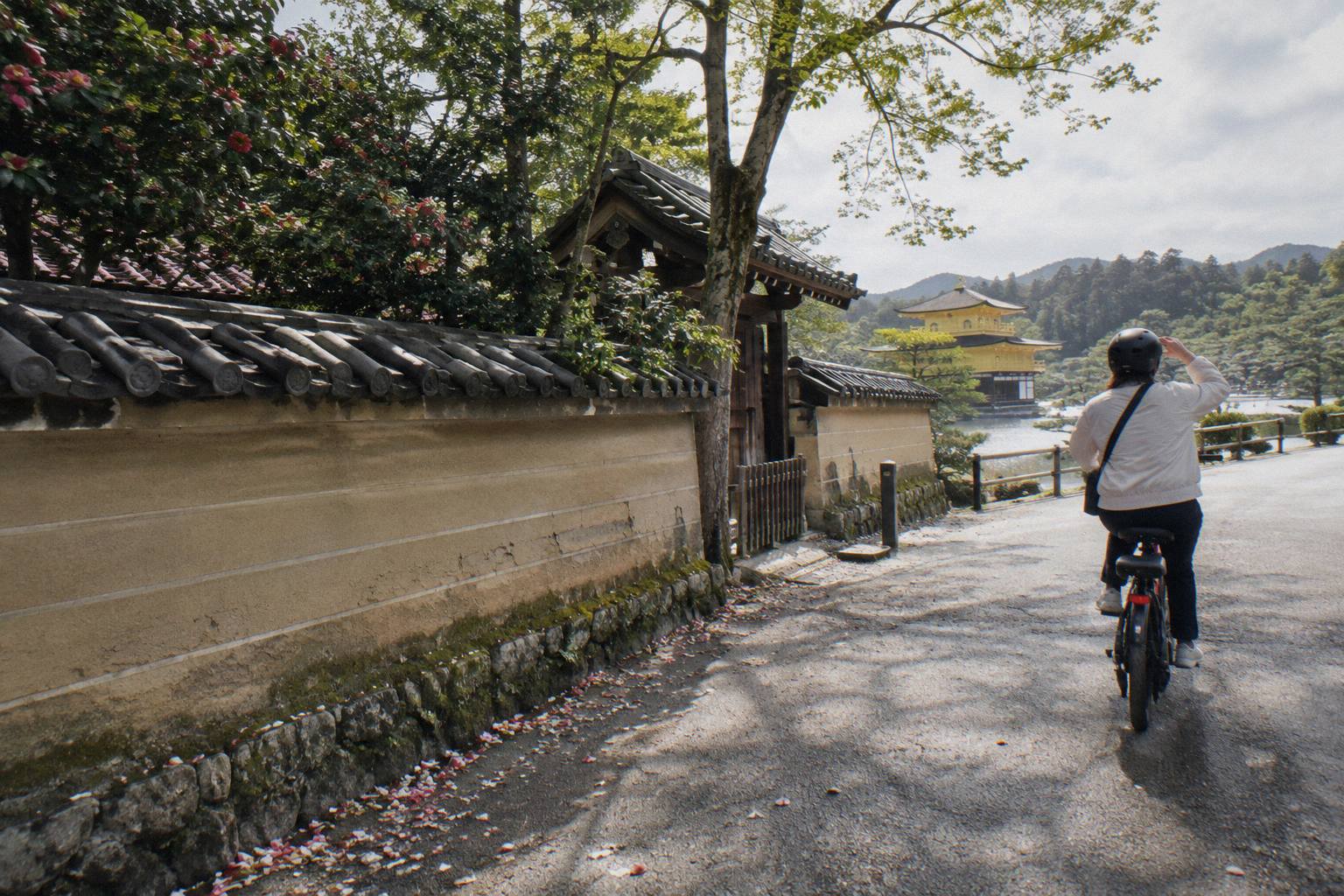
Kinkaku-ji charges 500 yen for general admission and 300 yen for primary and middle school students, and it opens 9:00 to 17:00 every day of the year, though the stated hours can shift for special exhibitions, so a rare closure day should be checked against your ride date rather than assumed away. Those figures come from the official Kinkaku-ji access page. On a guided ride the fee question mostly disappears: the Northern Ride, Kinkaku-Ji includes the entrance fee in its price, and Palace, Castle And Temples includes all entrance fees across its six and a half hours.
Going alone changes the arithmetic in the other direction. A self-guided visit means buying the ticket at the gate, finding legal parking for the bike, and absorbing the reclaim risk: Kyoto City removes bicycles parked outside designated areas and charges 3,500 yen per bicycle to get one back, holding it for 4 weeks. On a guided ride the group parks where the operator arranges it, which is one fewer fine to think about.
Two neighboring stops show up on northern itineraries with their own numbers, useful when comparing what each ride's included-fees line is actually worth:
| Stop | Admission | Hours |
|---|---|---|
| Kinkaku-ji | 500 yen general; 300 yen school students | 9:00 to 17:00, all year |
| Nijo Castle | from 800 yen general; castle plus Ninomaru Palace 1,300 yen | Admission 8:45 to 16:00, closes 17:00 |
| Kyoto Imperial Palace grounds | Free entry, no advance application | Check ahead for the current schedule |
| Ginkaku-ji (eastern pairing) | 1,000 yen adult since 1 April 2026; 500 yen child | 8:30 to 17:00, 1 March to 30 November |
The Ginkaku-ji line matters for triage: its adult fee doubled from 500 yen on 1 April 2026, so any older write-up quoting the half-price ticket is out of date. Palace, Castle And Temples is the ride that folds Nijo Castle admission into its all-fees-included pricing; the shorter northern ride concentrates on Kinkaku-ji itself plus backstreets, where nothing carries a ticket.
Timing the visit around the temple's clock is the one thing the roster cannot do for you, since start times are chosen on the booking page. What the temple's own hours tell you is that any ride ending after 17:00 will treat Kinkaku-ji as a photo stop from outside rather than a walk-through, which is worth checking against your chosen date before you pay.
Which Ride Fits Your Group: Short Northern, Long Northern Or Backstreet Loop?
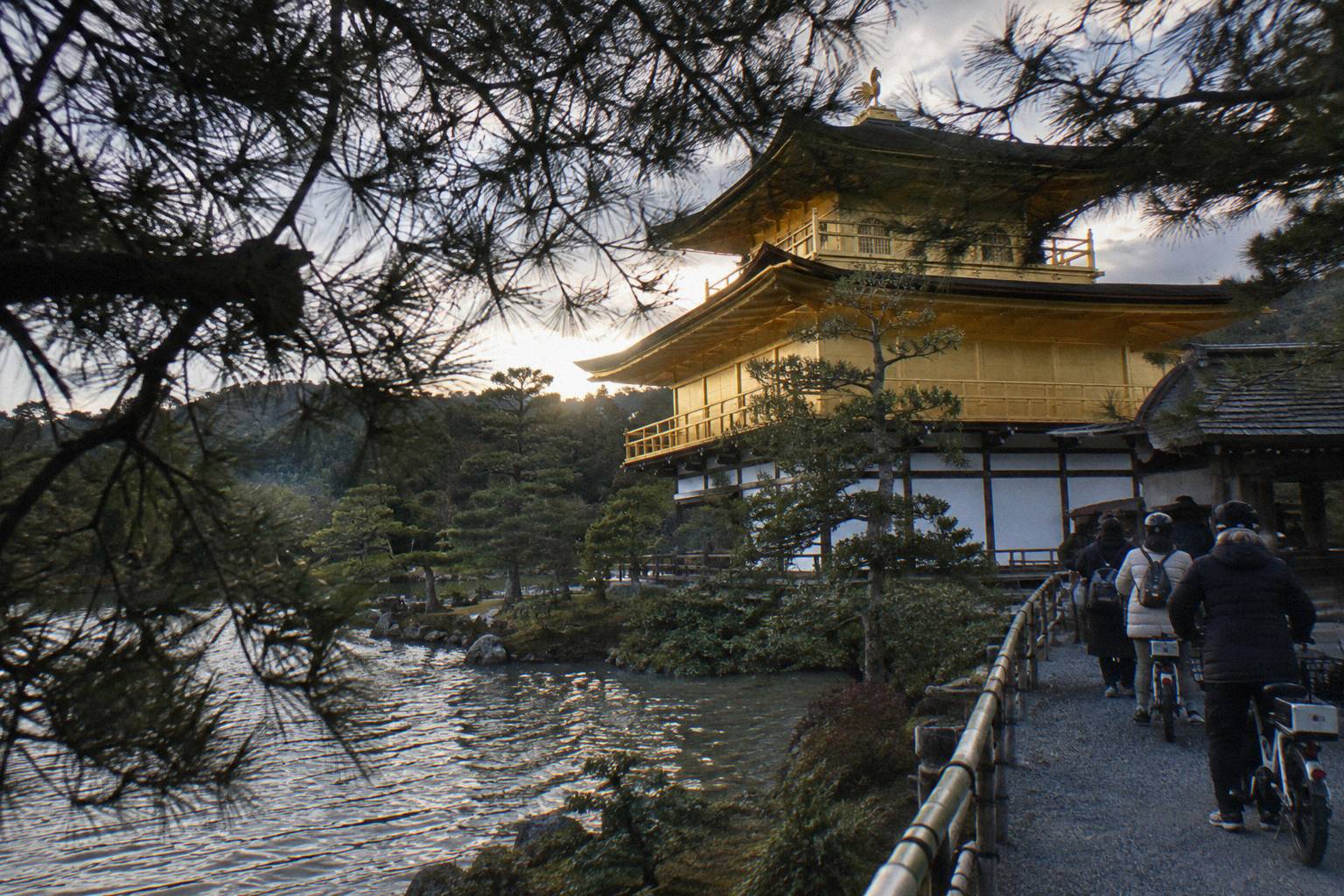
Match the ride to attention span rather than ambition: the Northern Ride, Kinkaku-Ji suits a half-day visit from age 9, the 4 hour Hidden Gems ride from age 12, and the 6 hours 30 minutes Palace, Castle And Temples from age 10 for groups who want fees, parking and a full day handled in one booking. All three offer free cancellation up to 24 hours before start, so an early booking costs nothing to rearrange.
The ages are the hard filter. A family with a nine-year-old has one option among these three; the two longer rides set their floors at 10 and 12. Duration is the soft filter. Six and a half hours is a full day on a bike with breaks built in, and the Palace, Castle And Temples product treats lunch as a flexible break rather than an included meal, with only one 600 ml bottle of water per participant named among the inclusions. The 4 hour Hidden Gems ride includes no lunch either and excludes insurance, so riders who want coverage sorted should check their own policy before booking that one.
| Northern Ride, Kinkaku-Ji | Hidden Gems, 4 Hours | Palace, Castle And Temples | |
|---|---|---|---|
| Duration | 3 hours 15 minutes | 4 hours | 6 hours 30 minutes |
| Minimum age | 9 | 12 | 10 |
| Entry fees | Kinkaku-ji included | Not named as included | All included |
| E-bike | Included | Use of bicycle included | Premium Panasonic e-bike each |
| Food or drink | None included | None named | Water only; flexible lunch break |
| Cancellation | Free up to 24 hours | Free up to 24 hours | Free up to 24 hours |
Prices sit where the booking calendar puts them: Palace, Castle And Temples starts from ¥16,500 per person, and the other two show their price on the booking page for the date you pick. If you are weighing guided against going alone, the guided or self-guided cycling guide sets out the trade-offs in full; the one-line version is that the northern district rewards local knowledge more than most parts of Kyoto, since its points of interest sit in residential blocks rather than along one obvious corridor.
Review pools differ sharply, and that matters for how much weight a rating carries. The 4 hour Hidden Gems ride's 5.0 from 214 reviews is a deep sample; the Northern Ride's 5.0 from 16 reviews is real but drawn from a much smaller pool, so read it as a signal rather than a verdict. Palace, Castle And Temples carries no rating figure at all, which is a reason to lean on its inclusion list, all entrance fees, all parking fees, a premium e-bike each and a bilingual guide, when comparing it against the other two.
Group shape is the last filter. A couple with a free morning gets full value from the 3 hour 15 minute ride; a multi-generation family splitting into two groups can book the age 9 option for one half and the age 12 option for the other, since both start from free cancellation and neither locks a date until 24 hours out. For readers deciding between an intimate day and a standard group departure, the private or small group cycling guide covers that axis separately.
What Rules Apply On The Road Between The Temple Stops?
Every rider aged 16 and over is covered by the blue-ticket system introduced on 1 April 2026, where minor violations carry fixed fines from 3,000 to 12,000 yen, and holding a phone while riding is the most expensive at 12,000 yen, with umbrella riding at 5,000 and riding two abreast or carrying a passenger at 3,000. The system replaced criminal procedure for those minor cases and applies to every rider aged 16 and over, visitors included. Ignoring a signal and riding on the wrong side of the road each cost 6,000 yen, and failing to stop at a stop sign costs 5,000.
The phone rule has teeth beyond the fixed fine. Since 1 November 2024, holding a phone to talk or watch the screen while riding can mean up to 6 months in prison or a 100,000 yen fine, and causing danger while doing so raises that to up to 1 year or 300,000 yen. On a guided ride the practical version of this is simple: the guide handles the navigation, so the phone stays in the bag. Everything else covered here is indexed on Kyoto Bike Tours.
Helmets are an effort duty rather than a punishable one. Since 1 April 2023 every cyclist of every age must make an effort to wear one, with no fine attached, per the Kyoto Prefecture page on the helmet effort duty. Every ride in this comparison puts a helmet in the inclusions, so the effort is made for you. The National Police Agency's five basic rules, laid out in the National Police Agency bicycle safety leaflet, come down to riding on the left of the roadway, treating the sidewalk as the exception with pedestrians first, and giving way at crossings.
Alcohol deserves one line because temple districts are lunch districts. Drunk cycling is banned at any level of drinking in Japan, and riding with a blood alcohol level of 0.3 mg per ml or above can mean up to 3 years in prison or a 500,000 yen fine; even lending a bike to a drunk rider carries the same maximum. On a ride with a flexible lunch break, that rules out the temple-lane pint with lunch. Riders who want the full penalty table, including the drunk-riding tiers, will find it in the what the new bicycle rules mean explainer.
Insurance is the one line to read closely per product. Kyoto Prefecture requires bicycle liability insurance under its ordinance, and the prefecture accepts a personal-liability rider on a home, fire or car policy as satisfying it. The Northern Ride, Kinkaku-Ji states plainly that insurance is not included in case of accidents, and the 4 hour Hidden Gems ride lists insurance as excluded too, so check your travel policy before riding either.
Parking sits alongside the rules. Kyoto City removes bicycles left outside designated spots across nearly the whole city and charges 3,500 yen per bicycle to release them from storage, where they are held for 4 weeks, as explained on the Kyoto City page on removed bicycles. Guided groups park together where the operator arranges it, which is precisely the chore independent riders most often get wrong; the bike parking guide covers the solo-rider version.
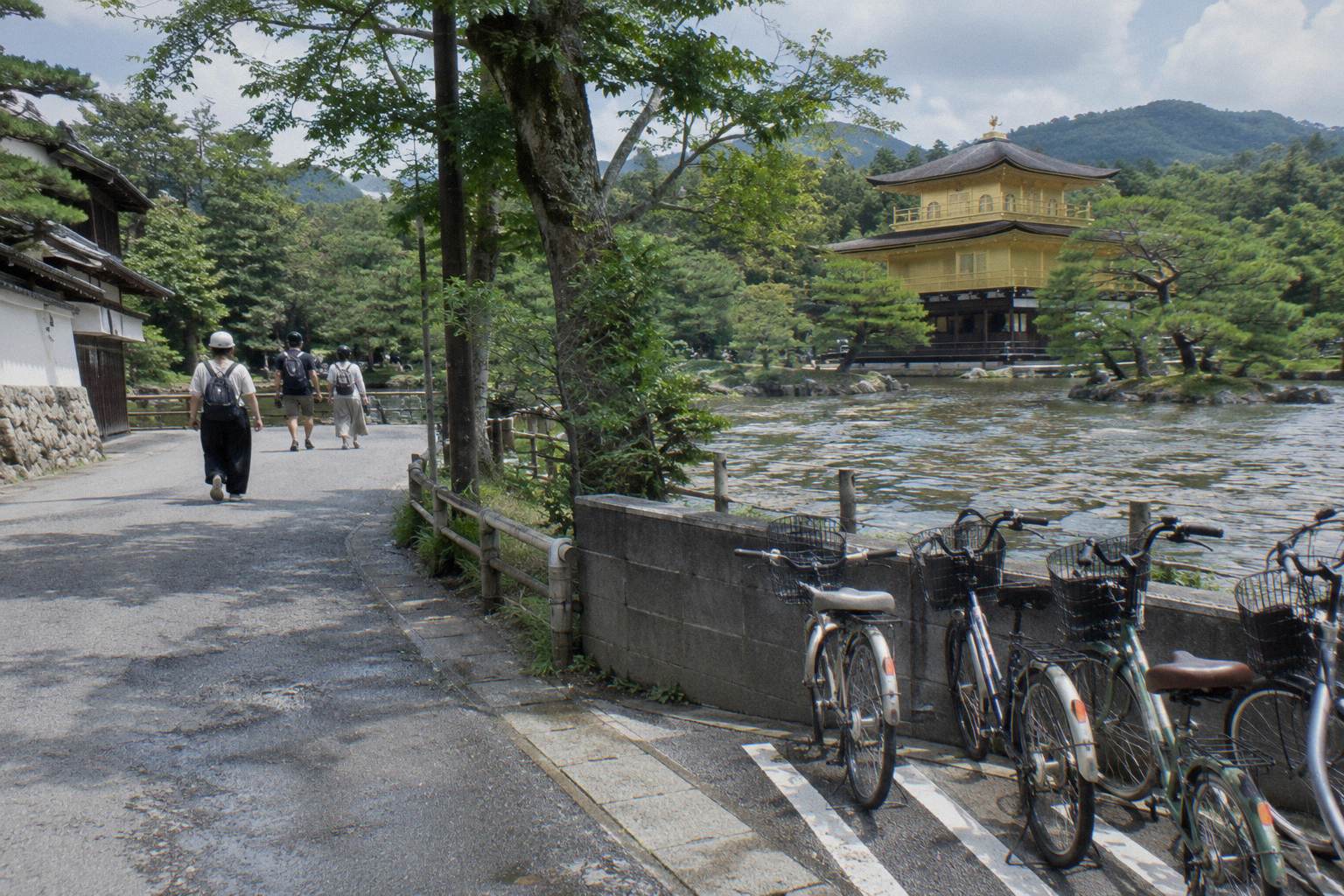
How Long Do The Northern Rides Take And How Should You Time One?
The three rides run 3 hours 15 minutes, 4 hours and 6 hours 30 minutes, so the northern district can be done as a morning, a half-day or a full day, and Kinkaku-ji's 9:00 opening plus 17:00 closing bounds every option. Start times are chosen on the booking page per date; what you control is which duration you buy and how it sits against the rest of your day.
The short version leaves room for something else. Three and a quarter hours with the entry fee included means the Northern Ride, Kinkaku-Ji can occupy a morning and still free the afternoon for a different district; the eastern temples riding guide is the usual pairing, since the Higashiyama side of the city is a separate ride rather than an extension of this one.
The long version consumes the day but replaces decisions. Palace, Castle And Temples runs its six and a half hours across palace, castle and temple stops with all fees, all parking fees and a bilingual guide included, plus a flexible lunch break you fund yourself. In summer heat that length matters: the operator offers an optional fan-cooled jacket rental on request for ¥1,000 per day. The 4 hour Hidden Gems ride splits the difference and carries the deepest review pool of the three at 5.0 from 214 reviews, with an in-person English guide and bicycle use included.
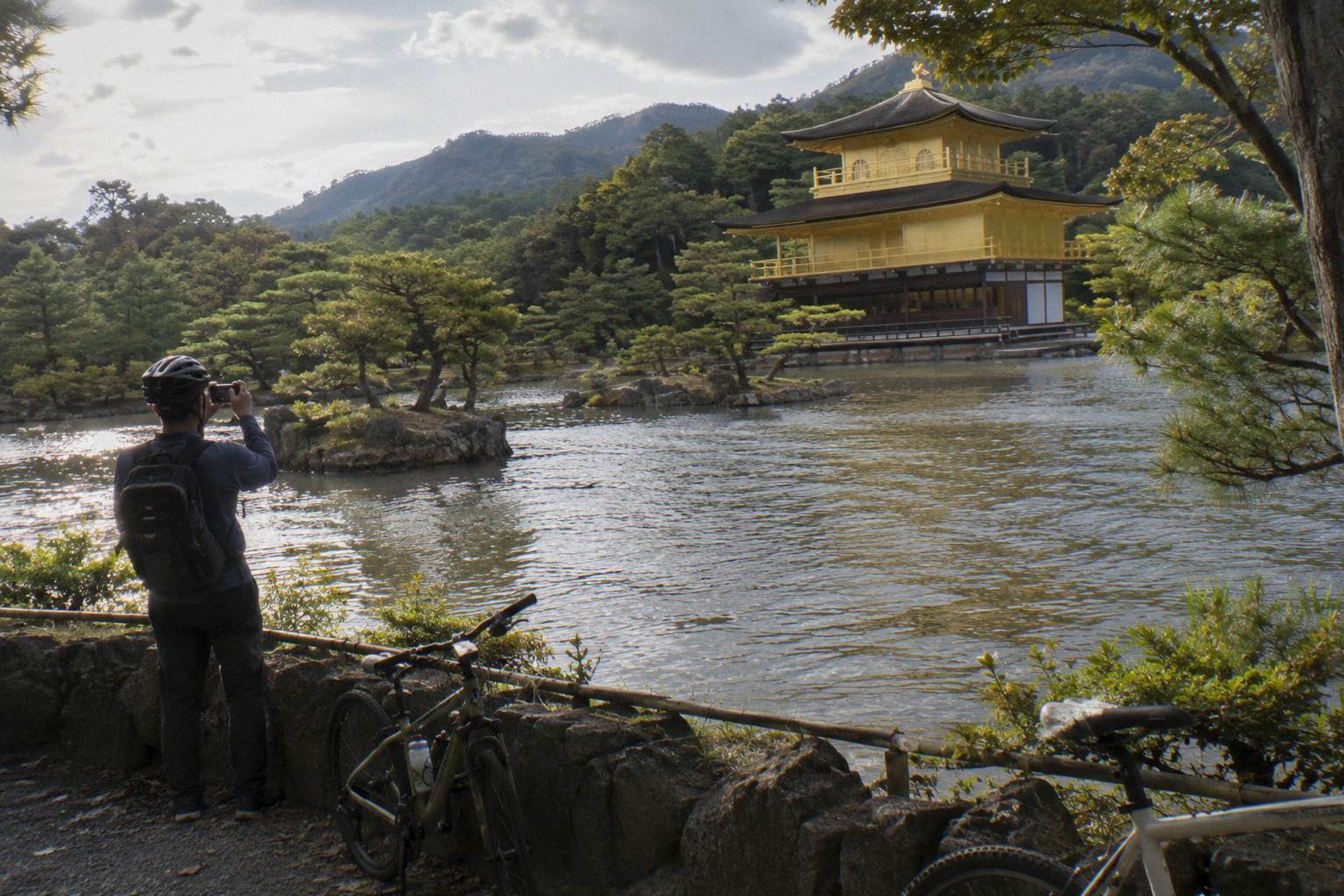
Between the two shorter rides, the choice is really about what you want the guide for. The 3 hour 15 minute northern ride is a single-destination product with the Kinkaku-ji fee bundled; the 4 hour Hidden Gems ride spreads the same time budget across backstreets and several temples, which suits a first visit that wants range over depth. Neither includes a meal, so plan a lunch outside the ride either way, and both finish inside the temple's opening window on the start times a booking page typically offers, though confirming the slot remains a two-click job at checkout.
One timing rule applies regardless of product: book ahead for the date you want rather than the date you land. Free cancellation up to 24 hours before start runs across all three, so there is no penalty for holding a day early and dropping it later, a habit the advance booking blog post examines in more detail.
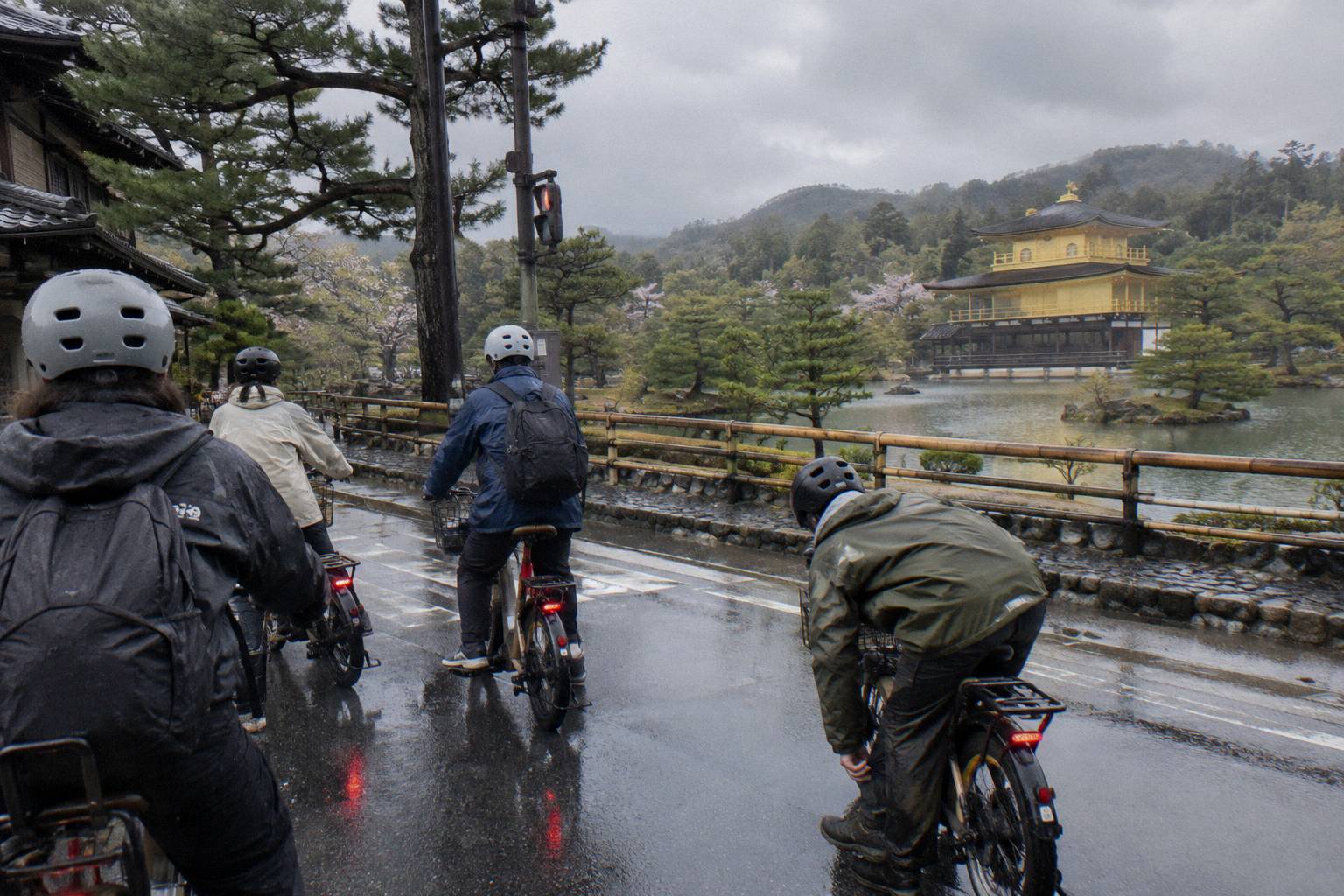
Which Month Works Best For Riding North To Kinkakuji?
April, May, October and November are the months the climate numbers favor, with means of 14.4, 19.5, 18.4 and 12.5 °C respectively, while July is the wettest month at 223.6 mm and August the hottest at a mean of 28.5 °C with daily highs of 33.7 °C. Those are the 1991 to 2020 normals for Station Kyoto published by the Japan Meteorological Agency Kyoto monthly normals.
The extremes deserve respect. Kyoto's record daily maximum is 39.8 °C, and three of the six hottest days on record fell in 2024, 2025 and 2026, so an August afternoon ride is a real heat-management question rather than a discomfort. The rainy season runs roughly early June to mid July. January is the coldest and driest month, mean 4.8 °C, which some riders prefer to any umbrella.
| Month | Rain mm | Mean C | Daily high C | Daily low C |
|---|---|---|---|---|
| April | 117.0 | 14.4 | 20.1 | 9.2 |
| May | 151.4 | 19.5 | 25.1 | 14.5 |
| July | 223.6 | 27.3 | 32.0 | 23.6 |
| August | 153.8 | 28.5 | 33.7 | 24.7 |
| October | 143.2 | 18.4 | 23.4 | 14.4 |
| November | 73.9 | 12.5 | 17.3 | 8.4 |
Bloom and leaf dates are observatory records, not promises. The Kyoto observatory's 1991 to 2020 normals put cherry flowering at 26 March and full bloom at 4 April, and in 2026 the full-bloom date came early at 30 March; maple colouring has a normal date of 5 December, per the Japan Meteorological Agency Kyoto observations. Those dates are the official marker trees, not a forecast for any single temple street, so book the ride you want and let the season do what it does. For deeper planning, the cherry blossom riding guide and the autumn leaves riding guide each work through their season.
Duration should flex with the month. The 6 hours 30 minutes ride makes most sense in the April, May, October and November windows; in July and August the two shorter products, 3 hours 15 minutes and 4 hours, spend less of the hot part of the day in the saddle, and the fan-cooled jacket option on the long ride exists precisely because of months like those. Rain changes less than people expect, since all three rides run on free cancellation up to 24 hours before start, and the what happens when it rains post walks through the operator-decides reality in full.
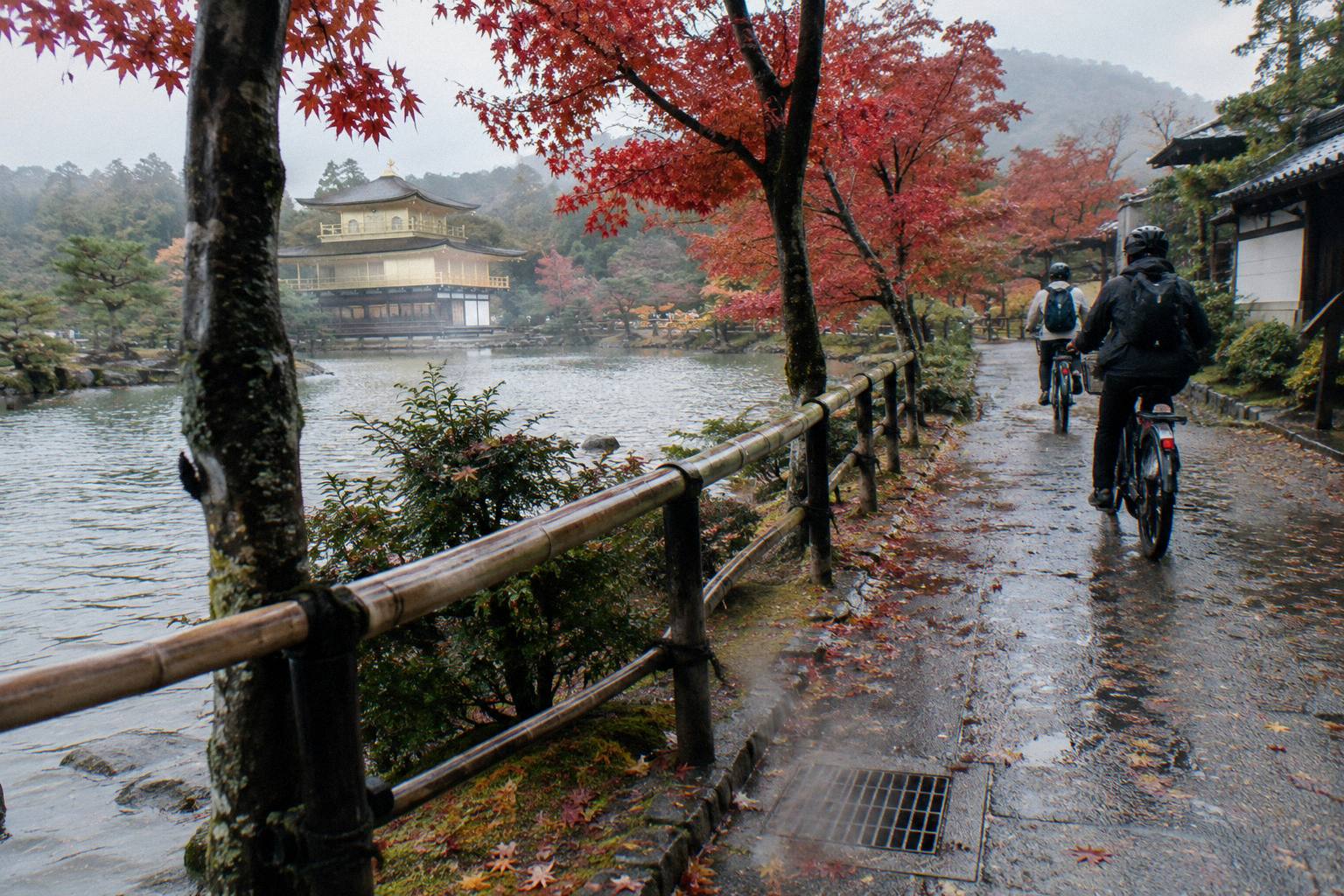
What Trips People Up Before You Book
The avoidable mistakes are booking a ride whose minimum age excludes someone in the group, assuming every product includes insurance or lunch, relying on the temple staying open past 17:00, and parking independently near Kinkaku-ji without a designated spot, which risks a 3,500 yen reclaim fee. Each one is a two-minute check against the comparison above.
Age first. The Northern Ride, Kinkaku-Ji takes riders from 9, Palace, Castle And Temples from 10, and the 4 hour Hidden Gems ride from 12. A family or mixed group needs to filter by its youngest rider before comparing anything else.
Inclusions second. The northern ride includes the Kinkaku-ji entry fee and the e-bike but no food, drink or accident insurance. Palace, Castle And Temples includes all fees and a bottle of water but makes lunch a flexible self-funded break. Assuming one product's inclusions for another is the classic booking error; each listing names its own.
Third, the clock. Kinkaku-ji closes at 17:00, so check the start time offered on the booking page for your date and confirm the temple stop falls inside opening hours rather than at the tail of the ride. Prices vary by date and group, and the booking page shows the price for the date; for the two rides with no price shown here, see dates before planning the budget.
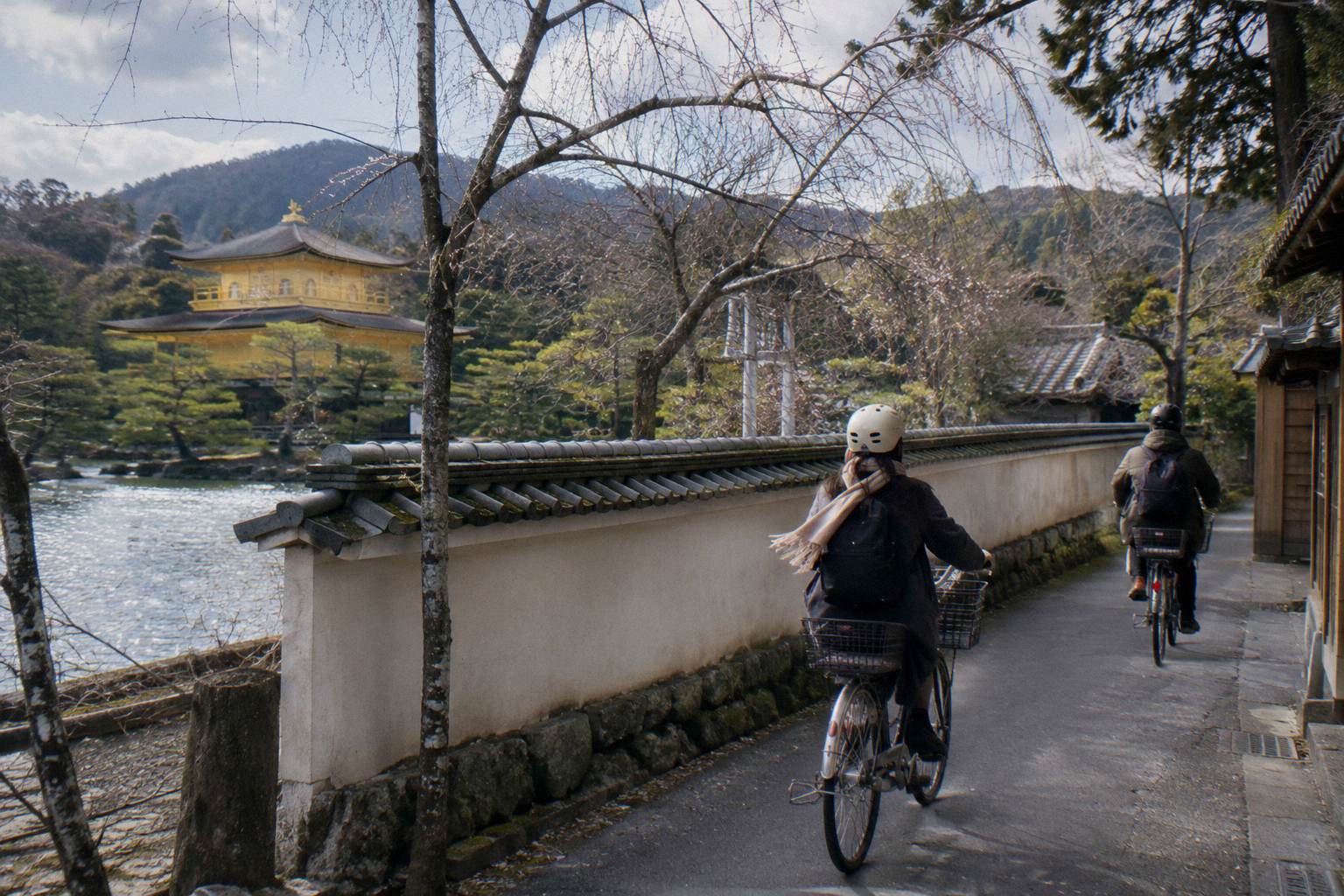
Fourth, the solo temptation. Riding up alone is possible, but the parking, fines and insurance rules above all land on you instead of an operator. If you are still undecided, the e-bike or regular bike guide covers the rider-fit half of the decision; the section above covers the rest. The featured northern Kinkaku-ji ride page shows the full inclusion list, and if the date matters you can check availability while comparing.
A fifth error hides in the weather plan. Booking a 6 hours 30 minutes ride for an August afternoon ignores the 33.7 °C mean daily high, and booking any ride for the heart of early June to mid July without a fallback ignores the rainy season. Free cancellation up to 24 hours before start across all three products is the buffer; the mistake is not using it, holding a date that no longer fits instead of releasing it the day before.
Common Questions About Riding Around Kinkakuji
Can You Reach Kinkakuji On A Guided E-Bike Ride?
Yes. The Northern Ride, Kinkaku-Ji includes the temple's entrance fee and the e-bike rental in a 3 hour 15 minute guided ride, and two longer rides, the 4 hour Hidden Gems and the 6 hours 30 minutes Palace, Castle And Temples, also cover the northern district.
What Does Kinkakuji Cost To Enter And When Is It Open?
Admission is 500 yen general and 300 yen for primary and middle school students, with hours of 9:00 to 17:00 all year, subject to change for exhibitions. On guided rides that name the entrance fee as included, it is already covered.
Which Ride Fits Your Group: Short Northern, Long Northern Or Backstreet Loop?
Filter by age first: the rides start at ages 9, 10 and 12. Then by duration, from 3 hours 15 minutes to a full 6 hours 30 minutes day. All three offer free cancellation up to 24 hours before start.
What Rules Apply On The Road Between The Temple Stops?
The blue-ticket system fines riders aged 16 and over from 3,000 to 12,000 yen for minor violations, with phone use the costliest at 12,000 yen. Helmets are an effort duty for all ages, and Kyoto Prefecture requires bicycle liability insurance.
Which Month Works Best For Riding North To Kinkakuji?
By the climate normals, April, May, October and November balance rain against temperature best. July is wettest at 223.6 mm and August hottest at a 28.5 °C mean, so either extreme month calls for a shorter ride or an early start.
Is Insurance Included On The Northern Kinkakuji Rides?
Not on the two shorter options: the Northern Ride, Kinkaku-Ji states that accident insurance is not included, and the 4 hour Hidden Gems ride lists insurance as excluded. Check your own travel policy before booking, since Kyoto Prefecture requires riders to hold bicycle liability insurance.