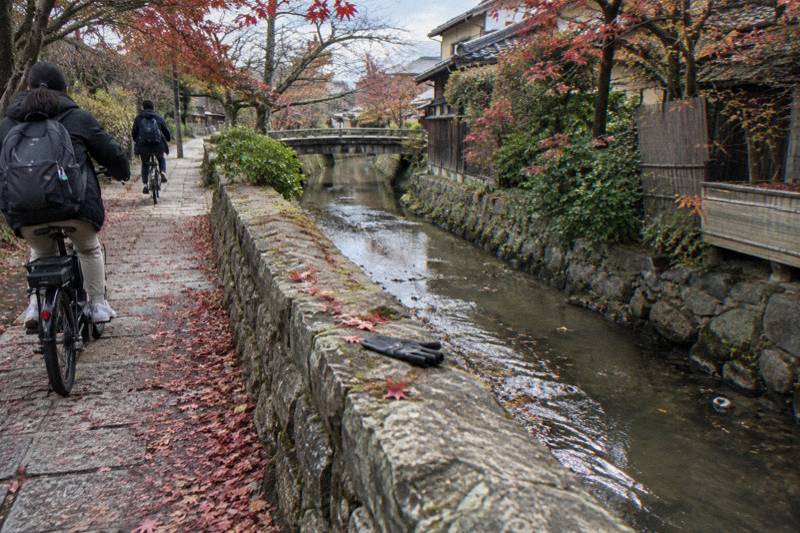
Kamo River Cycling Path: Route, Distance And Rest Stops
The Kamo River corridor links Demachiyanagi in the north with central Kyoto, and several guided e-bike rides cover the district by name. This guide sets out what to decide before booking.
Short answer
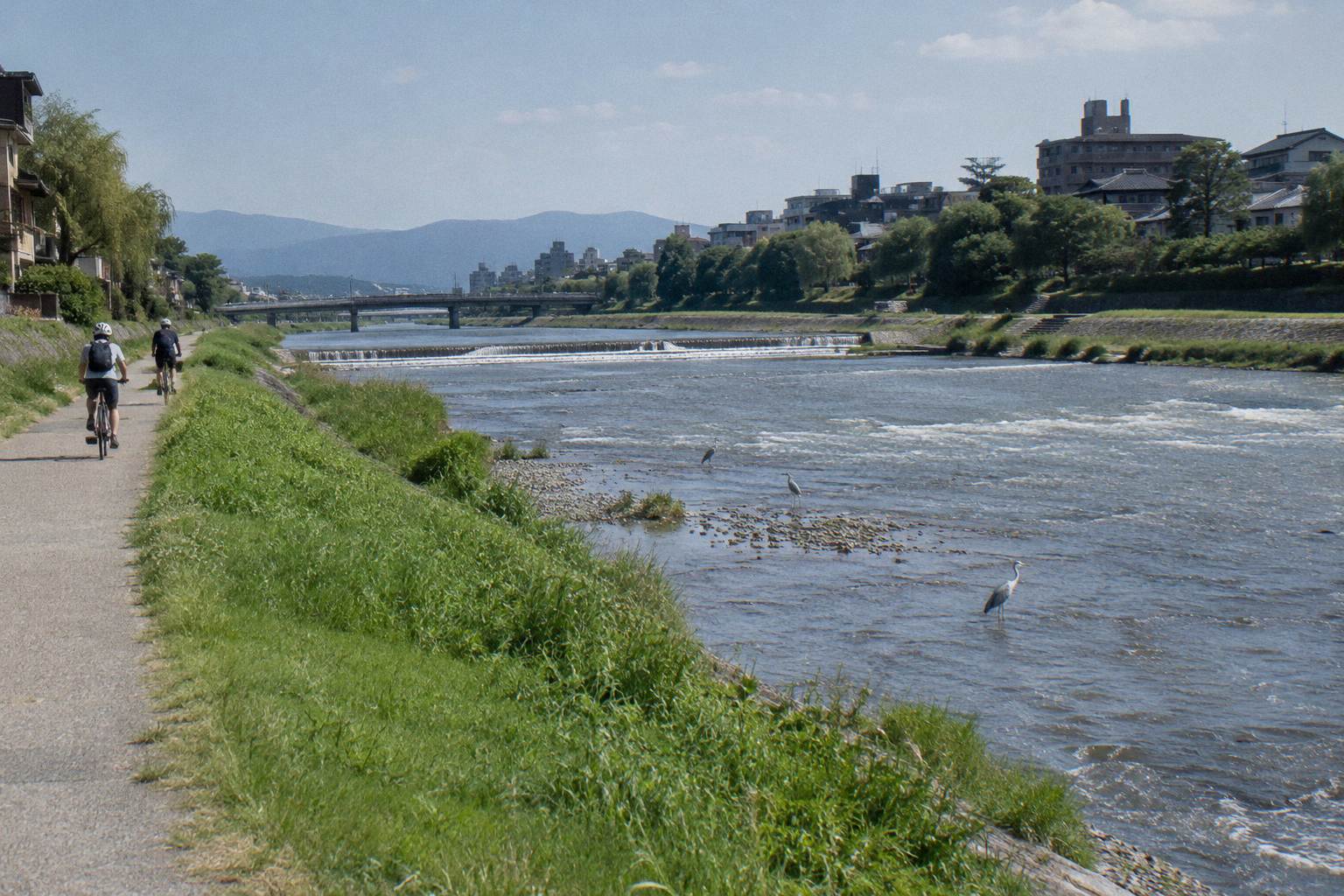
No official cycling route or distance for the Kamo River paths is published, so the practical way to ride the corridor is with a guided product that names the area: the Morning Ride From Station from ¥14,000 per person (3 hours 30 minutes), or the Silver Pavilion, Philosopher's Path ride from ¥14,500 per person (4 hours).
Cycling the Kamo River corridor is one of the most requested rides in Kyoto, and the morning station e-bike ride is the guided product built for it. Rather than guessing at an unsigned route, most visitors book a ride whose itinerary names the district outright, and the decision content below exists to make that choice cleanly.
| Fact | Detail |
|---|---|
| Northern map anchor | Demachiyanagi, where the Kamo and Takano rivers meet |
| Southern map anchor | Kyoto Station |
| Guided option from the station area | Morning Ride From Station, from ¥14,000 per person, 3 hours 30 minutes |
| Guided option to the north-east | Silver Pavilion, Philosopher's Path ride, from ¥14,500 per person, 4 hours |
| Helmet rule | Effort duty for every age since 1 April 2023, no fine |
| Fixed fines | 3,000 to 12,000 yen for riders aged 16 and over since 1 April 2026 |
| Insurance | Bicycle liability insurance required by Kyoto Prefecture ordinance |
| River park entry | Free public riverside space; no official cycling statement exists, so book a guided ride for the corridor |
Can You Cycle Along The Kamo River?
No official statement on bicycle use along the Kamo River paths has been published by Kyoto City or Kyoto Prefecture, so no cycling-allowed or cycling-banned claim can be made for the riverside itself. What can be said firmly: guided e-bike rides that operate in this district exist and are bookable, and the ordinary road rules of Kyoto apply on every public road nearby, including riding on the left and obeying signals.
The corridor matters because it ties the northern end of central Kyoto around Demachiyanagi to the station district in the south, passing the heart of the city. Two roster rides cover this part of town by their own names, and booking one removes the route-finding question entirely. The whether guided or self-guided riding suits Kyoto guide walks through that trade-off in full: a guide handles navigation, parking and the timing of stops, while a self-guided rider takes all three on alone in a city whose signposting assumes local knowledge.
The Morning Ride From Station ("Beat the Crowds: Pro-Curated Morning E-Bike Tour, Kyoto Sta") is the natural fit for the southern end of the corridor. It runs 3 hours 30 minutes from ¥14,000 per person, carries a 5 rating from 20 reviews, sets a minimum age of 13, and includes a helmet, raincoat, water and liability insurance. Because it operates from the Kyoto Station area per the booking page, it suits visitors who want the river corridor handled on the day they arrive or before a train out. The morning slot also aligns with the coolest and quietest part of a Kyoto day, which is the argument the best time of day guide makes in full.
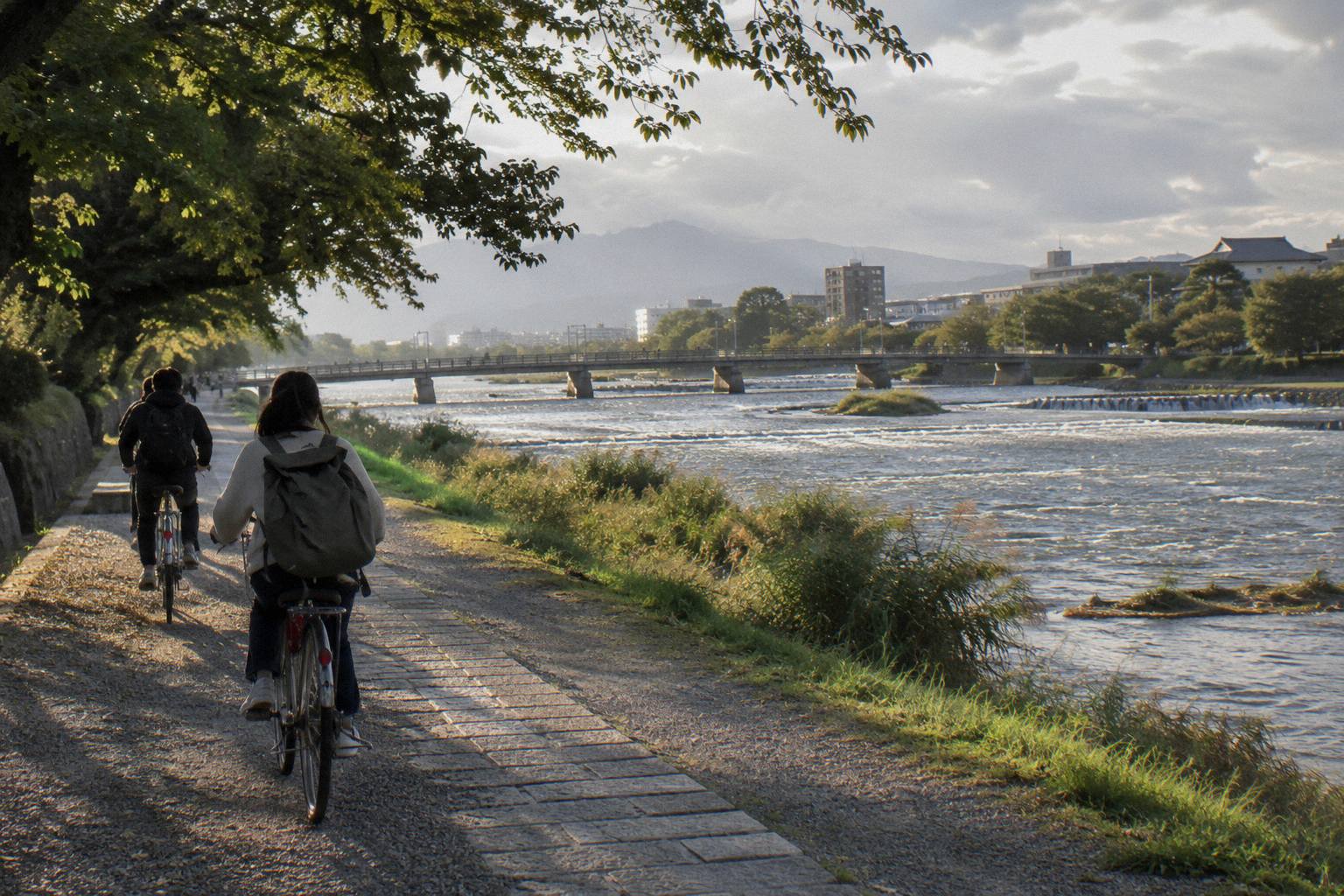
For the northern reaches, the Silver Pavilion, Philosopher's Path ride ("Kyoto E-Bike Tour: The Silver Pavilion & Philosopher's Path") covers the canal-and-river landscape near Demachiyanagi over 4 hours, from ¥14,500 per person, with a 5 rating from 322 reviews and a minimum age of 12. Its route sits close to where the river corridor begins, which makes it the better pick when the plan leans toward temples rather than city-centre riding. The larger review pool on this one, 322 reviews against 20, is worth weighing if review volume matters to your booking confidence.
The inclusions differ in one useful way. The Silver Pavilion ride names landing and facility fees, so its temple stops are paid within the booking, while the Morning Ride names a raincoat, which matters in a city where July alone averages 223.6 mm of rain. Prices vary by date and group, and the booking page shows the price for the date chosen.
Which Guided Rides Cover The Kamo River Corridor?
Three roster rides work for this area. The Morning Ride From Station (from ¥14,000 per person, 3 hours 30 minutes) covers the southern corridor from the station district. The Silver Pavilion, Philosopher's Path ride (from ¥14,500 per person, 4 hours) covers the northern end. The Backstreets, 5 To 6 Hours ride (from ¥15,000 per person) adds central backstreets between the two, and all three include free cancellation up to 24 hours before start.
- Budget Fare, Hidden Alleys¥11,000
- Crowd-Free E-Bike Ride¥13,000
- Higashiyama Heritage Ride¥13,500
- Fushimi Inari, Sento Stop¥13,500
- Morning Ride From Station¥14,000
- Silver Pavilion, Philosopher's Path¥14,500
- Backstreets, 5 To 6 Hours¥15,000
- Palace, Castle And Temples¥16,500
The comparison below sets out what each ride includes so the choice can be made on substance rather than on the itinerary names alone. Every figure comes from the product's own details; nothing is carried across from one ride to another.
| Ride | From price | Duration | Rating | Minimum age | Named inclusions |
|---|---|---|---|---|---|
| Morning Ride From Station | ¥14,000 per person | 3 hours 30 minutes | 5.0 from 20 reviews | 13 | Water, raincoat, helmet, use of bicycle, liability insurance |
| Silver Pavilion, Philosopher's Path | ¥14,500 per person | 4 hours | 5.0 from 322 reviews | 12 | E-bike rental, landing and facility fees, guide |
| Backstreets, 5 To 6 Hours | ¥15,000 per person | 5 hours to 6 hours | 4.9 from 210 reviews | 3 | E-bike for everyone, bottled water, all fees and taxes, helmets |
The Backstreets, 5 To 6 Hours ride ("Kyoto Backstreets and Hidden Gems E-Bike Tour") is the outlier on age: its minimum age of 3 means families with small children can consider it where the other two cannot, though whether a child seat is available is a question for the operator. It is also the longest of the three at 5 hours to 6 hours, which suits a visitor giving most of a day to the ride. Its 4.9 rating from 210 reviews is the second-largest pool in this comparison.
Duration is the real dividing line between the three. The Morning Ride's 3 hours 30 minutes fits a layover or a first day; the Silver Pavilion ride's 4 hours adds the temple end of the corridor; the Backstreets ride's 5 hours to 6 hours swallows most of a daylight day. Working back from dinner plans or a shinkansen departure is the practical way to choose, since no ride prints its own start clock time and the booking page handles scheduling.
Booking in advance matters most in the popular months. The advance-booking question for Kyoto rides has its own answer, but the short version is that same-day slots on the smaller rides are not something to count on. The rides with 20 or 28 review pools are plausibly smaller operations than the ones with hundreds, and smaller operations fill first in April and November.
For a full-day alternative that sweeps five major sites, the full-day e-bike comparison sets out the longer options, including the Full-Day E-Bike, Lunch Included ride from ¥26,000 per person with a 5 rating from 596 reviews and a minimum age of 16.
What Road Rules Apply On A Kamo River Ride?
The standard Kyoto road rules apply on every public road in the corridor: ride on the left, obey signals, stop at stop signs, and never hold a phone while riding. Since 1 April 2026, riders aged 16 and over who commit minor violations pay a fixed fine of 3,000 to 12,000 yen instead of going through criminal procedure, and the fines apply to every rider aged 16 and over.
The fine schedule published by Kyoto City names the common cases. A phone held or watched while riding draws 12,000 yen, the largest fixed amount. Ignoring a signal or riding on the wrong side of the road draws 6,000 yen. Failing to stop at a stop sign draws 5,000 yen, as does riding with an umbrella. Carrying a second rider or riding two abreast draws 3,000 yen. The Kyoto City page on cycling rules carries the full schedule.
| Violation | Fixed fine (yen) |
|---|---|
| Holding or watching a phone while riding | 12,000 |
| Ignoring a signal | 6,000 |
| Riding on the wrong side of the road | 6,000 |
| Failing to stop at a stop sign | 5,000 |
| Riding with an umbrella | 5,000 |
| Carrying a second rider or riding two abreast | 3,000 |
Holding a phone while riding is treated more severely than the fixed fine suggests in some cases: since 1 November 2024 it can mean up to 6 months in prison or a 100,000 yen fine, and causing danger while using a phone can mean up to 1 year or 300,000 yen. Drunk cycling is banned at any level of drinking, and lending a bicycle to a drunk rider carries its own penalty of up to 3 years or 500,000 yen. On a guided ride none of these edges are in play: the guide leads, the route is set, and there is no phone to hold.
Helmets have been an effort duty for cyclists of every age since 1 April 2023, with no fine attached, per the Kyoto Prefecture page on the helmet effort duty. All three rides in the table above name a helmet as included, so a booked rider is covered on that count. The five national bicycle safety rules, including the principle of riding the roadway on the left with the sidewalk as an exception, are summarised in the National Police Agency bicycle safety leaflet.
The full reference, including the sidewalk exception and the e-bike legal standard, sits in the Kyoto road rules for visitors guide. One point worth carrying onto any ride: a pedal-assist e-bike that meets the legal standard is a bicycle in law, which is what every e-bike product on this site uses. The sidewalk question has its own dedicated answer in whether you can ride on the sidewalk in Japan, and the helmet question in the helmet rules post.
Do You Need Insurance To Ride In Kyoto?
Yes, in practice: Kyoto Prefecture requires bicycle liability insurance under its bicycle ordinance, and the prefecture's page names bicycle accident insurance or a personal-liability rider on home, car or accident policies as acceptable. Some guided rides build cover in. The Morning Ride From Station names liability insurance as included, and the Zen Temples lunch ride includes bike insurance with bodily injury liability cover.
The Kyoto Prefecture page on bicycle liability insurance spells out which policies satisfy the requirement. For a visitor without a Japanese policy, this is a real gap, and it is one of the strongest arguments for booking a ride that names insurance in its inclusions rather than arranging a bicycle alone. A travel insurance policy may or may not include personal liability for cycling abroad; checking that before the trip takes minutes and settles the question.
| Ride | Insurance position per its own inclusions |
|---|---|
| Morning Ride From Station | Liability insurance included |
| Zen Temples, Lunch ride | Bike insurance with bodily injury liability included |
| Backstreets, 5 To 6 Hours | All fees and taxes included; ask the operator about cover |
| Hidden Gems, 4 Hours | Insurance named as excluded |
The Zen Temples, Lunch ride ("4.5-Hour Kyoto Bike Tour with Lunch and UNESCO Zen Temples") runs 4 hours 30 minutes from ¥15,000 per person with a 5 rating from 145 reviews and a minimum age of 15, and its lunch at a local Japanese house is a rare inclusion among the roster. The operator can cater for vegetarians when told ahead of booking, though fish stock is used in the kitchen. The Hidden Gems, 4 Hours ride ("Kyoto E-Bike Tour of Hidden Gems Backstreets and Temples") is the counter-example: a 5 rating from 214 reviews over 4 hours with a minimum age of 12, but insurance named as excluded, so a booking there needs a separate policy behind it. For riders weighing insurance carefully, the e-bike rental questions guide covers what a solo renter arranges alone.
Where Can You Stop Along The Way?
The corridor's stops are mostly free riverside space plus a ring of temples at either end with confirmed fees and hours. Ginkaku-ji charges 1,000 yen for adults and opens 8:30 to 17:00 from 1 March to 30 November. The Kyoto Imperial Palace grounds are free to enter. Fushimi Inari Taisha, slightly south-east of the corridor, charges no admission.
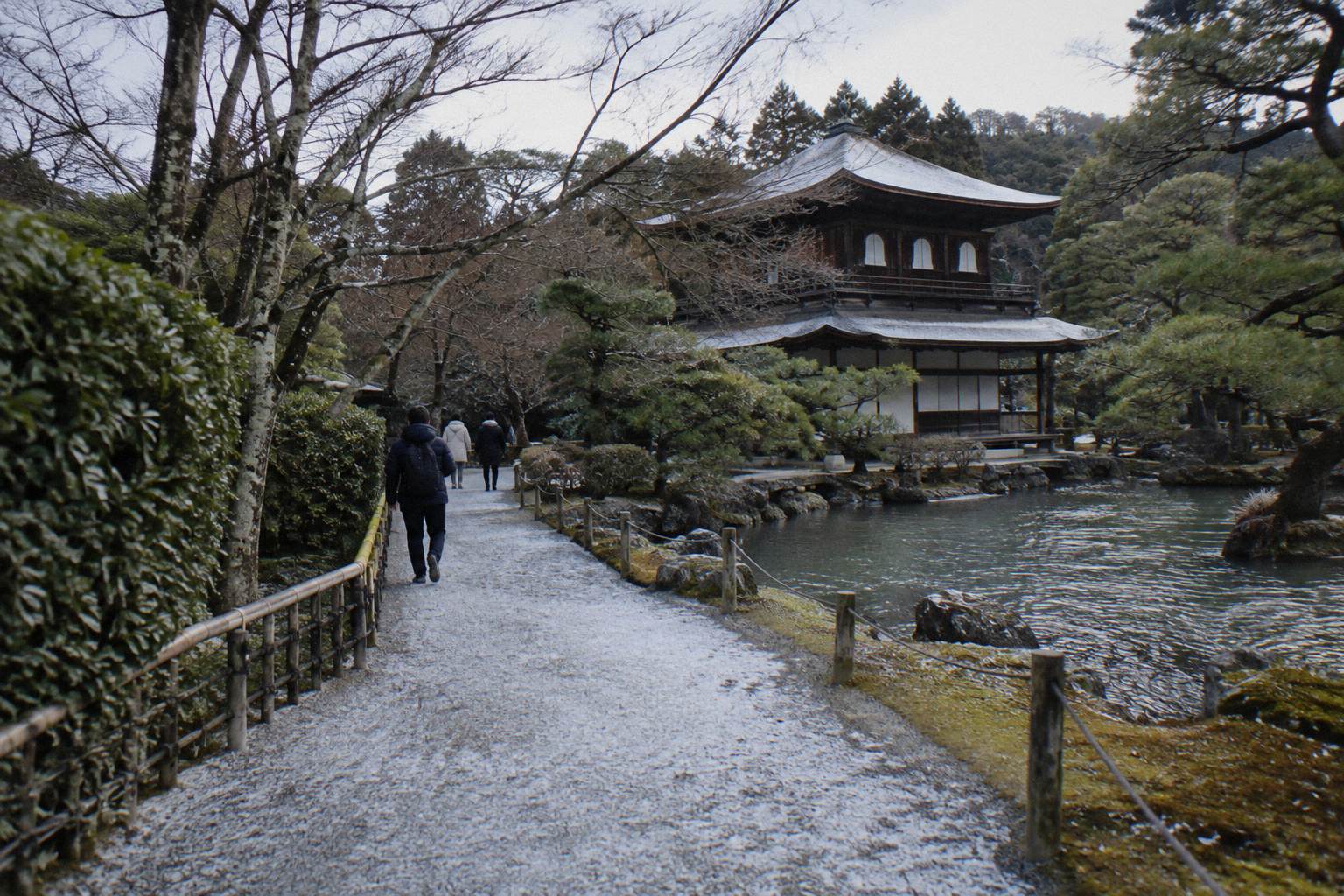
Ginkaku-ji's adult fee doubled from 500 yen to 1,000 yen on 1 April 2026; winter hours from 1 December to the end of February run 9:00 to 16:30, per the Ginkaku-ji official page. The Silver Pavilion ride names its entrance coverage through its landing and facility fees, so a booked rider does not pay at the gate separately. The Higashiyama Heritage Ride also names its Kiyomizu-dera and Ginkaku-ji entrance fees as included, from ¥13,500 per person over 4 hours with a minimum age of 12, though it has only 7 reviews so no rating is claimed here.
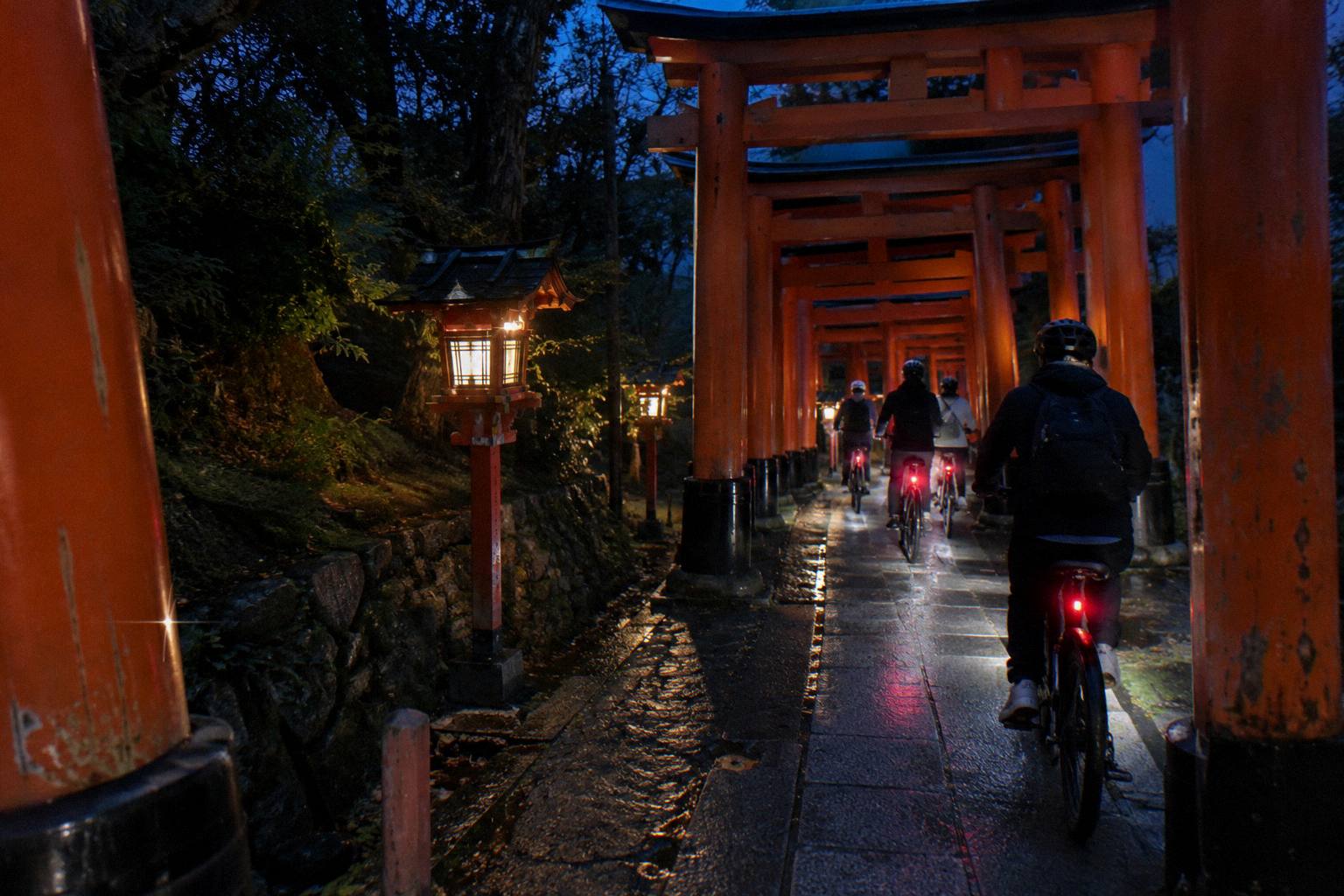
At the southern end, Nijo Castle is the nearest major paid stop with confirmed figures: castle admission from 800 yen general, or castle plus Ninomaru Palace from 1,300 yen, with admission 8:45 to 16:00 and the castle closing at 17:00. The Palace, Castle And Temples ride ("Kyoto E-Bike Tour of Palace, Castle, Temples and Hidden Gems") names all entrance fees and all parking fees as included over 6 hours 30 minutes, from ¥16,500 per person with a minimum age of 10, on new premium Panasonic electric bicycles with a 600 ml bottle of mineral water per rider; it has no reviews yet, so no rating is claimed. Fushimi Inari Taisha has around 10,000 torii gateways along its mountain paths and no admission fee, per the Fushimi Inari Taisha FAQ. Two roster rides work that side of town: the Fushimi Inari, Sento Stop ride from ¥13,500 per person (4 hours, minimum age 1, including a fox-shaped ema, amazake and a towel for the sento) and the Evening Ride, Fushimi Inari over 3 hours with entrance tickets included.
| Stop | Admission | Hours |
|---|---|---|
| Ginkaku-ji | Adult 1,000 yen, child 500 yen | 8:30 to 17:00 (1 Mar to 30 Nov); 9:00 to 16:30 (Dec to Feb) |
| Nijo Castle | From 800 yen; castle plus palace from 1,300 yen | Admission 8:45 to 16:00, closes 17:00 |
| Fushimi Inari Taisha | No fee | No closing time stated by the shrine |
| Kyoto Imperial Palace grounds | Free | No hours printed |
| Riverside Kamo River park | Free | No hours printed |
One more paid stop worth knowing on a northern plan: Tenryu-ji's garden is 500 yen for high school age and older, open 8:30 to 17:00 with last admission at 4:50 pm, and buildings add 300 yen, per the Tenryu-ji visitor page. It sits beyond the corridor in Arashiyama, but several full-day products bridge both districts. The Fushimi Inari by bike route guide covers the shrine side of the plan in full, and the night cycling and evening rides guide covers after-dark options such as the Night Ride By Lantern Light, 3 hours 45 minutes with a 4.9 rating from 53 reviews and all entrance fees included.
When Is The Best Season For A River Ride?
On the 1991 to 2020 normals from the Japan Meteorological Agency, April and October and November are the comfortable windows: April averages 14.4 °C, October 18.4 °C, November 12.5 °C. July is the wettest month at 223.6 mm, and August is the hottest with a mean of 28.5 °C and a daily high of 33.7 °C, so summer rides lean toward the morning products.
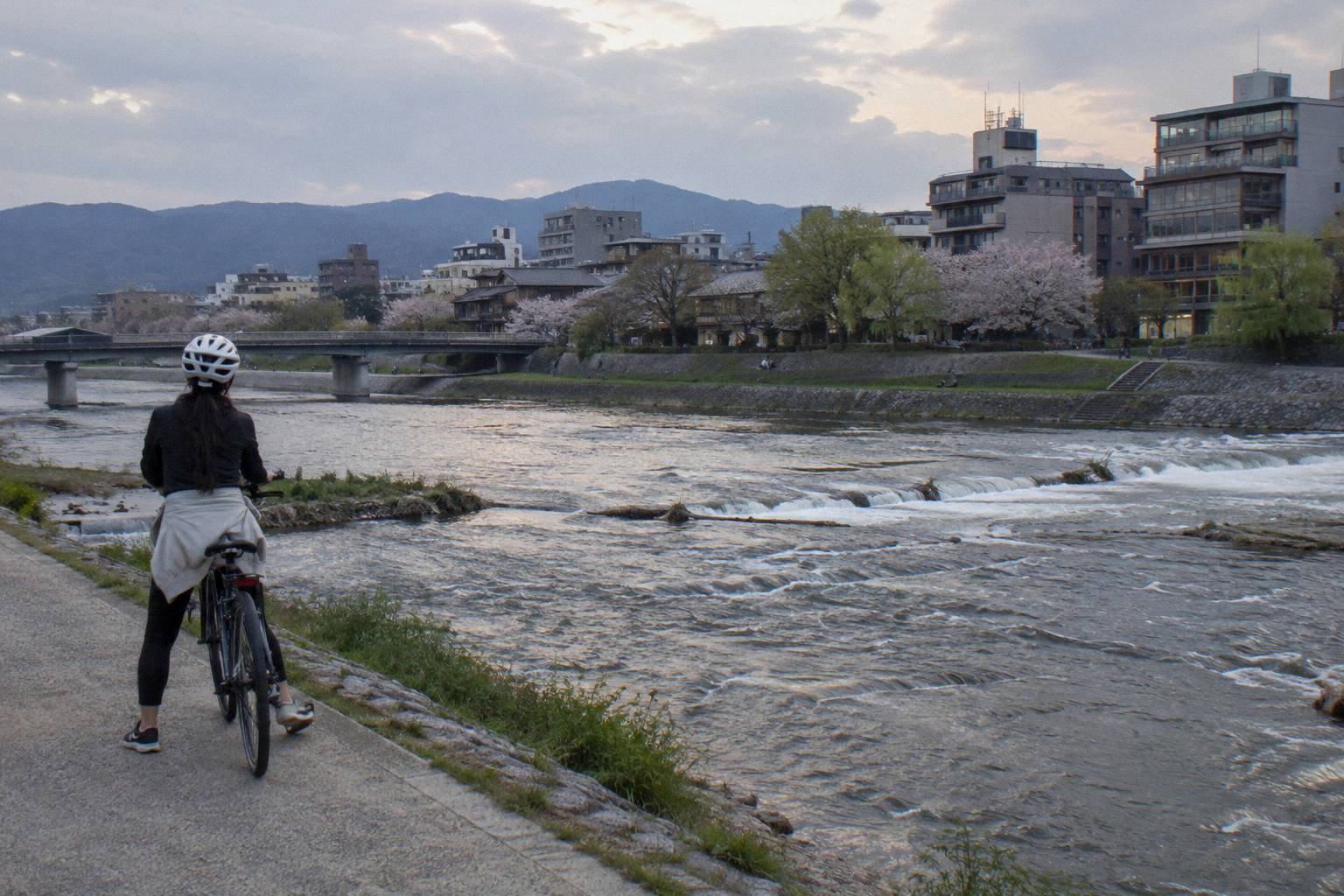
Cherry blossom adds a timing layer. The Kyoto observatory's normal full bloom is 4 April, though 2026 came early with full bloom on 30 March and 2025 late with 5 April; the record range runs from 24 March 2023 to 17 April 1965. Maple colouring's normal date is 5 December, an official marker rather than a district peak, and ginkgo yellowing's normal is 24 November. The Japan Meteorological Agency Kyoto observations publish both series, and the JMA Kyoto monthly normals carry the climate table.
| Month | Rain mm | Mean C | Note for riders |
|---|---|---|---|
| April | 117.0 | 14.4 | Normal full bloom 4 April |
| July | 223.6 | 27.3 | Wettest month; rainy season runs early June to mid July |
| August | 153.8 | 28.5 | Hottest month, daily high 33.7 °C |
| October | 143.2 | 18.4 | Comfortable riding window |
| November | 73.9 | 12.5 | Maple colouring normal 5 December |
Kyoto's record daily maximum is 39.8 °C, set on 19 July 2018 and 8 August 1994, and three of the six hottest days on record fell in 2024, 2025 and 2026. January is the coldest and driest month at a mean of 4.8 °C and 53.3 mm of rain, which makes winter the quiet season with a warm-layer requirement. The summer heat cycling guide and the rainy season cycling guide cover those months in detail, including what the 39.8 °C record means for August planning. For spring, the cherry blossom cycling guide walks through the observatory dates, and for late autumn the autumn leaves cycling guide does the same for the maple markers.
The Crowd-Free E-Bike Ride ("Pedal Adventure Kyoto E-Bike tour : True Kyoto Avoid the crowds") is a 4-hour option from ¥13,000 per person with a 5 rating from 21 reviews, a minimum age of 12, and a guide in English or Japanese, worth a look when the calendar points at a busy month and a shorter ride is wanted.
What Trips People Up Before You Book
The common failures are simple ones: parking a bicycle illegally and paying 3,500 yen to reclaim it, riding without the required liability insurance, holding a phone for navigation and risking a 12,000 yen fine or worse, and booking a ride whose minimum age excludes a family member. Each of these is avoidable with one check before the booking is made.
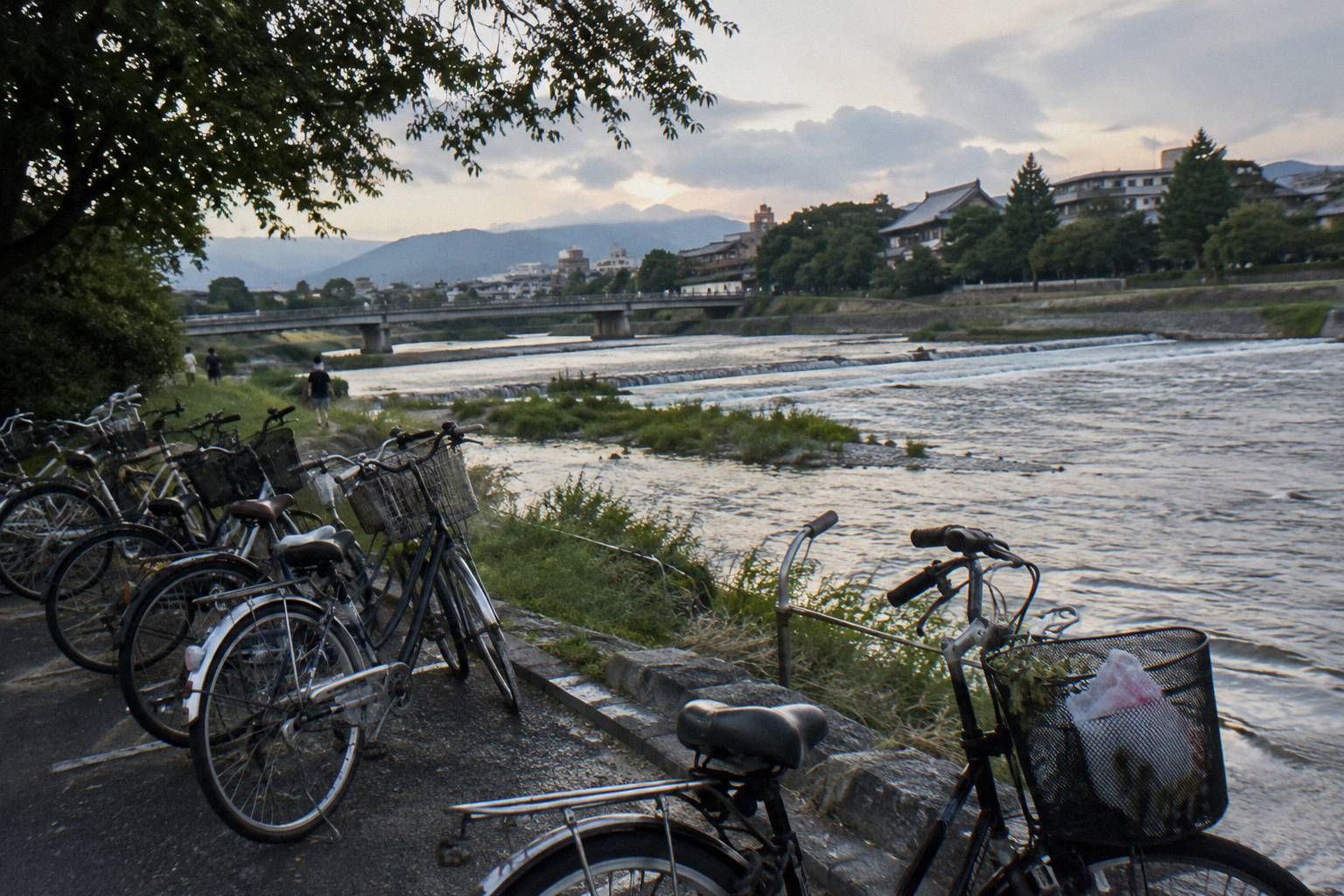
Removed bicycles are held at city depots for four weeks from the day after removal and cost 3,500 yen per bicycle to reclaim, per the Kyoto City page on removed bicycles. The removal strengthening areas cover nearly the whole city, and depots such as Sanjo Senbon open daily noon to 9 pm. On a guided ride the parking question belongs to the operator; the Palace, Castle And Temples ride, for example, names all parking fees as included, and the evening Fushimi Inari ride names bike parking fees as included too. The bike parking guide covers where bicycles can be left in full.
Age limits catch families out. The Morning Ride From Station sets 13, the Silver Pavilion ride 12, the Zen Temples lunch ride 15, while the Backstreets, 5 To 6 Hours ride allows age 3 and the Fushimi Inari, Sento Stop ride allows age 1. Check the age on the exact product before booking for a group; the cycling with kids guide covers the family angle, and the seniors e-bike question covers the other end of the age range.
Insurance is the quieter trap. A rider who arranges a bicycle alone must hold liability cover under the prefectural ordinance, while several roster rides name it as included and at least one names it as excluded. Read the inclusions line on the booking page rather than assuming.
Weather is the third. The rainy season runs early June to mid July, July alone averages 223.6 mm, and what happens to a booking when rain arrives is covered in what happens to a guided ride when it rains. Every ride recommended in this guide carries free cancellation up to 24 hours before start, which leaves the decision open until the evening before. Luggage before a ride is answered in where to leave luggage before a bike ride.
Finally, do not hold a phone for navigation on the move. The fixed fine is 12,000 yen, and the separate November 2024 penalty can reach 6 months in prison. A guided ride removes the need entirely. What to bring and wear is covered in the what to wear cycling guide.
For riders who prefer the privacy of their own group, the private or small group cycling guide compares the formats, including the Private Ride, Snacks Included, 2 hours 30 minutes with a 4.8 rating from 51 reviews, which is a private product with a local drink or snack included and carbon-neutral booking. Private format means the pace and the stops are yours to set, which is the deciding factor for some groups regardless of price.
The river corridor is one part of a wider cycling city, and Kyoto Bike Tours covers the rest of it district by district, from cycling routes across Kyoto to the Higashiyama temples route. If a ride on the corridor sounds right, check the live price for your date on the ride page, since prices vary by date and group.
Common Questions About The Kamo River Ride
Is There An Official Cycling Route Along The Kamo River?
No official statement on bicycle use along the Kamo River paths has been published, and no route or distance is given for the riverside. The practical option is a guided ride that covers the district by name, such as the Morning Ride From Station or the Silver Pavilion, Philosopher's Path ride.
How Far Is It From Demachiyanagi To Kyoto Station?
No distance for the corridor is published in any verified source, and this guide prints none. Demachiyanagi and Kyoto Station serve as map anchors for the northern and southern ends of the district. A guided ride handles the route for you.
Do I Need Insurance To Ride A Bike In Kyoto?
Yes. Kyoto Prefecture requires bicycle liability insurance under its ordinance, and several guided rides name cover in their inclusions, including liability insurance on the Morning Ride From Station. Riders arranging a bicycle alone must hold a qualifying policy themselves.
Which Guided Rides Cover The Kamo River Area?
The Morning Ride From Station (from ¥14,000 per person, 3 hours 30 minutes), the Silver Pavilion, Philosopher's Path ride (from ¥14,500 per person, 4 hours) and the Backstreets, 5 To 6 Hours ride (from ¥15,000 per person) all cover the district by their own names, each with free cancellation up to 24 hours before start.
What Are The Fines For Cycling Violations In Kyoto?
Since 1 April 2026 riders aged 16 and over pay fixed fines of 3,000 to 12,000 yen for minor violations. A phone held while riding draws 12,000 yen, ignoring a signal 6,000, riding with an umbrella 5,000, and riding two abreast or carrying a passenger 3,000.
Do I Have To Wear A Helmet On A Kamo River Ride?
Helmets have been an effort duty for cyclists of every age since 1 April 2023, with no fine attached. Every ride recommended in this guide names a helmet as included, so a booked rider is covered either way.