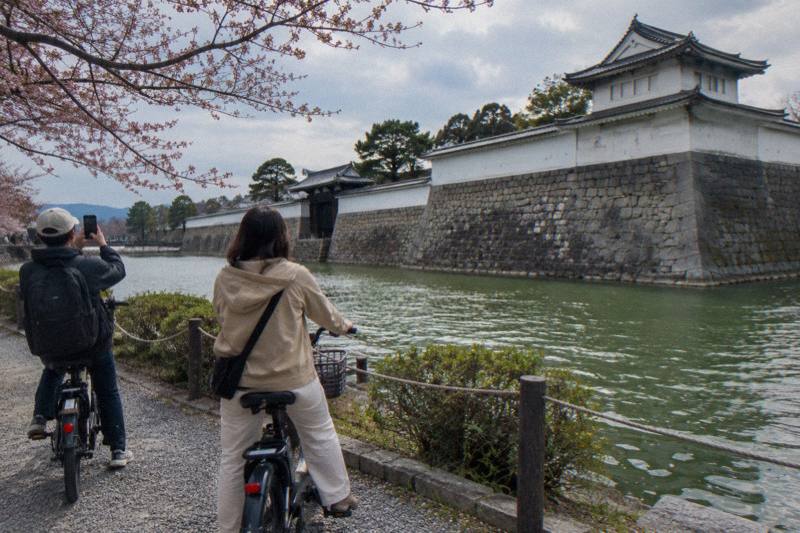
Cycling Kyoto Imperial Palace Park And The Surrounding Streets
A calm northern-central base for a ride: the Imperial Palace is free to enter with no advance application, the surrounding garden is free public access, and several guided e-bike rides pass through on their way to Nijo Castle and beyond.
Short answer
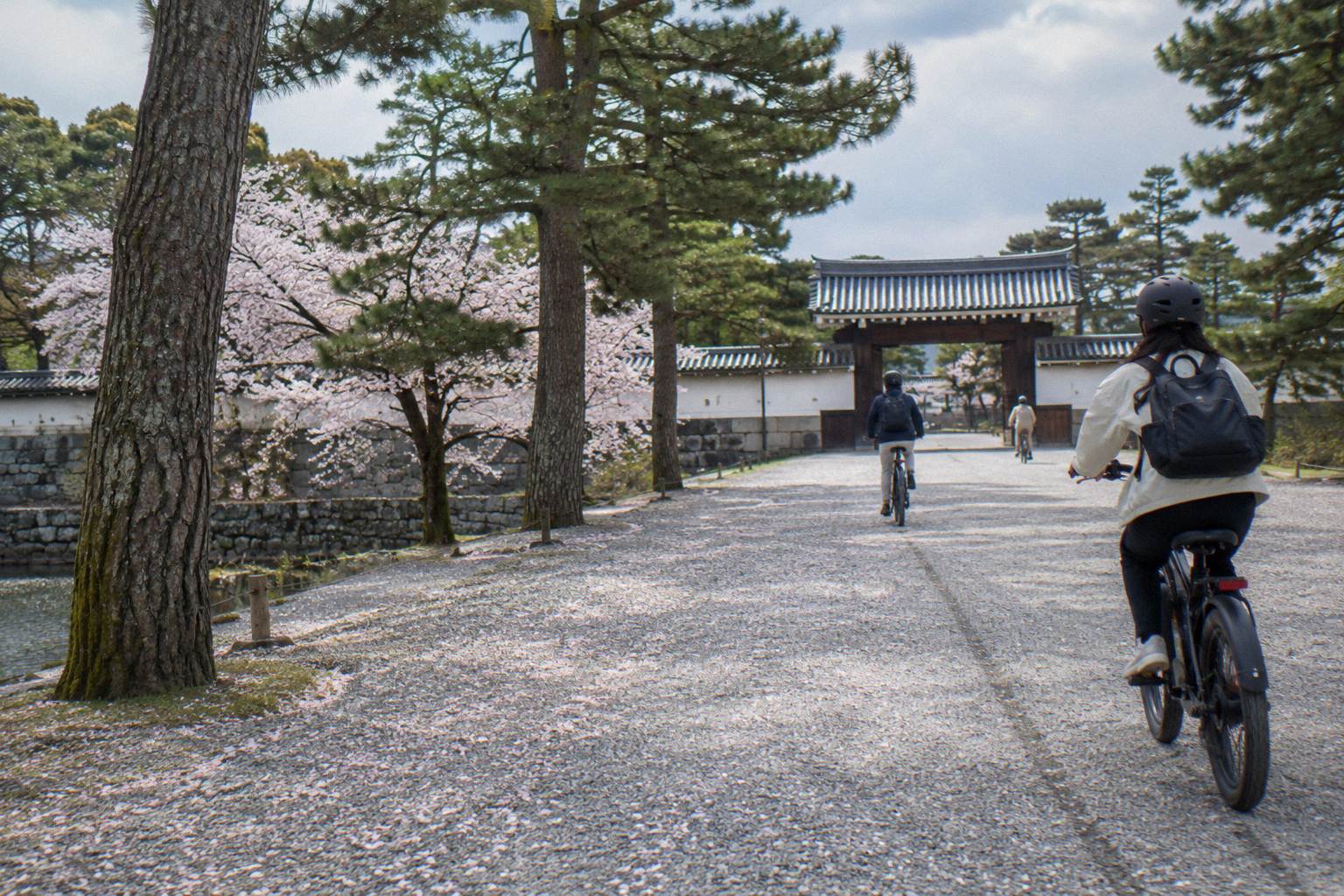
Kyoto Imperial Palace Park is free to enter with no advance application, and Kyoto Gyoen National Garden around it is free public access. Guided e-bike rides that cover this area run from ¥13,000 to ¥16,500 per person and 3 hours 30 minutes to 6 hours 30 minutes, with minimum ages from 10 to 13.
Riders weighing the palace district usually start from the e-bike ride built around the palace and castle, and the pairing makes sense: the Imperial Palace sits in the northern half of central Kyoto, with Kyoto Gyoen wrapped around it and Nijo Castle a short hop southwest.
| Fact | Detail |
|---|---|
| Kyoto Imperial Palace entry | Free, open to all visitors with no advance application |
| Kyoto Gyoen National Garden | Free public access, no closing |
| Nijo Castle admission | From 800 yen general; 400 yen junior high and high school; 300 yen elementary |
| Imperial Palace location | 35.02526, 135.76234 |
| Nijo Castle location | 35.01400, 135.74853 |
| Removed bicycle reclaim fee | 3,500 yen per bicycle, held 4 weeks |
| Helmet rule | Effort duty for every age since 1 April 2023, no fine |
| Fixed fines for riders 16 and over | 3,000 to 12,000 yen since 1 April 2026 |
Is The Imperial Palace Park Area Good For A Cycling Stop?
Yes, as a midpoint rather than a destination ride. The Imperial Palace grounds and Kyoto Gyoen together form one of the largest open stretches in central Kyoto, entry is free with no paperwork, and the district links naturally to Nijo Castle, the Kamogawa riverfront and the northern backstreets. Guided e-bike rides use it as one stop among several, with durations from 3 hours 30 minutes to 6 hours 30 minutes.
The practical appeal is cost and friction. Nothing about visiting the palace requires a ticket, a reservation window or a fee, and the garden around it is free public access with no closing. For a rider building a day around several stops, that means the palace district can absorb as much or as little time as the rest of the schedule allows, without a booking to keep.
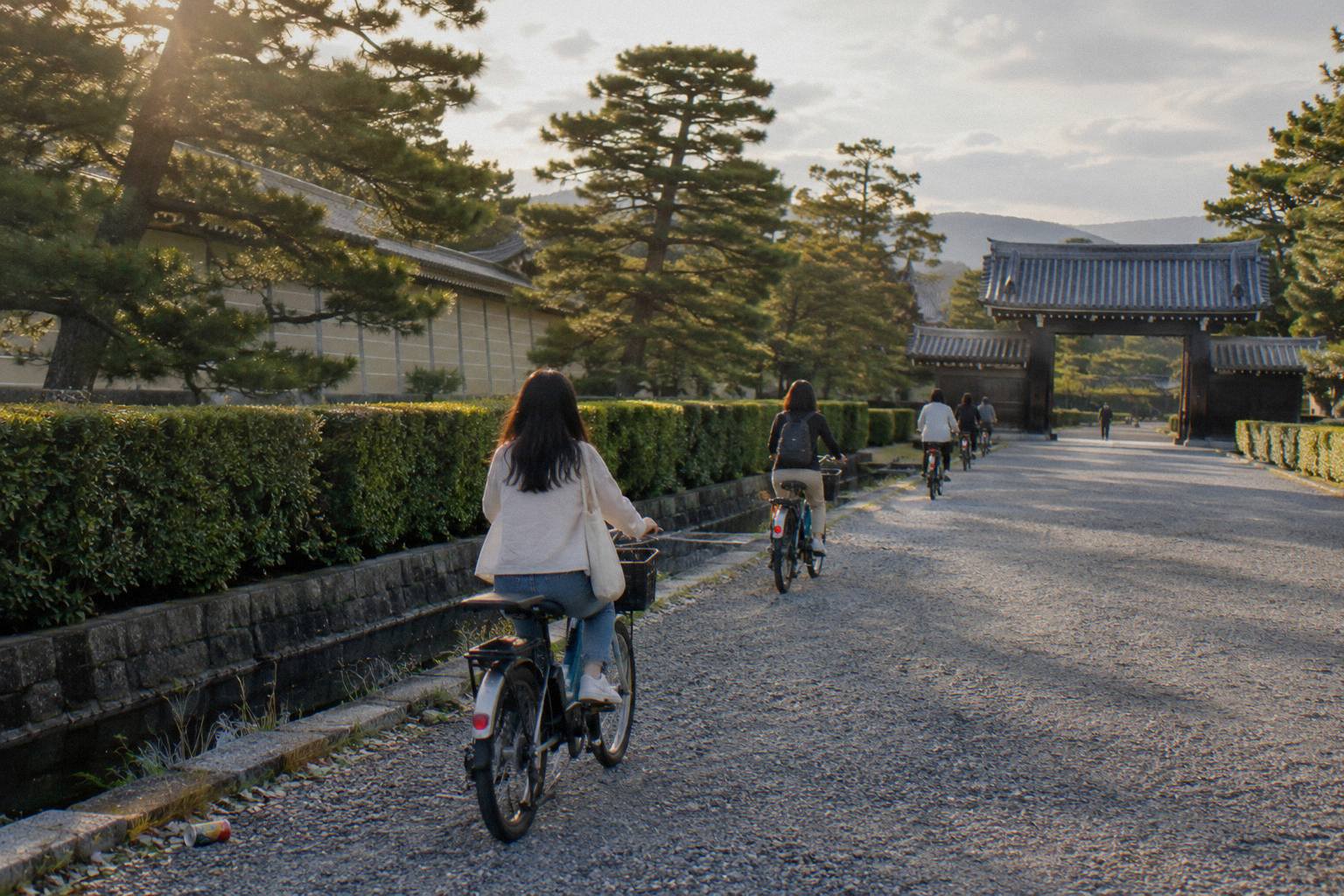
The geographic argument matters too. The palace sits at 35.02526, 135.76234, north of the main hotel districts and roughly level with Demachiyanagi to the east. Nijo Castle sits southwest at 35.01400, 135.74853, close enough that several guided rides pair the two in a single itinerary rather than treating them as separate outings. Riders who want the pairing without planning it themselves can look at the Palace, Castle And Temples ride, which is built around exactly that combination.
One thing worth settling early: whether to ride this area with a guide or alone. A guide removes the route-finding and the parking decisions, which in this district are not trivial given Kyoto City's removal enforcement. The trade-offs are laid out in the guided versus self-guided cycling comparison, and the answer mostly depends on how many stops you want to chain together in one day.
What Does It Cost To Visit The Palace And Garden?
Nothing at the gate. Entry to the Kyoto Imperial Palace is free and open to all visitors with no advance application, and Kyoto Gyoen National Garden is free public access with no closing. The costs that do exist in this district belong to the castle rather than the palace: Nijo Castle admission runs from 800 yen for general visitors, with reduced rates for students.
This is unusual for Kyoto. The temple stops that dominate most itineraries charge entry: Tenryu-ji's garden is 500 yen, Kinkaku-ji is 500 yen, and Ginkaku-ji doubled to 1,000 yen on 1 April 2026. Against that backdrop, a palace-and-garden stop is the cheapest sightseeing in the city, which is part of why guided rides slot it in alongside paid stops rather than instead of them.
| Stop | Admission | Notes |
|---|---|---|
| Kyoto Imperial Palace | Free | Open to all visitors, no advance application |
| Kyoto Gyoen National Garden | Free | Public access, no closing |
| Nijo Castle | From 800 yen general, 400 yen junior high and high school, 300 yen elementary | Castle plus Ninomaru Palace combination priced separately |
For budgeting purposes, then, the palace district adds time rather than money to a ride day. The meaningful spend is the ride itself. Guided e-bike options that cover this area start at from ¥13,000 per person for a 4-hour outing and run to from ¥16,500 per person for a 6 hour 30 minute itinerary with every entrance fee included, so a longer ride can actually cost less at the gate than a shorter one that leaves admissions to you.
Prices vary by date and group, and the booking page shows the price for the date you choose. If the palace district is the anchor of your day, these three rides are the ones built around it:
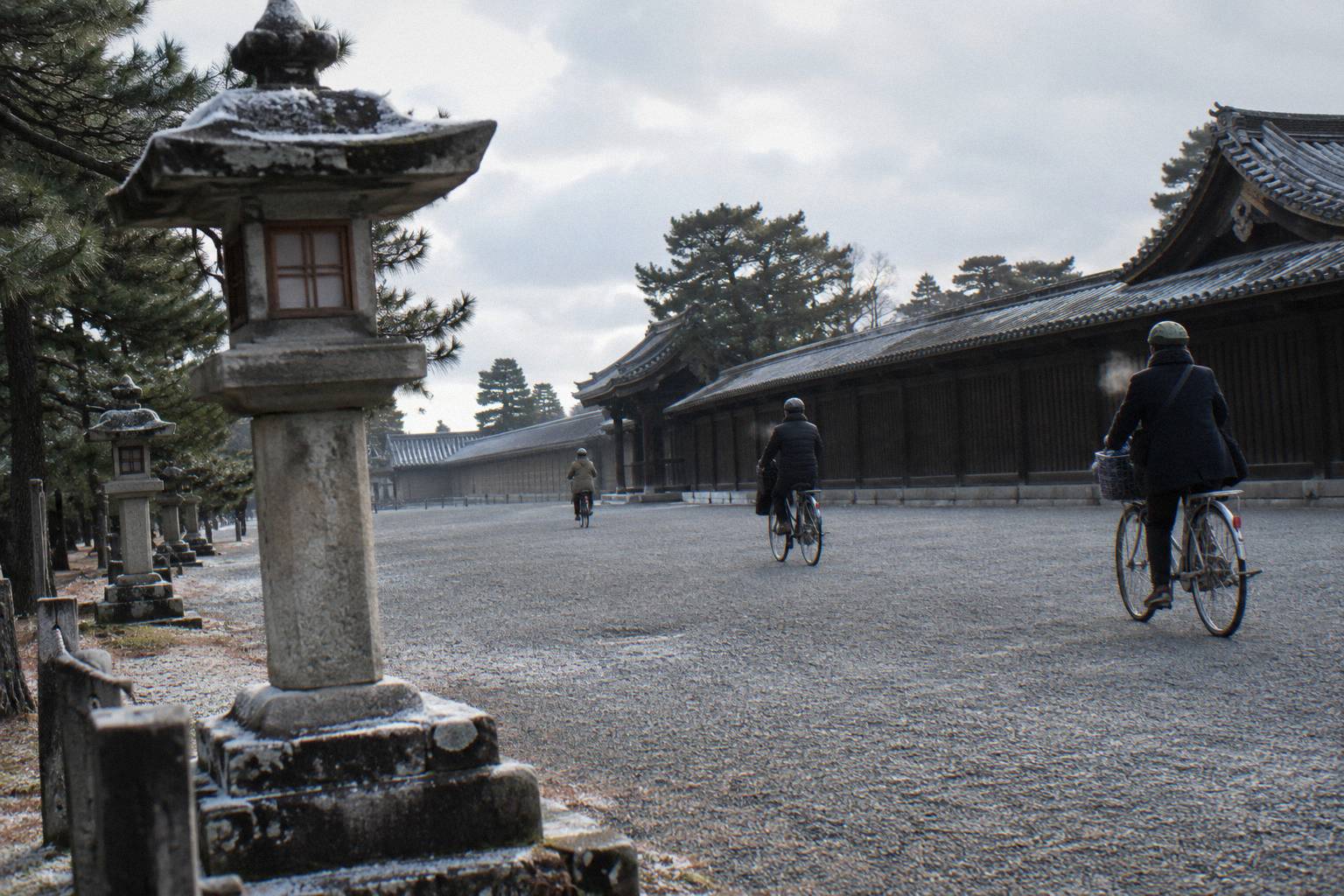
Free entry does not mean the stop is quick. The palace grounds and the surrounding garden together are a large footprint, and riders who plan a photo stop and a loop should treat it as a proper segment of the day rather than a drive-by. Guided itineraries reflect this: the ones that include the district tend to be the longer options on the calendar, not the shortest.
Which Guided Rides Cover The Palace District?
Three stand out. The full-day Palace, Castle And Temples ride runs 6 hours 30 minutes from ¥16,500 per person with all entrance and parking fees included. The Morning Ride From Station covers the area in 3 hours 30 minutes from ¥14,000 per person, rated 5.0 from 20 reviews. The Crowd-Free E-Bike Ride runs 4 hours from ¥13,000 per person, rated 5.0 from 21 reviews.
The first is "Kyoto E-Bike Tour of Palace, Castle, Temples and Hidden Gems", operated by Kyoto Heritage e-Bike Tours. It includes all entrance fees, all parking fees, a bilingual guide in English and Japanese, a new premium Panasonic electric bicycle and helmet for each participant, and one 600 ml bottle of mineral water per rider. Lunch is not included; instead the ride takes a flexible lunch break. Minimum age is 10. It has no review history to speak of yet, so judge it on its itinerary and inclusions rather than a rating.
- Budget Fare, Hidden Alleys¥11,000
- Crowd-Free E-Bike Ride¥13,000
- Higashiyama Heritage Ride¥13,500
- Fushimi Inari, Sento Stop¥13,500
- Morning Ride From Station¥14,000
- Silver Pavilion, Philosopher's Path¥14,500
- Backstreets, 5 To 6 Hours¥15,000
- Palace, Castle And Temples¥16,500
The second is "Beat the Crowds: Pro-Curated Morning E-Bike Tour, Kyoto Sta", a morning-format ride that starts from the station area and works north. Water, a raincoat, a helmet and liability insurance are included; snacks are excluded. Minimum age is 13, and free cancellation applies up to 24 hours before start.
The third, "Pedal Adventure Kyoto E-Bike tour : True Kyoto Avoid the crowds", is the shortest of the three at 4 hours and the lowest from-price at from ¥13,000 per person. It includes bottled water, a helmet, use of the bicycle and an in-person guide in English or Japanese, with a minimum age of 12. The operator asks that any allergies or dietary requirements be flagged ahead of booking.
Ready To Hand The Planning Over?
Free cancellation up to 24 hours before start applies to all three rides, so you can lock a date now and adjust later if your plans shift.
Between the three, the decision comes down to how much of the day you want to spend riding. The 6 hour 30 minute option is the only one that folds the palace district into a full castle-and-temple itinerary with fees handled; the two shorter rides suit riders who want the area covered before or around the rest of their day. Whichever you choose, checking the calendar early matters more in spring and autumn, a point covered in whether you need to book a cycling ride in advance.
How Does Nijo Castle Fit Into A Palace Ride?
It sits southwest of the palace at 35.01400, 135.74853, close enough that the two work as one itinerary, and it is where the admission costs of the day appear. Castle admission runs from 800 yen for general visitors, 400 yen for junior high and high school students and 300 yen for elementary students, with a higher combined ticket for the castle plus Ninomaru Palace.
The castle is the natural paid companion to the free palace stop. Where the Imperial Palace costs nothing and needs no application, Nijo Castle charges at the gate, which is exactly why riders who want both tend to prefer a guided ride with entrance fees included rather than assembling the pair independently. The Palace, Castle And Temples ride names all entrance fees as included, so the castle fee is absorbed into the from ¥16,500 per person price rather than paid on arrival.
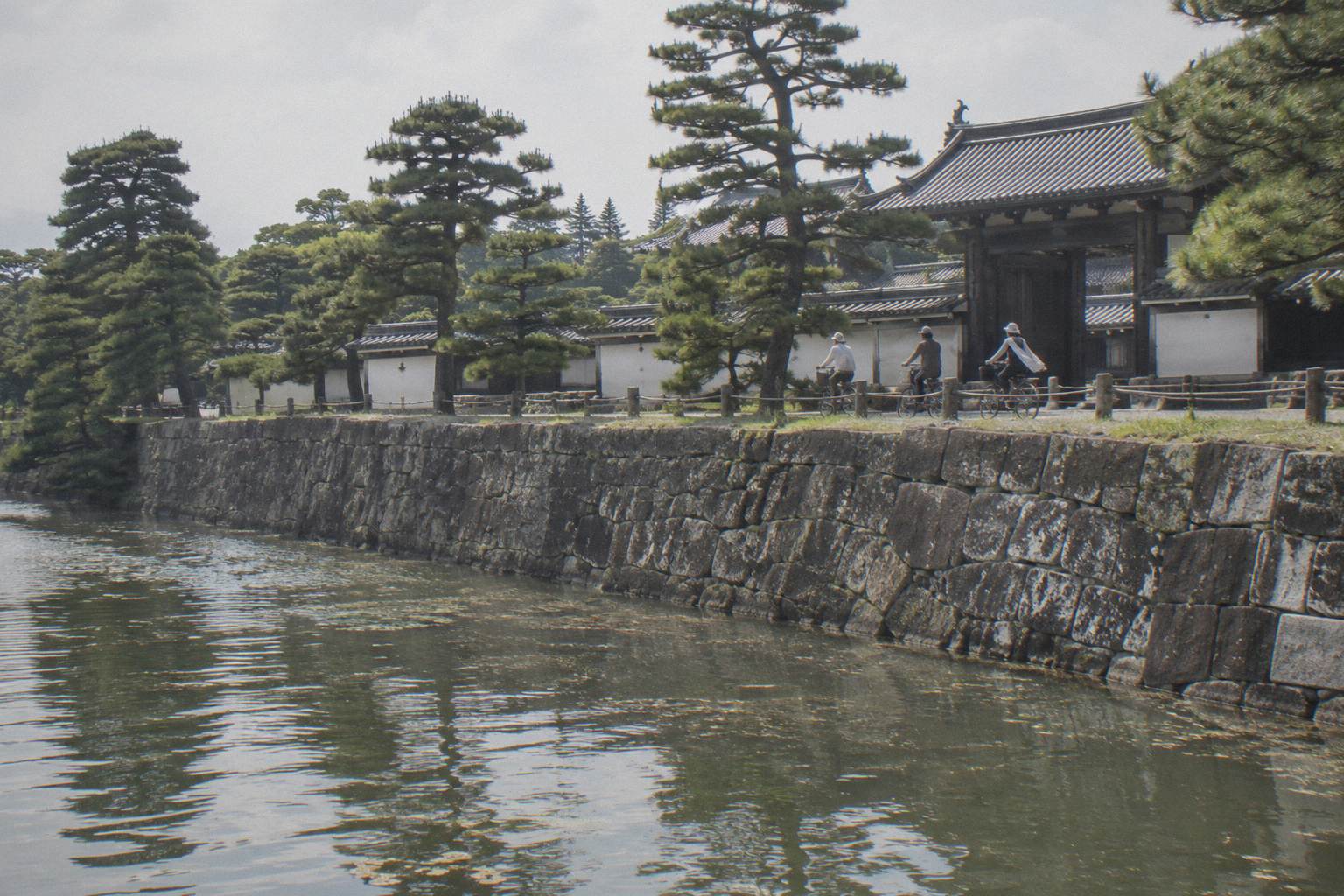
For riders going independently, the pairing is straightforward to sequence: the palace and garden first, since they are free and unhurried, then the castle, since it charges and has set admission hours ending in the late afternoon. The gap between the two coordinates crosses central northern Kyoto, so the ride between them passes through ordinary streets rather than parkland, which is where the traffic rules in the next sections start to matter.
The morning-format ride is the alternative for riders who want the castle-and-palace territory covered before midday. "Beat the Crowds: Pro-Curated Morning E-Bike Tour, Kyoto Sta" runs 3 hours 30 minutes at from ¥14,000 per person with a minimum age of 13, and its inclusion of liability insurance matters for anyone riding without their own cover. See dates and the price for your date on the booking page, or Check availability.
E-Bike Or Regular Bike Around The Palace District?
Every ride that covers this area uses electric assist, and the roster of palace-area rides reflects that: the Palace, Castle And Temples ride issues a premium Panasonic electric bicycle to each participant, the Morning Ride From Station and the Crowd-Free E-Bike Ride are both e-bike formats, and durations of 3 hours 30 minutes to 6 hours 30 minutes assume the assist. Regular pedal bikes appear mainly on shorter rides elsewhere in the city.
The rider-fit question deserves real thought rather than reflex. Electric assist changes how much riding a day can hold: a 6 hour 30 minute itinerary is a different proposition on assist than without it, and the longer palace-area rides are priced and scheduled on that basis. The full decision framework, including who benefits most, is in the e-bike versus regular bike comparison.
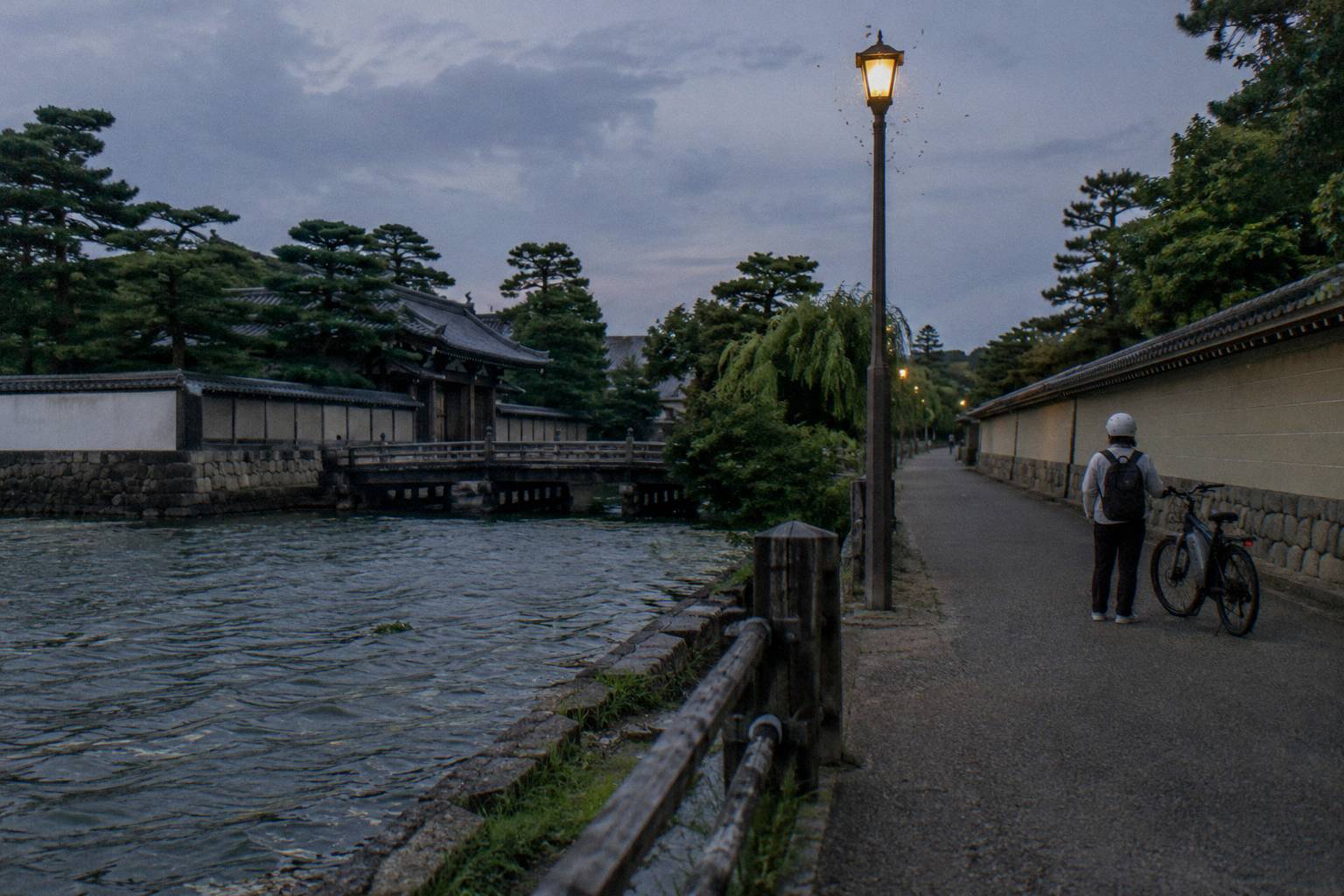
Legally, the assist matters less than riders might expect. A pedal-assist e-bike that meets the legal standard is classed as a bicycle in Japan, and the same road rules apply to it as to any other bike; a vehicle with a throttle or outside the standard would be treated as a motorised bicycle instead, which no tour operator uses. Every e-bike on the rides above falls inside the bicycle category, per the Kyoto City page on cycling rules.
For riders who prefer the shortest commitment in this district, "Pedal Adventure Kyoto E-Bike tour : True Kyoto Avoid the crowds" is the 4-hour option at from ¥13,000 per person, rated 5.0 from 21 reviews, minimum age 12. Its dietary-requirements note is worth reading before booking if anyone in your group has allergies. More on the fitness side of the question is in how fit you need to be for an e-bike ride.
When Is The Best Season To Ride This Area?
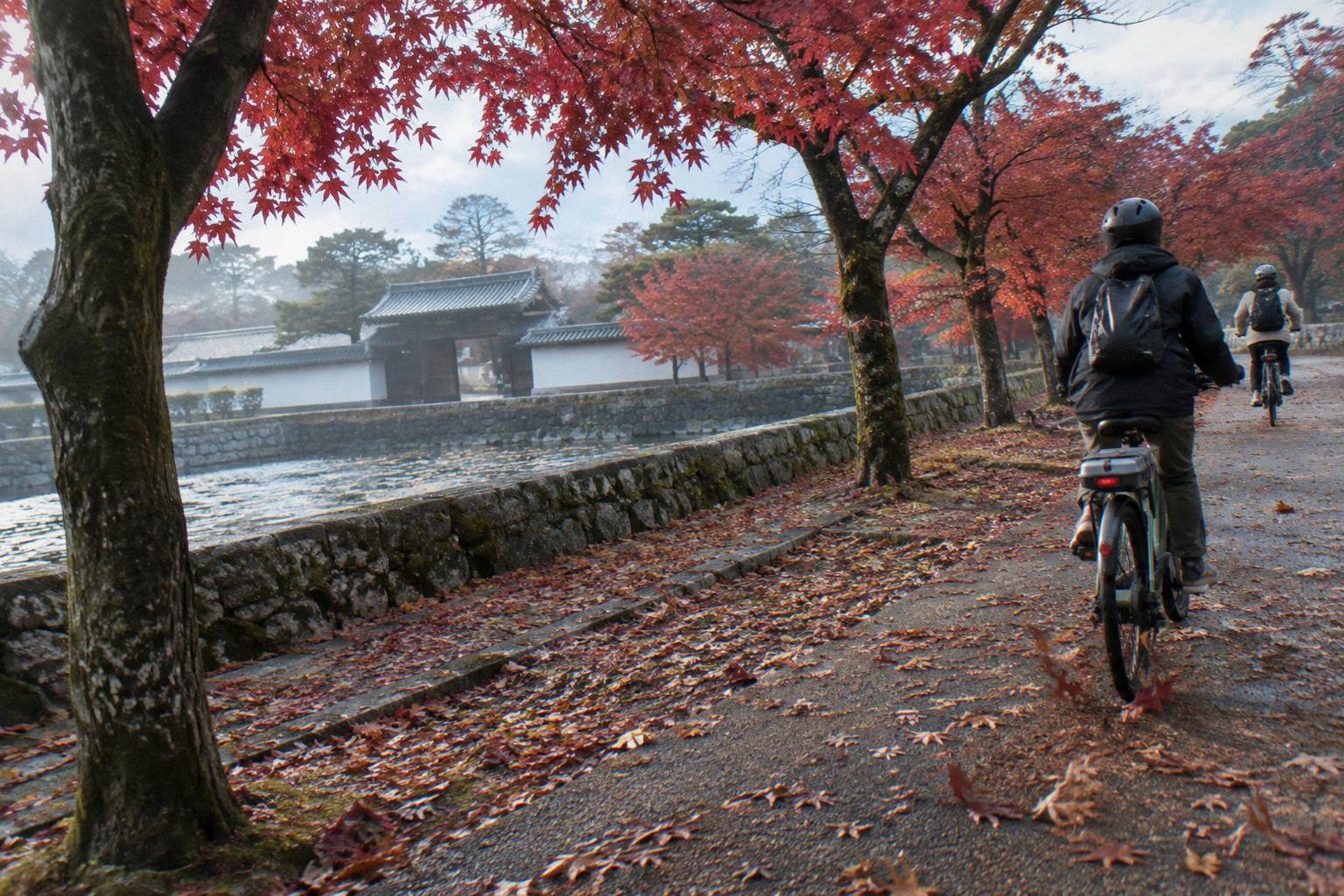
For comfort, spring and late autumn. Kyoto's cherry blossom normally reaches full bloom on 4 April at the city observatory (30 March in 2026), and maple colouring normally arrives on 5 December. July is the wettest month at 223.6 mm of rain, and August is the hottest with a mean of 28.5 °C and a daily high of 33.7 °C, so midsummer rides lean toward morning formats.
The numbers come from the Japan Meteorological Agency Kyoto monthly normals, the 1991 to 2020 averages for the city station. Winter riding is dry but cold, with January averaging 4.8 °C. The shoulder months of April, May, October and November combine moderate temperatures with the city's two spectacle seasons, which is also when guided rides fill first.
| Month | Mean rain (mm) | Mean temperature (C) | What it means for a ride |
|---|---|---|---|
| April | 117.0 | 14.4 | Blossom season, mild riding, book early |
| July | 223.6 | 27.3 | Wettest month, raincoat and cancellation terms matter |
| August | 153.8 | 28.5 | Hottest month, daily high 33.7, morning rides |
| October | 143.2 | 18.4 | Comfortable shoulder riding |
| November | 73.9 | 12.5 | Driest shoulder month, maple season |
Bloom and leaf dates are the observatory's long-term normals, not promises for any given year; the record spread for full bloom runs from 24 March in 2023 to 17 April in 1965, per the Japan Meteorological Agency Kyoto observations. Weather, bloom timing and crowds decide what any single day delivers, and the operator decides what runs. Free cancellation up to 24 hours before start gives you room to move a booking if the forecast turns.
The rainy season runs roughly early June to mid July, overlapping with the wettest month. Riders booking in that window should look at the cancellation terms and at rides that include a raincoat, as the Morning Ride From Station does. Season-by-season planning is covered in the cherry blossom cycling guide and the autumn leaves cycling guide.
The record spread for full bloom, 24 days between the earliest and latest dates on the books, is a useful caution for anyone locking in a trip around the blossoms. A booking aimed at the 4 April normal can still land a week or more either side of peak colour, so the free cancellation window up to 24 hours before start is worth treating as part of the plan rather than a footnote. The maple season carries the same caveat: 5 December is a normal, not a schedule.
The rainfall table also shows how differently the two spectacle seasons behave. November, at 73.9 mm, is the driest shoulder month of the five listed, which suits longer loops around the park. April takes 117.0 mm, so a blossom-season ride has a real chance of wet pavement even when temperatures sit at a pleasant 14.4 °C mean. Packing a light rain layer in spring costs little and matches what the cancellation terms are there to cover.
Which Rules Apply To Riders Aged 16 And Over?
Since 1 April 2026, minor cycling violations by riders aged 16 and over are punished with a fixed fine instead of criminal procedure, running from 3,000 to 12,000 yen. Holding a phone while riding costs 12,000 yen, ignoring a signal 6,000, riding on the wrong side 6,000, failing to stop at a stop sign 5,000, riding with an umbrella 5,000, and riding two abreast or carrying a passenger 3,000.
The system is known as the blue ticket, and it applies to every rider aged 16 and over. The fine schedule is published on the Kyoto City cycling rules page, which also covers the harsher phone penalties in force since 1 November 2024: holding a phone to talk or watch the screen can mean up to 6 months in prison or a 100,000 yen fine, even without the fixed-fine schedule.
| Violation | Consequence |
|---|---|
| Phone held or watched while riding | 12,000 yen fixed fine; up to 6 months or 100,000 yen since 1 November 2024 |
| Ignoring a signal | 6,000 yen |
| Riding on the wrong side of the road | 6,000 yen |
| Failing to stop at a stop sign | 5,000 yen |
| Riding with an umbrella | 5,000 yen |
| Two abreast or carrying a second rider | 3,000 yen |
| Cycling after drinking | Banned at any level; up to 3 years or 500,000 yen |
Three further obligations apply. Helmets have been an effort duty for cyclists of every age since 1 April 2023, with no fine attached, per the Kyoto Prefecture helmet page. Kyoto Prefecture requires bicycle liability insurance, which a rider on a home, car or accident policy can satisfy. And illegally parked bicycles are removed: reclaiming one costs 3,500 yen and storage runs 4 weeks from the day after removal, per the Kyoto City page on removed bicycles. All of the guided rides above include helmets and handle parking, which quietly removes most of this list from your day. The full reference is the Kyoto cycling rules guide.
What Trips People Up Before You Book
The recurring mistakes are assuming the palace needs a reservation, underestimating how much of the day the longer rides take, skipping the insurance question, and leaving the booking late in the April and November windows. None of these is expensive to avoid, and each is settled in a few minutes of planning before you pay anything.
The first is the palace itself. Years ago, entry required a permit; today it is open to all visitors with no advance application and free. Riders who still build their plans around the old system waste time on paperwork that no longer exists, or skip the palace entirely believing it is closed to them.
The second is duration arithmetic. A 6 hour 30 minute ride consumes most of a daylight day, and the two shorter options at 3 hours 30 minutes and 4 hours still eat a morning or an afternoon once you add getting to and from the start. Match the ride length to the rest of your day before you book, not after.
The third is the lunch question. The Palace, Castle And Temples ride builds in a flexible lunch break but does not include the meal; riders who assume food is covered come up short mid-ride. The "4.5-Hour Kyoto Bike Tour with Lunch and UNESCO Zen Temples" from MagicalTrip Inc., from ¥15,000 per person and rated 5.0 from 145 reviews, is the alternative for anyone who wants the meal handled, though it sits in a different part of the city.
The fourth is timing the booking. Spring and autumn dates on the palace-area rides go first, and while free cancellation up to 24 hours before start protects a change of plans, it does not create availability on a sold-out morning. Booking ahead and adjusting later beats waiting, per the best time of day for cycling Kyoto.
Whichever way you decide, the palace district remains the least expensive stop on any Kyoto cycling day. The rides that cover it differ mainly in how many hours they give you and how much of the day they own, so pick the duration that fits and let the free palace and garden carry the rest. More area-by-area planning lives at Kyoto Bike Tours, including the wider Kyoto cycling routes overview.
Common Questions About Riding The Palace District
Is Kyoto Imperial Palace Free To Enter?
Yes. The Kyoto Imperial Palace is open to all visitors with no advance application, and entry is free. The surrounding Kyoto Gyoen National Garden is also free public access with no closing.
Do Guided Bike Rides Include The Imperial Palace?
Several do. "Kyoto E-Bike Tour of Palace, Castle, Temples and Hidden Gems" builds the district into a 6 hour 30 minute itinerary from ¥16,500 per person, and shorter morning and 4-hour e-bike rides also cover the area.
How Far Is Nijo Castle From The Imperial Palace?
The two sit in the same northern-central part of Kyoto: the palace at 35.02526, 135.76234 and the castle at 35.01400, 135.74853. Guided rides commonly pair them in a single itinerary, with castle admission from 800 yen for general visitors.
Do I Need A Helmet To Cycle In Kyoto?
Helmets have been an effort duty for cyclists of every age since 1 April 2023, with no fine attached. Every guided ride covering the palace district includes one.
Can Tourists Get Fined For Cycling Violations In Japan?
Yes. Since 1 April 2026 the blue-ticket system applies to every rider aged 16 and over, with fixed fines from 3,000 to 12,000 yen. Holding a phone while riding costs 12,000 yen.
What Is The Best Season For Cycling Around The Palace?
Spring and late autumn combine mild weather with the blossom and foliage seasons. Cherry blossom normally reaches full bloom on 4 April and maple colouring on 5 December. July is the wettest month and August the hottest, when morning rides are the comfortable choice.