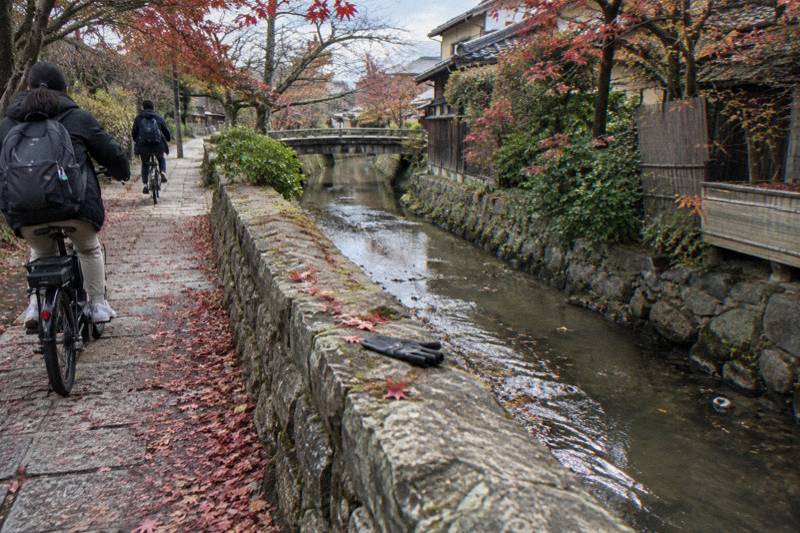
How Fit Do You Need To Be For An E-Bike Ride In Kyoto?
What Kyoto e-bike rides actually ask of you, answered from ride durations, minimum ages and what each fare includes, with a standard-bike ride for contrast.
Riders asking this question are usually weighing the full range of Kyoto cycling options, where durations run from a single afternoon to a full day. The useful comparison is not gym fitness against some threshold; it is hours on the bicycle, the minimum age on each product, and whether an electric-assist machine or a regular bike is under you for that time. Those three things decide how a ride feels far more than any training plan.
| Fact | Detail |
|---|---|
| Shortest e-bike ride with a from-price | Fushimi Inari, Sento Stop, 4 hours, from ¥13,500 per person |
| Longest rides in the comparison | Full-day rides of 7 to 8 hours, from ¥19,500 or ¥26,000 per person |
| Featured ride duration | Silver Pavilion, Philosopher's Path, 4 hours |
| E-bike included where named | Silver Pavilion ride, Backstreets ride, Fushimi Inari ride, both full-day rides |
| Standard-bike contrast | Gentle Backstreet Ride, 3 to 4 hours, from ¥12,000 per person |
| Helmet effort duty | Every age, since 1 April 2023, no fine |
| Hottest month | August, mean 28.5 °C, daily high 33.7 °C |
| Free cancellation | Up to 24 hours before start on the rides compared here |
The demands are modest: be comfortable sitting on a bicycle for 3 hours 15 minutes to 8 hours, depending on the ride, and old enough for its minimum age, from 1 on one family ride to 16 on the full-day Grand Loop. The electric-assist bicycle is included where named, so the machine does the pushing; your job is balance, time in the saddle and a helmet.
That is the whole question in one paragraph, but the details deserve space because the answer changes with the ride you pick. A 4-hour ride with an e-bike included is a different proposition from a 7 to 8 hour day, even though both carry electric assist. Time is the variable that matters. Nobody checks your pace or your training log at the meeting point; the ride simply lasts as long as it lasts, and you are on the bicycle for most of it.
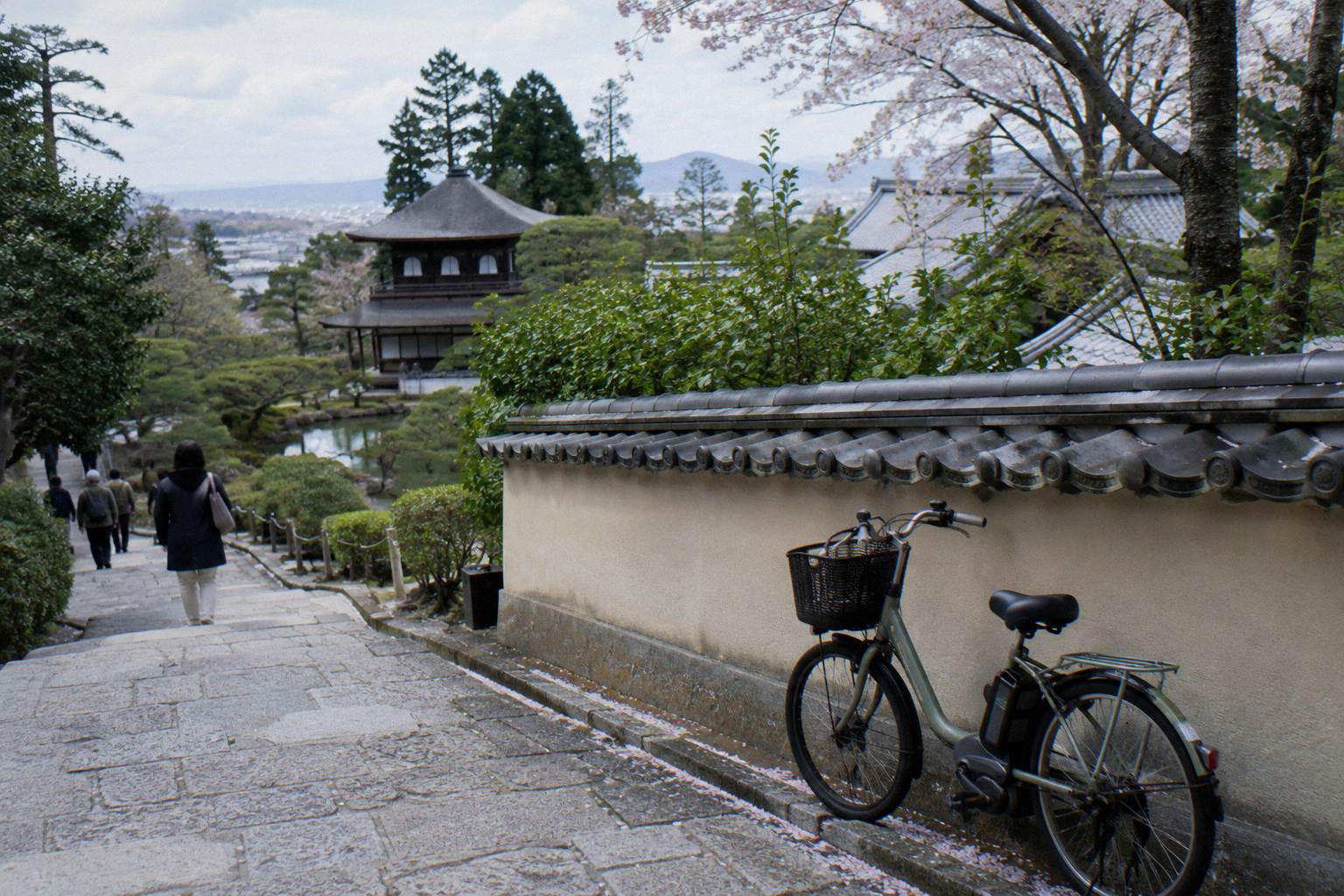
The featured ride on this question is Kyoto E-Bike Tour: The Silver Pavilion & Philosopher's Path, run by Kyoto Fun. It runs 4 hours, costs from ¥14,500 per person, takes riders aged 12 and over, and puts an e-bike under every participant, with landing and facility fees and a guide included. It carries a 5 rating from 322 reviews. Four hours with electric assist and a seated break or two is a format a broad range of riders manage comfortably; the ride's own page shows what the fare covers for your date. See dates and the live price before comparing it with the longer options below.
One more framing point before the numbers. No route distance, gradient or exertion figure for these rides has been published anywhere a visitor can check, so this comparison sticks to what can be verified: durations, from-prices, minimum ages and the inclusions each fare names. Those four data points answer most fitness questions anyway, because duration plus electric assist is what your body actually experiences on the day.
How Long Is Each Ride, Really?
Ride durations range from 3 hours 15 minutes on the Northern Ride up to 8 hours on the full-day Grand Loop, with most tours lasting around 4 hours, including the Silver Pavilion ride and the Fushimi Inari and Sento Stop tour. The Backstreets ride runs 5 or 6 hours, while the two full-day options take 7 to 8 hours, adding lunch and more sites on some fares.
Breaking the day into hours is the most useful fitness filter you have. A 4-hour ride typically includes stops at temples, shrines and photo points, so you are not pedalling continuously from start to finish. Still, four hours of mounting, dismounting, walking through grounds and riding between stops adds up, and a rider who has not cycled since childhood will feel it in the seat and shoulders by the end. That is normal, and it is not a reason to skip the ride.
The next step up in duration is Kyoto Backstreets and Hidden Gems E-Bike Tour from Memory Kyoto Bike Tour. It runs 5 hours to 6 hours, costs from ¥15,000 per person, gives everyone an e-bike, includes bottled water, helmets and all fees and taxes, and accepts riders from age 3. It carries a 4.9 rating from 210 reviews. Two extra hours over the 4-hour format is a real difference in cumulative saddle time, and it is the ride to choose when a full day feels like too much but four hours feels light. The full half-day and full-day picture is mapped in the guide to Kyoto's full-day cycling loop.
At the top of the range sit the two full-day products. Bike Kyoto's Grand Loop: Full-Day Kyoto E-Bike Tour runs 7 to 8 hours from ¥26,000 per person, includes an e-bike, a light lunch, snacks, water, helmet, admission fees and a bilingual guide, sets minimum age 16, and carries a 5 rating from 596 reviews. Discover Kyoto by Bike Full Day Tour runs 7 to 8 hours from ¥19,500 per person with an e-bike, entrance fee and bottled water included, lunch excluded, minimum age 10, and a 5 rating from 28 reviews. Seven or eight hours is a working day on and off a bicycle. Choose it when a shorter ride sounds too short, not to prove anything.
| Ride | Duration | From-price | Minimum age | Reviews |
|---|---|---|---|---|
| Northern Ride, Kinkaku-Ji | 3 hours 15 minutes | none shown | 9 | 5.0 from 16 reviews |
| Silver Pavilion, Philosopher's Path | 4 hours | ¥14,500 per person | 12 | 5.0 from 322 reviews |
| Fushimi Inari, Sento Stop | 4 hours | ¥13,500 per person | 1 | fewer than 15 reviews |
| Backstreets, 5 To 6 Hours | 5 hours to 6 hours | ¥15,000 per person | 3 | 4.9 from 210 reviews |
| Full-Day Ride, No Meal | 7 hours to 8 hours | ¥19,500 per person | 10 | 5.0 from 28 reviews |
| Full-Day E-Bike, Lunch Included | 7 hours to 8 hours | ¥26,000 per person | 16 | 5.0 from 596 reviews |
Prices vary by date and group, and the booking page shows the price for the date you are considering. Match the duration to your day, not to your ego: the riders who regret a choice are usually the ones who booked the longest ride available and spent the last two hours watching the clock.
Does The E-Bike Actually Do The Work?
Yes, on every ride compared here that names the e-bike as included. Electric assist drives the wheel while you pedal, so steady effort replaces hard pushing, and the longer formats become manageable for riders who would not attempt them on a regular bike. Kyoto City classifies a pedal-assist bicycle that meets the legal standard as a bicycle, which is why these rides operate on the same rules as any other cyclist.
The mechanics are simple. You pedal, the motor adds power in proportion to your input, and the combined push is what moves the bike. You are never passive: the assist cuts in only while you are turning the pedals. What you get is a machine that removes most of the sting from sustained riding, which is precisely why a 4-hour or 6-hour tour is a realistic prospect for someone whose last bike ride was years ago. More of these guides are collected on Kyoto Bike Tours.
The legal side backs this up. The Kyoto City page on cycling rules draws the line clearly: a pedal-assist e-bike meeting the standard is a bicycle under the law, while anything with a throttle or outside the standard counts as a motorised bicycle or car. The machines on these tours sit on the bicycle side of that line, so the ordinary cycling rules apply to you and the same fines for violations apply to every rider aged 16 and over.
Which fares include the machine? The Silver Pavilion ride names E-Bike rental in its inclusions. The Backstreets ride states that everyone will get an e-bike. The Fushimi Inari and Sento Stop ride lists an e-bike, a reusable water bottle, a fox-shaped ema, amazake and a towel for the sento. The Palace, Castle And Temples ride provides each participant with a new premium Panasonic electric bicycle and a helmet, alongside all entrance fees and a 600 ml bottle of mineral water per person, from ¥16,500 per person over 6 hours 30 minutes with minimum age 10. The e-bike is not an add-on to hunt for; it is the bicycle you ride, and check the live price per date because the fare moves with demand.
One caveat worth keeping. Assist helps your legs but does nothing for balance, and it does not shorten the day. The skills an e-bike ride asks for are the ordinary ones: riding in a straight line, stopping smoothly, walking the bike where the guide tells you to, and staying alert for the hours the ride lasts. If you can ride a regular bicycle around a park, the machine will handle the rest. If you have questions about a specific health condition and a specific route, ask the operator before booking; they know the day's demands better than any general write-up can.
E-Bike Or A Regular Bike: Which Asks More Of You?
The regular bike asks more of your legs and less of nothing else. South Kyoto in a Nutshell: Gentle Backstreet Bike Tour runs 3 to 4 hours from ¥12,000 per person on a high quality Cannondale pedal bike, minimum age 13, with a 5 rating from 279 reviews. It is the cheapest ride in this comparison and the shortest with a from-price, and it is the one where your own effort alone moves the bicycle.
The trade is clean. On the Gentle Backstreet Ride from Cycle Kyoto you get bottled water, the Cannondale bike, a helmet and use of the bicycle, with gratuities excluded, and you supply every watt. In exchange, the duration is capped at 3 to 4 hours, which keeps total effort within reach for a reasonably active rider. On any e-bike ride, the motor shares the load and the day can stretch longer without breaking you. The rider-fit decision between the two formats is covered in depth in the comparison of e-bikes and regular bikes in Kyoto.
Who should choose which? If you cycle at home, even casually, and want the shorter, cheaper commitment, the pedal-bike format is a fine match and the 279-review track record suggests it lands well. If the words "bike tour" make you think of aching thighs, the e-bike formats remove that concern almost entirely, and the modest extra cost at the entry level buys a motor and an extra hour or two. A rider's age question, separate from fitness, is answered in the guide to e-bike riding for seniors.
The remaining question people bring to this comparison is heat. The Japan Meteorological Agency Kyoto monthly normals give the context: August averages 28.5 °C with a mean daily high of 33.7 °C, and the record high is 39.8 °C. On a hot afternoon, the e-bike is not a luxury; it is the difference between finishing a 4-hour ride and wilting halfway through. In January, when the mean is 4.8 °C, the calculation flips and any ride is mostly a clothing question. See dates with the season in mind.
| Format | Example ride | Duration | What your body supplies |
|---|---|---|---|
| Regular pedal bike | Gentle Backstreet Ride | 3 hours to 4 hours | All of the pedalling effort |
| E-bike, half day | Silver Pavilion ride | 4 hours | Balance, steering and light pedalling |
| E-bike, extended | Backstreets ride | 5 hours to 6 hours | The same, for longer |
| E-bike, full day | Grand Loop | 7 hours to 8 hours | Stamina for a full day outdoors |
Minimum Ages And Who Rides
Read those numbers as the operators' judgment, because that is what they are. An operator who sets minimum age 1 on the Fushimi Inari, Sento Stop ride from SunnyCycleTour, from ¥13,500 per person over 4 hours, is signalling a family-format day; one who sets 16 on the full-day Grand Loop is signalling a long ride they do not want younger children attempting. Between those poles, minimum age 12 on the featured Silver Pavilion ride means secondary-school-age riders and up.
The helmet rule applies to every age group without exception. The Kyoto Prefecture page on the helmet effort duty confirms that since 1 April 2023 every cyclist must make an effort to wear one, with no fine attached. Practically, every ride compared here that names a helmet includes it in the fare, so you do not need to bring your own. The family angle, including what the products do and do not say about child seats, is covered in the guide to cycling in Kyoto with kids.
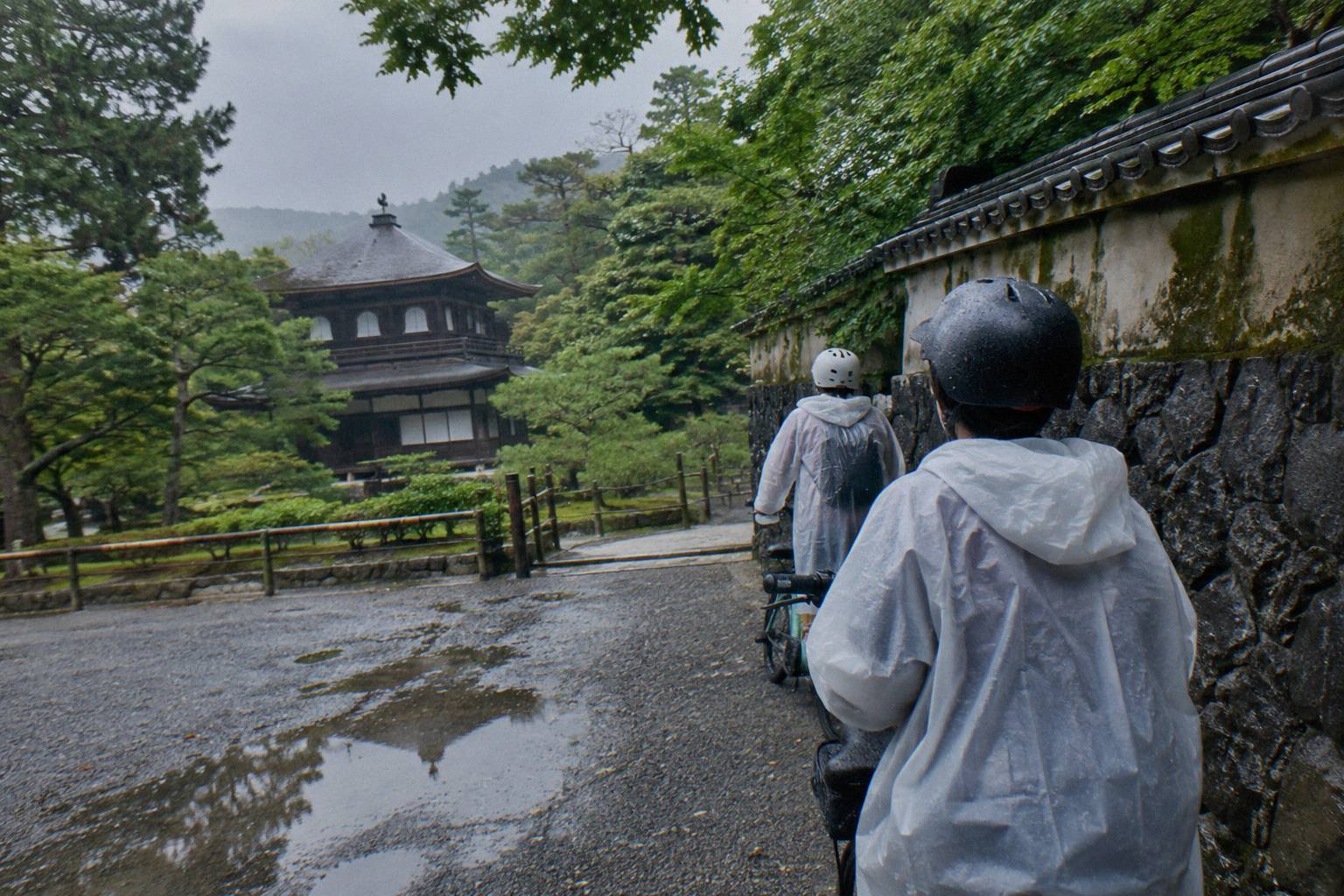
There is a rule-side reason the ages matter too. Since 1 April 2026, the blue-ticket system means riders aged 16 and over pay fixed fines for minor violations, such as 12,000 yen for holding a phone while riding or 3,000 yen for riding two abreast. A 16-year-old on the Grand Loop is old enough to be fined like an adult, which is part of why that ride's guide earns their fee. On the younger minimum ages, the guide carries the responsibility and the family gets the day.
What The Day Actually Asks Of You Beyond Pedalling
Beyond the riding itself, the day asks for ordinary tourist stamina: walking through temple grounds on stops, standing while the guide explains, and being outdoors for the full duration in whatever the weather does. The Silver Pavilion ride's route touches Ginkaku-ji, where adult admission is 1,000 yen since 1 April 2026, and the ride's inclusions cover landing and facility fees, so entry logistics are handled for you.
Walking is the underrated component. A 4-hour ride includes time off the bike, and temple visits mean gravel paths, steps and standing. The format is ride, park, walk, look, remount, repeated several times over the morning or afternoon. Riders who handle a bicycle fine but rarely walk any distance sometimes find the stops more tiring than the riding, which is worth knowing before you blame the pedalling.
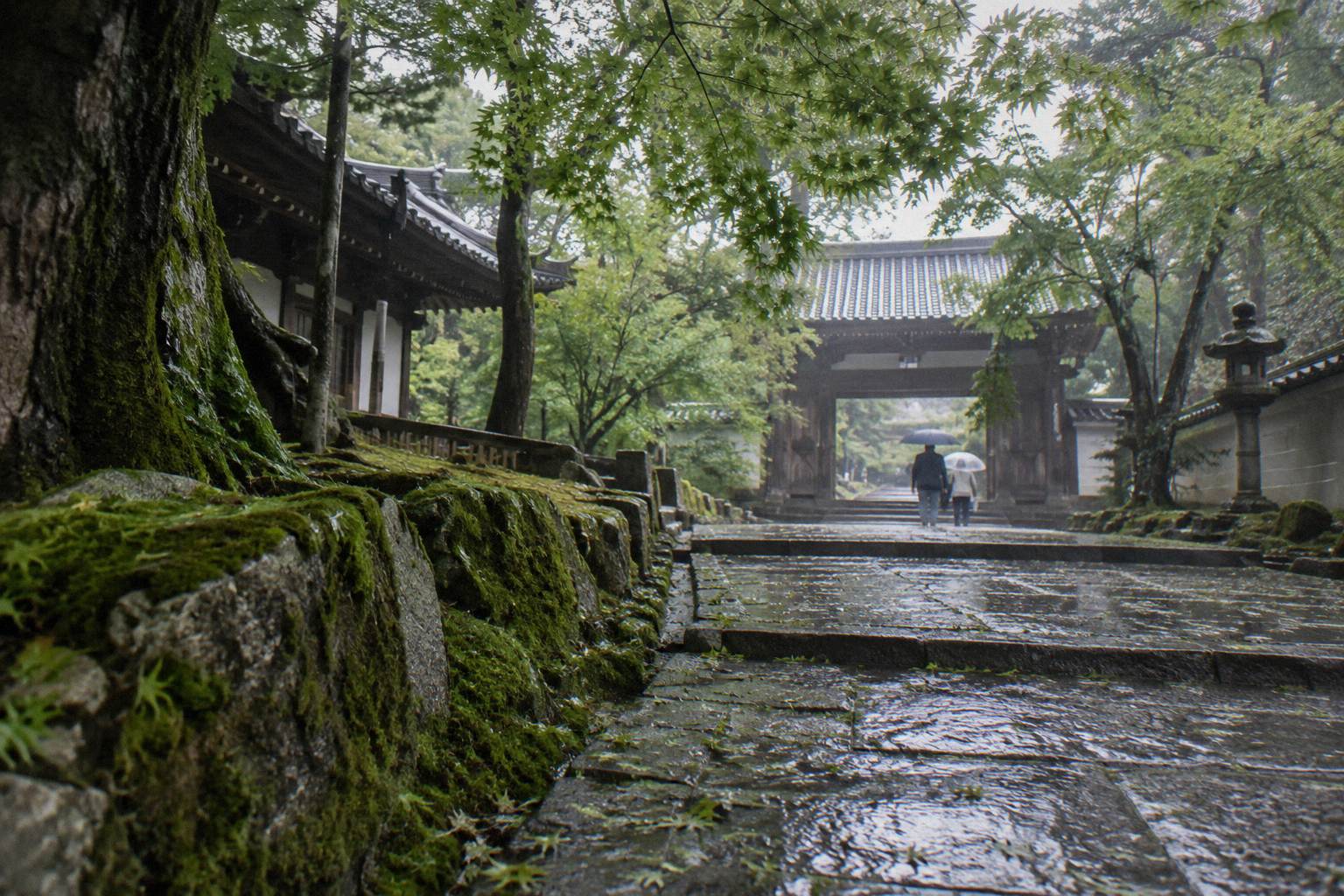
Weather shapes the day more than fitness does. July is Kyoto's wettest month at 223.6 mm of rain, the rainy season runs roughly early June to mid July, and every ride compared here offers free cancellation up to 24 hours before start, so a forecast that disagrees with your plans costs you nothing if you act a day ahead. What a guided ride does in the rain is covered in the post on guided rides when it rains in Kyoto.
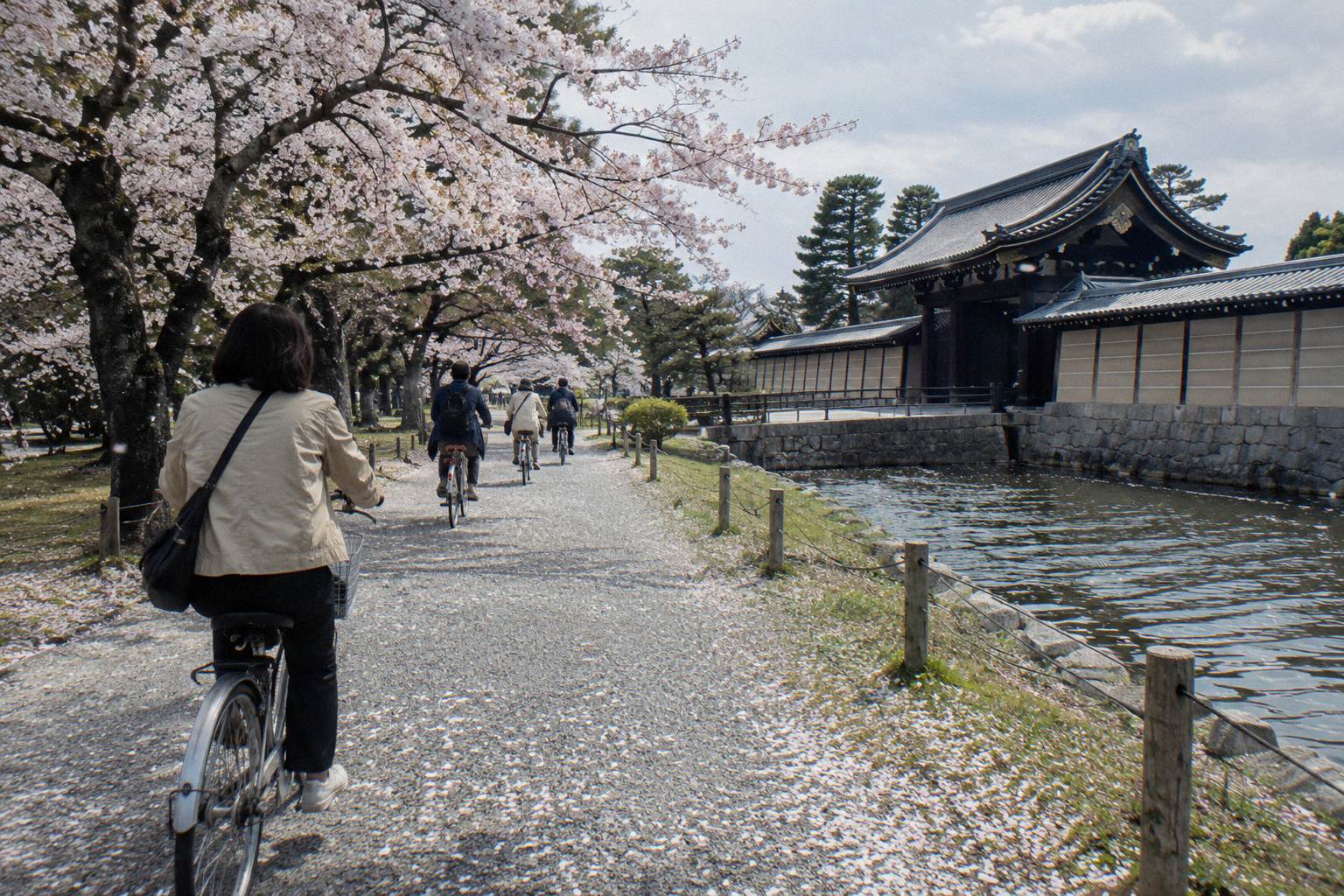
Then there is the seasonal timing question, because it interacts with how much walking and standing a day involves. Cherry blossom full bloom averages 4 April in the observatory's 1991 to 2020 normals, though it came on 30 March in 2026, and maple colouring averages 5 December. Those dates matter for crowds and for how long you linger at stops, not for the physical demands of the ride itself. The seasonal detail, including what the observatory's dates do and do not mean, is in the guide to cherry blossom cycling in Kyoto.
Finally, the small practical load: you carry whatever you bring. Water is included on most of these fares, from the bottled water on the Silver Pavilion ride to the reusable spring-water bottle on the SunnyCycleTour rides, so a light pack with sunscreen and a layer covers it. Nothing in the day asks for specialised gear, only for having thought about the hours and the forecast in advance.
What Trips People Up Before You Book
The common stumbles are booking by price alone and ignoring duration, assuming every ride includes an e-bike when some include a regular pedal bike, skipping the minimum age on the booking page, and leaving the booking so late that the date you want is gone. Each is avoidable in under a minute by checking duration, inclusions, minimum age and live availability before you commit.
The first trap is duration blindness. A from-price that looks attractive next to a competitor's may belong to a 7 to 8 hour ride when you meant to book a 4-hour one. The Full-Day Ride, No Meal at from ¥19,500 per person is excellent value per hour, and it is still an eight-hour commitment with lunch excluded. Read the duration line before the price line, every time.
The second trap is machine assumptions. Most rides on this comparison include an e-bike, but not all: the Gentle Backstreet Ride puts you on a Cannondale multi-speed pedal bike, and the Early Bird Bamboo Forest Ride from Kyoto Bike Tour, from ¥16,000 per person over 3 to 4 hours with a 5 rating from 773 reviews, also names a comfortable, well-maintained Cannondale multi-speed bicycle, with an e-bike upgrade available for an extra fee by advance request, if available. If the motor is the reason you are booking, confirm it is in the fare.
The third trap is age. A family of five booking the Silver Pavilion ride will hit the minimum age of 12 for the youngest, and discovering that at the meeting point is a bad morning. The fourth trap is timing: booking a cycling ride in advance in Kyoto matters most in blossom week and autumn leaf season, and free cancellation up to 24 hours before start means an early booking costs nothing to change.
Common Questions About E-Bike Ride Fitness
How Fit Do You Need To Be For An E-Bike Ride In Kyoto?
Comfortable on a bicycle for the ride's full duration, which runs from 3 hours 15 minutes to 8 hours depending on the product. The electric assist does the hard pushing where the e-bike is included in the fare, so balance and general health matter more than strength. For route-specific questions, ask the operator before booking.
Do You Need To Have Ridden An E-Bike Before?
No prior e-bike experience is named as a requirement on any ride compared here. A pedal-assist bicycle handles like an ordinary bicycle, with the motor adding power only while you pedal. If you can ride a regular bike, the transition is immediate, and the guide is present throughout the ride.
Is A 4-Hour E-Bike Ride Tiring?
It involves four hours outdoors with riding and walking breaks mixed together, not four hours of continuous pedalling. The Silver Pavilion, Philosopher's Path ride runs exactly this format at from ¥14,500 per person with the e-bike included, and carries a 5 rating from 322 reviews. Riders who want less time can look at the 3 to 4 hour formats instead.
What Is The Longest Ride You Can Book?
The full-day formats run 7 to 8 hours. Bike Kyoto's Grand Loop costs from ¥26,000 per person with lunch included and minimum age 16, and carries a 5 rating from 596 reviews. Treat it as a full working day on and off the bicycle and book it only if that sounds appealing rather than daunting.
Do Age Limits Tell You About Difficulty?
They tell you who the operator accepts, which is a signal but not a fitness rating. Minimum ages run from 1 on the Fushimi Inari, Sento Stop ride to 16 on the full-day Grand Loop. The spread reflects duration and format more than any measure of exertion, since no route distances or gradients are published for these rides.
Does The Weather Change How Hard A Ride Feels?
Yes. August averages 28.5 °C with daily highs of 33.7 °C, and July brings 223.6 mm of rain on average, the wettest month. Electric assist offsets heat fatigue, and free cancellation up to 24 hours before start on the rides compared here lets you move the booking if the forecast turns.