Is Cycling In Kyoto Safe For Tourists?
Cycling in Kyoto is governed by clear rules: ride left, keep the phone away, wear a helmet on an effort basis and carry liability insurance. This article sets out the fines, the removal fee and how guided rides handle helmets, guides and insurance.
Kyoto is a city where the bicycle is an everyday tool, and its rules are written down and enforced: fixed fines for minor violations, a helmet effort duty for every age, a prefectural insurance requirement and a removal fee for badly parked bikes. Kyoto Bike Tours covers those rides across the site, and the cycling routes overview maps where they go. The rest of this article sets out the rules a rider actually meets on the road.
| Fact | Detail |
|---|---|
| Riding position | Roadway is the principle, ride on the left; sidewalk riding is the exception with pedestrians first |
| Blue ticket system | From 1 April 2026, riders aged 16 and over pay fixed fines of 3,000 to 12,000 yen for minor violations |
| Phone while riding | 12,000 yen fixed fine; since 1 November 2024, holding a phone can mean up to 6 months in prison or a 100,000 yen fine |
| Helmet | Effort duty for every age since 1 April 2023, no fine attached |
| Insurance | Kyoto Prefecture requires bicycle liability insurance under its ordinance |
| Removed bicycle | 3,500 yen to reclaim, held for 4 weeks from the day after removal |
| Guided rides compared | From ¥11,000 to ¥26,000 per person, all with free cancellation up to 24 hours before start |
Yes, cycling in Kyoto is safe for tourists who follow the rules: ride on the left side of the road, keep phones out of your hands, never cycle after drinking, carry liability insurance as the prefectural ordinance requires, and wear a helmet if you can. Tourists who respect those five expectations ride under the same framework as local commuters, and the risks stay manageable.
The starting point is the National Police Agency's five rules for cyclists, which set the principle that the roadway comes first and the sidewalk is the exception. Pedestrians have priority wherever sidewalk riding is permitted, and it is permitted where signs or markings allow it, for children under 13, for people aged 70 and over, for people with disabilities, or when road conditions leave no safe alternative. Kyoto City publishes the same framework alongside its local penalties on the Kyoto City page on cycling rules.
One legal detail matters for anyone booking an e-bike: a pedal-assist e-bike that meets the legal standard is a bicycle in Japanese law, while a vehicle with a throttle or outside the standard counts as a motorised bicycle or car. Every e-bike ride compared in this article supplies a bicycle, so the ordinary bicycle rules are the ones that apply.
For riders who prefer not to work out the rules alone, three rides on the roster build the safety context into the package: helmets, a guide and, on one, liability insurance.
Which Road Rules Apply To Cyclists In Kyoto?
Cyclists in Kyoto must ride on the left, obey traffic signals, never hold a phone while riding, and never cycle after drinking. Breaking these rules brings fines of 6,000 yen for running a red light or riding on the wrong side, 12,000 yen for phone use, up to 500,000 yen or three years in prison for drunk riding, and 3,000 yen for carrying a passenger or riding two abreast.
The fine list comes from the blue ticket system introduced on 1 April 2026, under which riders aged 16 and over who commit minor violations pay a fixed sum instead of going through criminal procedure. The system applies to every rider aged 16 and over; a foreign licence or a holiday does not exempt anyone.
The phone rules deserve a second look because two separate penalties exist. The fixed 12,000 yen fine covers holding or watching a phone while riding. Separately, since 1 November 2024, holding a phone to talk or watch the screen can mean up to 6 months in prison or a 100,000 yen fine, and causing danger while using a phone can mean up to 1 year or 300,000 yen. A handlebar mount and a stopped bike are the answer if a map is needed.
| Violation | Fixed fine (yen) |
|---|---|
| Holding or watching a phone while riding | 12,000 |
| Ignoring a signal | 6,000 |
| Riding on the wrong side of the road | 6,000 |
| Failing to stop at a stop sign | 5,000 |
| Riding with an umbrella | 5,000 |
| Carrying a second rider or riding two abreast | 3,000 |
Drunk cycling sits outside the fine table entirely because it is criminal: alcohol-impaired riding (blood 0.3 mg per ml or breath 0.15 mg per litre) can bring up to 3 years in prison or a 500,000 yen fine, and even lending a bike to a drunk rider or riding along as a passenger carries penalties. One sake tasting on a ride day is enough to change the plan; leave the bike parked and walk.
Do You Need A Helmet And Insurance In Kyoto?
A helmet is an effort duty, not a fine: since 1 April 2023 every cyclist of every age in Japan must make an effort to wear one, and no penalty attaches to riding bareheaded. Insurance is a harder requirement: Kyoto Prefecture's ordinance requires riders to carry bicycle liability insurance, and a personal-liability rider on home, fire, car or accident policies counts. A visitor with none of those policies should look at rides that name insurance as included.
The helmet duty is spelled out on the Kyoto Prefecture page on the helmet effort duty, and the same wording appears on the Kyoto City cycling rules page. In practice the roster rides make the question easy: helmets are named as included on the Early Bird Bamboo Forest Ride (Kyoto Bamboo Forest & Hidden Gems: Early Bird Easy Bike Tour, from ¥16,000 per person, 3 hours to 4 hours, rated 5.0 from 773 reviews, minimum age 10) and on the Gentle Backstreet Ride (South Kyoto in a Nutshell: Gentle Backstreet Bike Tour!, from ¥12,000 per person, 3 hours to 4 hours, rated 5.0 from 279 reviews, minimum age 13), which also supplies a Cannondale bicycle and water.
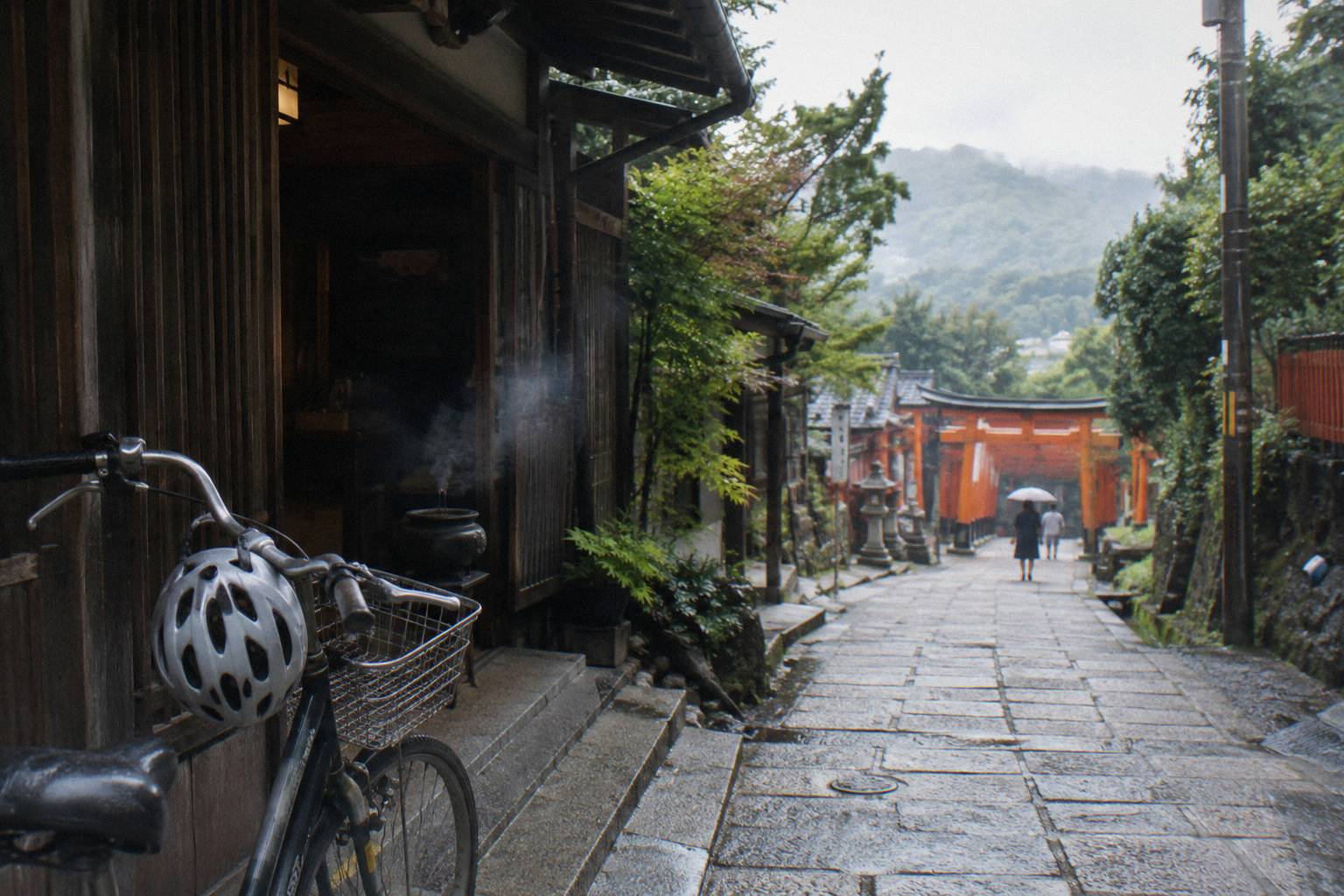
On insurance, the standout is the Morning Ride From Station (Beat the Crowds: Pro-Curated Morning E-Bike Tour, Kyoto Sta), from ¥14,000 per person for 3 hours 30 minutes, rated 5.0 from 20 reviews with a minimum age of 13: liability insurance, a helmet, a raincoat and water are named as included, snacks are excluded, and cancellation is free up to 24 hours before start. For a visitor with no Japanese liability policy, that inclusion answers the prefectural requirement inside the booking. The full ride write-up covers what else is in the package, and check availability shows the date you want.
The insurance requirement itself is explained on the Kyoto Prefecture page on bicycle liability insurance, which names accident, fire and car policies with an individual-liability rider as acceptable. Travel insurance sometimes includes a personal-liability section; checking the policy wording before the trip is a five-minute task that settles the question for any self-guided riding.
One practical note on the effort duty itself: because the helmet rule carries no penalty, a rider who turns up bareheaded will not be stopped or fined, but the two roster tours above hand a helmet over as part of the package, so the simplest way to comply on a guided ride is to accept it and wear it for the full route. The Morning Ride From Station goes further still, pairing its named helmet with a raincoat and water, which covers the two most common comfort gaps on a 3-hour-30-minute morning outing in Kyoto's changeable weather.
For families, the age minimums matter more than the paperwork. The Early Bird Bamboo Forest Ride accepts riders from age 10, the Gentle Backstreet Ride and the Morning Ride From Station both start at 13, and since the helmet duty applies to every cyclist of every age, a child on the Early Bird ride falls under the same effort obligation as the adults. Booking a tour that lists helmets as included removes the need to source a child-size lid separately.
A quick pre-booking checklist ties both threads together: confirm your home, fire, car or accident policy carries a personal-liability rider, or check your travel insurance wording for a personal-liability section; if neither applies, pick a ride that names liability insurance as included, such as the Morning Ride From Station, where liability insurance, helmet, raincoat and water are all part of the booking and cancellation stays free up to 24 hours before start.
Where Can You Leave A Bicycle In Kyoto?
Only in a designated place: Kyoto City removes illegally parked bicycles across removal strengthening areas that cover nearly the whole city, charges 3,500 yen per bicycle to get one back (5,000 yen for scooters), and holds bikes for 4 weeks from the day after removal. A guided ride usually settles parking with the operator, but any self-guided rider needs the bike left in a marked bicycle zone.
The fee, the four-week hold and the depot hours come from the Kyoto City page on removed bicycles. Storage depots such as Sanjo Senbon open daily from noon to 9 pm. The city explains that the fee covers the cost of removal and storage, and a bike left against a temple wall or a bridge railing in a strengthening area is exactly the kind of bicycle the patrols collect.
For context on the rides, some products handle the bike's whole life cycle for you: the Kyoto E-Bike Tour of Palace, Castle, Temples and Hidden Gems (from ¥16,500 per person, 6 hours 30 minutes, minimum age 10) names all parking fees as included, which removes the parking question from the rider's day entirely. Whether an operator covers parking for a given ride is a detail to confirm on the booking calendar before paying.
Does A Guided Ride Change The Safety Picture?
A guide changes the workload rather than the rules: someone rides at the front and absorbs the route-finding and the local judgement, while helmets arrive in the package and one ride adds liability insurance. The Early Bird Bamboo Forest Ride, from ¥16,000 per person, 3 hours to 4 hours, rated 5.0 from 773 reviews, minimum age 10, includes a bilingual guide, a Cannondale bicycle, a helmet and water.
The same pattern appears on the Gentle Backstreet Ride, which pairs its Cannondale bicycle and helmet with water for from ¥12,000 per person. On the full-day side, the Full-Day E-Bike, Lunch Included (Bike Kyoto's Grand Loop: Full-Day Kyoto E-Bike Tour - 5 Top Sites) runs 7 hours to 8 hours from ¥26,000 per person, rated 5.0 from 596 reviews, minimum age 16, and names a native English speaking bilingual guide, helmet, e-bike, admission fees, snacks, water and a light lunch.
The trade-off question, guide or no guide, has its own treatment in whether a guided ride beats going alone in Kyoto. For safety specifically, the guide's value is that left-side riding, signal discipline and the phone rule stop being things to remember under pressure: the rider follows a local who already rides this way daily.
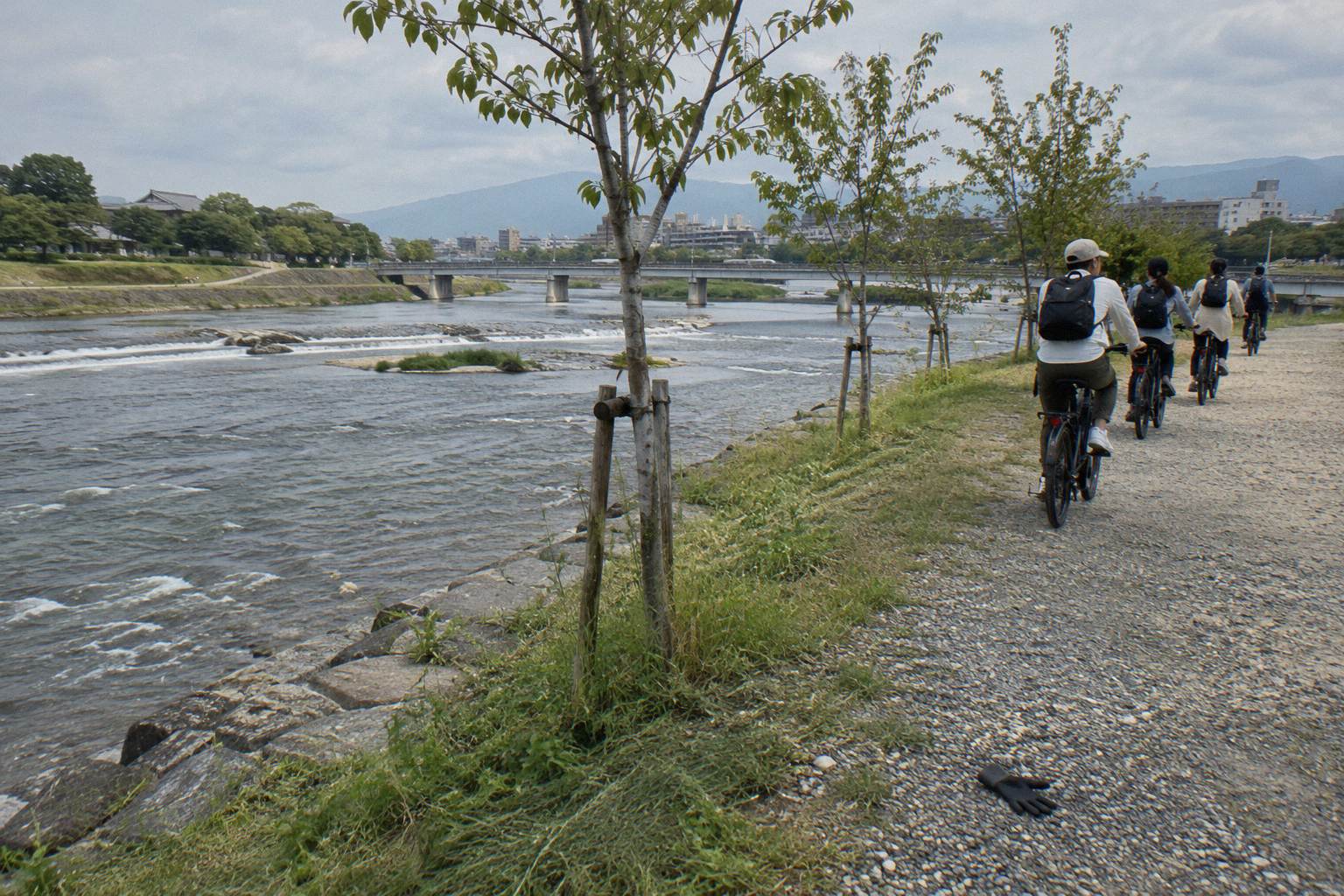
The budget end of the roster works the same way. The Budget Fare, Hidden Alleys ride (Kyoto: E-Bike Tour - Highlights, Backstreets & Local Secrets, from ¥11,000 per person, 4 hours, rated 5.0 from 148 reviews, minimum age 2) includes an e-bike and a reusable water bottle. The Silver Pavilion, Philosopher's Path ride (Kyoto E-Bike Tour: The Silver Pavilion & Philosopher's Path, from ¥14,500 per person, 4 hours, rated 5.0 from 322 reviews, minimum age 12) includes e-bike rental, landing and facility fees and a guide, with lunch excluded. Each is a separate bookable product with its own card, and each hands the riding decisions to a guide.
Which Season Changes The Safety Calculation?
Summer heat and July rain are the two seasonal factors with measurable impact: July is Kyoto's wettest month at 223.6 mm of rain, August the hottest with a mean of 28.5 °C, a mean daily high of 33.7 °C, and a record daily maximum of 39.8 °C. Rain cuts braking grip and visibility while heat raises the cost of pedal work, so your visit month shapes a ride more than the rulebook does.
The monthly normals come from the Japan Meteorological Agency Kyoto monthly normals. January is both the coldest month (mean 4.8 °C) and the driest (53.3 mm), which makes winter the low-friction season for riding, while June adds 199.7 mm before July peaks. The rainy season runs roughly early June to mid July.
| Month | Rain (mm) | Mean C | Mean daily high C |
|---|---|---|---|
| January | 53.3 | 4.8 | 9.1 |
| April | 117.0 | 14.4 | 20.1 |
| July | 223.6 | 27.3 | 32.0 |
| August | 153.8 | 28.5 | 33.7 |
| October | 143.2 | 18.4 | 23.4 |
Weather policy sits with the operator, and every ride compared here carries free cancellation up to 24 hours before start, which covers a rainy-morning change of plan. The Morning Ride From Station names a raincoat among its inclusions, a small signal that rain does not automatically end a ride. For the wider seasonal picture, the rainy season riding guide and the summer heat riding guide each take one condition in depth.
What Trips People Up Before You Book
The recurring mistakes are booking below the stated minimum age, assuming insurance is included when only one product names it, riding after a drink because the fine table stops at 12,000 yen while criminal penalties run higher, and leaving a bike outside a marked parking zone at a temple stop. Minimum ages here run from 10 to 16, insurance appears on exactly one ride, and reclaiming a removed bike costs 3,500 yen.
Minimum age is the first check. The Early Bird Bamboo Forest Ride sets 10, the Gentle Backstreet Ride and the Morning Ride From Station set 13, and the Full-Day E-Bike, Lunch Included sets 16. A family with a nine-year-old fits the first of those and none of the others; the age is printed on each product's card, so it takes a moment to match.
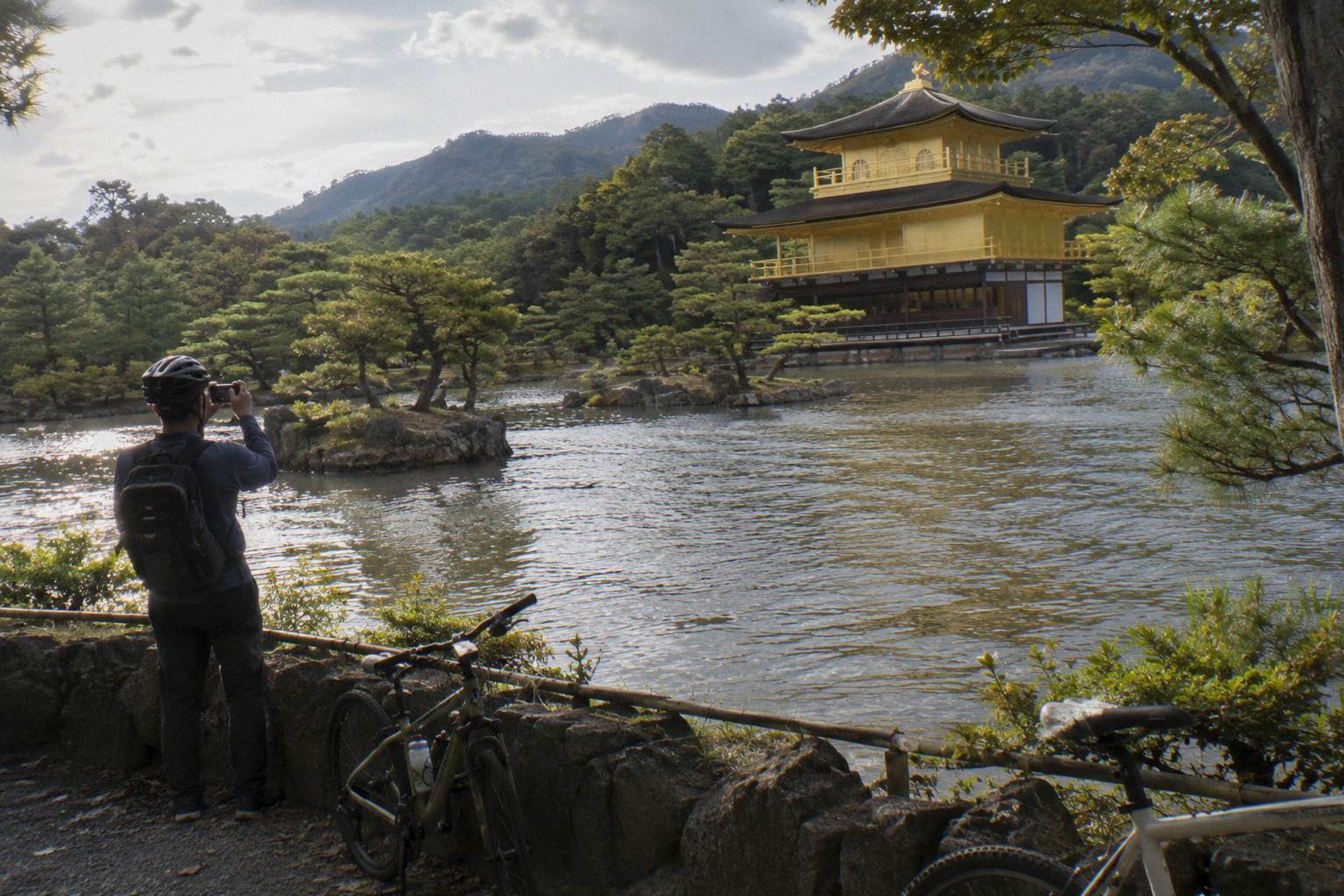
Insurance is the second. Only the Morning Ride From Station names liability insurance as included among the rides discussed here; two other roster products (the Hidden Gems, 4 Hours ride and the Northern Ride, Kinkaku-Ji) explicitly list insurance as excluded. Anyone riding without a Japanese liability policy should either confirm cover within their travel insurance or choose a product that names it.
The third mistake is reading the fine table as the ceiling. Blue ticket fines top out at 12,000 yen, but the phone rule since 1 November 2024 and the drunk-cycling provisions carry prison terms and fines up to 500,000 yen, outside the ticket system altogether.
The fourth is parking. A bike leaned against a wall at Fushimi Inari or Kinkaku-ji is a candidate for removal, and reclaiming it costs 3,500 yen plus a trip to a depot that opens at noon. Operators handle parking on rides that name parking fees as included; on anything else, ask the operator where the bikes wait during a stop.
Common Questions About Cycling Safety
Is Cycling In Kyoto Safe For Tourists?
Riding in Kyoto follows a clear rule framework: left-side riding, fixed fines of 3,000 to 12,000 yen for riders aged 16 and over, a helmet effort duty for every age and a prefectural liability insurance requirement. Tourists follow the same rules as residents, and guided rides that include a helmet, a guide and, on one product, liability insurance handle the practical side of them.
What Happens If I Hold My Phone While Cycling In Kyoto?
Holding or watching a phone while riding carries a fixed fine of 12,000 yen under the blue ticket system. Since 1 November 2024 it can also mean up to 6 months in prison or a 100,000 yen fine, and causing danger while using a phone can mean up to 1 year or 300,000 yen. Stop the bike before checking a map.
Do Tourists Have To Wear A Helmet In Kyoto?
A helmet has been an effort duty for every cyclist of every age since 1 April 2023, with no fine attached. Most guided rides named here include a helmet, so wearing one costs nothing extra on a tour.
Do I Need Bicycle Insurance As A Visitor In Kyoto?
Kyoto Prefecture's ordinance requires bicycle liability insurance, and a personal-liability rider on home, fire, car or accident policies counts. Visitors can check whether their travel insurance includes personal liability, or book a ride that names liability insurance as included, such as the Morning Ride From Station.
What Happens To A Badly Parked Bicycle In Kyoto?
Kyoto City removes illegally parked bicycles across strengthening areas covering nearly the whole city. Reclaiming one costs 3,500 yen, depots such as Sanjo Senbon open daily from noon to 9 pm, and bikes are held for 4 weeks from the day after removal.
Can I Ride A Bike After One Drink In Kyoto?
No. Drunk cycling is banned at any level of drinking. Alcohol-impaired riding can bring up to 3 years in prison or a 500,000 yen fine, and even lending a bike to a drunk rider carries a penalty. Leave the bike parked on any evening that includes alcohol.