Can Tourists Rent A Bike In Kyoto Without A License Or ID?
A licence is not part of riding a bicycle in Kyoto, including a legal pedal-assist e-bike, but helmets, insurance and road rules apply to every rider, and guided rides fold the bicycle into the fare.
Riding a bicycle in Kyoto carries no licence requirement, and the same holds for the pedal-assist e-bikes that make up most of the guided products on this site, because a compliant assist bike is legally a bicycle. What a rental shop asks for at the counter is a different matter from what the law asks of you on the road, and the two questions get tangled constantly.
| Fact | Detail |
|---|---|
| Licence for a bicycle | None required; a bicycle is ridden without a driving licence |
| E-bike classification | A pedal-assist e-bike meeting the national standard is legally a bicycle; throttle models outside the standard are not |
| Helmet | Effort duty for every age since 1 April 2023, with no fine |
| Insurance | Bicycle liability insurance is required in Kyoto Prefecture |
| Fines | Fixed fines of 3,000 yen to 12,000 yen for riders aged 16 and over since 1 April 2026 |
| Removed bicycle | 3,500 yen to reclaim, held for 4 weeks |
| Shop terms on ID or deposit | Ask the shop for its terms |
Yes. A bicycle needs no driving licence in Kyoto, and a pedal-assist e-bike that meets the national standard is legally a bicycle, so the same answer covers most e-bike products, guided or rented. Shop terms on ID and payment are set shop by shop, so ask the shop for its terms. On the road, every rider owes a helmet effort, liability insurance and the fixed-fine rules that apply from age 16.
The licence half of the question is the easy half. Japanese law classifies a bicycle as a vehicle in its own right, ridden without any licence, and the Kyoto City page on cycling rules draws the e-bike line clearly: a pedal-assist machine that meets the legal standard is a bicycle, while a vehicle with a throttle or outside the standard counts as a motorised bicycle or car and changes what applies to the rider. Every guided ride sold through Kyoto Bike Tours uses bicycles or compliant e-bikes, so the classification question never complicates a booking.
The ID half has no single published answer. Rental counters set their own terms on identification and payment, and those terms differ from shop to shop, so the useful move is to check before you travel rather than to assume. One sentence settles it at the counter: ask the shop for its terms.
There is also a route around the question entirely. On a guided ride the bicycle arrives with the tour, included in the fare, so there is no counter, no deposit discussion and no paperwork between you and the saddle.
What Counts As A Bicycle Under Kyoto's Rules
The dividing line is the motor. A pedal-assist e-bike that meets the national standard is a bicycle in law, which is why it needs no licence, no registration as a motor vehicle and no special rider credential. A vehicle with a throttle, or one that exceeds the assist standard, is treated as a motorised bicycle or car, and riding one puts you under a different rulebook entirely.
That classification does the heavy lifting in the rental question. Kyoto City states it plainly: the assist bike that cuts in while you pedal, and cuts out at speed, stays a bicycle. The throttle scooter that moves without pedalling does not. For a visitor, the practical consequence is that the standard e-bike fleet used by Kyoto's guided rides sits on the bicycle side of the line, so booking one of those rides brings no licence or motor-vehicle question with it.
It also explains why the road rules for bicycles apply to e-bike riders in full. The five national safety rules from the National Police Agency bicycle safety leaflet treat the roadway as the principle, riding on the left, with the sidewalk an exception that puts pedestrians first. Nothing in those rules separates a pedal bike from a compliant e-bike, and nothing in the fine schedule does either.
If you would rather compare the two formats side by side before committing, the breakdown at e-bike versus regular bicycle in Kyoto covers the rider-fit decision in detail. The short version for this question: both formats are licence-free, and both carry the same helmet, insurance and fines obligations.
The Helmet And Insurance Rules That Apply To Every Rider
Two obligations attach to every cyclist in Kyoto regardless of age, nationality or where the bicycle came from. Since 1 April 2023, wearing a helmet is an effort duty for every rider, with no fine attached. Separately, the prefecture's ordinance requires bicycle liability insurance, and a rider whose home, car or accident policy includes a personal-liability section already satisfies it. Both obligations are explained on Kyoto Prefecture's own pages.
The helmet rule changed the default rather than the penalty. Riders of every age are asked to make the effort to wear one, and no fine backs the duty up, but the expectation is now the norm rather than a suggestion, as the Kyoto Prefecture page on the helmet effort duty sets out. Guided rides make this frictionless: helmets are named as included on product after product, from the Early Bird Bamboo Forest Ride (from ¥16,000 per person, 5.0 from 773 reviews, minimum age 10) to the Backstreets, 5 To 6 Hours option (from ¥15,000 per person, 4.9 from 210 reviews, minimum age 3).
The insurance rule surprises more visitors. Kyoto Prefecture requires cyclists to carry liability insurance, and the Kyoto Prefecture page on bicycle liability insurance explains which policies count: bicycle accident insurance itself, or a personal-liability rider attached to a home, car or fire policy. A travel insurance policy may already include such cover, and reading yours before the trip takes a minute. Some guided products build cover in directly, such as the UNESCO Zen Temples ride with lunch (from ¥15,000 per person, 5.0 from 145 reviews, minimum age 15), whose rental bike includes bodily injury liability insurance, and the Morning Ride From Station (from ¥14,000 per person, 5.0 from 20 reviews, minimum age 13), which names liability insurance among its inclusions.
For a deeper read on which of these obligations changes what you pack and book, the safety write-up at whether cycling in Kyoto suits tourists walks through the same rules from the confidence angle.
Why A Guided Ride Skips The Rental Counter Entirely
On a guided ride the bicycle comes with the tour, included in the fare, so the rental counter never enters the picture. Products such as Backstreets, 5 To 6 Hours name the e-bike, helmet and bottled water as included, from ¥15,000 per person, with a 4.9 rating from 210 reviews, and every guided product here carries free cancellation up to 24 hours before start.
This is the cleanest answer for a visitor who wants to ride but does not want to negotiate shop terms. The bicycle, the helmet and often the water are in the fare. The guide sets the route, the pace and the parking, and the inclusion lists on each product page tell you exactly what arrives with the ride and what does not, so there is nothing left to arrange at a counter on the morning.
The trade-off is freedom rather than legality. A rental bike is yours for the day, to point wherever you like, while a guided ride follows a plan. The comparison at guided versus self-guided cycling in Kyoto sets the two formats against each other properly. On the narrow question of licence and ID, though, the guided format simply steps around it: you book a tour product under the operator's own booking terms, and the bicycle is equipment, not a hire contract.
Price-wise the guided format stacks up better than many visitors expect. Entry e-bike rides start at from ¥11,000 per person for the Budget Fare, Hidden Alleys product (4 hours, 5.0 from 148 reviews, minimum age 2), which brings the e-bike, a reusable water bottle and a water fortune slip at Shimogamo Shrine. Prices vary by date and group, and the booking page shows the price for the date you choose.
E-Bike Rides Where The Bicycle Is In The Fare
Three e-bike products make a good ladder for this decision. Budget Fare, Hidden Alleys runs 4 hours from ¥11,000 per person (5.0 from 148 reviews, minimum age 2). Gentle Backstreet Ride runs 3 to 4 hours from ¥12,000 per person (5.0 from 279 reviews, minimum age 13). Backstreets, 5 To 6 Hours runs from ¥15,000 per person (4.9 from 210 reviews, minimum age 3) with e-bike, water, helmets and all fees included.
The cheapest rung is also the shortest commitment. Budget Fare, Hidden Alleys ("Kyoto: E-Bike Tour: Highlights, Backstreets & Local Secrets") includes the e-bike itself and a reusable water bottle for spring water, with a 5 rating from 148 reviews behind it and a minimum age of 2, the lowest on any product covered here. It suits families whose youngest riders would not clear other age minimums.
One step up, Gentle Backstreet Ride ("South Kyoto in a Nutshell: Gentle Backstreet Bike Tour!") supplies a high quality Cannondale bicycle, helmet and bottled water from ¥12,000 per person, with a 5 rating from 279 reviews and a minimum age of 13. The two hour window of flexibility, 3 hours to 4 hours, makes it the natural half-day pick.
| Product | From price | Duration | Rating | Minimum age |
|---|---|---|---|---|
| Budget Fare, Hidden Alleys | ¥11,000 per person | 4 hours | 5.0 from 148 reviews | 2 |
| Gentle Backstreet Ride | ¥12,000 per person | 3 hours to 4 hours | 5.0 from 279 reviews | 13 |
| Backstreets, 5 To 6 Hours | ¥15,000 per person | 5 hours to 6 hours | 4.9 from 210 reviews | 3 |
| Silver Pavilion, Philosopher's Path | ¥14,500 per person | 4 hours | 5.0 from 322 reviews | 12 |
At the top of the ladder sits the featured pick for this question, the Kyoto Backstreets and Hidden Gems E-Bike Tour, whose full tour page lists everyone on an e-bike with bottled water, helmets, and all fees and taxes in the fare. With a 4.9 rating from 210 reviews and a minimum age of 3, it is the widest-suitability long ride of the group.
A different flavour of the same idea is the Silver Pavilion, Philosopher's Path product ("Kyoto E-Bike Tour: The Silver Pavilion & Philosopher's Path"), from ¥14,500 per person for 4 hours, including e-bike rental, landing and facility fees and a guide, with a 5 rating from 322 reviews and a minimum age of 12. Lunch is excluded there, so plan a meal around it.
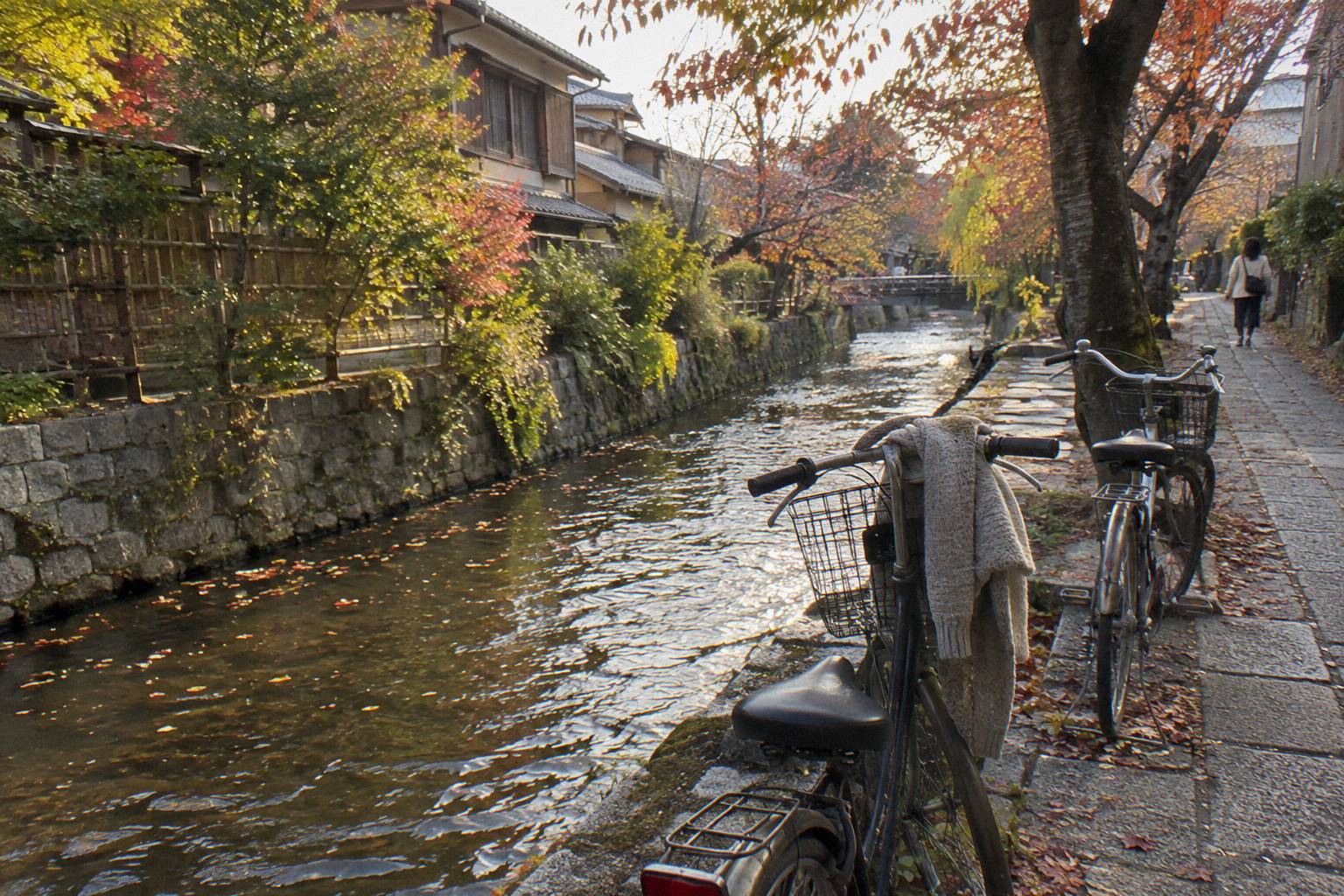
Whichever rung fits, the same three-step booking applies: pick a date, read the inclusion list on the product page, and check availability before the calendar fills.
Fines And Rules Riders Aged 16 And Over Should Know
Since 1 April 2026, riders aged 16 and over who commit minor violations pay a fixed fine instead of going through criminal procedure, under the blue ticket system Kyoto City describes. Fines run from 3,000 yen to 12,000 yen, and the system applies to every rider aged 16 and over, visitors included. Holding a phone while riding is the costliest at 12,000 yen, while riding two abreast or carrying a second rider draws 3,000.
The fine schedule rewards a one-minute read before you set off. Kyoto City names the amounts directly: phone held or watched while riding 12,000 yen; ignoring a signal 6,000; riding on the wrong side of the road 6,000; failing to stop at a stop sign 5,000; riding with an umbrella 5,000; riding two abreast or carrying a second rider 3,000. The umbrella figure catches visitors in the rainy season, early June to mid July, when July is the wettest month on the Japan Meteorological Agency normals at 223.6 mm.
| Violation named by Kyoto City | Fixed fine |
|---|---|
| Holding or watching a phone while riding | ¥12,000 |
| Ignoring a traffic signal | ¥6,000 |
| Riding on the wrong side of the road | ¥6,000 |
| Failing to stop at a stop sign | ¥5,000 |
| Riding with an umbrella | ¥5,000 |
| Riding two abreast or carrying a second rider | ¥3,000 |
The phone rule reaches beyond the ticket system. Since 1 November 2024, holding a phone to talk or watch the screen while riding has carried up to 6 months in prison or a 100,000 yen fine, and causing danger while using a phone up to 1 year or 300,000 yen, per the same Kyoto City page. The old habit of checking a map one-handed at a junction is now the single most expensive mistake a rider can make, and it is a strong argument for the guided format, where the guide holds the route and the rider keeps both hands free.
Parking closes the loop. Bicycles left outside designated areas are removed, and reclaiming one costs 3,500 yen, with storage depots such as Sanjo Senbon holding bikes for 4 weeks, as the Kyoto City page on removed bicycles explains. The full rulebook, including drunk-riding penalties and the five safety rules, is laid out in the Kyoto cycling rules reference.
What Trips People Up Before You Book
The recurring mistakes are assumption, not regulation. Riders assume a rental's counter terms are standardised when they are set shop by shop, assume the helmet rule carries a fine when it is an effort duty, and assume the fixed-fine system stops at residents when it applies to every rider aged 16 and over. Each one is avoided by a single check before the trip rather than a correction during it.
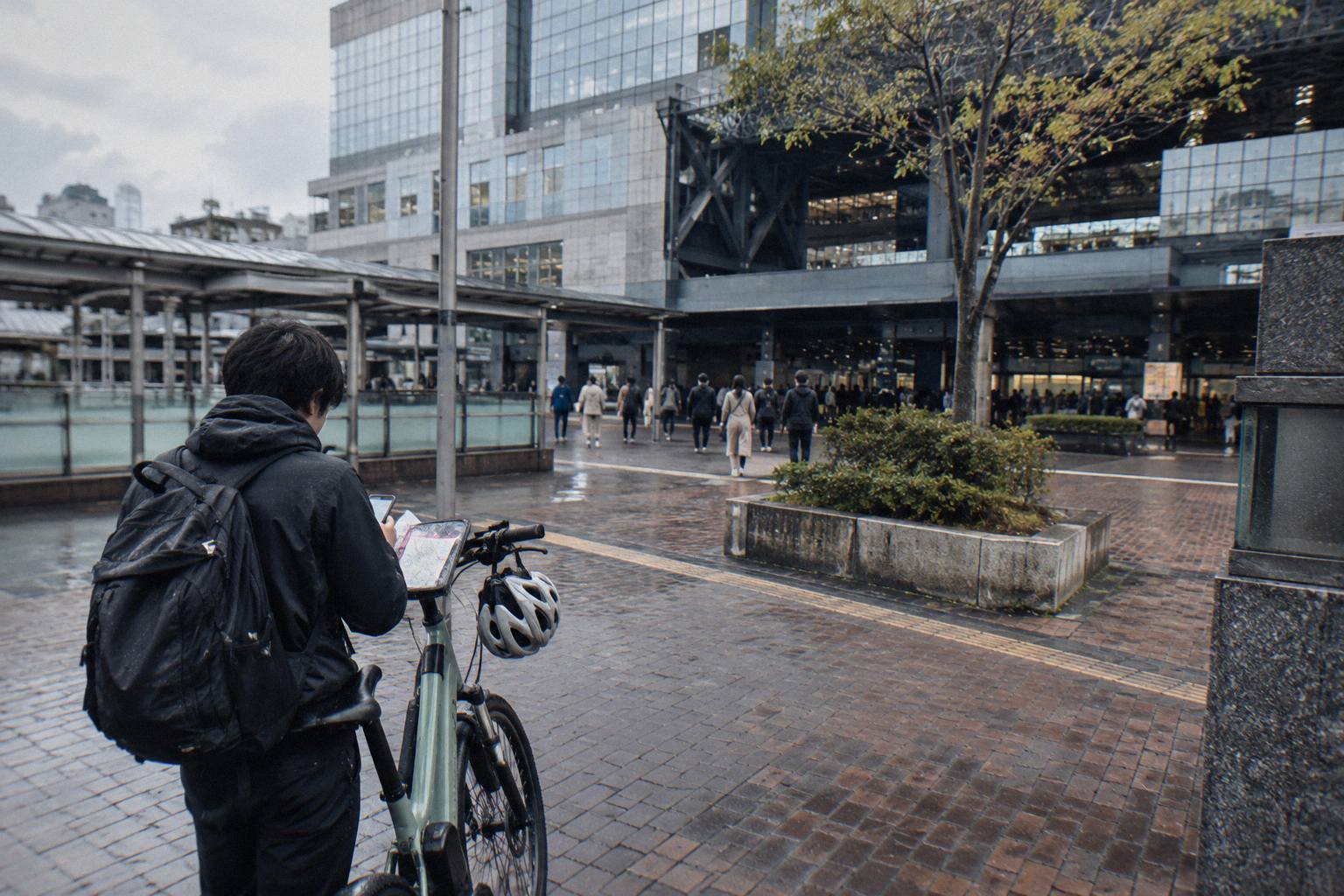
The first mistake is treating the ID question as settled by law. It is not: the licence answer is clear, but counter terms on identification and payment belong to each shop, so a message ahead of time beats an assumption at the counter. Booking a guided ride instead removes the question, since the bicycle is equipment supplied with a booked product.
The second mistake is ignoring age minimums until the morning of. They vary widely across the products here, from 2 on the Budget Fare, Hidden Alleys ride to 15 on the UNESCO Zen Temples ride and 16 on the Full-Day E-Bike, Lunch Included (from ¥26,000 per person, 5.0 from 596 reviews, minimum age 16). Reading the product line before booking is the whole fix.
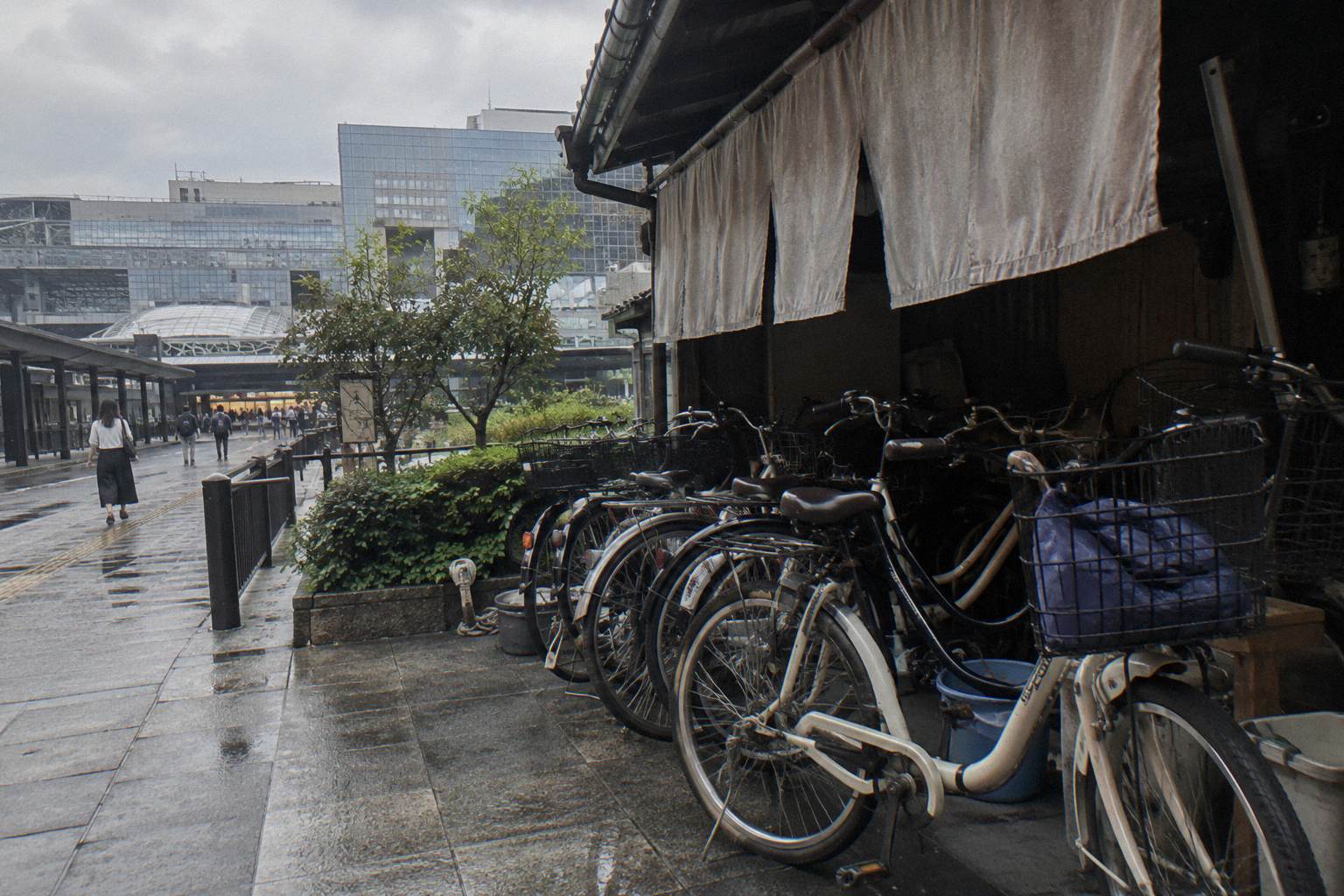
The third mistake is riding without liability cover. The prefecture requires it, many travel policies already include a personal-liability section, and several guided products name insurance among their inclusions. A two-minute read of your own policy before departure settles it.
The fourth is leaving the bike on a whim. Removal costs 3,500 yen and a trip to a depot, and the depots keep bikes for 4 weeks only. Use designated parking, and check the timing of your visit against the seasons too: the bloom and leaf dates on the Japan Meteorological Agency Kyoto observations are the reference points most visitors plan around.
Common Questions About Renting And Riding Bikes In Kyoto
Can Tourists Rent A Bike In Kyoto Without A License Or ID?
Riding a bicycle in Kyoto requires no driving licence, and a compliant pedal-assist e-bike is legally a bicycle, so the same holds there. Counter terms on ID are set by each shop, so ask the shop for its terms, or book a guided ride where the bicycle is included in the fare and no rental contract is involved.
Is An Electric Bicycle Treated The Same As A Normal Bicycle In Japan?
Yes, when it is a pedal-assist model meeting the national standard. Kyoto City states that such a bike is legally a bicycle, while a throttle vehicle outside the standard counts as a motorised bicycle or car and falls under different rules.
Do You Have To Wear A Helmet Cycling In Kyoto?
Since 1 April 2023, wearing a helmet is an effort duty for cyclists of every age, with no fine attached. Most guided rides name helmets as included, so riders who book one arrive with a helmet in hand.
What Happens If I Park A Rental Bike In The Wrong Place?
Kyoto City removes illegally parked bicycles and charges 3,500 yen to release one, holding it for 4 weeks from the day after removal. Storage depots such as Sanjo Senbon handle collection.
Do The Fixed Fines Apply To Foreign Visitors?
Since 1 April 2026 the blue ticket system applies to every rider aged 16 and over who commits a minor violation, with fines from 3,000 yen to 12,000 yen. The system keys on age, not residence.
Is A Guided Ride A Way To Skip The Rental Counter?
Yes. On every guided product the bicycle is included in the fare, from the Budget Fare, Hidden Alleys ride at from ¥11,000 per person to the Backstreets, 5 To 6 Hours ride at from ¥15,000 per person, each with free cancellation up to 24 hours before start.