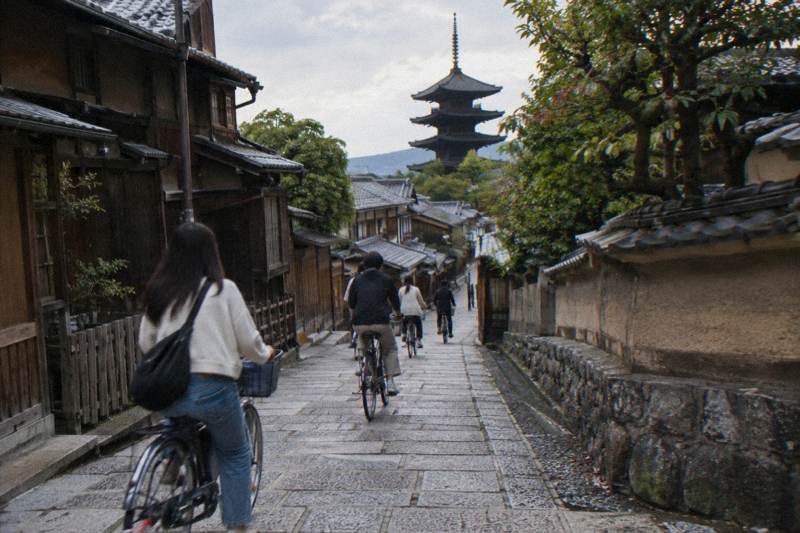
South Kyoto Backstreet Cycling: Sake Districts And Quiet Lanes
South Kyoto's backstreets are a ride decision, not a single route: this guide compares the rides that cover them, their prices and ages, and the rules and seasons that shape the day.
Short answer
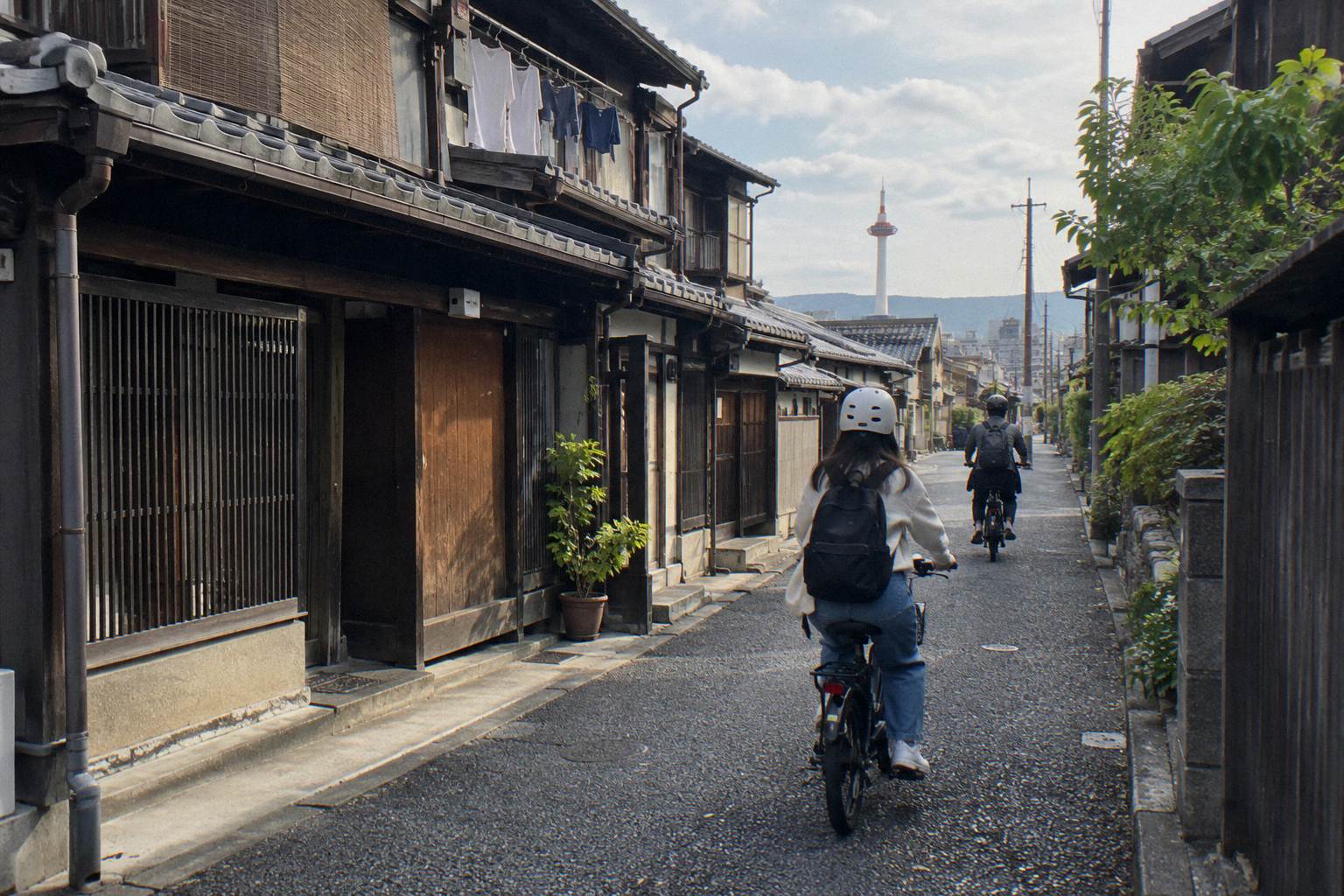
Two rides cover South Kyoto's backstreets directly. South Kyoto in a Nutshell: Gentle Backstreet Bike Tour! runs from ¥12,000 per person for 3 to 4 hours, rated 5.0 from 279 reviews, minimum age 13. South Kyoto: E-Bike Highlights & Local Cultural Experiences runs from ¥13,500 per person for 4 hours and adds Fushimi Inari and a sento stop. Both allow free cancellation up to 24 hours before start.
South Kyoto's backstreets are covered by several guided rides, and the decision on this page is which one fits the backstreet-lane idea, what each costs, and what a rider should sort out before booking a date. The full guided-cycling collection for this part of the city sits under guided cycling rides, where the pedal and e-bike products for the south of the city are grouped together.
| Fact | Detail |
|---|---|
| Cheapest backstreet option | South Kyoto in a Nutshell: Gentle Backstreet Bike Tour!, from ¥12,000 per person, 3 to 4 hours |
| Fushimi pairing option | South Kyoto: E-Bike Highlights & Local Cultural Experiences, from ¥13,500 per person, 4 hours, minimum age 1 |
| E-bike alternative | Kyoto E-Bike Tour of Hidden Gems Backstreets and Temples, 4 hours, 5.0 from 214 reviews, minimum age 12 |
| Helmet law | Effort duty for every age since 1 April 2023, no fine attached |
| Minor violations | Since 1 April 2026, riders 16 and over pay fixed fines of 3,000 to 12,000 yen |
| Removed bicycles | 3,500 yen to reclaim, held 4 weeks |
| Wettest month | July, 223.6 mm at Station Kyoto (1991 to 2020 normals) |
| Hottest month | August, mean 28.5 °C, daily high 33.7 °C |
What A South Kyoto Backstreet Ride Actually Covers
A South Kyoto backstreet ride is a half-day guided loop through residential lanes south of the city centre, usually 3 to 4 hours on a pedal bike or e-bike. Two rides serve the idea directly: the Gentle Backstreet Ride from ¥12,000 per person, and the Fushimi Inari, Sento Stop option from ¥13,500 per person. Neither is a full-day commitment, and both allow free cancellation up to 24 hours before the start.
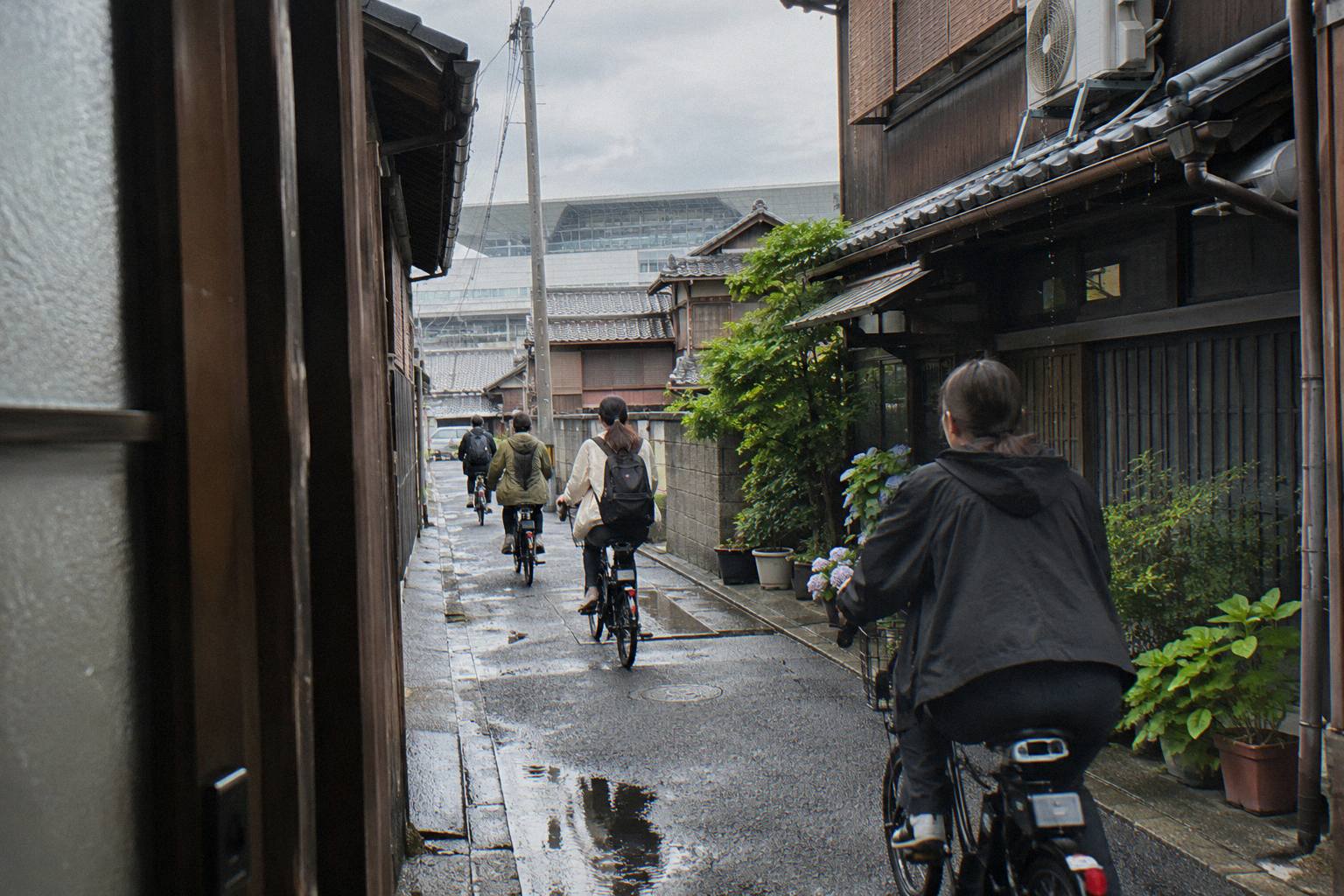
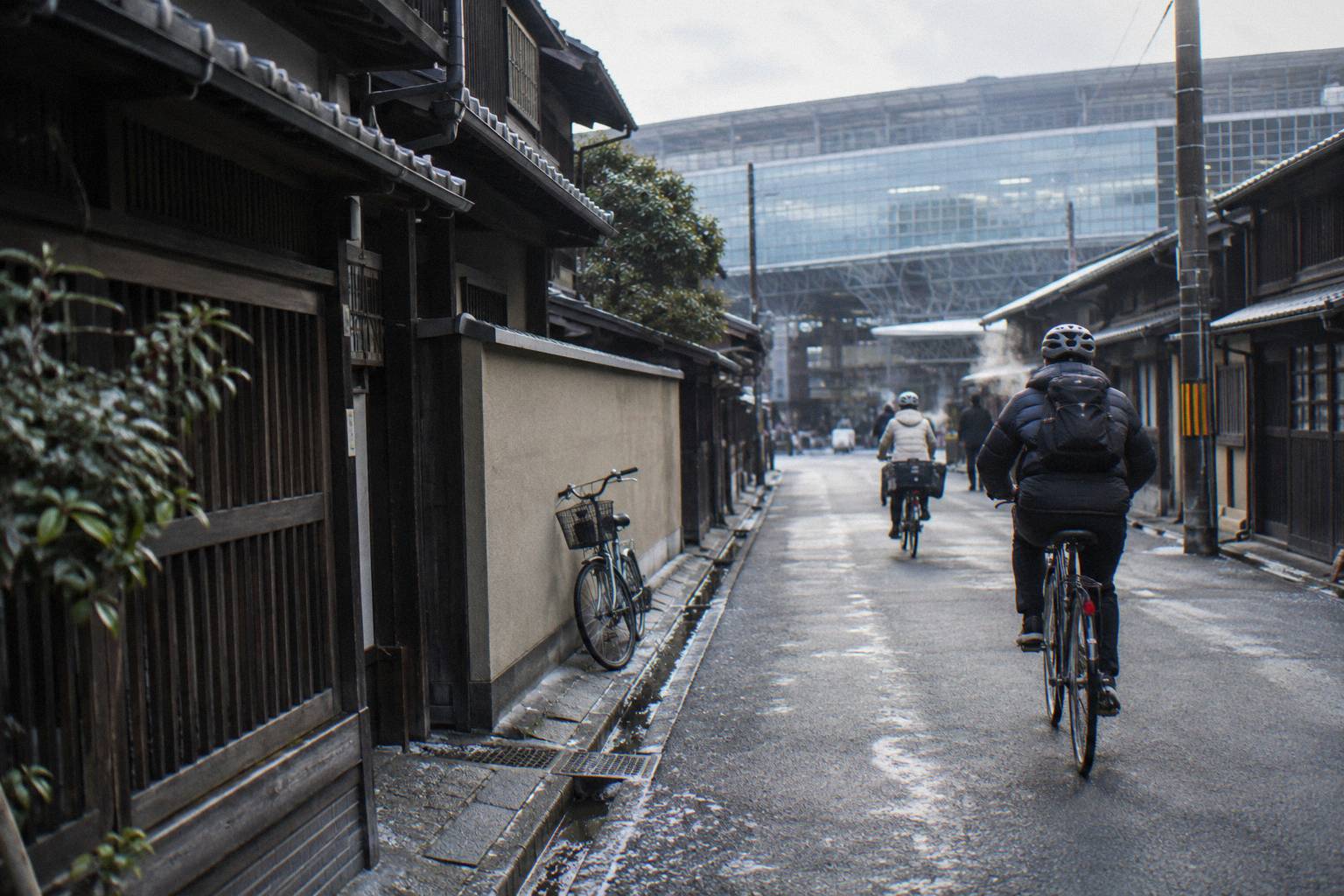
The word "backstreet" is doing real work here. South Kyoto, in riding terms, means the districts you reach by heading south from the centre toward Fushimi Inari Taisha, Tofuku-ji and the quieter grid of streets between them. A guided ride through this area is built around lanes a bus cannot serve well, guided commentary that explains what you are passing, and a pace set by a guide rather than by a timetable of temple gates.
The trade-off a rider is making is specific. A backstreet ride buys time in ordinary neighbourhoods at the cost of headline temples: the Gentle Backstreet Ride's inclusions are a Cannondale bike, helmet, bottled water and the use of the bicycle, with gratuities excluded, and its focus is the lanes themselves. The Fushimi Inari, Sento Stop option spends part of its 4 hours at the shrine, adding a reusable water bottle, fox-shaped ema, amazake and a towel for the sento bathhouse stop. More culture per yen, less pure lane time.
There is a third shape of ride worth naming. The Hidden Gems, 4 Hours option from Localized Walking & Food Tours blends backstreets with temples at 4 hours on an e-bike, minimum age 12, rated 5.0 from 214 reviews. If the goal is instead the famous northern and eastern temple districts, different rides fit better than anything in South Kyoto. This page stays on the south, on the lanes, and on the three products that actually cover them.
Which Ride Fits The Backstreet Decision
The Gentle Backstreet Ride from ¥12,000 per person fits a rider who wants the lanes and nothing else, at 3 to 4 hours with a minimum age of 13. The Fushimi Inari, Sento Stop option from ¥13,500 per person adds the shrine and a bathhouse at 4 hours, minimum age 1. The Hidden Gems, 4 Hours e-bike ride suits riders who want assist and a wider age fit.
Prices vary by date and group, and the booking page shows the price for the date you choose. The table below sets the three rides side by side on the figures that decide the matter: duration, minimum age, what is physically handed to you, and what is left out. Read it row by row rather than column by column, because no two rows answer the same question.
| Gentle Backstreet Ride | Fushimi Inari, Sento Stop | Hidden Gems, 4 Hours | |
|---|---|---|---|
| Duration | 3 hours to 4 hours | 4 hours | 4 hours |
| Minimum age | 13 | 1 | 12 |
| Bike | Cannondale bike | E-bike | Use of bicycle |
| Rating | 5.0 from 279 reviews | No star claim | 5.0 from 214 reviews |
| Included extras | Helmet, bottled water | Reusable water bottle, fox-shaped ema, amazake, sento towel | English-speaking guide |
| Excluded | Gratuities | None named | Insurance |
| Cancellation | Free up to 24 hours before start | Free up to 24 hours before start | Free up to 24 hours before start |
Two details in that table deserve a second look. First, the sento towel on the Fushimi option: the ride builds in a stop at a public bathhouse, which is a different kind of inclusion than a temple ticket, and it means changing arrangements are worth asking the operator about before you go. Second, the Hidden Gems option lists insurance as excluded, which matters more in Kyoto than in most cities: the Kyoto Prefecture page on bicycle liability insurance confirms the prefecture requires riders to carry bicycle accident coverage, so a rider without a personal policy should ask what the operator arranges.
A third detail is subtler: the cancellation row is identical across all three products, so cancellation should not be a deciding factor between them. The free cancellation up to 24 hours before start is a shared property of this set, which means the decision rests entirely on price, duration, bike type, age fit and inclusions. That is a cleaner decision than most ride comparisons in this city, where cancellation terms vary and muddy the water.
The Gentle Backstreet Ride: Price, Duration And Fit
The Gentle Backstreet Ride, booked as South Kyoto in a Nutshell: Gentle Backstreet Bike Tour!, costs from ¥12,000 per person for 3 to 4 hours, carries a 5 rating from 279 reviews, and sets a minimum age of 13. It includes a high-quality Cannondale bike, helmet, bottled water and use of the bicycle, with gratuities excluded. It is the lowest-priced way on the roster to ride South Kyoto's lanes with a guide.
The review pool is the largest of the three options here, and it is what makes this ride the default pick for the pure backstreet idea. At 3 to 4 hours it fits a morning before other plans or an afternoon after them. The pedal bike is a Cannondale, not an unnamed rental fleet machine, and the helmet comes with it rather than being an add-on you have to remember to request.
Who it does not fit: anyone under 13, per the operator's own minimum, and anyone who wants electric assist, since no e-bike is named in this ride's inclusions. The assist question is a rider-fit question, and the e-bike versus regular bike decision is worked through in full there, but the short version for this page is that a pedal rider comfortable with 3 to 4 hours in the saddle loses nothing by choosing this ride. Gratuities are excluded and optional, so budget nothing extra unless the guide earns it.
- Budget Fare, Hidden Alleys¥11,000
- Crowd-Free E-Bike Ride¥13,000
- Higashiyama Heritage Ride¥13,500
- Fushimi Inari, Sento Stop¥13,500
- Morning Ride From Station¥14,000
- Silver Pavilion, Philosopher's Path¥14,500
- Backstreets, 5 To 6 Hours¥15,000
- Palace, Castle And Temples¥16,500
The ride is operated by Cycle Kyoto, which also runs the Early Bird With Lunch option and the Countryside Ride, Lunch Included option elsewhere on the roster. Knowing the operator helps when two of their products overlap on a calendar: same company, different day shape. The full tour page for this ride is the gentle South Kyoto backstreet ride, and you can check availability for your dates there.
The Fushimi Inari Pairing: Shrine, Amazake And A Sento
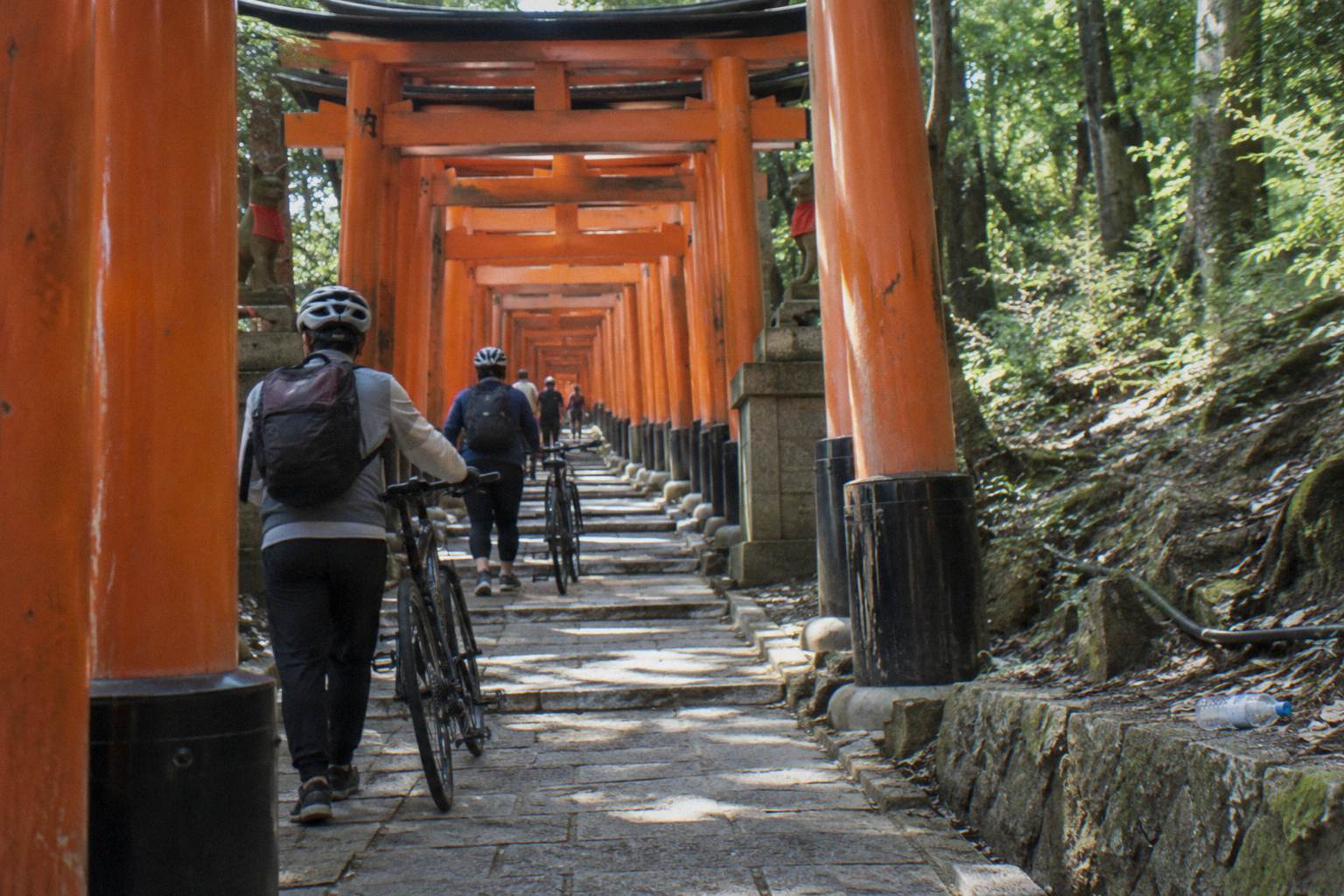
The Fushimi Inari, Sento Stop ride, booked as South Kyoto: E-Bike Highlights & Local Cultural Experiences, costs from ¥13,500 per person for 4 hours with a minimum age of 1. It is the only South Kyoto option pairing the backstreets with Fushimi Inari Taisha and a public bathhouse, including an e-bike, reusable water bottle, fox-shaped ema, amazake and a sento towel. It has too few reviews for a star claim.
Fushimi Inari Taisha charges no admission fee, and its own Fushimi Inari Taisha FAQ describes around 10,000 torii gateways of all sizes along the mountain paths. The ride's fox-shaped ema connects directly to the shrine: the fox is Inari's messenger, and an ema is a wooden plaque you write a wish on and hang at the shrine. Amazake, a sweet fermented rice drink, is a classic Fushimi-area refreshment, and the towel covers the sento, a neighbourhood bathhouse.
The shrine stops that South Kyoto rides touch are easy to hold in one table. Two named places sit at the southern end of the city, and both can appear on a ride's itinerary, so their entry figures are worth knowing before you compare what a tour includes against what you would pay alone.
| Place | Admission | Notes |
|---|---|---|
| Fushimi Inari Taisha | No fee | Around 10,000 torii gateways along the mountain paths |
| Tofuku-ji Hojo garden | From 600 yen | Tsutenkyo bridge and Kaisando also 600, 1,000 in the autumn foliage period; combined ticket 1,000 |
Tofuku-ji appears here because it sits between the city centre and Fushimi Inari, which makes it a natural stop on any southbound route; whether a given ride enters its paid garden or only passes is a question for the operator. The minimum age of 1 on the Fushimi option is the widest on this page by a distance, which makes this the family option among South Kyoto rides, though no child seat or trailer is named, so ask the operator how a very young rider is carried before booking. The Fushimi Inari by bike route guide covers the shrine stop in full if that is the part you are weighing.
Pedal Bike Or E-Bike In The Lanes
The Gentle Backstreet Ride is pedal-only, with a Cannondale bike and no e-bike named in its inclusions; the Fushimi Inari, Sento Stop ride and the Hidden Gems, 4 Hours ride both provide an e-bike or bicycle. Legally, a pedal-assist e-bike that meets the standard is a bicycle in Japan, so all three rides operate under the same road rules regardless of what you are riding.
The legal point comes from the Kyoto City page on cycling rules: a pedal-assist e-bike meeting the legal standard counts as a bicycle, while a throttle vehicle outside the standard would be a motorised bicycle, which is why no ride on the roster uses one. In practice this means an e-bike rider and a pedal rider on the same tour follow identical rules, stop at identical signals and face identical fines. The bike under you changes the effort, never the law.
The fit question is about the rider, not the route. This page makes no claim about gradients in South Kyoto, since no official elevation figure exists for any district here. What can be said: e-assist removes the penalty for a slower rider holding a group back. A mixed-ability group, a rider returning to cycling after years off, or a family spanning ages fits the e-bike products more comfortably than the pedal-only one.
The other e-bike consideration is what the ride hands you. The Fushimi option names an e-bike plainly, and the Hidden Gems option names use of a bicycle with a guide in English. Neither names a battery figure, a range or a model, so ask the operator if those details matter to you. For the deeper comparison of assist versus pedal across the whole city, the rider-fit guide to e-bikes and regular bikes is the fuller treatment; the paragraph above is the whole of it as it applies to these three rides.
Season, Weather And Timing The Ride
July is Kyoto's wettest month with 223.6 mm of rain, and August the hottest with a mean of 28.5 °C and a daily high of 33.7 °C, so a 3 to 4 hour backstreet ride sits most comfortably in spring or autumn. Cherry blossom normally reaches full bloom on 4 April and maple colouring on 5 December. Weather and the operator decide what runs on any given day.
Those figures are the Japan Meteorological Agency Kyoto monthly normals for 1991 to 2020. The record daily maximum is 39.8 °C, and the rainy season runs roughly early June to mid July. A lane-focussed ride with frequent stops is more exposed to weather than a temple-to-temple loop, because there is less time indoors. The blossom and maple dates are the observatory's reference-tree normals, not a promise for any single year: 2026's full bloom arrived on 30 March, ahead of the 4 April normal, which shows how far a season can shift.
| Month | Rain (mm) | Mean (C) | Daily high (C) |
|---|---|---|---|
| January | 53.3 | 4.8 | 9.1 |
| April | 117.0 | 14.4 | 20.1 |
| July | 223.6 | 27.3 | 32.0 |
| August | 153.8 | 28.5 | 33.7 |
| October | 143.2 | 18.4 | 23.4 |
| November | 73.9 | 12.5 | 17.3 |
Note that August, not July, is the hottest month: July trades slightly lower temperatures for the heaviest rain. April and November sit in the most comfortable band of the table, which is also when the blossom and maple dates fall, and when the city is busiest. January is the coldest and driest month, at a mean of 4.8 °C, which some riders prefer precisely because demand is low; layer up and the lanes are as rideable as in any other month.
Timing within the day is a separate decision, and the question of whether to reserve ahead is answered in whether you need to book a Kyoto cycling ride in advance. Prices vary by date and group, so see dates early if you are targeting April or November. The free cancellation up to 24 hours before start, shared by all three rides here, means an early booking carries no weather risk you cannot undo.
Rules And Fines That Apply In The Lanes
Since 1 April 2026, every rider aged 16 and over who commits a minor violation pays a fixed fine of 3,000 to 12,000 yen instead of facing criminal procedure. Holding a phone costs 12,000 yen, ignoring a signal 6,000, riding two abreast 3,000. Helmets have been an effort duty for every age since 1 April 2023, with no fine. A guided ride exempts no one from any of it.
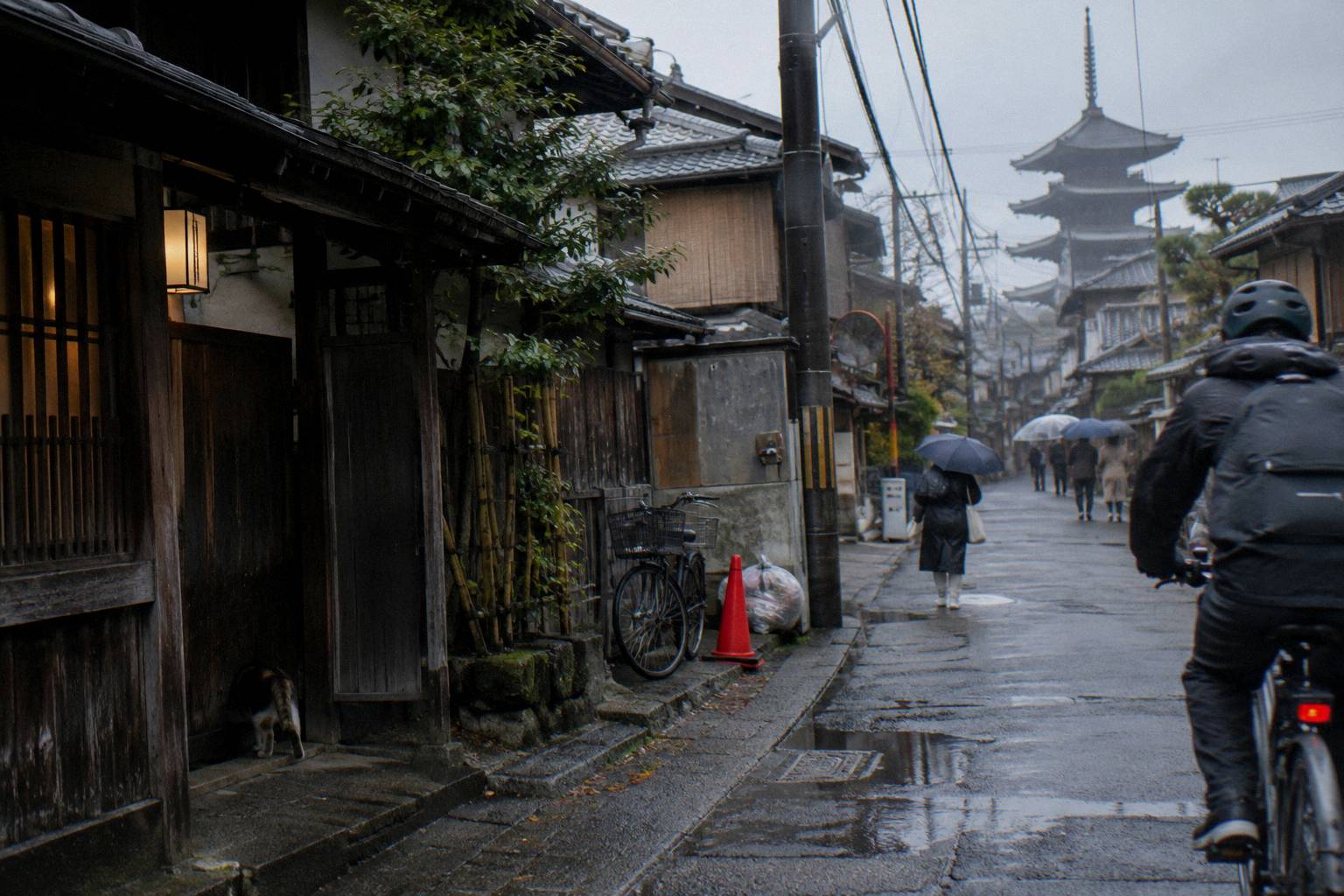
Backstreets are exactly where riders relax and drift onto the wrong side of a narrow lane or roll through a quiet junction, and the fixed amounts are specific: 6,000 yen for riding on the wrong side of the road, 5,000 for failing to stop at a stop sign, 5,000 for riding with an umbrella, 3,000 for carrying a second rider or riding two abreast. Holding a phone to talk or watch the screen has carried up to 6 months in prison or a 100,000 yen fine since 1 November 2024, before the fixed-fine amounts even apply. Riding behind a guide is not a defence.
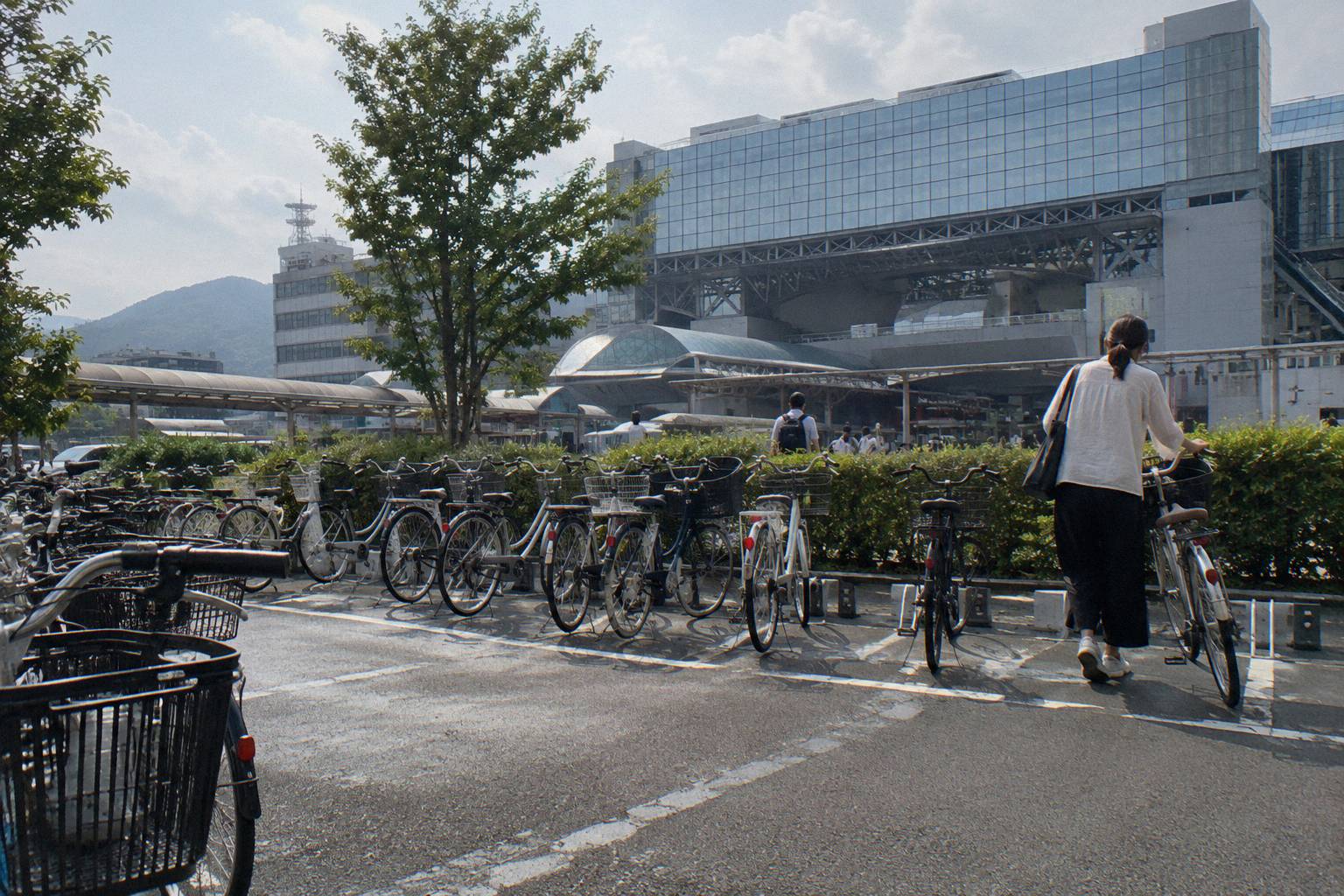
The helmet duty comes from the Kyoto Prefecture page on the helmet effort duty: every cyclist of every age must make an effort to wear one, and no fine attaches. The Gentle Backstreet Ride and the Fushimi option both hand you a helmet as a named inclusion, so the effort is already made for you. Parking matters too if you arrive on your own bike: Kyoto City removes illegally parked bicycles and charges 3,500 yen to reclaim one, holding it for 4 weeks, and the guide to where to leave bikes in Kyoto covers that risk in detail. The full rule reference is the Kyoto cycling rules for visitors.
What Trips People Up Before You Book
The four common misses are booking the pedal-only Gentle Backstreet Ride when you wanted assist, overlooking its minimum age of 13, assuming the sento stop needs nothing from you, and skipping liability insurance when a ride lists it as excluded. Each is a one-minute check: read the bike line, the age line, the inclusion list and the exclusion list before you pick a date.
The bike line first. The Gentle Backstreet Ride names a Cannondale bike and no e-bike; riders who assumed assist was standard on every Kyoto ride end up pedalling for 3 to 4 hours. The two alternatives on this page both provide an e-bike or bicycle, so the fix is simply choosing the right product, not asking on the day. The same logic applies to duration: 3 to 4 hours and a flat 4 hours look similar on a card, but the shorter option's range means the actual ride can be a full hour quicker.
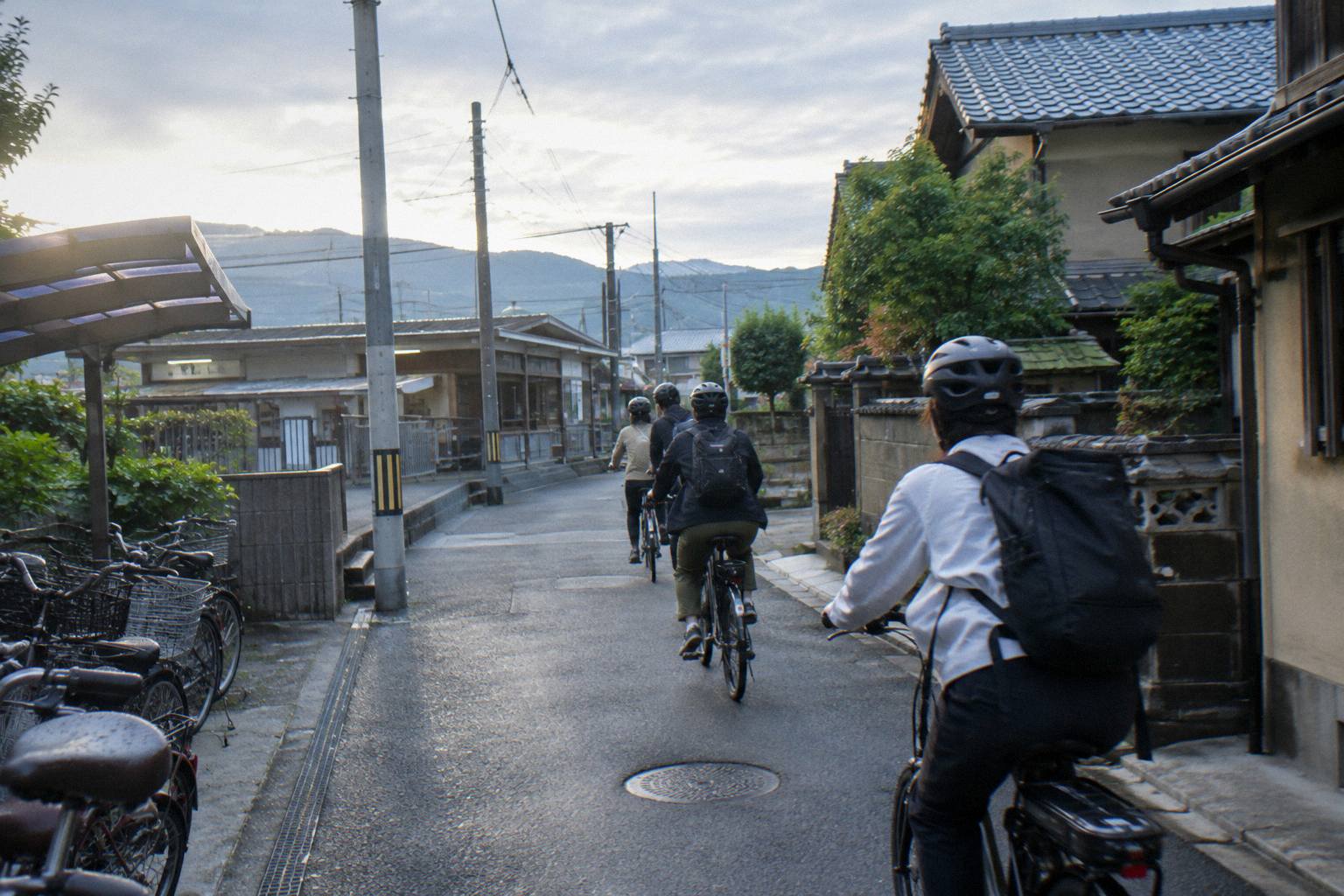
Second, the age lines differ enormously on this page: 13, 12 and 1 across the three rides. A family with a nine-year-old fits exactly one of them. A rider who wants the shortest possible commitment on an e-bike from the station end of town could also weigh the Morning Ride From Station, which runs 3 hours 30 minutes from ¥14,000 per person, rated 5.0 from 20 reviews, with a raincoat and liability insurance included. It is not a South Kyoto product, but it is the shortest assisted ride near this part of the decision.
Third, the sento. A towel is included on the Fushimi option, but nothing is named about swimwear, changing facilities or how that specific bathhouse runs, so ask the operator one question before booking rather than discovering the answer mid-ride. Fourth, insurance: the Hidden Gems ride lists it as excluded, and Kyoto Prefecture requires riders to hold bicycle liability cover, so check your own policy covers you or ask what the operator arranges. A personal-liability rider on a home, car or accident policy counts under the prefecture's ordinance.
One more timing note: all three rides allow free cancellation up to 24 hours before start, so there is no reason to wait for a weather forecast that will not exist yet. Book, then cancel free if the date turns wet. What a guided ride actually does when rain arrives is a question with its own answer, covered in what happens to a guided ride in Kyoto when it rains.
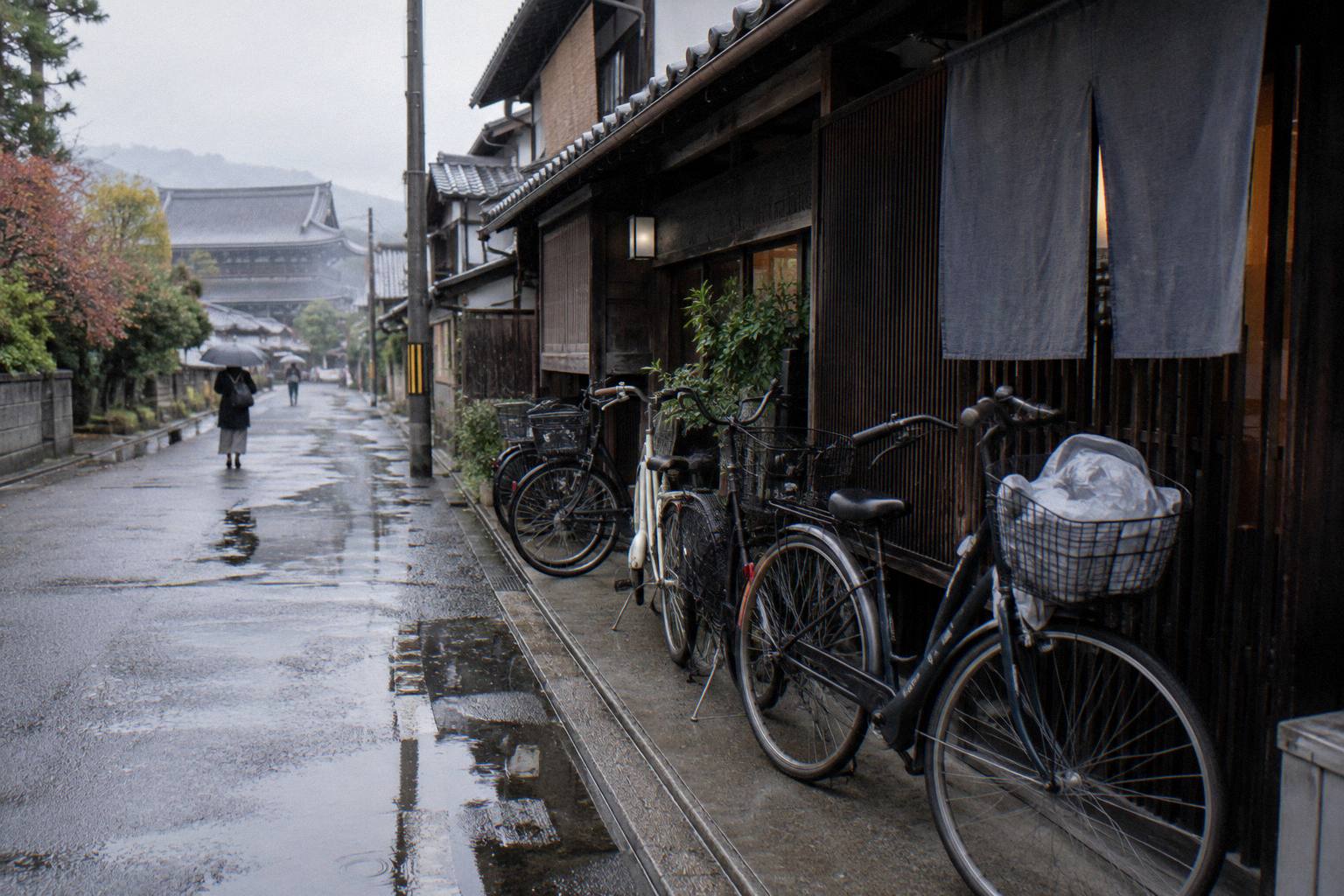
The wider backstreet theme extends across the city, and the northern weaving district has its own treatment in the Nishijin backstreets cycling guide. If South Kyoto's 4 hour ceiling feels short, the Backstreets, 5 To 6 Hours ride from Memory Kyoto Bike Tour runs longer at ¥15,000 per person, rated 4.9 from 210 reviews, minimum age 3, with e-bikes for everyone, helmets, bottled water and all fees and taxes included. Longer, pricier, and assisted for the whole group: a different shape of day entirely.
South Kyoto rewards the rider who picked the right product rather than the cheapest one. Take the from-price, the bike line, the age line and the inclusion list together, match them to your group, and lock the date with the free cancellation as your safety net. Where you go from the lanes is a separate question, and the Kyoto Bike Tours route guides cover every other district.
Common Questions About South Kyoto Lanes
How Much Does A South Kyoto Backstreet Ride Cost?
The Gentle Backstreet Ride costs from ¥12,000 per person for 3 to 4 hours, and the Fushimi Inari, Sento Stop option from ¥13,500 per person for 4 hours. The Hidden Gems, 4 Hours ride has no price to print here, so check the booking calendar for it. Prices vary by date and group.
Can Children Join A South Kyoto Backstreet Ride?
It depends on the ride. The Fushimi Inari, Sento Stop option sets a minimum age of 1, the Hidden Gems ride 12, and the Gentle Backstreet Ride 13. Ask the operator how a very young child is carried, since no child seat or trailer is named on any of them.
Do I Need An E-Bike For South Kyoto's Lanes?
No ride here requires one, and no gradient claims can be made about the district. The Gentle Backstreet Ride is pedal-only with a Cannondale bike; the other two provide an e-bike or bicycle. A pedal-assist e-bike meeting the legal standard counts as a bicycle under Japanese law.
What Happens If It Rains On The Day?
All three rides allow free cancellation up to 24 hours before start. July is the wettest month at 223.6 mm, so spring and autumn dates carry less weather risk. Any operator's own weather policy beyond that free-cancellation window is a question to ask before booking.
Is A Helmet Included On These Rides?
On the Gentle Backstreet Ride, yes, a helmet is named as included. Helmets have been an effort duty for every cyclist of every age since 1 April 2023, with no fine attached, so wearing the one you are given satisfies the rule.
Does The Fushimi Inari Stop Cost Extra?
No. Fushimi Inari Taisha charges no admission fee, and the ride includes a fox-shaped ema, amazake, a reusable water bottle and a sento towel, so nothing at the shrine itself needs paying for.